
.png)
Injeolmi, Chapssaltteok, Songpyeon: Korean Dessert Rice Cakes That Win People Over Fast


The phrase “dessert rice cake” does not sound like an easy sell.
It sounds dense. Maybe bland. Maybe like something you are supposed to admire more than enjoy.
Then you try a good one and realize the whole category has been badly explained.
Korean dessert rice cakes win people over for the same reason a lot of heavily marketed sweets do not: they are chewy, lightly sweet, and built around texture more than sugar. Injeolmi gives you soft chew and nutty soybean powder. Chapssaltteok adds a filled, mochi-like center that feels fuller and more familiar to a lot of first-timers. Songpyeon brings shape, filling, and a more traditional kind of charm that makes it feel special even before the first bite.
That is why these desserts land faster than people expect.
TL;DR
Injeolmi, chapssaltteok, and songpyeon are all Korean dessert rice cakes, but they win people over in different ways. Injeolmi is usually the easiest first try because it is soft, chewy, nutty, and only lightly sweet. Chapssaltteok is the better pick if you like filled sweets and want something closer to a mochi-style bite with more softness and a fuller center. Songpyeon is a little more traditional and distinctive, with its half-moon shape and sweet filling, and it often feels more special than casual. What makes all three easy to love is that they rely more on chew, texture, and gentle sweetness than on heavy sugar.
Why Korean dessert rice cakes surprise people
A lot of first impressions go wrong before the food even gets to your mouth.
People hear “rice cake” and imagine something dry, stiff, or purely ceremonial. Or they hear “dessert” and expect frosting-level sweetness. These rice cakes do not behave like either of those things.
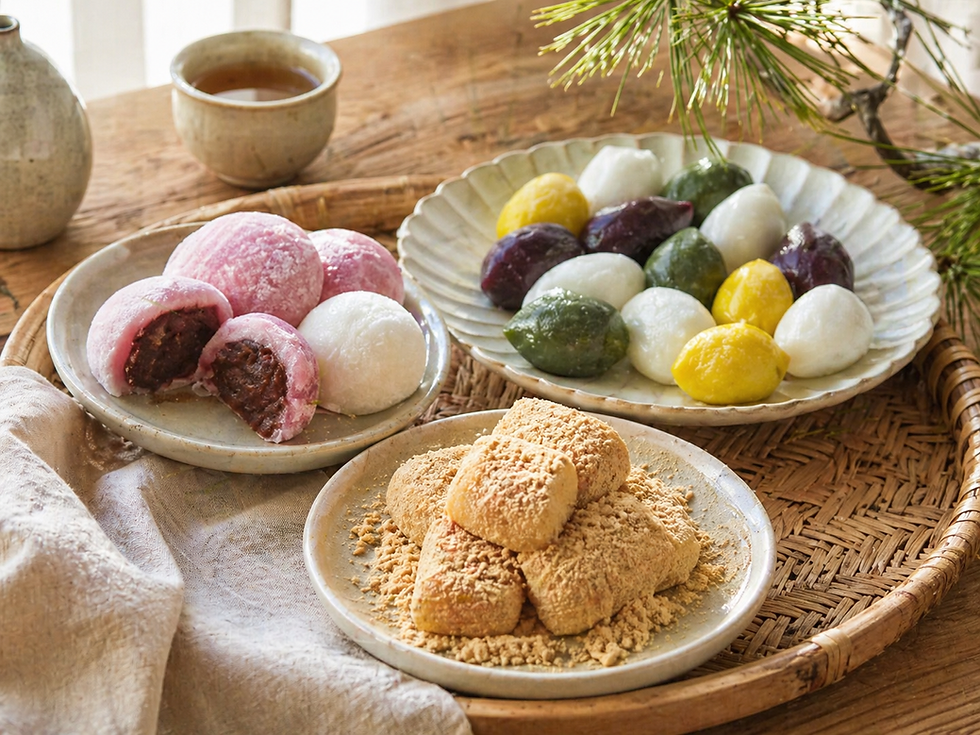
What makes them click is the balance. They are chewy without being tough. Sweet without being loud. Traditional without feeling like homework. And because the sweetness is usually restrained, the texture has room to matter.
That is the real beginner advantage here. You are not being hit with a wall of sugar. You are noticing chew, softness, nuttiness, fillings, and the way each rice cake has its own mood.
Injeolmi is the one that wins people over quietly
If you want the easiest first dessert tteok to understand, start with injeolmi.
Injeolmi is soft, stretchy, and usually coated in roasted soybean powder, which gives it that nutty, lightly sweet finish people remember right away. It is not trying to stun you. It just makes sense almost immediately. The chew is satisfying. The soybean coating keeps it from tasting flat. The sweetness stays gentle enough that you can focus on how good the texture feels.

That is why injeolmi often works even for people who do not usually chase traditional desserts. It does not ask you to decode anything. It just tastes comforting.
It is also one of the easiest Korean sweets to recommend to people who say they do not like overly sugary desserts. Injeolmi has enough flavor to feel like dessert, but it does not lean on sugar to get there.
If you want a MyFreshDash example that fits this lane, Mosiall Ramie Ingeolmi is a relevant pick. It is not plain classic injeolmi, but it keeps the same core appeal: soft chew, roasted soybean coating, and that gentle nutty sweetness that makes injeolmi such an easy first love.

Chapssaltteok is where dessert tteok starts feeling fuller
Chapssaltteok usually lands fastest with people who already like mochi, especially filled mochi.
It is made with glutinous rice dough, which gives it that soft, sticky chew, and it is often filled with sweet red bean paste or another sweet center. That filling changes the experience. Instead of tasting mostly texture first, like injeolmi often does, chapssaltteok gives you a clearer inside-out contrast: soft outer layer, sweet center, more obvious dessert logic.

That makes it especially beginner-friendly in a different way. Injeolmi feels clean and understated. Chapssaltteok feels more complete in one bite.
If somebody says they want the Korean rice cake that feels most familiar to fans of mochi or sweet bean-filled desserts, this is usually the safest answer.
I did not find a clear standalone chapssaltteok listing on MyFreshDash, so I would not force a weak match here. The closest texture bridge is Danya Daifuku Mochi (White). It is Japanese-style daifuku, not Korean chapssaltteok, but it can still help the right reader understand why filled chewy rice sweets are so easy to like.
Songpyeon wins people over differently
Songpyeon is often the prettiest one on the plate, but that is not the only reason it stands out.
These half-moon-shaped rice cakes are traditionally associated with Chuseok, and they usually come with a sweet filling such as sesame, red bean, or other classic mixtures. They tend to feel a little more special than casual, partly because of the shape and partly because they are so closely tied to a sense of occasion.

But songpyeon is not just about symbolism. It is also good. The outer rice layer has a pleasant chew, the filling gives each piece more personality, and the overall effect feels more delicate than people often expect from the phrase “rice cake.”
Compared with injeolmi, songpyeon usually feels a little more structured and a little less immediately cozy. Compared with chapssaltteok, it feels less plush and more shaped. That is part of its appeal. It feels distinct.
If you want the clearest MyFreshDash example here, GW Songpyeon is the direct fit. It matches the traditional half-moon style and is the easiest product tie-in for readers who want to try the category in its more classic, occasion-linked form.
Which one is easiest to love first?
For most beginners, the smoothest first path is injeolmi.
It is the least demanding. The flavor is easy to understand, the chew is instantly satisfying, and the soybean powder gives it enough character without making it feel niche.
Chapssaltteok is the better first try if you already know you like filled chewy desserts. It feels more obviously like a sweet treat, which can make it easier to connect with right away.
Songpyeon is often the third step, not because it is harder to like, but because it makes more sense once you already understand that Korean dessert rice cakes are not one thing. It is a little more specific in shape, feeling, and context.
So if the goal is to get the category to click fast, the order usually goes like this:
Injeolmi first.
Chapssaltteok next.
Songpyeon after that.
Why these desserts work even for people who do not love sweets
This matters more than people think.
A lot of Korean dessert rice cakes are not trying to be sugary in the loud, dessert-case way many Western sweets are. Their appeal comes from chew, rice aroma, nutty coatings, bean fillings, and a kind of restraint that makes each bite feel calm instead of overwhelming.
That is exactly why they win over people who usually say things like “I do not really like desserts” or “I only want a few bites.” These are not giant sugar events. They are texture-first sweets.
And once you understand that, the category stops feeling obscure. It starts feeling smart.
What each one is best at
Injeolmi is best when you want something soft, nutty, and low-pressure.
Chapssaltteok is best when you want dessert tteok to feel fuller and more obviously sweet in the center.
Songpyeon is best when you want something that feels a little more traditional, shaped, and occasion-ready.
That is really the easiest way to keep them straight. They are not interchangeable. They are three different answers to the same question: how do you make rice cake feel like dessert?
👉 Browse our [Rice Cake Category] for more options.
Why people end up coming back to them
Because the first impression is usually, “Oh, this is much better than I expected.”
Then the second impression is more specific.
You start craving the soybean powder on injeolmi.
Or the soft red bean center in chapssaltteok.
Or the neat little half-moon shape and sweet filling in songpyeon.
That is when these desserts stop feeling like cultural homework and start feeling like actual favorites.
They do not need to be dramatic to get there.
They just need one good bite.
Related posts to read next
Korean Rice Cake Guide: Which Tteok Works Best for Soup, Tteokbokki, Grilling, and Dessert
Korean Traditional Snacks for Beginners: Yakgwa, Yeot, and What’s Actually Worth Trying First
Best Korean Snacks for People Who Don’t Like Overly Sweet Desserts
Korean Traditional Drinks for Beginners: Sikhye, Sujeonggwa, and What Makes Them Different
FAQ
What is injeolmi?
Injeolmi is a Korean sweet rice cake known for its soft, chewy texture and coating of roasted soybean powder. It is usually lightly sweet and often considered one of the easiest traditional Korean desserts to like.
What is chapssaltteok?
Chapssaltteok is a Korean glutinous rice cake with a soft, sticky chew, often filled with sweet red bean paste or another sweet center. It is one of the dessert rice cakes most likely to appeal to people who already like mochi.
What is songpyeon?
Songpyeon is a traditional half-moon-shaped Korean rice cake, often filled with sweet ingredients such as sesame or red bean. It is especially associated with Chuseok and often feels more festive or special than everyday dessert tteok.
Which Korean dessert rice cake is best for beginners?
Injeolmi is usually the best first try for beginners because it is gently sweet, chewy, and easy to understand right away. Chapssaltteok is also a strong first pick if you prefer filled sweets.
Are Korean dessert rice cakes very sweet?
Usually no. Many of them are more lightly sweet than cakes, cookies, or heavily frosted desserts. Their appeal often comes more from chew and texture than from sugar.
Is chapssaltteok the same as Japanese mochi?
They are similar in texture because both use glutinous rice, but chapssaltteok is part of the Korean tteok tradition and has its own style, context, and variations.
Why do people like injeolmi so much?
People tend to like injeolmi because it balances soft chew, nutty roasted soybean powder, and mild sweetness in a way that feels comforting and easy to keep eating.


Comments