
.png)
Myeolchi Kalguksu vs Gomtang Ramen: Which Mild Korean Noodle Soup Feels More Like Homemade Comfort?


A mild Korean noodle bowl can feel homemade for two completely different reasons.
One kind of bowl feels homemade because the broth tastes like it came from an actual soup habit. The noodles are softer, the whole bowl feels a little less manufactured, and the comfort comes from soup realism.
The other kind feels homemade because it goes quiet the way real comfort food does. No heat, no sharp edges, no need to think too hard about dinner. Just warm broth, easy noodles, and that oddly specific relief of eating something gentle at exactly the right time.
That is the real split between myeolchi kalguksu and gomtang ramen.
They are both mild. They are both soup-first bowls. They are both good when spicy ramen sounds like too much work.
But they do not comfort you in the same way.
TL;DR
Choose myeolchi kalguksu if homemade comfort means a broth that feels more kitchen-like, more soup-built, and more tied to real Korean noodle-soup mood.
Choose gomtang ramen if homemade comfort means a calmer, beefier, softer bowl that feels easy to trust when you want dinner to be quiet.
Myeolchi kalguksu feels more homemade in the noodle-soup sense.
Gomtang ramen feels more homemade in the emotional-comfort sense.
If you want the shortest version: go with anchovy-broth kalguksu for soup realism, and go with gomtang for soft beef-broth comfort.
These bowls are both mild, but they go mild in different directions
This is where people flatten the category too much.
A mild bowl is not automatically a blank bowl. These two just avoid loudness in different ways.
Myeolchi kalguksu tastes like somebody started with the idea of broth first. The broth has shape, even though it stays gentle. The noodles matter more. The whole bowl leans closer to a real Korean noodle soup than to standard instant ramen with the volume turned down.
Gomtang goes the other way. It is less about noodle identity and more about what happens after the second spoonful. The broth is smoother. The comfort is broader. It feels like the kind of bowl you reach for when you do not want dinner to make a big impression, just a kind one.
That difference matters because it changes what “homemade” means in each bowl.

Myeolchi kalguksu feels more homemade when you want soup that tastes built, not just seasoned
This is the bowl that makes sense when you want your comfort soup to feel a little closer to the pot than the packet.
The anchovy side is a big reason why. Not because the broth tastes fishy. It usually does not. It is more that the broth tastes like it came from stock logic instead of flavor-powder logic. The savory part sits lower and steadier. It does not rush at you. It just tastes like soup.
The noodles do a lot of the emotional work too. Kalguksu-style noodles are thicker, softer, and less springy than standard instant ramen. That changes the pace of the bowl. You slurp differently. You chew a little more. The whole thing feels less snacky and more like someone would actually set it in front of you at home.
That is exactly why Nongshim Myeolchi Kal Guk Soo has the stronger case when your idea of homemade comfort starts with soup character and noodle feel, not just mildness.

If you want the fuller breakdown of why this bowl lands differently from regular mild ramen, Nongshim Myeolchi Kal Guk Soo Review: The Mild Korean Noodle Soup That Actually Feels Homemade is the most useful next read.
Gomtang ramen feels more homemade when what you want is calm more than specificity
Gomtang comfort works in a quieter register.
It does not need a distinctive noodle shape to make its case. It does not need anchovy-stock personality or seafood depth. It wins by being soft, warm, beefy, and strangely easy to keep eating.

This is the kind of bowl that can seem almost too plain on paper, then feel exactly right on the night you are tired, slightly cold, maybe not that hungry, and not interested in spice or broth drama of any kind. The first sip can even feel understated. Then the bowl keeps going, and that understatement becomes the whole point.
That is where Paldo Gomtang Noodle Cup earns its place. This gomtang cup does not feel homemade because it is trying to imitate a handmade noodle soup. It feels homemade because it lands like the kind of plain-looking beef-broth comfort people keep coming back to once louder ramen starts sounding tiring.
If you want the deeper soup logic behind that feeling, What Is Gomtang? The Korean Beef Soup People Crave When They Want Something Clean and Comforting is the best companion read.

The real comfort difference shows up after the first few bites
Myeolchi kalguksu makes you notice the bowl.
You notice that the broth tastes more soup-like than expected. You notice that the noodles feel closer to a real noodle dish than standard instant ramen. You notice that the comfort is coming from the bowl feeling a little more handmade than the format should allow.
Gomtang makes you stop noticing things.
That is its strength. Once you are halfway in, the bowl stops asking questions. It just keeps being soft, warm, and beefy enough to feel restorative. It is easier to disappear into.
So if homemade comfort means “this feels like something somebody would actually have simmering in a Korean home kitchen,” the kalguksu side wins.
If homemade comfort means “this is the exact bowl I wanted after a long day without realizing how quiet I needed dinner to be,” the gomtang side can win just as hard.
Which one fits the kind of comfort you actually mean?
Buy the kalguksu first if you care about broth shape, noodle texture, and that slightly more real-soup feeling. It is the better bowl for people who want mild noodles that still feel distinctly Korean and a little more homemade than standard instant ramen usually does.
Buy the gomtang first if you want the safer, calmer, more universally soothing bowl. It is the easier pick when you already know you like mellow beefy broth and want something you can come back to without needing to be in a specific mood for it.
This is also the simplest way to think about the split.
Myeolchi kalguksu feels more like homemade noodle soup.
Gomtang feels more like homemade comfort stripped down to broth, warmth, and ease.
👉 Browse our [Korean ramen & noodle category] for more options.
The honest verdict
If the question is strictly which one feels more like homemade comfort, the edge goes to the kalguksu side.
Not by a mile. But enough to matter.
The broth tastes more built. The noodles feel more like part of a real Korean noodle-soup idea. The bowl has more of that unfussy, kitchen-counter, steam-on-the-glasses energy people are usually reaching for when they say they want something that feels homemade.
That makes Nongshim Myeolchi Kal Guk Soo the better answer if the word you mean most is homemade.
But the gomtang side is still the better answer for a lot of real nights.
If what you are craving is softness, steadiness, and a broth that feels almost deliberately unexciting in the most comforting way, the Paldo gomtang cup is the bowl that will probably get rebought more easily.
So the cleanest answer is this.
Myeolchi kalguksu feels more like homemade soup comfort.
Gomtang ramen feels more like homemade recovery comfort.
Related posts to read next
FAQ
Is myeolchi kalguksu fishy?
Usually no. The anchovy part reads more like calm stock depth than obvious fishiness. It tastes more like the broth has a real soup base behind it.
Is gomtang ramen just plain instant noodles?
Not really. It can look plain, but the point is the mellow beef-broth comfort. A good gomtang bowl is gentle on purpose, not empty.
Which one is better if I want the least aggressive flavor?
Gomtang is usually the gentler first pick because the broth is smoother, broader, and easier to settle into right away.
Which one feels more homemade because of the noodles?
Myeolchi kalguksu. The thicker, softer kalguksu-style noodles are a big reason the bowl feels closer to a real noodle soup than standard instant ramen does.
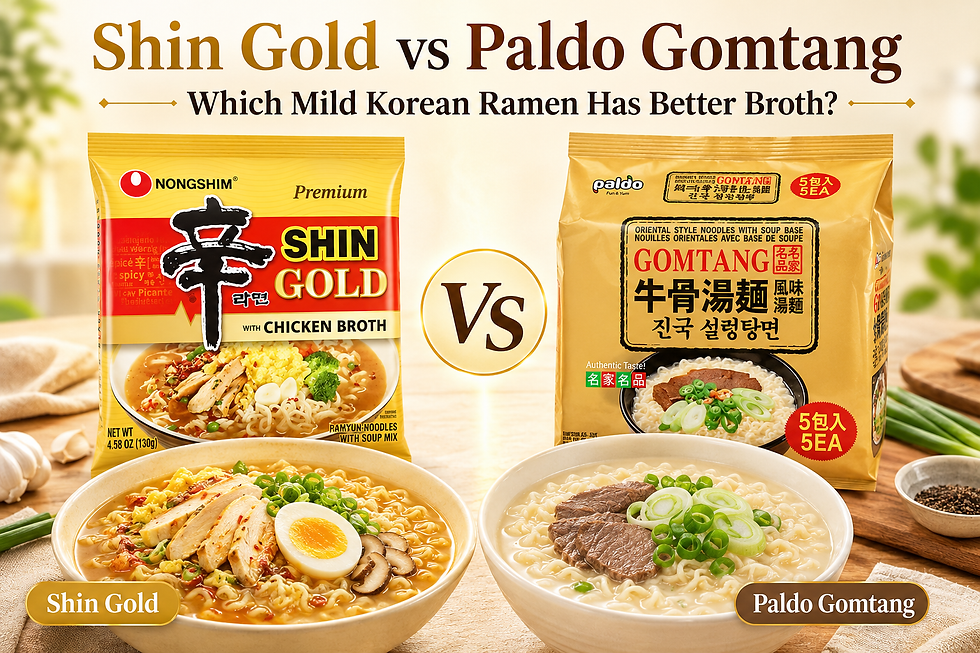
Which one has the better broth?
That depends on the kind of comfort you want. Myeolchi kalguksu has the more stock-like, soup-built broth. Gomtang has the more mellow, beefy, immediately soothing broth.
Which one is the safer first buy?
Gomtang is usually the safer first buy for most people because mild beef-broth comfort is easier to like immediately than anchovy-based noodle-soup flavor.
Which one is more likely to become a repeat buy?
Gomtang is the easier repeat buy for many people because it is so calm and easy to come back to. Myeolchi kalguksu is more likely to become the favorite for people who care about soup realism and noodle texture, not just mildness.


Comments