
.png)
What Is Kongguksu? The Chilled Soy Milk Noodle Bowl That Feels Nothing Like Ramyeon


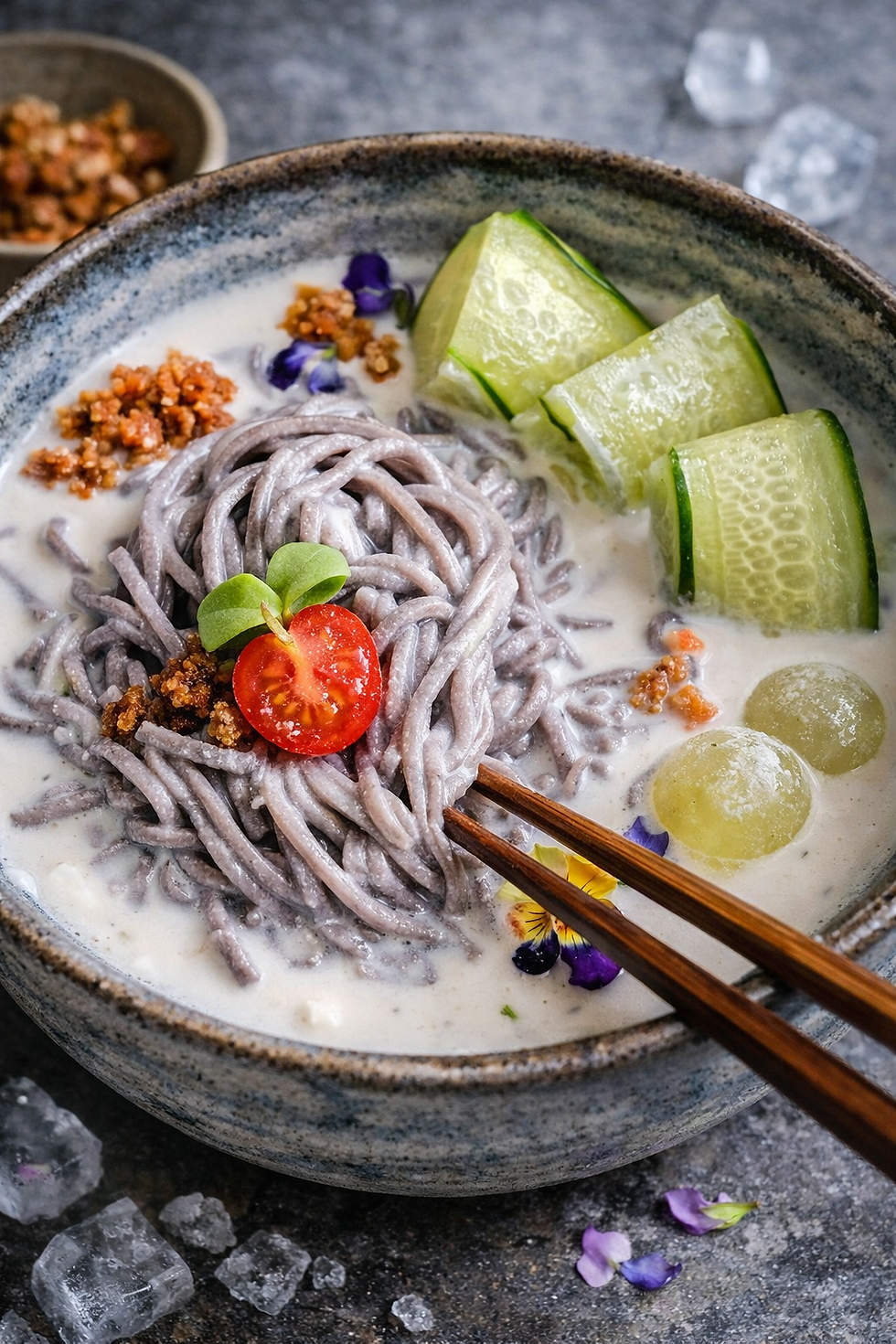
The first thing that throws people about kongguksu is the color.
You look down and see pale broth, quiet toppings, cold noodles, almost no visual drama at all, and it does not look like the kind of bowl that should be memorable. Then you take a bite and realize this is not trying to do anything ramyeon does.
It is not hot. It is not loud. It is not built around spice, steam, or instant comfort.
Kongguksu goes a completely different direction.
It is cold, creamy, nutty, soft around the edges, and weirdly calming once you settle into it. The bowl feels more like relief than excitement. On the right day, that is exactly why it works.
TL;DR
Kongguksu is a Korean cold noodle dish served in chilled soy milk broth, usually with simple toppings like cucumber, sesame, or tomato. It feels nothing like ramyeon because the whole point is smoothness, quiet flavor, and cold, creamy refreshment instead of heat, spice, and broth intensity. If you like chilled noodles, savory soy milk, or summer meals that feel light but still filling, kongguksu makes a lot more sense than it first sounds.
What kongguksu actually is
Kongguksu is a Korean noodle dish served in chilled soy milk broth.
The broth is usually made from ground soybeans or a soy-based soup base, which gives the bowl its creamy look and soft, nutty flavor. The noodles are typically wheat noodles, and the toppings stay simple on purpose. Cucumber, tomato, sesame, sometimes pine nuts, sometimes just a little salt on the side.
That restraint matters.
Kongguksu is not a bowl that wins by piling on ingredients. It wins by getting the texture and temperature right. The broth needs to feel cold and smooth. The noodles need enough body to stand up in it. The toppings need to freshen the bowl without turning it into something busier than it should be.

What kongguksu tastes like in real life
This is usually the part people need help picturing.
Kongguksu does not taste like cereal milk. It does not taste like sweet packaged soy milk. And it definitely does not taste like dairy cream.
A good bowl tastes savory, nutty, clean, and softly rich. The soy flavor is there, but it is usually gentler than first-time eaters expect. The cold temperature makes it feel even calmer. Then the noodles give the bowl some weight, so it does not drift into drink territory.
That balance is why people either really get kongguksu or do not get it on the first try.
If you are expecting strong spice, deep meatiness, or sharp broth punch, it can feel almost too quiet. If you like sesame, soy, chilled noodles, or foods that feel soothing instead of dramatic, the bowl lands very differently.
Why it feels nothing like ramyeon
The difference starts before the first bite.
Ramyeon usually announces itself. The smell hits first. The steam hits second. The broth is built to come at you quickly. Even mild ramyeon still wants to feel active.
Kongguksu does not do any of that.
It arrives cold. The flavor opens slower. The soy broth is smooth instead of punchy. The comfort is there, but it comes from coolness, texture, and calm rather than heat and force.
That is why comparing kongguksu to ramyeon mostly helps by showing what it is not. Ramyeon is a craving bowl when you want intensity. Kongguksu is a summer bowl when intensity sounds exhausting.
The noodles feel different too. Ramyeon usually lives off broth flavor and springy bite. Kongguksu depends much more on the whole bowl feeling silky, chilled, and steady.
Why some people love it immediately and others need a second try
Kongguksu is one of those dishes that depends a lot on what you thought was coming.
People who go in expecting a bold Korean noodle dish sometimes find the first bowl too quiet. People who already like cold noodles, nutty flavors, tofu, soy milk, or creamy-but-not-dairy textures often understand it much faster.
That is not really a flaw in the dish. It is more about mood.
Kongguksu makes the most sense when it is hot out, your appetite feels tired, and the idea of a spicy or greasy meal sounds like too much work. It is not trying to wake you up. It is trying to cool you down without leaving you hungry an hour later.
That is a very specific job, and it does it well.
What makes a good first bowl go right
The biggest thing is temperature.
Kongguksu needs to be properly cold. Not just room temperature soy broth poured over noodles. Actually cold. That chill is part of what makes the bowl feel thick, clean, and refreshing instead of flat.
The second thing is not overcomplicating it.
Too many toppings can make kongguksu feel confused. A little cucumber, a little sesame, maybe tomato if you like the contrast, and enough salt to wake up the soy broth are usually enough.
If you want the easiest way to understand the bowl at home, Samyook Soy Soup for Noodle is the kind of product that makes sense here. It gives you the smooth soy broth part without forcing you to start from scratch with soaked beans and blending.
The easiest at-home path for beginners
A lot of people do not need the full traditional project the first time.
They just need a version that makes the bowl click.
That is why a kit like Pulmuone Soymilk Guksu With Anchovy Base Soup Kit is useful for beginners. It lowers the friction. You get the noodle-and-soy-broth structure in a way that is easier to understand at home, especially if you are still figuring out whether kongguksu is your kind of cold noodle.
That does not make it the only way to eat it well. It just makes it a practical first step.
Who kongguksu is best for
Kongguksu makes the most sense for a pretty specific eater.
It is a good fit if you like:
chilled noodle dishes more than hot soup noodles
nutty, savory flavors more than spicy ones
simple bowls where texture matters a lot
summer meals that feel filling without feeling heavy
foods that are soothing instead of aggressive
It is less ideal if what you really want is heat, garlic, chili, or a broth that announces itself right away. In that mood, ramyeon is just doing a different job better.
👉 Browse our [Cold Noodles category] for more options.
Why people keep coming back to it
Because once kongguksu clicks, it scratches an itch not many other bowls cover.
It is creamy, but not rich in the usual way. Cold, but still comforting. Simple, but not bland when the seasoning is right. It cools you down without feeling like a compromise meal.
That is a rare combination.
A lot of noodle cravings are about impact. Kongguksu is more about relief. When the weather is brutal or your appetite wants something soft and cold instead of exciting, that can feel even better.
Related posts to read next
Korean Cold Noodles Explained: Naengmyeon, Bibim Guksu, Jjolmyeon, and Which Style Fits You Best
A Shopper’s Guide to Korean Fresh Noodles for Faster Homemade Meals
How to Choose Your First Korean Foods Without Getting Overwhelmed
Top 5 Korean Noodles Without Broth: Which Ones Have the Biggest Flavor?
FAQ
Is kongguksu sweet?
Usually no. A good bowl is more savory and nutty than sweet. It should not taste like sweet soy milk or dessert.
Is kongguksu served cold?
Yes. Kongguksu is meant to be served chilled, and that cold temperature is a big part of what makes the bowl feel smooth and refreshing.
What does kongguksu taste like?
It usually tastes creamy, nutty, mild, and savory, with the soy broth doing more of the work than strong seasoning. The overall feel is calm rather than bold.
Is kongguksu like ramyeon?
Not really. Ramyeon is hot, steamy, and usually much more intense. Kongguksu is cold, creamy, and much quieter in flavor.
Why do some people not like kongguksu at first?
Usually because they expected a stronger or spicier noodle bowl. Kongguksu can feel too gentle if you are not in the mood for a chilled, nutty, soy-based dish.
What toppings usually go on kongguksu?
Common toppings include cucumber, sesame, tomato, and sometimes pine nuts. The toppings usually stay simple because the soy broth is supposed to stay central.
Is kongguksu a good first Korean noodle dish?
Only for the right kind of beginner. If you already like cold noodles, soy-based flavors, or creamy savory bowls, it can be a great first try. If you want something hotter or louder, other Korean noodle dishes are usually easier first entries.


Comments