
.png)
A Shopper’s Guide to Korean Pickled Radish: Kimbap Strips, Wrap Radish, Cubes, and What Each One Is For

Updated: May 19
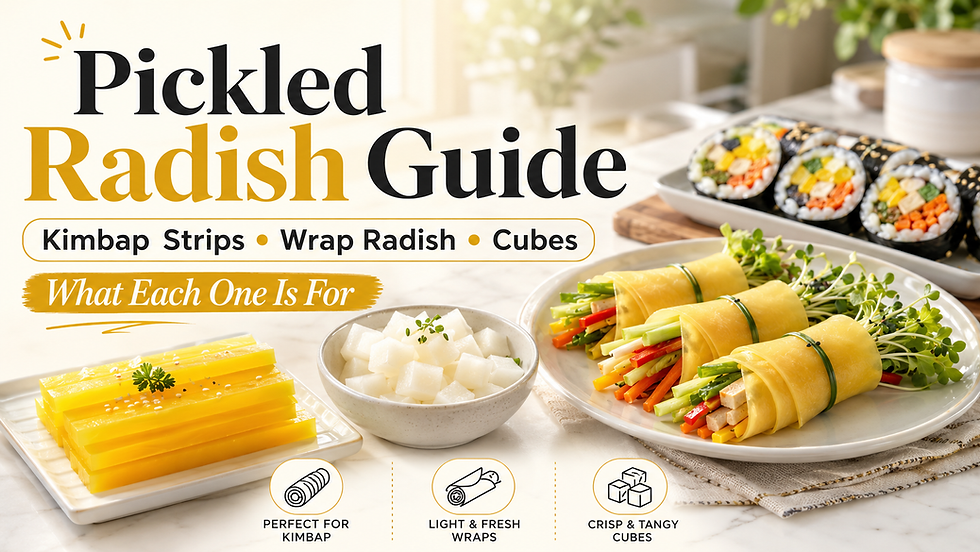
Korean pickled radish is one of those grocery items that looks simple right up until you are standing in front of three or four different packages wondering why they all seem to be yellow and vaguely correct.
Some are cut into long strips for rolls. Some are wide, floppy sheets meant for wrapping. Some show up as bite-size chunks next to fried chicken, jjajangmyeon, or heavy takeout. Some look like plain slices but work very differently depending on what you are making.
That is where beginners get tripped up. They think they are choosing flavor, when they are usually choosing shape and job.
Because with Korean pickled radish, the cut tells you almost everything. Buy the wrong one and dinner is still edible, but it feels a little off. Buy the right one and suddenly the whole meal makes more sense.
👉 If you want the bigger side-dish picture beyond radish formats, start with this guide to Korean pickled side dishes.
TL;DR
The easiest way to shop Korean pickled radish is by format, not by brand.
Kimbap strips are for neat, firm lines inside rolls. Wrap radish is for Korean BBQ, ssam, and bigger bites where the radish acts almost like a second wrapper. Cubes are for side-dish duty, especially when you want cold crunch next to rich, spicy, or saucy food.
If you want the safest first buy for homemade kimbap, start with a strip or half-cut style like Jinga Sushi Pickled Radish or Wang Pickled Radish Half Cut. If you want something for wraps, buy a true wrap-style pack like Haioreum Pickled Radish Wrap Sweet and Sour. If you mostly want a bright side dish, sliced radish is usually the most flexible supermarket-friendly choice.
The main thing shoppers miss: this is a format category
A lot of Korean pantry staples are about sauce, flavor, or spice level. Pickled radish is different.
Yes, there are flavor variations. Some are sweeter. Some lean more sour. Some have omija or even a little wasabi-style kick. But the bigger difference, especially for beginners, is physical shape.
That shape decides whether the radish disappears neatly into a kimbap roll, folds around a bite of meat, or lands on the table as a cold little reset between rich mouthfuls.
So instead of asking, “Which brand is best?” the more useful first question is, “What exactly am I making?”
That one question usually narrows the choice fast.

Kimbap strips: the one for clean lines inside the roll
This is the classic danmuji lane.
Kimbap strips, batons, or long half-cut pieces are there to give the roll a bright, crunchy line running through the center. They are not supposed to dominate. They are there to wake up the rice, egg, ham, tuna, or vegetables around them.
A good kimbap radish should feel firm enough to hold shape, not floppy and not so thick that every bite turns into mostly pickle. That is why strip-style packs make so much sense. The prep is basically done for you.
If you are rolling a lot of kimbap or sushi-style rolls, Jinga Sushi Pickled Radish is the kind of product that makes sense because it is built for that long, clean center line. If you want something easier to portion for beginner homemade rolls, Wang Pickled Radish Half Cut is a very natural first buy. It still fits the kimbap job, but it feels a little easier to manage if you are not making party-tray quantities.
There is also a convenience version of this decision. If you already know you want that classic burdock-plus-radish combo in your roll, Jinga Braised Burdock & Pickled Radish is the sort of shortcut that can save a homemade kimbap night from turning into too much chopping.
When kimbap strips make the most sense
They are best when you want:
homemade kimbap that slices neatly
lunchbox-style rolls with a classic center bite
a crisp, sweet-tangy line instead of loose pickle pieces
less prep and less guessing
When they do not
They are not the best buy if you mostly want a side dish for fried foods, Korean BBQ, or noodle meals. They can do the job, but they are shaped for rolling first.
Wrap radish: the one that acts like a second wrapper
This is the format that surprises a lot of first-time shoppers.
Wrap radish is usually cut into broad, thin sheets. Instead of hiding inside the food, it wraps around it or layers into a larger bite. It is cool, flexible, and great at cutting through fatty or salty food without shouting over it.

This is what makes sense for Korean BBQ nights, lettuce wraps, and some styles of kimbap where you want a wider, cleaner crunch than narrow strips can give you. It is also the radish format that makes people suddenly understand why the category exists beyond rolls.
If that is the job, a true wrap product matters. Haioreum Pickled Radish Wrap Sweet and Sour is the straightforward version for people who want the classic use case. Haioreum Pickled Radish Wrap Omija-Five Berries makes more sense if you like the basic wrap idea but want something a little fruitier and more playful. Haioreum Pickled Radish Wrap Japanese Horseradish Flavor is more niche, but it works when you want a little sharpness in the bite.
When wrap radish makes the most sense
It is best when you want:
Korean BBQ bites that need a cold, sweet-sour layer
ssam or lettuce-wrap meals with more crunch
a broader, thinner radish piece than kimbap batons
a pickled side that feels refreshing instead of just salty
When it does not
Wrap radish is not the smartest first buy if your only goal is classic kimbap. You can use it, but you are working against the format a little. It is also not the best pick when all you need is a quick side dish to set next to noodles or fried food.
Cubes: the one for side-dish duty and palate reset
This is the format many people recognize from the table before they recognize it in the store.
Cubed pickled radish usually shows up next to Korean-Chinese noodle dishes, fried chicken, or rich takeout meals where you need something cold, crisp, and bright to break up the heaviness. It is not there to be the main event. It is there to keep the meal from getting dull halfway through.
That is an important distinction.

Cubes are not really about elegant assembly. They are about grab-and-bite usefulness. One piece, quick crunch, back to the noodles. That is why they make so much sense with jjajangmyeon, tangsuyuk, or anything oily, saucy, or a little one-note without contrast.
I am not seeing a true cube-format radish pack live on MyFreshDash right now, which is worth knowing as a shopper because it means the site currently leans more toward roll-friendly and wrap-friendly formats than restaurant-side cubes. So if cubes are the exact experience you want, you may need to cut a sliced pack yourself or treat sliced radish as the closest home-kitchen equivalent.
Sliced radish: the flexible middle ground most shoppers end up using more than expected
This is the least flashy format and probably the most quietly useful.
Sliced radish is what you buy when you are not committing to one very specific job. It can sit next to fried food, go into a lunchbox, be cut down for rolls, or just show up on the table as a cold crunchy side. It is not as purpose-built as strips for kimbap or wrap sheets for ssam, but it bends into more situations.

That makes it a smart first buy for people still figuring out how often they actually use pickled radish.
Products like Wang Pickled Radish Sliced, Pulmuone Sliced Pickled Radish, Haioreum Pickled Radish, and Sajo Sliced Pickled Radish all fit this lane. They make sense when you want something that can move between kimbap prep, quick sides, lunchbox fillers, and casual snacky meals without demanding one exact plan.
When sliced radish makes the most sense
It is best when you want:
a general-use first buy
something to serve with fried foods or spicy meals
a pack you can trim into smaller shapes if needed
a side dish that does not require a whole cooking project around it
When it does not
If you already know you are doing a full kimbap night, strips are still better. If you already know you are building Korean BBQ wraps, wrap radish is still the more natural fit.
So which one should you actually buy first?
Here is the easiest beginner breakdown.
👉 Safest first buy
A sliced or half-cut pack.
It gives you the most room to improvise, and it is hard to misuse.
👉 Best first buy for homemade kimbap
A strip-style or half-cut pack.
That is where Jinga Sushi Pickled Radish and Wang Pickled Radish Half Cut make the most sense.
👉 Best first buy for Korean BBQ or ssam
A true wrap pack.
That is exactly what Haioreum Pickled Radish Wrap Sweet and Sour is there for.
👉 Most interesting buy
A flavored wrap variation.
Something like Haioreum Pickled Radish Wrap Omija-Five Berries is not the default beginner pick, but it is a fun one when you already know you like the category.
👉 Most broadly useful rebuy
Probably sliced radish.
Not because it is the most exciting, but because it slides into more meals than people expect.
Common shopper mistakes with Korean pickled radish
➡️ Buying by color instead of shape
Yellow is not enough information here.
The cut tells you much more than the label color ever will.
➡️ Buying wrap radish for basic kimbap and then wondering why it feels awkward
It can work, but it is usually not the cleanest or easiest fit.
➡️ Buying strips when you mostly want a side dish
You can still eat them that way, but you are paying for a format built around rolls.
➡️ Assuming all pickled radish tastes basically the same
The category is not wildly diverse in flavor, but it is not identical either. Sweetness, sourness, and extra flavoring like omija or horseradish do matter once you know what you like.
➡️ Forgetting the real job it is doing
Korean pickled radish is rarely there to be the star. Its real job is contrast. Crunch against softness. Tang against fat. Brightness against heavy starch or rich sauce.
That is why the right format matters so much.
👉 Browse our [Pickles & Fermented Veggies Category] for more options.
What each one is really for?
Kimbap strips are for rolls.
Wrap radish is for building bigger bites around meat, rice, or lettuce.
Cubes are for grabbing between rich bites of noodle, fried, or takeout meals.
Sliced radish is for the shopper who wants one pack that can do a little of everything.
Once you see the category that way, the whole shelf gets easier.
You are not choosing between random yellow pickles.
You are choosing the right shape for the meal you want to have.
Related posts to read next
What Goes Into Kimbap? The Simplest First Shopping List for a Homemade Roll Night
The Ultimate Kimbap Guide: Roll Tight, Slice Neat, Look Restaurant-Ready
Korean BBQ at Home Starts Before the Meat: The Wraps, Sides, and Sauces Worth Buying First
How to Make Jjajangmyeon with Otoki 3 Minutes Jjajang Sauce (Fast, Rich, and Restaurant-Feeling)
FAQ
Is Korean pickled radish the same as danmuji?
Danmuji usually refers to the bright yellow pickled radish commonly used in kimbap and served as a side. In everyday shopping, that is often the same general category people mean when they say Korean pickled radish.
What kind of pickled radish should I buy for kimbap?
Strip-style or half-cut radish is the easiest first buy for kimbap because it fits the roll naturally and gives you that clean, bright center line.
What is wrap radish for?
Wrap radish is for Korean BBQ, ssam, and other meals where the radish acts like a thin wrapper or cool layer around a bigger bite.
Are cubed and sliced pickled radish interchangeable?
Mostly for home use, yes. Cubes are more grab-and-bite friendly, while slices are more flexible. If you cannot find cubes, sliced radish is often the easiest substitute.
Which type is best with fried chicken or jjajangmyeon?
Cubed or sliced pickled radish usually makes the most sense there because the job is not rolling or wrapping. It is palate-cleansing side-dish crunch.
Is flavored wrap radish good for beginners?
Usually the plain sweet-and-sour version is the safest first buy. Omija or horseradish versions are better once you already know you like the wrap format.
What is the best all-around first buy if I am not sure?
A sliced or half-cut pack is usually the smartest first buy because it can work as a side dish, be trimmed for rolls, and generally asks the least from you as a shopper.


Comments