
.png)
Hotteok: The Korean Sweet Pancake You’ll Wish You Tried Sooner


The first bite of hotteok does not taste like a pancake.
It tastes like crisp dough giving way to brown sugar and cinnamon that have melted into the center. The outside has real chew. The middle is hot, sticky, and just messy enough to make you slow down after the first bite.
That is why hotteok catches people off guard. The name sounds simple. The actual thing feels closer to a filled griddled pastry than anything most people picture when they hear “sweet pancake.”
And once you try a good one hot, it is very easy to understand why people get attached to it so fast.
TL;DR
Hotteok is worth trying because it gives you a texture combination most sweets do not: crisp outside, chewy dough, and a molten center. The classic version tastes like brown sugar and cinnamon tucked inside a pan-fried Korean pancake that eats more like a filled dessert bread than an American pancake. Start with the traditional sweet version if you want the most iconic first bite. Cook frozen hotteok in a pan long enough to brown both sides and fully soften the center. That is the difference between “pretty good” and “now I get it.”
What hotteok actually is
Hotteok is a Korean filled pancake, usually made with a soft dough that is stuffed, pressed flat, and cooked on a griddle or pan until golden. The version most people picture first has a sweet filling based on brown sugar and cinnamon, sometimes with seeds or chopped nuts mixed in.

The key thing to understand is that hotteok is not fluffy in the way many people expect from the word pancake. It is denser, chewier, and much more centered around the filling. The dough matters. The browning matters. But the real payoff is what happens in the middle as it heats up. The filling loosens and turns glossy, so each bite gives you crispness, chew, and syrupy sweetness at the same time.
That is what makes hotteok memorable.
What hotteok tastes like
Classic hotteok tastes warm, sweet, and lightly spiced. Brown sugar usually leads. Cinnamon gives it that familiar bakery comfort. If seeds or nuts are included, they add a little nuttiness and texture, but the bigger story is still the contrast between the outside and the center.
The first bite usually lands in layers. You get a little surface crispness first. Then the dough pulls back with a soft, slightly stretchy chew. Then the middle gives way and the sweetness spreads through the bite.
That is why hotteok tends to win people over fast. The flavor is comforting, but the texture is what makes it feel special.
If you want a clear example of the classic style, Daifuku Korean Pancake Brown Sugar is exactly the kind of first try that helps the category make sense. It leans into the version most people are hoping for: chewy dough, caramel-like sweetness, and a center that gets properly sticky when cooked all the way through.
Why the classic brown sugar version is still the best first try
If you are new to hotteok, do not overthink your first buy.
Start with the traditional sweet version.
This is the one that explains the category best. It gives you the flavor profile people usually mean when they talk about hotteok with affection. It is cozy, straightforward, and easy to understand after one bite. No extra twist is required. You get the warm sugar filling, the cinnamon note, and the satisfying chew that makes the whole thing feel more substantial than a random dessert snack.

It also fits more situations than people expect. Hotteok works as a sweet breakfast, a late afternoon snack with coffee or tea, or a cold-weather dessert when cookies feel too dry and cake feels like too much. It has enough weight to feel like food, not just sugar.
That is usually what turns it from a one-time curiosity into something people actually rebuy.
Cheese hotteok is good, but it is a different mood
Cheese-filled hotteok can be excellent. It is just not the same experience.
Once cheese enters the picture, the category shifts. The center gets richer and softer. The sweetness feels less direct. Instead of reading like a warm brown sugar snack, it starts to feel more like a bakery crossover: part dessert, part comfort bread, part indulgent snack.
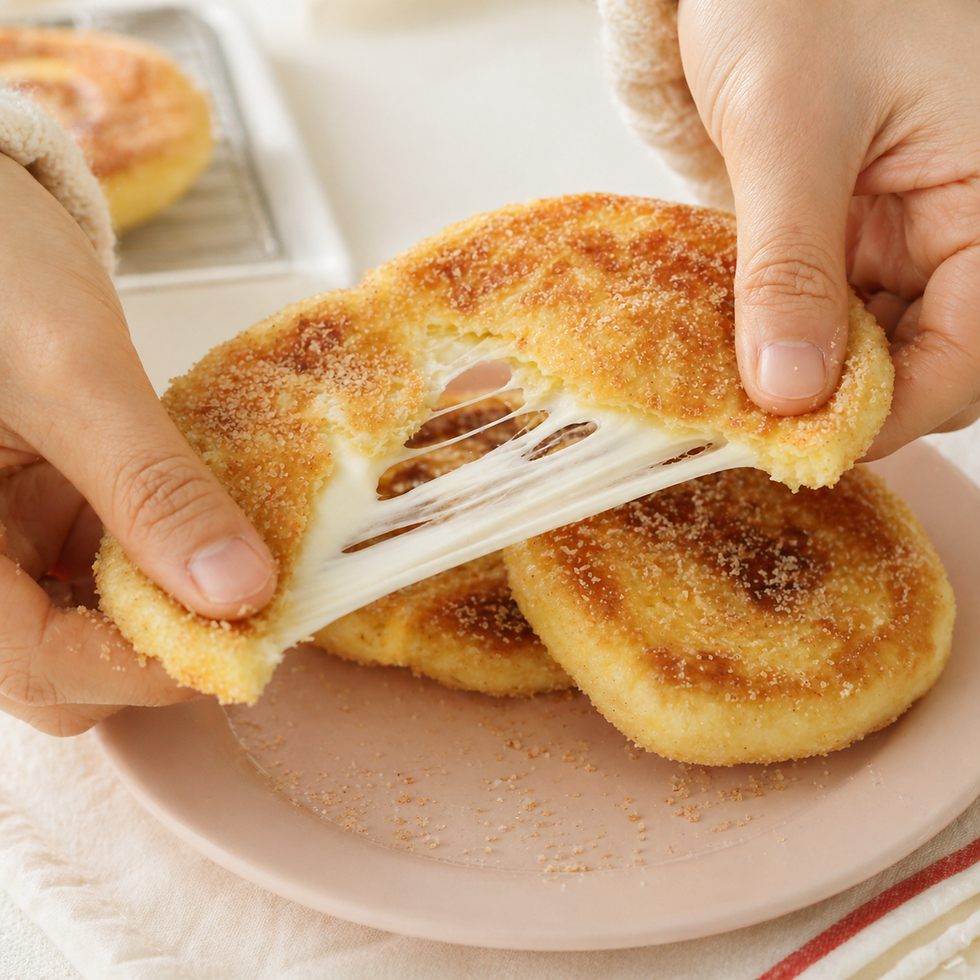
That is why Pulmuone Mozzarella & Cream Cheese Hotteok makes sense once you already understand what you like about hotteok. It is a smart pick for someone who likes sweet-savory pastries, cheesy breads, or richer snacks that still feel soft and comforting.
But if your goal is to understand why hotteok became beloved in the first place, brown sugar still tells the story more clearly.
Frozen hotteok can still be very good
Street hotteok has obvious advantages. Fresh off a griddle, it is hard to beat. The crust is livelier, the center feels more dramatic, and the whole thing arrives at exactly the right moment.
But frozen hotteok still holds up better than a lot of people expect.
That is because the core appeal survives freezing surprisingly well. If you cook it properly, you still get the browned exterior, the chewy dough, and the hot filling that makes the whole category work. What you lose is a little freshness and some of the magic of having it made on the spot. What you keep is the craving logic.
And for most people, that is enough.
How to cook frozen hotteok so it actually tastes right
This is where a lot of first tries go wrong.
Hotteok needs heat long enough to do two jobs at once: warm the center until it turns soft and sticky, and brown the outside until it gets a little crisp. If you rush either part, the texture feels off. The middle stays dull or pasty. The outside stays pale and soft. That is usually the moment when people think hotteok is overrated, when really it was just undercooked.

The easiest way to get a good result is simple:
1. Start with a lightly oiled pan
Use a skillet or nonstick pan over medium to medium-low heat. You do not need a deep layer of oil, just enough to help the surface brown instead of dry out.
2. Cook slowly enough for the center to heat through
Put the frozen hotteok in the pan and give it time. This is not a high-heat, rush-it food. Let one side cook until it has visible color before flipping. Then cook the second side the same way.
3. Press gently as it softens
Once the dough starts to loosen, press it lightly with a spatula. That helps it flatten a bit, cook more evenly, and develop the shape and surface hotteok is supposed to have.
4. Wait for the middle to loosen
The outside can look ready before the inside is there. Keep going until the center feels fully heated. The best hotteok has a middle that turns soft and syrupy, not just warm.
5. Rest it for a minute before eating
Give it a brief pause after it leaves the pan. The filling will still be very hot, and one minute makes it easier to eat without losing that fresh-off-the-pan texture.
If you only remember one thing, remember this: pan texture matters. A microwave can warm hotteok, but it usually does not give you the browning that makes the category taste complete.
If you want to make it yourself, use a mix instead of guessing
Making hotteok from scratch can be fun, but it is not necessary for a good first experience.
A mix is the more practical move for most people because the hard part is not understanding the idea. It is getting the dough texture right. Too dry, and hotteok starts eating like bread. Too thick, and the filling loses impact. Too little chew, and the whole thing feels flatter than it should.

That is where OTOKI Stuffed Pancake Mix is useful. It gives you a hands-on version without turning the whole thing into a trial-and-error baking project. If you like the idea of fresh homemade hotteok but do not want to troubleshoot dough on your first try, that route makes sense.
Who hotteok usually wins over fastest
Hotteok is especially easy to love if you already care about texture in desserts.
If you like chewy pastries, cinnamon sugar breads, mochi-like bounce, pan-fried buns, or sweets that feel warm and substantial rather than airy and delicate, hotteok makes sense very quickly. It also works well for people who are tired of packaged sweets that taste one-note. Even when the flavor is simple, the bite feels layered.
Where it may be less of an instant hit is with people who only want very light desserts or who dislike sticky fillings. But for most readers who are already even a little curious, hotteok tends to answer the question fast.
Not because it is flashy.
Because it feels better than it sounds.
👉 Browse our [Bread & Desserts Category] for more options.
Why people wish they had tried it sooner
Because the name undersells it.
A lot of foods arrive with big expectations and average results. Hotteok usually does the reverse. It sounds almost too simple to be worth chasing, then turns out to be exactly the sort of sweet snack people keep looking for without realizing it: warm, chewy, a little crisp at the edges, and satisfying enough to feel like a real treat instead of filler.
It is the kind of food that makes instant sense once you actually eat it hot.
That is the whole trick.
Related posts to read next
FAQ
What is hotteok?
Hotteok is a Korean filled pancake that is usually pan-fried until golden on the outside and soft inside. The classic version is sweet and typically contains brown sugar and cinnamon in the center.
What does hotteok taste like?
Classic hotteok tastes warm, sweet, and lightly spiced, with brown sugar and cinnamon as the main flavor notes. The bigger appeal is the contrast between crisp edges, chewy dough, and a soft sticky center.
Is hotteok more like a pancake or a pastry?
It is closer to a filled pastry or sweet griddled bread than an American breakfast pancake. It is flatter, chewier, and much more filling-centered.
Which hotteok should a beginner try first?
Most beginners should start with a brown sugar hotteok because it gives the clearest, most traditional version of the category. That first bite tells you what the fuss is about.
How do you cook frozen hotteok?
Cook it in a lightly oiled pan over medium or medium-low heat until both sides are browned and the center feels fully hot and softened. A skillet gives much better texture than relying on the microwave alone.
Is cheese hotteok sweet or savory?
Usually both, but it leans richer and less traditionally sweet than brown sugar hotteok. It feels more like a comfort-bakery snack than a classic cinnamon-sugar dessert.
Can hotteok be breakfast, dessert, or a snack?
Yes. That is part of the appeal. It works as a sweet breakfast, an afternoon snack with coffee or tea, or a warm dessert when you want something comforting without making a whole event out of it.


Comments