
.png)
How to Make Kongguksu at Home: Cold Soy Milk Noodles That Feel Clean, Creamy, and Summer-Ready

Updated: Apr 22

Kongguksu is the kind of bowl that sounds almost too quiet to crave until the weather gets hot and everything else starts feeling like too much.
No red sauce. No bubbling broth. No fried topping pile trying to prove anything.
Just cold noodles in a pale soy broth that lands smooth, nutty, lightly savory, and much more refreshing than the word “creamy” usually promises.
That is the whole appeal of kongguksu.
It feels clean on the way in, filling by the time you finish, and strangely calming the entire time you are eating it. When it is good, the soy broth tastes chilled and silky instead of heavy. The noodles stay light enough to carry it. The bowl feels like summer food for people who still want something substantial.
That is why kongguksu matters. It is one of the few cold noodle dishes that can feel minimal and comforting at the same time.
TL;DR
Kongguksu is a Korean cold noodle dish made with thin wheat noodles and a chilled soy milk broth or soy-bean-based soup. The bowl is supposed to feel clean, creamy, nutty, and lightly savory rather than rich or strongly seasoned. The easiest way to make it well at home is to use the right noodle, keep the broth cold, and make sure the soy base tastes smooth and settled instead of watery or chalky. For a faster version, a ready-made soy soup base can save a lot of effort without changing the point of the dish.
What kongguksu actually is
Kongguksu is cold noodles served in a chilled soy-based broth, usually made from blended soybeans or a soy soup base designed to give the same creamy-nutty effect.
That is the simple version.

The more useful version is that kongguksu is one of the gentlest Korean summer bowls. It is not built around heat, broth depth, or big toppings. It is built around texture and temperature. The noodles need to stay cool and easy to slurp. The broth needs to feel smooth, soft, and clean enough that you keep going back for another bite even though almost nothing about the bowl looks dramatic.
That is why people who love kongguksu often love it very specifically. It does not try to impress the way other cold noodle dishes do. It just feels right when you want a meal that cools you down without turning into a snack.
Why kongguksu feels creamy without feeling heavy
This is the part that usually makes the bowl click.
Kongguksu is creamy, but it is not creamy in a dairy sense. It does not coat the mouth the way a cream sauce does. The soy broth feels lighter, cleaner, and more refreshing than that. It has body, yes, but the body comes from ground soybeans or soy-based soup instead of fat-heavy richness.
That difference matters.
It is why kongguksu can feel substantial enough for lunch or dinner without making you want to lie down after. The broth has enough thickness to feel complete, but it still moves like a cold noodle broth. That is the line the bowl is trying to hold.
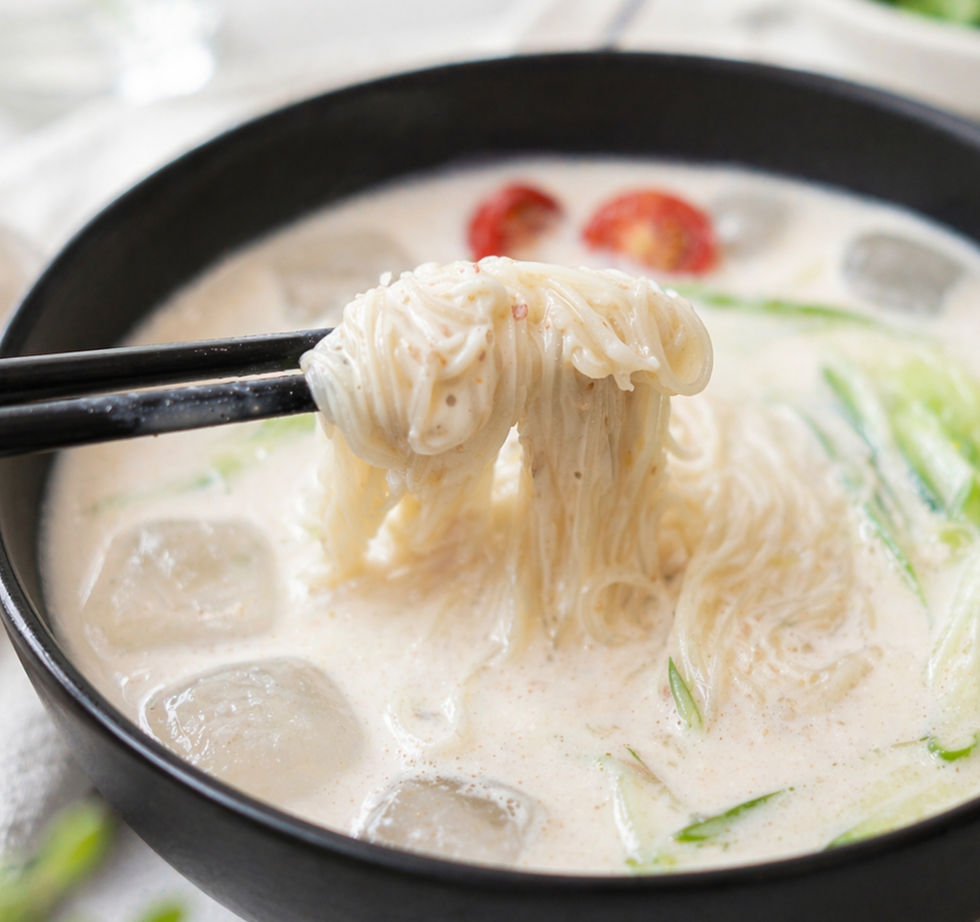
Start with the right noodle
Kongguksu usually works best with thin wheat noodles, often somyeon or another light noodle that can sit in the soy broth without making the whole bowl too dense.
That is part of what keeps the dish feeling summer-ready. Thick noodles can make kongguksu feel stodgy. Thin noodles keep it moving.
A very clean fit here is Gompyo Thin Wheat Flour Noodles Somyeon. MyFreshDash describes them as smooth, light, and quick to cook, which is exactly the kind of noodle texture kongguksu wants. The broth already has body. The noodle should stay on the cleaner side.
The easiest quality check is this: if the noodle feels like it is weighing the soy broth down, it is probably the wrong noodle for the job.
The broth matters more than everything else
Kongguksu is not a dish you can hide behind toppings.
If the broth is watery, the whole bowl feels unfinished.
If the broth is chalky, the whole bowl feels harder to enjoy.
If the broth is thick but dull, the noodles just start carrying blandness around.
That is why the soy base has to do so much work. It needs to taste nutty, cold, smooth, and lightly savory enough that the bowl still feels alive even though the seasoning is restrained. Salt matters more than people expect here. So does chill. Kongguksu that is not cold enough loses part of the reason it exists.
The easiest home version that still tastes like kongguksu
For 2 servings, this is the kind of setup that usually gets you a very convincing bowl:
2 servings thin wheat noodles
about 3 cups chilled soy broth or soy soup base
salt to taste
cucumber, julienned
sesame seeds, optional
ice, optional if the broth is not cold enough yet
That is enough.
Kongguksu is not the kind of dish that needs ten toppings to feel complete. In fact, overbuilding it usually makes the bowl less itself. The point is the noodle and the soy broth meeting in the right texture range.
How to make kongguksu at home without turning it into a project
1. Cook the noodles, then rinse them very well in cold water
The rinse matters. It cools the noodles, removes excess starch, and helps the finished bowl feel cleaner instead of sticky.

2. Chill the soy broth properly
Do not settle for vaguely cool. Kongguksu wants to feel actually cold. If the broth is only lukewarm-cool, the bowl loses a lot of its appeal.

3. Salt the broth carefully
The broth should taste a little more seasoned than you expect, because the cold temperature softens everything once the noodles are in. Kongguksu is a restrained bowl, but restrained does not mean flat.

4. Keep the toppings minimal
A little cucumber is usually enough. Sesame seeds can help. Some people like a few ice cubes if the bowl needs extra chill. That is about it.

5. Serve right away
This is not a bowl that gets more interesting by sitting around. Kongguksu is at its best when the noodles are cold, the broth is very cold, and everything still feels fresh from assembly.

The easiest shortcut if you do not want to blend soybeans
A ready-made soy soup base is the smartest shortcut here because it saves the one part of kongguksu that can get messy or inconsistent at home.
That is why Samyook Soy Soup for Noodle fits this article so naturally. MyFreshDash explicitly positions it as a chilled broth for kongguksu, which makes it the kind of shortcut that helps without changing the identity of the dish. You still control the noodle, the coldness, and the final seasoning. You just skip the part that turns the kitchen into a soybean project.
That is a very useful kind of shortcut when the bowl itself is supposed to feel calm.
What kongguksu should feel like when it is right
A good bowl should feel cold first.
Then smooth.
Then nutty and lightly savory, with enough salt that the broth tastes finished but not loud.
The noodles should be easy to lift and easy to slurp. The broth should feel fuller than water but much lighter than cream. The cucumber should sharpen the bowl just enough without distracting from it.
If kongguksu feels heavy, it usually went too far in the wrong direction.
If it feels thin, it probably needed a better soy base or better seasoning.
If it feels dull, it usually needed more salt and more chill.
The weeknight version vs the hotter-day version
This is the easiest way to make the bowl fit your life.
For a weeknight kongguksu, use a ready-made soy soup base, cook the noodles, chill everything properly, and keep the toppings minimal. That gets dinner on the table quickly without losing the point of the dish.
For the hottest-day version, make the bowl even colder, use a little extra cucumber, and keep the rest of the meal light. Kongguksu is especially good when the weather makes richer dinners feel impossible.
That is part of its value. It can feel like a real meal on the kind of day when hot food starts sounding like a mistake.
The mistakes that make kongguksu disappointing
The biggest one is broth that is not cold enough.
The second is under-seasoning.
The third is using noodles that are too thick or too soft.
Those three problems account for most kongguksu bowls that feel more confusing than comforting.
It also helps not to overdecorate it. Kongguksu is not improved by treating it like a fully loaded cold noodle bowl. Too many toppings make the dish feel restless. This is one of those meals where restraint is actually the flavor.
Why kongguksu is such a strong summer meal
Kongguksu works because it handles heat in a very specific way.
It cools you down without feeling flimsy.
That is harder than it sounds.
A lot of summer meals are refreshing but not especially satisfying. Kongguksu manages both. The soy broth gives the bowl enough body to feel like actual food, the noodles keep it practical, and the cold temperature makes it hit with the kind of relief that hot-weather meals are supposed to deliver.
That is why people who love kongguksu do not just think of it as cold soy noodles. They think of it as a bowl with a very specific job, and a very specific kind of payoff.
👉 Browse our [Korean Recipes] for more options.

Final bite
Kongguksu is one of the cleanest, calmest Korean noodle bowls to make at home.
Cold noodles. Smooth soy broth. Very little clutter.
That is the whole point.
Once the noodle is light enough and the broth is cold and seasoned enough, kongguksu stops sounding like a niche summer dish and starts feeling like one of the smartest warm-weather meals you can keep in rotation.
Related posts to read next
Korean Cold Noodles Explained: Naengmyeon, Bibim Guksu, Jjolmyeon, and Which Style Fits You Best
A Shopper’s Guide to Korean Fresh Noodles for Faster Homemade Meals
8 Types of Korean Noodles to Know and What Each One Is Best For
A Shopper’s Guide to Korean Broth Noodle Kits: Mild, Beefy, and Spicy Bowls Worth Slurping
FAQ
What noodles are best for kongguksu?
Thin wheat noodles like somyeon usually work best because they stay light and let the soy broth stay in charge.
Is kongguksu supposed to be sweet?
Not really. It should feel more nutty, lightly savory, and clean than obviously sweet.
Can I make kongguksu without blending soybeans from scratch?
Yes. A ready-made soy soup base can work very well, especially if it is designed specifically for noodle dishes.
Why does kongguksu sometimes taste bland?
Usually because the broth is under-salted or not cold enough. Cold bowls mute flavor more than people expect.
Is kongguksu heavy?
It should not be. It is creamy in a soy-based way, but the bowl should still feel clean and relatively light.
What toppings go best with kongguksu?
Usually just a little cucumber and maybe sesame seeds. It is not a topping-heavy noodle dish.
Is kongguksu a good weeknight meal?
Yes, especially if you use a ready-made soy broth and keep the bowl simple.


Comments