
.png)
Galbitang: The Ultimate Comfort Food

Updated: Jan 20
There are days when you want comfort. Some days, you crave something nourishing. Other days, you just want a big bowl of food that makes you stop and say, “Wow.” Galbitang hits all three.
Galbitang is a Korean beef short rib soup. It features a clear, deep-tasting broth, tender ribs, and soft radish that soaks up all the flavor. At first glance, it may seem simple, but the taste comes from slow-simmered bones, patient prep, and a few small steps that make a big difference: soaking, blanching, and chilling the broth. This process ensures the broth turns rich but not heavy.
Whether you are tired, feeling under the weather, craving something light yet satisfying, or just want a “restaurant at home” moment, this galbitang recipe provides that clean bone broth comfort in one big, generous bowl.

Why You Should Make Galbitang
You can absolutely make galbitang with regular short ribs from any grocery store. The method here focuses on:
Removing blood and odors so the broth stays clear.
Slowly simmering with radish, onion, garlic, and peppercorns.
Chilling the soup so you can lift off the fat for a light, clean finish.
It takes time, but most of it is hands-off. Make a big batch, freeze portions, and you have ready-to-heat Korean bone broth anytime you need a boost.

TL;DR: Easy Galbitang at Home
This galbitang is a clear Korean beef short rib soup made by soaking, blanching, and then slowly simmering bone-in short ribs with radish, onion, garlic, and green onion. The broth is clean and rich, not greasy. You can make a big batch, chill it to remove the fat, then reheat with noodles and rice for a comforting meal anytime.
What Makes This Galbitang Recipe Work?
No Gamey Smell: A quick soak and a first “blanching” boil with aromatics pull out blood and off smells before the real simmer starts.
Clean but Full-Flavored Broth: Korean radish, onion, green onion, garlic, and whole peppercorns slowly flavor 3.5 L of water. No soy sauce to muddy the color, just salt at the end.
Lighter, Not Greasy: The broth is fully chilled so the fat sets on top. You scoop it off in one go and get a broth that tastes rich but feels light.
Meal Prep Friendly: Cook once, then portion the meat and broth. Reheat only what you need with some radish and ribs for a fresh-tasting bowl every time.

What is Galbitang?
Galbitang (갈비탕) is a Korean soup made by simmering beef short ribs and bones for several hours until the broth turns milky-clear and deeply savory. It is usually served with:
Steamed white rice.
Glass noodles (dangmyeon) in the soup.
Egg garnish (gyeran-jidan) and sliced scallions on top.
Salt and black pepper at the table so everyone can season to taste.
It is a popular holiday and “boost your strength” dish in Korea, especially when the weather suddenly turns cold.
Recipe at a Glance
Dish: Galbitang / Korean Beef Short Rib Soup
Serves: 4–6 generous bowls
Active Time: ~40 minutes
Total Time: About 3 hours simmering, plus chilling time
Skill Level: Medium
Flavor: Clean, beefy, not heavy, no gaminess
Ingredients
Beef & Bones
1.2 kg beef short ribs, cut for soup (about 2.5 lb)
1 kg beef soup bones or back ribs (about 2.2 lb)
For the First Boil (Blanching)
Water to cover the ribs
3 bay leaves
1 Tbsp whole black peppercorns
100 ml soju or cooking wine
For the Main Broth
3.5 L water
1 medium onion, peeled
500 g Korean radish (mu) or daikon, peeled and cut into large chunks
1 large green onion, cut into big pieces
10 cloves garlic
0.5 Tbsp whole black peppercorns
To Season the Soup
1.5–2 Tbsp fine salt, or to taste
Freshly ground black pepper
To Serve
Soaked glass noodles (dangmyeon)
Egg garnish (thin strips of fried egg, gyeran-jidan)
Sliced green onion
Extra salt and black pepper at the table
Want to stock up on pantry basics?
👉 Shop Korean sauces from MyFreshDash (gochujang, soy sauce, ssamjang, and more).
Tip: Use regular salt or Korean soup salt. Season near the end so the broth stays clean-tasting.
Step-by-Step: How to Make Clear, Rich Galbitang
1. Soak the Short Ribs
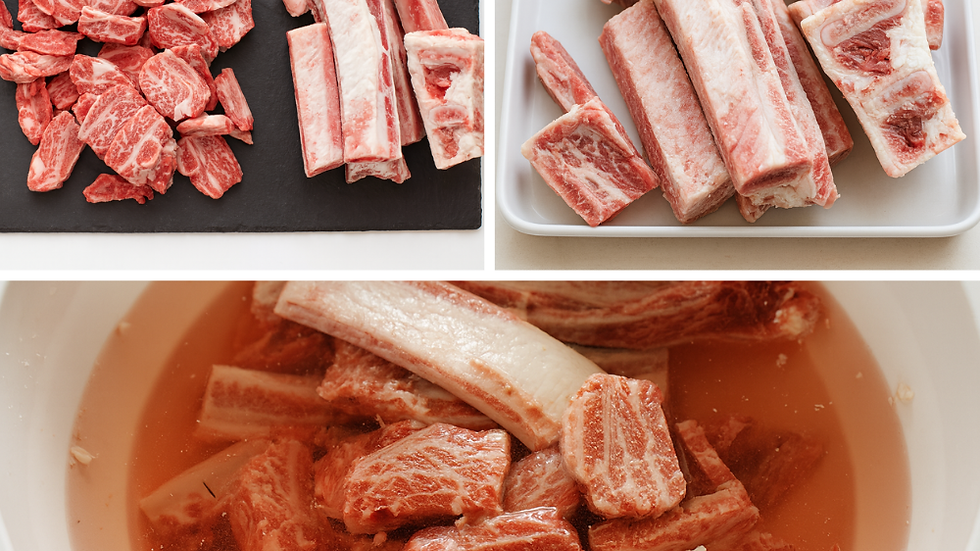
Rinse the short ribs and bones once under cold water.
Place them in a large bowl, cover fully with cold water, and soak for 3–5 hours in the fridge.
Change the water a couple of times until it looks much clearer.
This step pulls out blood from the bones and gives you a cleaner-tasting broth later.
2. First Boil with Aromatics (Blanching)
Add the soaked ribs and bones to a large pot.
Cover with fresh water and add:
3 bay leaves
1 Tbsp whole peppercorns
Bring to a rolling boil over high heat.
Once the water is boiling, pour in 100 ml soju around the inner edge of the pot. Let it bubble until lots of foam and impurities rise to the top and the outside of the meat changes color. You do not need to cook this step for long.
Turn off the heat, discard the water, and rinse the ribs and bones under warm running water to wash off any clinging scum.
Rinse the pot as well.
Now you have clean ribs ready for the real broth.
3. Slow Simmer for Broth

Put the rinsed ribs and bones back into the clean pot.
Add:
3.5 L water
1 whole onion
500 g Korean radish chunks
1 large green onion
10 cloves garlic
0.5 Tbsp whole peppercorns
Bring to a boil over high heat, then immediately lower to a gentle simmer.
Simmer for about 1 hour 30 minutes to 2 hours. Skim off any light foam that appears to keep the broth clear.
The meat should be very tender but still clinging to the bone. The radish will be soft and full of beef flavor.
When done, use tongs to take out:
All the ribs and bones
Radish and onion pieces
Large aromatics (green onion, peppercorns if you can catch them)

Let the meat cool slightly, then separate the meat from any excess bone or cartilage if you prefer easier eating later. Keep the radish pieces for serving.
4. Chill and Remove Fat

Strain the broth into a clean pot or container.
Let it cool at room temperature, then cover and chill in the fridge for a few hours or overnight.
By the next day, you will see a thick white layer of fat solidified on top.
Use a spoon or small strainer to lift off the hardened fat and discard it.
You are left with a golden, clear, concentrated beef broth that tastes rich but not greasy.
Tip: The fat you remove can be saved and used in small amounts for fried rice or stir-fries if you like extra beef flavor.
5. Season the Broth

Return the defatted broth to the stove.
Start with 1.5 Tbsp salt and bring the broth up to a gentle simmer.
Taste and add more salt a little at a time (up to about 2 Tbsp total), until it tastes just right to you.
Because the soup has reduced, the exact amount of salt can vary. It should taste slightly under-seasoned if you plan to add more salt at the table.
At this stage, you can:

Portion the broth and meat into containers and refrigerate or freeze, or
Move straight to reheating and serving.
6. Reheat Portions and Serve

Galbitang is easiest to serve if you reheat only what you need.
In a small pot, add a portion of:
Broth
A few pieces of radish
Several short ribs or chunks of meat
Bring to a gentle boil and heat through. Adjust with a pinch more salt if needed.
While it heats, cook your glass noodles according to package directions, then rinse briefly in cold water so they stay chewy.

To assemble each bowl:
Place a small handful of cooked noodles into a deep bowl.
Add hot radish and beef on top.
Ladle over the boiling-hot broth.
Garnish with:
Egg strips (gyeran-jidan)
Sliced green onion
Freshly ground black pepper
Serve immediately with hot rice and kimchi on the side.

Serving & Storage Tips
For Kids or Spice-Shy Eaters: Serve as-is with just black pepper. The broth is mild and comforting, perfect for younger kids or anyone feeling under the weather.
For Extra Richness: Top each bowl with a drizzle of toasted sesame oil or a spoonful of chopped green onion mixed with a bit of garlic and soy sauce.
Make-Ahead: Store broth and meat separately in the fridge for 3–4 days or freeze for up to 2 months. The flavor actually deepens a bit after a day.
Galbitang FAQ
Q. What Cut of Beef is Best for Galbitang?
A. Short ribs cut for soup (with bone) are ideal. You get tender meat plus collagen and marrow from the bone, which creates a naturally rich broth. If you can, choose meaty ribs with a bit of marbling for a cleaner, deeper flavor.
Q. Why Do I Have to Soak the Ribs in Cold Water First?
A. Soaking pulls out blood from the bones and meat. This helps remove strong odors and keeps the broth clear instead of cloudy and gray. You will see the water turn pink at first, then gradually clearer.
Q. Is the First Boiling Step Really Necessary?
A. Yes. The quick first boil with aromatics and soju helps remove impurities and gaminess. After you discard that water and rinse the ribs, the final broth tastes much cleaner and less heavy.
Q. My Broth Turned Cloudy. What Went Wrong?
A. Usually one of these:
The first blanching water was not discarded.
The broth was boiled too hard the whole time instead of gently simmered.
Foam and impurities were not skimmed off.
A gentle simmer and regular skimming give you a clearer, more elegant broth.
Q. Are Glass Noodles (Dangmyeon) Required?
A. Not required, but highly recommended. The chewy texture of glass noodles works very well with the clean broth and tender ribs. You can also serve galbitang just with rice if you prefer.
A Bowl of Pure Comfort
This galbitang takes a little planning, but the payoff is big: clear broth, deep beef flavor, no lingering gaminess, and plenty of leftovers for busy days. Ladle it over glass noodles, pile on tender short ribs, finish with egg and scallions, and you have a full, nourishing meal in one bowl. Perfect for cold snaps, recovering from a long week, or whenever you want that classic Korean “bo-yang” (restorative) soup at home.
Recommended Easy Recipes from MyFreshDash
• **Best-selling Korean ramen: top 5 classics — the legends behind your stash.
• **Spicy Spam Bomb Ramen (5 minutes) — crispy spam + noodles, instant upgrade.
• **Chapagetti with egg & cheese — 10-minute creamy jjajang bowl.


Comments