
.png)
Kimchi Jjigae with Tuna (Chamchi Kimchi Jjigae) – 25-Minute Recipe

Updated: May 19
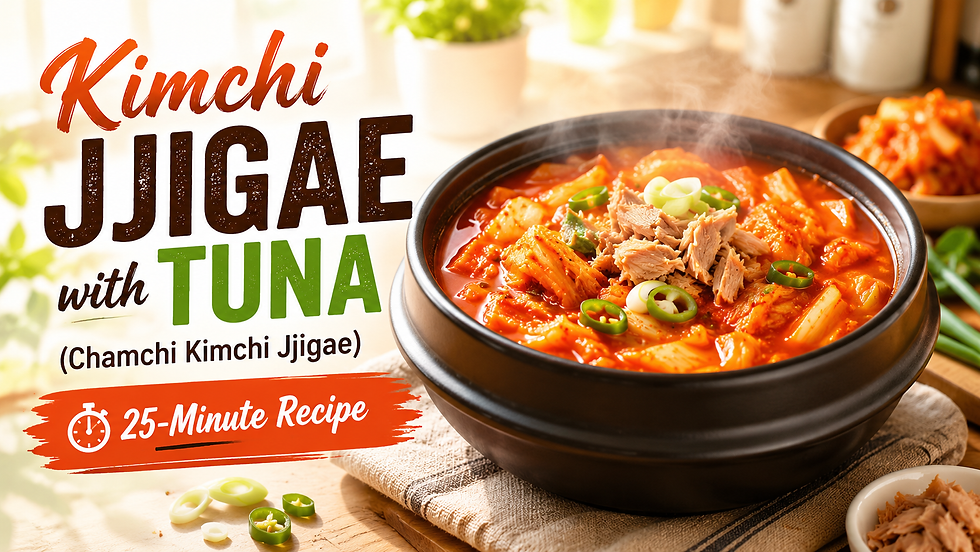
Tuna kimchi jjigae is what you make when dinner needs to feel cooked, cozy, and real, but you do not have pork thawed, stock ready, or the patience for extra steps.
The beauty of this version is how quickly it gets there. Ripe kimchi brings the tangy backbone. Canned tuna melts into the broth and gives it savory depth. Tofu softens the whole pot. Gochugaru adds warmth and color, while kimchi brine lets you sharpen the stew at the end instead of guessing too early.
It is a very practical kind of comfort food: one pot, pantry tuna, fermented kimchi, tofu, and hot rice waiting on the side. No stir-fry step. No long simmer. No complicated broth.
By the time the stew is bubbling hard and the kimchi has relaxed into the broth, the whole kitchen smells like dinner was planned better than it actually was.
This is the kimchi jjigae to make on a weeknight, on a rainy day, or anytime a can of tuna and a container of sour kimchi are the best things you have.
TL;DR
Make this 25-minute tuna kimchi jjigae when you want a fast Korean stew that still tastes deep and comforting.
You need:
Ripe napa kimchi for sourness, depth, and stew flavor.
Canned tuna for an easy savory base without pork or extra prep.
Tofu for softness and body.Gochugaru for color and gentle heat.
Kimchi brine to adjust the broth at the end.Hot rice because kimchi jjigae without rice feels unfinished.
The biggest rule:
Use well-fermented kimchi. Fresh kimchi can taste too clean and flat in stew. Sour kimchi gives the broth the punchy, cooked kimchi flavor that makes jjigae taste right.
For a richer bowl, keep a little tuna oil. For a cleaner broth, drain the tuna well. Either way, taste at the end before adding more salt because kimchi and brine can vary a lot.
Why this works: the kimchi brings tang and depth, the tuna melts into the broth for savory strength, and skipping the stir-fry step keeps the flavor clean, bright, and weeknight-easy. Customize the heat with a fresh chili, add more kimchi brine for oomph, and serve it with a mound of hot rice. Simple, cozy, and ridiculously satisfying.
At a glance
Serves: 2–3
Time: 25 minutes (10 min prep, 15 min simmer)
Difficulty: Easy
Best for: Weeknights, pantry dinners, cozy weather
Ingredients for Kimchi Jjigae (Tuna Version)
Main
Well-fermented napa kimchi — 2 cups (about 310 g), cut bite-size
Canned tuna (in oil or water) — 1 can (185 g), drained (keep 1 Tbsp oil for richer broth if you like)
Firm tofu — 1/2 block, cubed
Green onion (scallion) — 1/2 stalk, sliced
Korean green chili (Cheongyang) — 1, sliced (optional but delicious)
👉 For help choosing the right can before making stew, see our guide to Dongwon tuna for kimchi jjigae and rice meals.


Broth & seasoning
Water — 3 cups (about 540 ml)
Korean chili flakes (gochugaru) — 1 Tbsp
Kimchi brine/juice — ~6 Tbsp, to taste
Tuna extract (liquid tuna seasoning, chamchi-aek) — 1 Tbsp
Salt — 3/4 tsp (adjust to taste)
Optional
Sugar — 1/2 Tbsp (helps round out very sour kimchi)
How to Make Kimchi Jjigae with Canned Tuna (Step-by-Step)
Prep the tuna
Drain well. If the canned aroma is strong, leave it open a few minutes before using. For a fuller mouthfeel, keep 1 Tbsp of the tuna oil.

Load the pot
In a medium pot, add kimchi, tuna, and tofu.

Season & add water
Sprinkle in gochugaru, salt, and tuna extract. Pour in 3 cups water and stir.

Simmer
Cover and bring to a boil over high heat. Reduce to medium and simmer 15 minutes.

Final taste
Stir in kimchi brine little by little (start around 6 Tbsp) until the broth is punchy and balanced. If your kimchi is very sour, add 1/2 Tbsp sugar.

Finish & serve
Add green chili and scallion; simmer 1–2 minutes. Ladle over hot rice and eat immediately.

Pro Tips for Better Kimchi Jjigae
Use aged kimchi. The stew’s depth comes from well-fermented kimchi; fresh kimchi tastes flatter.
Season at the end. Saltiness varies by kimchi—let the brine do the heavy lifting.
Choose your tofu. Firm or extra-firm holds shape; soft tofu gives a creamier broth.
Clean vs. rich. Drain tuna for a light, clean flavor; keep a bit of tuna oil for more body.
👉 If you are choosing between fresh kimchi and aged kimchi for stew, this kimchi for cooking vs table kimchi guide explains why older kimchi usually works better.
Variations
Mushroom boost: Add a handful of enoki or sliced shiitake.
Extra protein: Toss in fish cake slices or a few spam cubes (classic).
Milder heat: Skip the green chili and reduce gochugaru to 2 tsp.
Broth upgrade: Swap 1 cup water for anchovy-kelp stock if you have it.
What to Serve with Kimchi Jjigae
Steamed short-grain rice, roasted seaweed, a fried egg, and a quick cucumber salad—simple, homestyle, perfect.
Storage & Reheating
Fridge: 3–4 days in an airtight container.
Reheat: Simmer gently; add a splash of water if it concentrated in the fridge.
Freezer: Up to 2 months. (If you’re picky about tofu texture, add fresh tofu when reheating.)
👉 Browse our [Korean Recipes] for more options.
Final Verdict
Tuna kimchi jjigae is one of the best low-effort Korean stews because it turns a few everyday ingredients into something that tastes much bigger than the work involved.
The ripe kimchi gives the broth its sour, spicy backbone. The tuna adds savory strength without needing pork, anchovy stock, or a longer simmer. The tofu soaks up the broth and makes each spoonful softer and more satisfying. A little kimchi brine at the end brings the whole pot into focus.
This is not the fanciest kimchi jjigae. That is not the point.
It is the one to make when the rice is cooking, the fridge is not exciting, and dinner still needs to feel warm, sharp, and comforting. Keep canned tuna around, use kimchi that is sour enough to cook with, and this stew becomes one of the easiest Korean meals to repeat.
Related Posts to Read Next
How to Choose Kimchi for the First Time: Fresh, Aged, Mild, or Best for Cooking
How to Make Kimchi Fried Rice at Home: The Fast Korean Rice Dish That Always Delivers
Kimchi Jjigae with Tuna (Chamchi Kimchi Jjigae) – 25-Minute Recipe
Ready-to-Eat Kimchi Jjigae vs Doenjang Jjigae: Which One Actually Earns Space at Home?
What Is Dubu Kimchi? The Korean Tofu-and-Kimchi Plate That Turns Two Basics Into a Real Meal
FAQ
What kind of kimchi is best for tuna kimchi jjigae?
Well-fermented napa cabbage kimchi works best. The sourness gives the broth more depth and helps the stew taste full even with a short simmer. Very fresh kimchi can work, but the stew may taste lighter and less developed.
Can I use canned tuna in water?
Yes. Tuna in water makes a cleaner, lighter broth. For more body, add a small splash of neutral oil or use a spoonful of the tuna liquid. Tuna in oil gives the stew a richer mouthfeel.
Should I drain the tuna before adding it?
Drain it for a cleaner stew. Keep about one tablespoon of the tuna oil or liquid when you want the broth to feel richer and more rounded. Too much can make the stew taste heavy, so add a little rather than the whole can liquid.
Do I need stock for this kimchi jjigae?
No. Ripe kimchi, kimchi brine, tuna, and gochugaru can build enough flavor for a fast weeknight stew. Anchovy-kelp stock can make it deeper, but the recipe still works well with water.
Why does my kimchi jjigae taste flat?
The kimchi may not be sour enough, or the broth may need more brine. Add kimchi juice little by little near the end, then adjust with salt only after tasting. A small pinch of sugar can also help if the stew tastes harsh rather than balanced.
Can I make tuna kimchi jjigae less spicy?
Yes. Use less gochugaru, skip the fresh chili, and choose kimchi that is not aggressively spicy. The stew will still get flavor from the fermented kimchi and tuna, even with a gentler heat level.
What should I serve with tuna kimchi jjigae?
Hot short-grain rice is the main thing. Roasted seaweed, a fried egg, simple cucumber salad, or a few mild banchan also work well because they balance the stew’s heat, sourness, and saltiness.


Comments