
.png)
Korean Spicy Tuna Bowl Guide: Canned Tuna, Gochujang, Mayo, and Fast Rice Meal Ideas


A spicy tuna bowl starts getting good before it gets pretty.
Hot rice goes down first. The tuna needs to be loose enough to mix, not so wet that the bowl turns mushy. The sauce should cling without sitting on the rice like paste. Then you need one soft thing and one crisp or sharp thing so every bite does not taste the same.
That is the Korean pantry version. Canned tuna, rice, gochujang, mayo, kimchi, egg, cucumber, sesame oil, scallions, maybe a little roasted seaweed if that is already in the cabinet. No raw fish. No sushi-bar expectations. No twelve-topping bowl that looks better than it eats.
This guide is about building a spicy tuna rice bowl you can actually make when lunch is already late.
TL;DR
A Korean spicy tuna bowl works best when you build it around hot rice, canned tuna, a spoonable spicy sauce, one softener, and one crisp or sharp topping.
Use ready-seasoned spicy tuna when speed matters most.
Use plain tuna when you want to control the gochujang, mayo, salt, and heat yourself.
Use tuna in sesame oil when you want a nuttier, glossier bowl that needs less mayo.
The easiest formula is rice, tuna, sauce, egg or mayo, and cucumber or kimchi. Add more only after the bowl proves it needs more.
The Bowl Formula That Actually Works
Most spicy tuna bowls fail for one of two reasons: the tuna is too dry, or the sauce is too heavy.
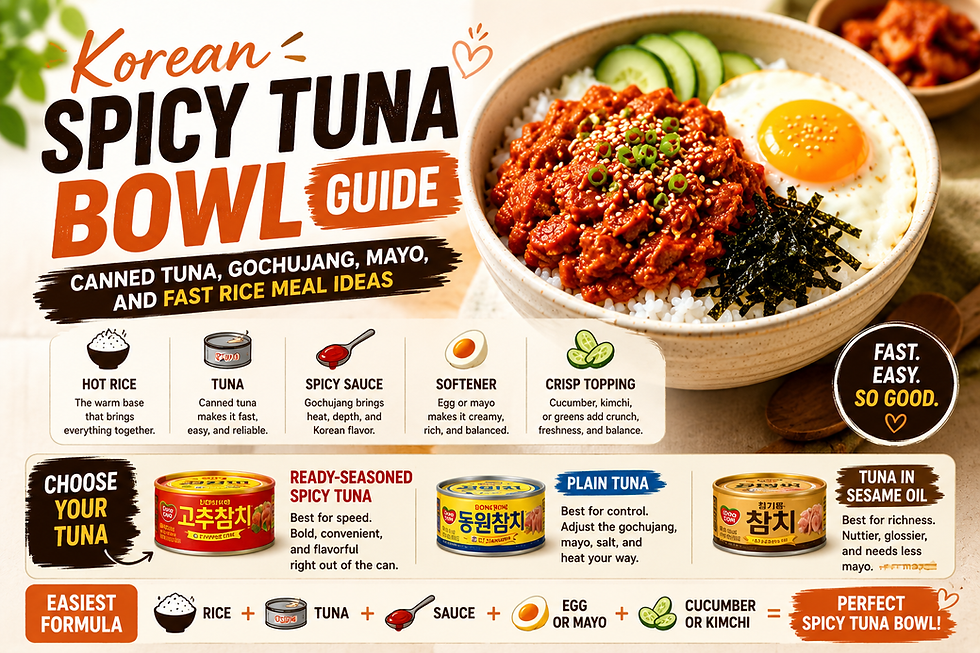
A good bowl needs five parts:
hot rice
canned tuna
spicy sauce or seasoned spicy tuna
something soft or rich
something crisp, fresh, or sharp
Hot rice is not optional if you want the bowl to feel right. It loosens the sauce, warms the tuna, and pulls the flavor through the grains. Cold rice makes the tuna sit on top like a separate scoop.
The softener can be mayo, a fried egg, soft scrambled egg, egg yolk, or a little sesame oil. The contrast can be cucumber, kimchi, pickled radish, cabbage, scallions, or a few torn pieces of roasted seaweed.
The best version usually has less going on than you think. Rice, tuna, sauce, egg, cucumber. Rice, tuna, mayo, kimchi. Rice, tuna, sesame oil, scallions, pickled radish. Those are bowls you can repeat.
Start With the Tuna Decision
The tuna decides how much work the rest of the bowl needs.
Dongwon Hot Pepper Tuna is the fastest route. The sauce and heat are already there, so the bowl can be as simple as hot rice, tuna, egg, and cucumber. Use it when the point is speed and you do not want to mix a separate Korean tuna sauce.
Dongwon Light Standard Tuna is the control route. It is better for a spicy tuna bowl recipe where you want to decide how much gochujang, mayo, soy sauce, sesame oil, and garlic go into the bowl. It also makes sense when two people want different heat levels from the same tuna base.
Dongwon Tuna in Sesame Oil is the richer route. It gives the bowl a nutty smell and glossy texture before you add much else. Use it when mayo sounds too heavy but plain tuna sounds too lean.
For the wider fast-rice shelf, read Best Korean Canned Proteins to Keep at Home for Fast Rice Meals. This article stays focused on spicy tuna bowls, not every canned protein option.
The Quick Gochujang Mayo Sauce
This is the sauce for plain tuna when you want a spicy tuna bowl without cooking.
Mix:
1 can plain tuna, drained if watery
1 tablespoon gochujang
1 tablespoon mayo
1 teaspoon soy sauce
1 teaspoon sesame oil
1 small grated garlic clove or a pinch of garlic powder
½ teaspoon sugar, honey, or syrup
1 to 2 tablespoons water
Stir until the tuna looks glossy and spoonable. The water matters. Without it, the sauce can turn thick and stubborn, especially once it hits rice.
Taste before building the bowl. If it is too sharp, add a little more mayo or sweetness. If it is flat, add a few drops of soy sauce. If it is too salty or spicy, do not keep fixing the sauce. Add more rice, cucumber, or egg.
The goal is not a dense tuna paste. The goal is tuna that can move through rice in small streaks.
For a fuller Korean spicy tuna recipe with a more complete bibimbap-style shape, read Easy 10-Minute Recipe Spicy Tuna Bibimbap (고추참치 비빔밥). This guide is more about fast assembly and bowl variations.
Mayo, Egg, or Sesame Oil: Pick the Softener
A spicy tuna bowl needs something to round off the heat.
Mayo makes the bowl creamy. It is the easiest choice if you want the spicy tuna to feel softer, richer, and more snacky. It also helps plain tuna feel less dry.
Egg makes the bowl feel more like a meal. A fried egg gives you a rich yolk that mixes into the rice. Scrambled egg makes the bowl calmer and more lunch-friendly. Soft egg is especially helpful when the tuna is already spicy and salty.
Sesame oil makes the bowl glossy and nutty. It is the better choice when you want richness without turning the tuna creamy. It also works nicely with cucumber, scallions, sesame seeds, and rice that is still hot enough to carry the smell.
Do not use all three heavily. Mayo, egg, and sesame oil can make the bowl taste rich in a good way, but too much turns it dull. Pick one main softener, then use the others lightly if needed.
The Crunch or Sharpness Is Not Optional
Spicy tuna plus rice can taste good for five bites and then start feeling heavy.
That is why the crisp or sharp piece matters.
Cucumber cools the bowl. Dice it small if you want it in every bite, or slice it thin if you want clearer contrast.
Kimchi sharpens the bowl. It adds acid, heat, crunch, and fermented flavor. Use less if your tuna is already spicy.
Pickled radish gives sweetness and snap. It is especially useful in lunch bowls because it stays crisp and makes the tuna feel less heavy.
Cabbage gives cheap crunch. Shred it thin and keep the sauce loose so the bowl does not turn dry.
Scallions add a quick fresh bite. They are small, but they change the bowl fast.
Roasted seaweed can add a dry, savory edge, but keep it as a supporting topping. This is still a spicy tuna bowl, not a seaweed tuna article.
Fast Spicy Tuna Bowl Ideas
👉 The No-Plan Rice Bowl
Hot rice, Dongwon Hot Pepper Tuna, fried egg, cucumber.
This is the bowl for the night when you want the can to do most of the work. The egg softens the heat. The cucumber keeps the bowl from feeling too heavy.
👉 The Gochujang Mayo Bowl
Hot rice, plain tuna mixed with gochujang mayo sauce, scallions, sesame seeds, cucumber.
This is the best spicy tuna bowl recipe when you want control. Make it creamier with more mayo, sharper with more gochujang, or lighter with extra cucumber.
👉 The Kimchi Tuna Bowl
Hot rice, spicy tuna, chopped kimchi, soft egg, scallions.
This is the louder bowl. Skip extra soy sauce at first because spicy tuna and kimchi already bring plenty of seasoning.
👉 The Sesame Oil Tuna Bowl
Hot rice, tuna in sesame oil, gochujang, cucumber, scallions, sesame seeds.
This bowl is nutty instead of creamy. It is good when mayo sounds too heavy but plain tuna sounds too lean.
👉 The Lunchbox Bowl
Rice, tuna, moderate mayo, cucumber, pickled radish, scallions.
Keep kimchi separate if smell matters. Keep the sauce a little thicker than usual so the rice does not get soggy before lunch.
👉 The Beginner Bowl
Hot rice, plain tuna, a small spoon of gochujang mayo, scrambled egg, cucumber.
This keeps the heat controlled. It is a better first bowl than going straight into spicy tuna, kimchi, and extra gochujang all at once.
What Not to Add Too Much Of
A spicy tuna bowl can become heavy fast because many of the ingredients are already strong.
Too much gochujang makes the bowl thick and salty.
Too much mayo makes it dull.
Too much kimchi can overpower the tuna.
Too much sesame oil makes the rice feel slick.
Too much soy sauce usually is not needed if the tuna is already seasoned.
Too much roasted seaweed can pull the bowl away from the tuna and make it taste like a different meal.
The best fix is usually not another sauce. It is more hot rice, cucumber, cabbage, egg, or pickled radish.
How to Adjust the Bowl for Different Moods
If you want fast and spicy, use Hot Pepper Tuna, rice, egg, and cucumber.
If you want creamy, use plain tuna, gochujang, mayo, rice, and scallions.
If you want sharper, use spicy tuna, kimchi, rice, egg, and cucumber.
If you want lighter, use plain tuna, less mayo, cucumber, cabbage, and a smaller spoon of gochujang.
If you want richer, use tuna in sesame oil, gochujang, rice, scallions, and egg.
If you want lunchbox-friendly, keep wet sauce moderate and pack crunchy sides separately.
If you want beginner-friendly, use more rice, less sauce, scrambled egg, and cucumber before adding kimchi or extra gochujang.
For a direct spicy-versus-mild canned tuna decision, read Dongwon Hot Pepper Tuna vs Vegetable Tuna: Which Can Makes the Better Fast Rice Meal?. That comparison helps if you are not sure whether spicy tuna is really the right starting point.
What to Check Before Buying Tuna for Spicy Rice Bowls
Check whether you want speed or control. Ready-seasoned spicy tuna is faster. Plain tuna lets you adjust heat, salt, mayo, and sauce thickness.
Check whether you want creamy or glossy. Mayo gives creamy softness. Sesame oil gives nutty gloss. They both work, but they do not create the same bowl.
Check spice level. If you are cautious with heat, plain tuna plus a small amount of gochujang is safer than a full can of spicy tuna.
Check pack size. Multi-packs make sense for tuna styles you already use often. If you are testing a new spicy can, start smaller when possible.
Check your rice habit. A spicy tuna rice bowl only stays easy if rice is easy too. Instant rice, leftover rice, or a rice cooker routine makes this meal much more realistic.
Check current product pages before checkout. Product names, pack formats, prices, and availability can change.
Who Should Make a Spicy Tuna Bowl First?
Make a spicy tuna bowl if you already eat rice often and want a fast protein that does not need much cooking.
It fits people who like spicy Korean pantry meals, mayo rice bowls, kimchi bowls, fried eggs over rice, and low-effort lunches that still need flavor.
Start with ready-seasoned spicy tuna if you want the fastest bowl.
Start with plain tuna if you want to make your own sauce and control the heat.
Start with tuna in sesame oil if you want a richer bowl that needs less mayo.
Skip this meal style if you want cold tuna salad, a neutral meal-prep protein, or a bowl that tastes mild by default. Spicy tuna bowls are best when you want the tuna to lead.
👉 Browse our [Canned Foods Category] for more options.
Final Verdict
A spicy tuna bowl is one of the easiest Korean canned tuna meals because the formula is flexible without being vague.
Hot rice gives the bowl a base. Tuna gives it protein. Gochujang or spicy tuna sauce gives it direction. Mayo, egg, or sesame oil softens the heat. Cucumber, kimchi, scallions, or pickled radish keeps the bowl from getting heavy.
Use spicy canned tuna when speed matters.
Use plain tuna when control matters.
Use sesame oil tuna when richness matters.
The best bowl is usually the simplest one: hot rice, tuna, spoonable sauce, one softener, one contrast, done.
Related Posts to Read Next
FAQ
What is a spicy tuna bowl?
A spicy tuna bowl is a rice bowl made with canned tuna or seasoned tuna, spicy sauce, and simple toppings like egg, cucumber, kimchi, scallions, mayo, or sesame oil. The Korean pantry version usually uses gochujang or Korean spicy canned tuna.
What canned tuna works best for a spicy tuna rice bowl?
Use ready-seasoned spicy tuna if you want the fastest bowl. Use plain tuna if you want to make your own gochujang mayo sauce. Use tuna in sesame oil if you want a richer, nuttier bowl with less mayo.
How do you make a quick spicy tuna bowl recipe?
Start with hot rice. Mix canned tuna with gochujang, mayo, soy sauce, sesame oil, garlic, a little sweetness, and water until spoonable. Add cucumber, egg, scallions, kimchi, or sesame seeds, then adjust with more rice if the sauce tastes too strong.
Is a Korean spicy tuna recipe always made with gochujang?
Not always, but gochujang is the easiest Korean pantry base for spicy tuna sauce. Ready-seasoned Korean spicy canned tuna can also work without extra gochujang, especially when you want the fastest rice bowl.
Should I use mayo in a spicy tuna bowl?
Mayo is useful when you want the bowl creamier and softer. It rounds off gochujang heat and makes plain tuna feel richer. Skip or reduce it if you want a cleaner, sharper bowl with more sesame oil or cucumber instead.
What toppings go well with a spicy tuna rice bowl?
Egg, cucumber, kimchi, scallions, sesame seeds, pickled radish, cabbage, and a little roasted seaweed all work well. The best bowl usually has one soft topping and one crisp or sharp topping, not every topping at once.
Can I make a spicy tuna bowl for lunch?
Yes. Keep the sauce moderate, use enough rice, and pack crunchy or strong-smelling toppings separately when needed. Cucumber, egg, pickled radish, and scallions are easier lunchbox choices than a very kimchi-heavy bowl.


Comments