
.png)
Seolleongtang vs Gomtang: Which Mild Korean Beef Soup Fits Your Taste Better?


From ten feet away, seolleongtang and gomtang can look like the same kind of comfort.
No red broth. No obvious spice. Beef. Steam. Rice nearby. Maybe kimchi on the side. It is easy to assume the choice is mostly about which restaurant uses which name.
Then the spoon hits.
One bowl often feels milkier, softer, more bone-cloudy, like the broth itself is doing most of the comforting. The other often feels clearer, straighter, and easier to keep eating when you want warmth without as much weight.
That is the difference most people actually care about.
Not the kind you memorize for a quiz. The kind that helps you order the right bowl when you are tired, cold, underfed, or just not in the mood to gamble on the wrong kind of mild soup.
TL;DR
Choose seolleongtang if you want the broth to feel milkier, more coating, and more clearly built around long-simmered bones.
Choose gomtang if you want a cleaner, calmer, more directly beefy bowl that still comforts you without feeling as rich.
That is the useful beginner shortcut. It is not a rigid law for every shop and every pot. Real bowls can blur. But as a taste-first guide, it works: seolleongtang usually leans more bone-broth-like, while gomtang usually leans cleaner and more straightforward.
If you are new to both, start with the broth texture you already trust. If you love richer, silkier soups, start with seolleongtang. If you love clear, steady, easy-to-finish soups, start with gomtang.
The simplest honest difference
Here is the version that is actually useful at the table.
Seolleongtang usually feels like the broth matters most.
Gomtang usually feels like the soup as a whole matters most.
That may sound subtle, but it lands clearly once you eat them side by side.
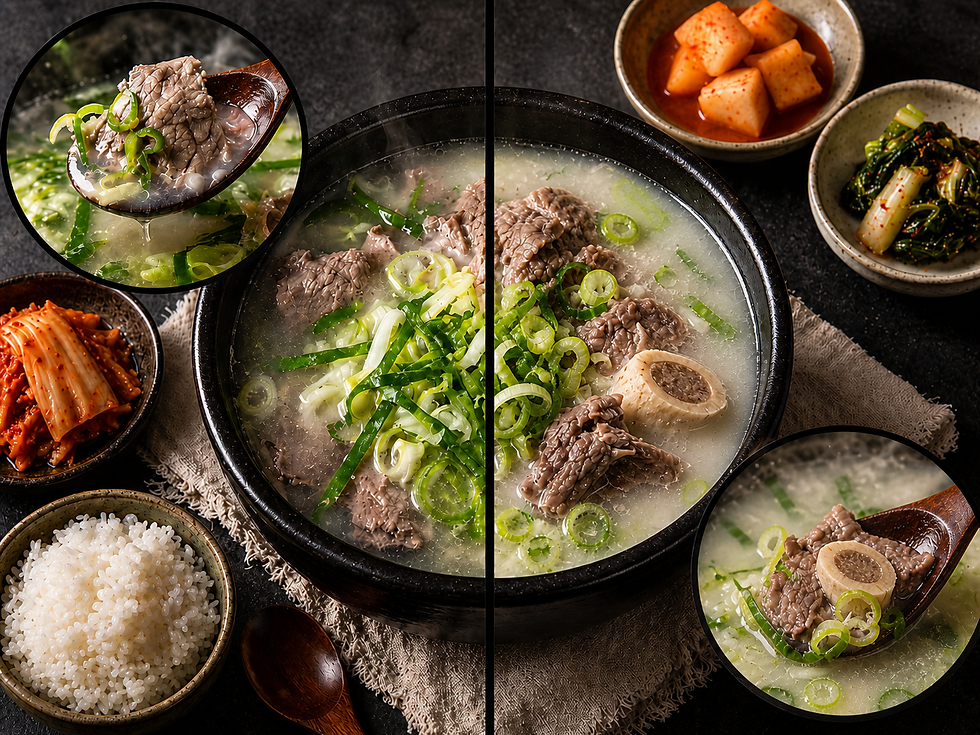
Seolleongtang often has that pale, fuller, long-simmered quality people associate with beef bones doing heavy lifting over time. The broth can feel smoother, rounder, and a little more coating across the tongue.
Gomtang often feels more transparent in its comfort. You taste beef, warmth, salt, broth, and calm without quite the same milkier, almost cushioned effect.
That does not mean one is bones and the other is only meat. It means the bowl tends to read differently when you eat it.
That is the distinction worth keeping.
If Korean soup names still feel slippery in general, Jjigae vs Guk vs Tang: What Korean Soup Names Actually Tell You About the Meal helps make the whole category feel less random.
Seolleongtang fits the person who wants the broth to feel like a blanket
This is the bowl for the days when “mild” is not enough.
You want gentle, yes. But you also want the broth to feel like it has somewhere to land. You want it to feel settled. Soft around the edges. A little fuller than plain beef soup.

That is where seolleongtang usually wins.
At its best, it tastes calm without tasting thin. The bowl has weight, but not in a greasy, punishing way. More in a slow, steady, bone-broth way. It feels especially right when you are cold, wrung out, underslept, slightly fragile, or just want a soup that does more of the emotional work for you.
It is also the bowl that tends to make the more dramatic first impression. Even people who usually think they want “just a mild beef soup” often notice seolleongtang immediately because the broth has more presence. It feels pale and quiet, but not plain.
If that is your lane, PK Ox Bone Soup with Beef is the clearest MyFreshDash product example of that seolleongtang-style mood: mild, milky, bone-led, and built for the kind of meal where the broth is supposed to carry most of the comfort.
Gomtang fits the person who wants comfort without that extra coat of richness
This is why gomtang keeps becoming the repeat bowl.
It is not trying to impress you with milky depth. It is trying to stay good all the way to the last spoonful.
A good gomtang feels clear in the best sense. Not watery. Not empty. Clear as in calm, direct, and easy to stay with. The beef flavor feels more obvious. The broth feels less like it is wrapping itself around your mouth and more like it is meeting you cleanly.

That is a big reason some people end up preferring it even if seolleongtang makes the bigger first impression. Gomtang asks less from the mood. You do not need to be in the exact right headspace for it. It works for lunch. It works when you are tired. It works when your appetite is half-there but still wants real food.
That is the part a lot of shoppers care about most once they have tried both.
Which bowl am I more likely to want again next week?
Often, it is gomtang.
If you want a fuller read on why that cleaner lane gets so many repeat cravings, What Is Gomtang? The Korean Beef Soup People Crave When They Want Something Clean and Comforting is the best companion piece.
What the difference feels like in one spoonful
Seolleongtang usually feels softer and more coating.
Gomtang usually feels cleaner and more direct.
That is the whole article in two lines, but it helps to put it into real eating terms.
If you take a spoonful of seolleongtang, the broth often lingers a little more. It can feel silkier, a little denser, a little more like the bowl is built around long simmering and patience.
If you take a spoonful of gomtang, the satisfaction often comes from how straight it lands. It tastes beefy, mild, savory, and steady without that extra milky cushion.
So if you usually like broths that feel rounded, soothing, and a bit more bone-broth-like, seolleongtang is usually closer to your instinct.
If you usually like broths that feel clean, balanced, and easier to keep sipping for a full meal, gomtang usually fits better.
Which one fits your taste better in real life?
👉 Pick seolleongtang if you want:
A broth that feels milkier, fuller, and more bone-driven
A bowl that makes the strongest first impression even though it is mild
Something that feels especially right in cold weather or low-energy moods
A soup that can carry the whole comfort of the meal almost by itself
👉 Pick gomtang if you want:
A broth that feels cleaner, straighter, and more obviously beefy
A mild soup that still feels substantial without leaning as rich
Something you can imagine craving more often, not only in one exact mood
A bowl that stays easy to finish and easy to want again
That is the real split.
Seolleongtang is often the more cocooning bowl.
Gomtang is often the more repeatable bowl.
Which one is safer for beginners?
Gomtang is usually safer.
Seolleongtang is usually more memorable.
That is the beginner shortcut I trust most.
If someone says they want a mild Korean soup and they are not sure how much richness they enjoy, gomtang is the safer first move. It is easier to read, easier to finish, and less likely to feel like “a lot” even when it is still deeply comforting.
If someone already knows they love bone broth, tonkotsu, collagen-rich soups, or anything with a little more body, seolleongtang is the better first try because it is the bowl more likely to make them stop and go, yes, this is exactly what I wanted.
So the beginner question is not really which soup is objectively easier.
It is which kind of mildness sounds more like home to you.
Which one makes more sense as a full meal?
Both do. They just carry the meal differently.
Seolleongtang can feel more self-contained because the broth has enough body that the bowl already feels emotionally complete before you even think about the side dishes.
Gomtang feels a little more open.
Not incomplete. Just more willing to sit next to rice, kimchi, kkakdugi, or a simple side without taking over the entire experience.
That is part of why gomtang works so well as an everyday lunch soup. It leaves space around itself.
Seolleongtang is a little more likely to feel like the whole event.
Gomtang is a little more likely to feel like the bowl you can fold into a regular week.
That same gentle-soup logic also shows up in Korean Hangover Soups (Haejangguk): Which Bowl You’ll Crave Most After a Heavy Drinking Night, especially if what you really want is a calmer beef-broth lane rather than a spicy recovery bowl.
What to buy if you already know your lane
If you already know you want the milkier, bone-richer side, go straight toward seolleongtang-style products.
Again, PK Ox Bone Soup with Beef is the clearest fit for that mood.
If you already know you want the gentler gomtang lane, Samyang Korean Gomtang Ramen is a useful pantry way to learn whether that calm beef-broth profile actually suits you. It is not the same thing as a restaurant bowl of gomtang, but the direction is recognizable fast.
And if your real priority is low-effort desk lunch convenience in that same mellow lane, Paldo Gomtang Noodle Cup is the more practical shortcut.
👉 Browse our [Instant Soup & Porridge Category] for more options.
Final verdict
If you want the richer, milkier, more bone-broth-like bowl, seolleongtang fits better.
If you want the cleaner, calmer, more repeatable bowl, gomtang fits better.
That is still the cleanest answer.
Just do not mistake it for a rigid courtroom definition.
It is a taste guide.
And as a taste guide, it is a good one. Seolleongtang usually feels more bone-cloudy and cocooning. Gomtang usually feels more direct and easier to keep coming back to. Once you know that, the choice gets much simpler.
Related posts to read next
FAQ
What is the main difference between seolleongtang and gomtang?
As a useful taste shortcut, seolleongtang usually feels milkier, more bone-broth-like, and more coating, while gomtang usually feels cleaner, calmer, and more directly beefy.
Is seolleongtang just bone broth and gomtang just beef soup?
Not that neatly. That shorthand can help beginners, but it is too rigid if you take it literally. The more useful difference is how the bowl reads when you eat it: seolleongtang often feels more bone-led and milkier, while gomtang often feels clearer and more straightforward.
Which soup is richer, seolleongtang or gomtang?
Usually seolleongtang. It often has a fuller, softer, more coating broth even when both soups are mild and comforting.
Is gomtang lighter than seolleongtang?
Usually yes, at least on the palate. Gomtang often feels cleaner and easier to keep eating, even when it is still deeply satisfying.
Which one is better for beginners?
Gomtang is usually the safer first choice. Seolleongtang is often the better first choice for beginners who already know they love richer, more bone-broth-like soups.
Which one is more likely to become a repeat buy?
For a lot of people, gomtang. It asks less from the mood and fits more days. Seolleongtang is often more memorable, but gomtang is often easier to crave regularly.
Which one goes better with rice and kimchi?
Both do. Seolleongtang can feel a little more self-contained, while gomtang often leaves a bit more room for the rice and side dishes to shape the meal around it.


dự đoán xsmb pro là cái mình vừa lướt qua hôm nay. Mình vào đúng bài soi cầu MB ngày 3 9 2026 nên đọc khá nhanh, thấy họ chia nội dung thành từng khối rõ ràng, tiêu đề “Dự Đoán XSMB 3 9 2026” đặt nổi bật nên kéo xuống tới đâu biết mình đang xem phần nào tới đó, nhìn cũng dễ nắm hơn mấy trang viết liền một mạch. Có đoạn họ nói soi cầu dựa trên thống kê kết quả các lần quay trước với đội ngũ tư vấn lâu năm, đọc kiểu có lý lẽ hơn chứ không phải kiểu phán đại, nhất là phần chốt chạm đầu đuôi giải Đặc Biệt trình bày khá…