
.png)
Sesame Leaves in Soy Sauce vs Spicy Sauce: Which One Should You Try First?

Updated: May 19

This sounds like a tiny fridge decision until dinner is actually in front of you.
You open one container and get something savory, glossy, and easy to drape over a spoonful of hot rice. You open the other and the whole meal shifts. The garlic lands faster. The chili hangs around longer. Suddenly the side dish is not just supporting dinner. It is driving it.
That is why this choice matters more than it looks.
A good Korean sesame leaves (kkaetnnip) side dish can do a lot with very little effort. It can make plain rice feel worth eating, wake up leftovers, sharpen grilled meat, or turn an egg-and-rice lunch into something you would happily eat again tomorrow. So if you are choosing between sesame leaves in soy sauce vs spicy sauce for the first time, the real question is not which one sounds better on paper. It is which one fits the way you actually like to eat.
👉 If you want to compare sesame leaves with pickled radish, garlic sides, and other fridge banchan, read our guide to Korean pickled side dishes.
TL;DR
For most people, sesame leaves in soy sauce are the better first buy.
They are easier to settle into and easier to use across more meals.
Spicy perilla leaves are the better first pick for people who already love bold, chili-forward Korean side dishes.
Soy sauce feels calmer, more flexible, and more likely to become an everyday repeat buy.
Spicy sauce feels punchier, more attention-grabbing, and sometimes more craveable.
The best order for most shoppers is soy first, spicy next.
The difference shows up fast once rice hits the table
These two side dishes may look close in the package, but they do not eat the same way.
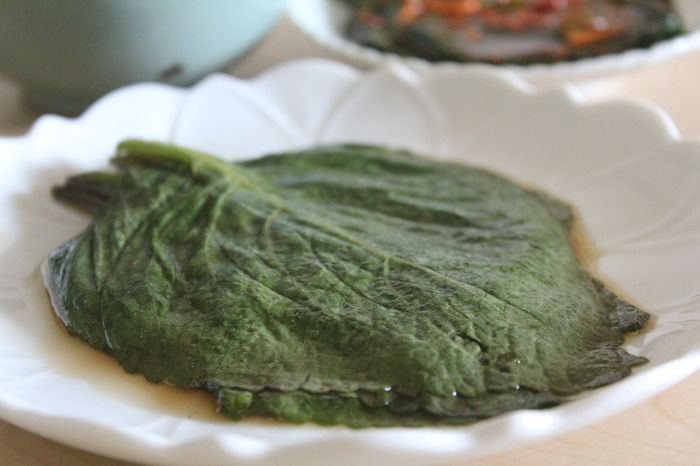
Perilla leaves in soy sauce feel settled. The seasoning gives the leaf salt, savoriness, and enough depth to make the bite feel full, but it still leaves room for the meal around it. You can eat it with hot rice, grilled fish, eggs, tofu, or a bowl of soup and it slides in naturally. Nothing about it feels like too much.
Spicy perilla leaves come in with more push. The leaf is still fragrant and distinctive, but now the seasoning has more edge. More garlic. More chili. More of that lingering bite that keeps pulling you back for another spoonful of rice. It is not just a side anymore. It starts acting like the loudest thing on the plate.
That is the split.
One helps the meal settle in.
One wakes it up.
Why soy sauce is usually the better first buy
For a first try, soy sauce gives the leaf a cleaner introduction.
That matters because perilla already has a strong personality. It is not a neutral green. It has fragrance. It has a little sharpness. It tastes alive in a way some people love immediately and others need a meal or two to really get into. The soy marinade smooths that first meeting out. You still get the leaf, but you get it in a way that feels easier to understand.
The first bite tends to land as savory before anything else. Then the leaf opens up. Then the meal starts making more sense around it.
That is a good sign.
The best first buy is usually not the one that makes the biggest entrance. It is the one that makes you want to keep going.
Soy sauce also has the wider everyday range. It works on nights when dinner is thoughtful and on nights when dinner is barely happening. Rice with a fried egg. Cold tofu with a little soy sauce. Leftover bulgogi. Pan-fried fish. A quiet bowl of soup on the side. This version rarely feels misplaced.
That kind of usefulness matters more than a dramatic first impression.

Why some people should start with spicy instead
If you already know you love bold Korean flavors, the spicy one may be the more honest first choice.
Some people do not want the calmer version. They want the one that wakes the bowl up immediately. They want the side dish that makes plain rice feel less plain, the one that leaves a little heat on your lips, the one that turns a simple meal into something with more momentum.
That is what spicy sauce does well.
Hot rice is where it really clicks. A little rice, a piece of leaf, a bit of the sauce caught in the bite, maybe a piece of egg or meat with it, and suddenly the meal has more life than it did five minutes earlier. The rice is not there to fill space. It is there to catch the heat and carry the flavor.
That can be genuinely addictive.
So while spicy is not the broadest recommendation, it is often the right recommendation for people who already know they like kimchi first, garlic forward banchan, and side dishes that show up with a little attitude.
Think less about labels and more about the kind of meal you want
This choice gets easier once you picture real meals instead of product names.
➡️ If you mostly want something for everyday rice meals
Go with soy sauce.
This is the best Korean side dish with rice for the person who wants something they can use often without overthinking it. It makes the bowl better without making the whole meal revolve around itself.
➡️ If your meals need more energy than comfort
Go with spicy.
Spicy leaves do more to rescue a plain plate. If dinner is just rice, eggs, and whatever is left in the fridge, the spicy version has a better chance of making that meal feel intentional instead of improvised.
➡️ If you are eating with grilled meat
Soy sauce usually fits more cleanly.
It gives the bite fragrance and savoriness without flattening everything into one flavor. You can still taste the meat clearly. You can still taste the rice. The side dish helps instead of taking over.
Spicy leaves are great here too, but they steer the bite harder. Sometimes that is exactly what you want. Sometimes it is more than the table needs.
➡️ If you want one container that will still make sense on a random Tuesday
Soy sauce wins again.
This is the version you remember halfway through the week and are still glad you bought. It works with leftovers. It works with lazy lunches. It works with the kind of dinner that only becomes dinner because one good side dish saves it.
The easiest mistake is meeting the leaf at full volume
A lot of people decide too quickly that they do not like sesame leaves when what they really do not like is the intensity of the first setup.
That is why the soy version makes such a good starting point. It lets the leaf introduce itself before the chili, garlic, and stronger seasoning start competing for attention. You get a clearer sense of what people enjoy about it in the first place.
Then, once that clicks, the spicy version starts making even more sense.
This is one of those categories where the first buy and the eventual favorite are not always the same thing.
A very common path is this: soy first, spicy later, and then a steady rotation between both depending on the meal.
That is usually the best outcome anyway.
You do not need one to replace the other.
You just need the first one to make you want the second.
👉 Browse our [Kimchi, side dish & deli category] for more options.
So which one should you try first?
If you want the version most likely to fit real everyday meals, start with sesame leaves in soy sauce.
If you already know your taste runs toward louder, sharper, more chili-heavy Korean flavors, start with spicy sauce.
But if the question is which one makes the better first introduction for most people, soy sauce still has the edge.
It is easier to understand on the first bite, easier to pair across a full week of meals, and easier to come back to once the novelty wears off.
Then, when you want the same leaf with more heat, more garlic, and more pull toward that next spoonful of rice, go buy the spicy one too.
Related posts to read next
What Is Banchan? The Korean Side Dish System Beginners Should Understand First
Best Korean Side Dishes That Make Plain Rice Feel Like a Full Meal
Best Korean Side Dishes to Keep in the Fridge for Easy Meals All Week
Korean BBQ at Home Starts Before the Meat: The Wraps, Sides, and Sauces Worth Buying First
FAQ
Are sesame leaves and perilla leaves the same thing here?
In this kind of Korean side dish, yes, that is usually what you are looking at. If the package says sesame leaves, it is typically referring to perilla leaves.
Which one is easier for beginners?
Soy sauce is easier for most people because it gives you the flavor of the leaf in a calmer, more balanced way.
Does the spicy version taste much hotter?
Usually it tastes more punchy than truly hot. The bigger difference is the stronger garlic, stronger seasoning, and the way the bite lingers longer.
Which one is better with plain rice?
Soy sauce is better for everyday rice meals. Spicy is better when you want the side dish to do more of the work.
Which one goes better with Korean BBQ?
Soy sauce is usually the easier all-around match because it layers in neatly with grilled meat instead of steering every bite in the same direction.
Which one is more likely to become a repeat buy?
For most people, soy sauce. It is easier to use across different meals and easier to keep in regular rotation.
Should I buy the spicy one second if I end up liking the soy one?
Yes. That is probably the best sequence for most people. Once the leaf itself makes sense to you, the spicy version becomes much easier to enjoy for what it is.


Comments