
.png)
What Is Bossam? The Korean Pork Wrap Meal That’s Really About the Kimchi, Sauces, and Sides

Updated: Apr 22
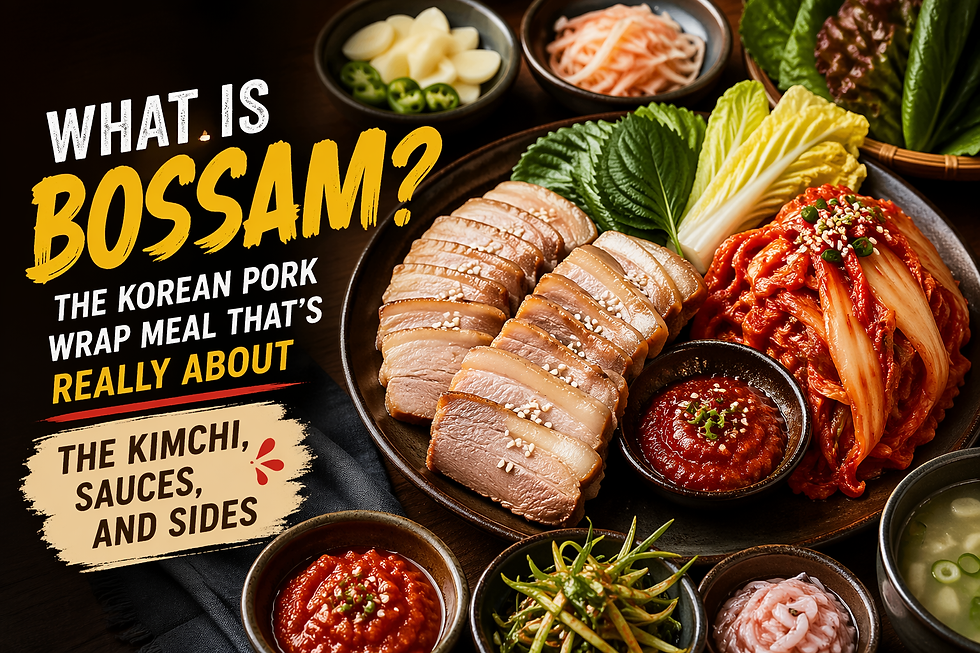
Bossam gets reduced to “boiled pork” too easily.
That is technically true. It is also the least interesting way to understand the meal.
The pork is only the soft center. Bossam gets memorable when the wrap around it is doing real work. Something cold enough to cut the fat. Something fermented enough to push back. Something savory enough to make the bite feel finished. A little salty hit that suddenly makes the pork taste more complete than it did a second earlier.
That is why bossam is better understood as a wrap meal than a pork dish.
The meat matters. But the meal comes alive in the company it keeps.
TL;DR
Bossam is a Korean pork wrap meal built on contrast. The pork is tender and mild on purpose, which means the kimchi, radish wraps, sauces, and salty condiments have to carry a lot of the energy. The best bossam bites usually balance soft pork with something fermented or sour, something crisp or cold, and something savory enough to tie the wrap together.
What bossam actually is
At its simplest, bossam is sliced pork served for wrapping.
Usually that means boiled or gently simmered pork, often pork belly or shoulder, served with napa cabbage leaves or other wrap elements and a small spread of sides and condiments. You build each bite yourself.
That last part matters more than it sounds.

Bossam is not a dish where everything is supposed to be fully composed before it reaches the table. It is supposed to come together in the wrap. The pork stays gentle. The rest of the table decides whether the bite feels rich in a good way or just heavy.
Why the pork is supposed to stay a little quiet
If you are expecting the meat to carry the whole meal, bossam can feel surprisingly mild.
That mildness is not a flaw. It is the design.
Pork with too much built-in intensity would fight everything else on the table. Bossam works because the pork is rich but calm. That gives kimchi room to cut through it. It gives radish room to cool it down. It gives sauce room to deepen the bite without burying it.
So yes, the meat should be tender.
But bossam is not trying to win on pork alone.
Kimchi is what gives the wrap backbone
A good bossam bite needs something with enough edge to push back against the richness.
That is where kimchi matters. It does more than add spice. It brings fermentation, acidity, crunch, and the kind of sharpness that keeps the wrap from feeling too soft after the second or third bite.
Fresh kimchi can work, especially if you want the meal to stay brighter and less assertive. But bossam often gets better when the kimchi has some age behind it. Aged kimchi has the stronger sourness and deeper fermented flavor that can stand up to pork without disappearing.
That is why an example like Bibigo Aged Kimchi fits bossam so naturally. Not because bossam needs a specific brand, but because this is the kind of more forceful kimchi profile that gives the bite real structure.
A simple rule helps here: the richer the pork feels, the more the kimchi needs to push back.

Radish wraps are doing a different job entirely
This is where a lot of first homemade bossam plates get a little confused.
Radish wraps are not there to replace kimchi.
Kimchi gives you fermentation and depth. Pickled radish wraps give you chill, sweetness, and crispness. They make the bite feel cleaner in a different way. Instead of punching through the pork, they rinse it off and make the next wrap feel fresh again.
That is why both can belong on the same table without competing. One gives the meal bite. The other gives it reset.
Something like Haioreum Pickled Radish Wrap Sweet and Sour works well here because it lands in exactly the zone bossam wants from radish wraps: cold, crisp, mildly sweet, and easy to fold into a pork bite without taking it over.
Kimchi gives you punch.
Radish gives you relief.
Bossam is usually better when both are possible.
The sauce is there to build the middle of the bite
Bossam is not only rich versus sour.
It also needs something savory in the middle so the wrap does not taste like disconnected parts piled together.
That is where ssamjang earns its place. It gives the bite a deeper, earthy, salty center that helps the pork, kimchi, and vegetables feel like one thing instead of three separate things happening at once.
This is also why too much sauce makes bossam worse. The point is not to drown the meat. The point is to give the wrap a little glue, not a flood.
A small swipe is usually enough.

The little salty extras matter more than they look like they should
Bossam is one of those meals where tiny condiments can change the whole bite.
Raw garlic. Green chili. A little extra kimchi juice. A small spoonful of saeujeot.
None of them need much space, but they can change the wrap more than another side dish would. Salted shrimp is especially easy to underestimate. It adds a salty fermented jolt that makes the pork taste fuller and somehow cleaner at the same time.
That is one reason bossam feels so Korean even when the ingredient list sounds simple on paper. The meal depends on small, high-impact things.
The best bossam meals give you more than one kind of sharpness
This is why the meal stays interesting.
One wrap leans deeper and more fermented with kimchi. The next one lands cleaner with radish. One bite gets a little ssamjang. Another stays simpler and lets the pork and kimchi do the work.
You are not eating the same wrap over and over. You are moving around inside a narrow set of ingredients that keep changing the balance.
That is the part people miss when they think bossam is only pork and cabbage.
It is actually a meal built on small variations.
A homemade bossam plate does not need a huge spread
This is useful to know because people often overbuild the table.
Bossam does not need every possible side dish to feel complete. It just needs the right jobs covered. Something fermented. Something crisp or cold. Something savory. Something salty enough to wake the pork up.
That can be a much smaller table than people expect.
In fact, the meal often works better when each part has room to matter.
👉 Browse our [Korean Recipes] for more options.
Why the meal ends up being about the table as much as the pork
Because bossam is remembered one wrap at a time.
The meat matters, of course. But what people usually remember is the bite that had the right kimchi, the right little salty hit, the cool radish, the small smear of sauce, and somehow made a very simple piece of pork taste much more complete than it should have.
That is bossam.
Not just boiled pork.
A meal that proves how much the sides can matter when the main thing is quiet on purpose.
Related posts to read next
Korean BBQ at Home Starts Before the Meat: The Wraps, Sides, and Sauces Worth Buying First
How to Choose Kimchi for the First Time: Fresh, Aged, Mild, or Best for Cooking
Doenjang vs Ssamjang: What’s the Difference and Which One Should You Buy First?
What Is Banchan? The Korean Side Dish System Beginners Should Understand First
Napa Kimchi vs Radish Kimchi vs White Kimchi: Which Type Fits Your Taste and Meals Best?
FAQ
What is bossam?
Bossam is a Korean pork wrap meal built around tender sliced pork and the things you wrap with it, such as kimchi, radish, sauces, and salty condiments.
Is bossam basically just boiled pork?
Not really. The pork is the center, but the meal only feels complete once the kimchi, wrap elements, sauces, and condiments are doing their job.
Why is kimchi so important with bossam?
Because pork alone can feel soft and mild. Kimchi brings acidity, fermentation, and enough punch to keep the bite from feeling flat.
Are radish wraps good with bossam?
Yes. They make the meal feel cleaner and more balanced by adding crispness, sweetness, and acidity without replacing the stronger fermented role of kimchi.
Do you need ssamjang for bossam?
A good bossam table can technically exist without it, but ssamjang is one of the things that makes the bite feel finished instead of incomplete.
What is the little salty condiment served with bossam?
It is often saeujeot, or Korean salted shrimp. A small spoonful adds salty fermented depth that makes the pork taste fuller and more complete.
What makes a homemade bossam meal feel right?
Contrast. The pork needs something fermented or sour, something crisp or cold, something savory, and something salty enough to wake the wrap up.


Comments