
.png)
What Is Jorim? The Korean Soy-Braised Dish Style That Makes Simple Side Dishes Taste Richer

Updated: May 18
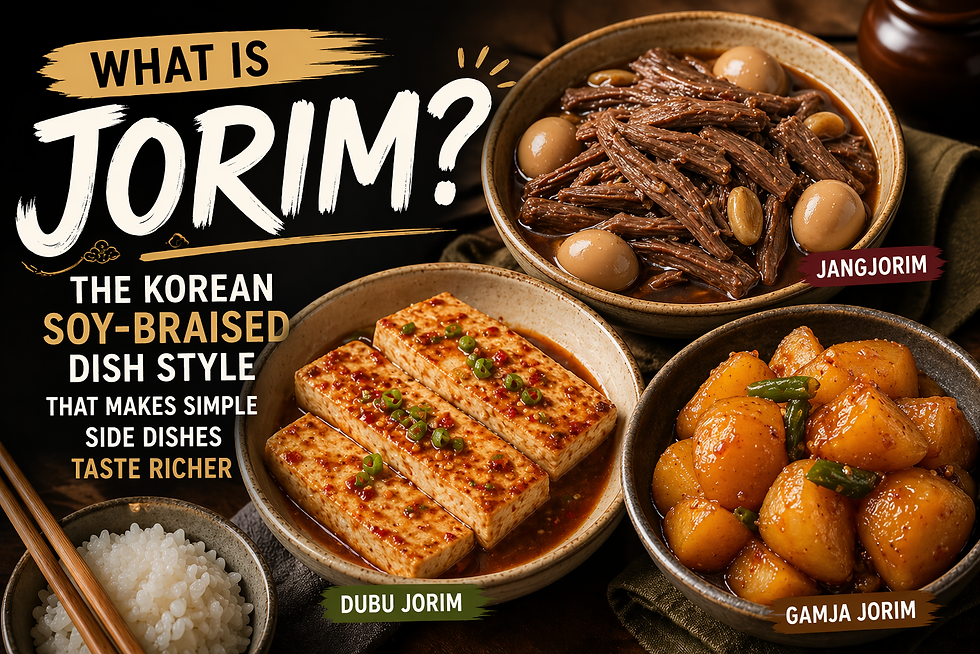
The dish never looks like much at first.
A few soy-darkened potatoes. A square of tofu with sauce clinging to the edges. Shreds of beef in a small container that seems too minor to matter.
Then it hits hot rice.
That is when jorim makes sense.
The ingredient itself may be simple, but the braise is doing real work. Soy sauce, sweetness, garlic, and time pull in close. The sauce reduces, the surface turns glossy, and suddenly a side dish that looked almost modest starts tasting deeper than the rest of the table around it.
That is what jorim is really about. Not one specific recipe. A Korean braising style that makes everyday ingredients taste fuller, darker, and much more worth putting next to rice.
TL;DR
Jorim is a Korean cooking style where ingredients are simmered in a seasoned liquid, usually built around soy sauce, aromatics, and a little sweetness, until the liquid reduces and the food takes on more of its flavor. That is why jorim dishes taste deeper and more concentrated than quick side dishes. You see it in foods like jangjorim (soy-braised beef), dubu jorim (braised tofu), and gamja jorim (braised potatoes). Jorim is not one dish. It is the soy-braised style behind a whole category of Korean sides that make plain rice taste more complete.
What jorim actually means
Jorim refers to a Korean braising or simmering style where the liquid matters just as much as the ingredient.
That is the useful definition.
The food cooks in a seasoned braising liquid long enough for the flavor to move beyond the surface. The sauce reduces. The ingredient absorbs part of it. What ends up on the plate tastes more integrated than a quick toss in seasoning.
That is why the word shows up across very different foods. Beef can be jorim. Tofu can be jorim. Potatoes can be jorim. Lotus root can be jorim. The ingredient changes, but the basic logic stays the same: simmer, reduce, deepen.

Why jorim tastes richer than it looks
Jorim dishes rarely rely on expensive ingredients or a long ingredient list to create impact.
They rely on concentration.
That is why tofu stops tasting bland, potatoes stop tasting plain, and a small dish of beef or lotus root suddenly feels like it can carry a whole bowl of rice. The soy gives depth. The sweetness smooths the salt and sharpness. The liquid cooks down until it feels less like sauce and more like part of the ingredient.
That is the reason jorim can look quiet on the table but taste so complete. The dish does not need bulk to feel satisfying. It already has enough intensity built in.
Jorim is a style, not one recipe
This is the point that makes Korean dish names much easier to read.
Jorim is not one food you memorize once. It is a style word.
When you see it in a name, it usually tells you that the ingredient has been braised or simmered in a seasoned liquid until the flavor tightens up and settles in. That is why jangjorim feels different from dubu jorim, and why gamja jorim still belongs in the same family even though potatoes and beef have almost nothing else in common.
Once that clicks, a lot of Korean menu names stop feeling random. You start to recognize the texture and flavor direction before the plate even shows up.

The jorim dishes that make the category click fastest
A few examples explain the style better than a definition ever could.
Jangjorim is probably the clearest entry point. Soy-braised beef, often with eggs or peppers, shows exactly what jorim does well. The meat is not sauced at the last second. It tastes like the braise had time to get into it.
Dubu jorim proves that the style works just as well on a soft ingredient. Tofu starts mild, but once it sits in a soy-garlic braise and picks up that reduced sauce, it becomes the kind of side dish that can carry plain rice almost by itself.
Gamja jorim might be the most convincing example of all because potatoes have so little natural drama. But give them soy, sweetness, and time to reduce, and suddenly they taste glazed, savory, and much more memorable than a plain potato side has any right to be.
That is the pattern. Jorim takes ingredients that could have been forgettable and gives them staying power.
Why jorim works so well as banchan
Jorim dishes are made for rice in a very particular way.
They usually show up in small amounts, but they do not need much space to matter. One piece of soy-braised tofu, one small spoonful of jangjorim, a couple of potatoes with a little reduced sauce, and a plain bowl of rice immediately starts tasting more finished.
That is why jorim fits so naturally into banchan. It has concentration without heaviness. It brings savory depth without needing a giant portion. It also holds up well, which matters in real home eating. A jorim side dish can sit in the fridge, come back the next day, and still feel useful. In some cases it even tastes better after resting because the flavor has had more time to settle.
Fresh namul brightens a meal. Pickled sides cut through it. Jorim anchors it.

What usually goes into a jorim braise
There is no single formula, but most jorim dishes live in the same flavor neighborhood.
Soy sauce is usually central. Garlic often shows up. Sweetness is common, whether that comes from sugar, rice syrup, oligo syrup, or another sweetener. Water or stock gives the dish something to simmer in. Sesame oil or sesame seeds may finish things off. Some versions bring chile. Many do not.
The point is not to build a complicated sauce.
The point is to build a sauce that reduces well.
That is why jorim often feels so satisfying despite looking simple. It is not trying to impress through ingredient count. It is letting reduction do the heavy lifting.
👉 If you are not sure which soy sauce fits braising, cooking, or soup seasoning, compare Jin Ganjang vs Yangjo Ganjang vs Guk Ganjang before choosing a bottle.
How jorim feels different from bokkeum
This comparison helps because the two styles can look close from a distance.
Bokkeum is the stir-fry lane. It usually feels quicker, drier, and more immediate. The seasoning lands hard, but mostly from the outside.
Jorim spends more time with the liquid.
That changes the entire mood of the dish. The sauce reduces instead of just coating. The flavor moves inward instead of staying mostly on the surface. The result usually tastes darker, calmer, and more settled than a stir-fry.
That is why eomuk bokkeum and dubu jorim do not feel remotely like the same side dish even if both use soy somewhere along the way. One is tossed and finished. The other is braised until the sauce feels built in.

Why jorim side dishes often get better later
Jorim is one of the Korean dish styles that can improve after a little time.
That makes sense once you understand the method. The whole point is that the liquid and the ingredient spend time together. Resting gives that relationship a little more room to settle. The soy tastes rounder. The sweetness feels more blended. The whole dish often tastes less newly cooked and more fully formed.
That is part of what makes jorim so practical for home meals. It is not chasing fragile freshness or crispness that disappears immediately. It is built to hold its shape, which is exactly what you want from a strong fridge side dish.
Is jorim beginner-friendly?
Yes, especially once the word stops feeling abstract.
The method itself is very approachable. Take an ingredient that can benefit from more flavor, simmer it in a soy-based liquid, and let the sauce reduce until the dish tastes more concentrated and rice-ready than it did before.
That is not a hard style to understand.
It is also one of the most useful Korean food words to learn because it unlocks several dishes at once. Once you know what jorim means, you do not just understand one recipe better. You start reading a whole category of side dishes more clearly.
Why the word matters beyond one dish
This is what makes jorim worth learning as a category, not just as vocabulary.
If you only know jangjorim as one beef side dish, that is helpful. But if you understand jorim as the soy-braised logic behind multiple dishes, you start seeing how Korean meals create depth in different ways.
Namul brings freshness.
Pickles bring lift.
Kimchi brings fermentation.
Jorim brings staying power.
It is the style that lets tofu, potatoes, lotus root, peppers, eggs, or beef show up in a small dish and still feel like more than a supporting extra.
👉 Browse our [Kimchi, side dish & deli category] for more options.
Final bite
Jorim is the Korean soy-braised dish style that makes ordinary ingredients taste like they had more attention than they did.
It is not one recipe.
It is the reduced, soy-savory cooking logic behind dishes like jangjorim, dubu jorim, and gamja jorim that can turn a small side dish into the thing your rice wanted most.
That is why the word matters.
Not because it sounds technical.
Because once you know it, a whole category of Korean food stops looking quiet and starts tasting exactly as serious as it is.
Related posts to read next
What Is Jangjorim? The Savory Korean Side Dish That Makes Rice Meals Easier
What Is Banchan? The Korean Side Dish System Beginners Should Understand First
Korean Cooking Syrups Explained: Oligo, Corn Syrup, Rice Syrup, and When to Use Each One
Jin Ganjang vs Yangjo Ganjang vs Guk Ganjang: Which Korean Soy Sauce Should You Keep in Your Pantry?
FAQ
What does jorim mean in Korean food?
Jorim refers to a Korean braising or simmering style where ingredients cook in a seasoned liquid until the flavor reduces and settles into the food.
Is jorim always made with soy sauce?
Many jorim dishes are soy-based, especially the side dishes most beginners notice first, but the bigger idea is the braising and reduction, not one fixed seasoning formula.
Is jangjorim the same thing as jorim?
No. Jangjorim is one specific dish within the broader jorim style. Jorim is the cooking category. Jangjorim is one example of it.
What foods are commonly made into jorim?
Beef, tofu, potatoes, lotus root, peppers, eggs, and other ingredients that absorb braising liquid well are common choices.
Why do jorim dishes taste richer than they look?
Because the liquid reduces and clings more closely to the food. The soy, sweetness, and aromatics have time to settle in instead of just coating the outside.
Is jorim the same as bokkeum?
No. Bokkeum is stir-fry, while jorim is braised or simmered in liquid that reduces as it cooks. Jorim usually tastes deeper and more integrated.
Are jorim dishes good for rice meals?
Yes. That is one of the main reasons they are so useful. Even a small portion of a good jorim side dish can make plain rice feel much more complete.


Mình hay xem soi cầu XSMB với soi cầu MB mỗi ngày để kịp cập nhật trước lúc quay, chủ yếu là để có thêm góc nhìn chứ không trông chờ may mắn. Thỉnh thoảng mình cũng lướt qua phần thống kê lô gan, lô xiên và mấy bảng tần suất từ dữ liệu cũ để tự lọc ra vài bộ số thấy hợp lý. Nhiều người trong nhóm còn nói quay thử XSMB hay Rồng Bạch Kim giúp kiểm tra lại cảm giác chọn số, nghe cũng có lý. Mình thấy dự đoán xổ số miền bắc hôm nay nếu biết kết hợp cầu bạch thủ với dàn đề thì đỡ bị chọn bừa hơn. Ai cần chỗ tham…
Mình chơi xổ số kiểu cho vui là chính, xem kết quả như một thói quen giải trí chứ không đặt nặng chuyện đổi đời. Trước đây nghe người ta bàn về “cầu” này nọ, mình cũng tò mò thử tìm hiểu nhưng vẫn mơ hồ. Theo dõi một thời gian thì thấy đôi lúc có vài mẫu lặp lại, nên mình chú ý hơn chút, nhưng vẫn tự nhắc là đừng quá tin. Thỉnh thoảng đọc mấy bài dự đoán, mình hay ghi lại vài con để hôm sau đối chiếu xem có phải mình tự tưởng tượng ra không. Có lúc rảnh mình ghé https://soicauxsmb.io/dau-duoi-xsmb.html đọc thêm cho đỡ chán. Trúng nhẹ thì vui, trượt hết thì coi…