
.png)
What Is Muchim? The Korean Tossed Side Dish Style That Makes Vegetables Taste Better

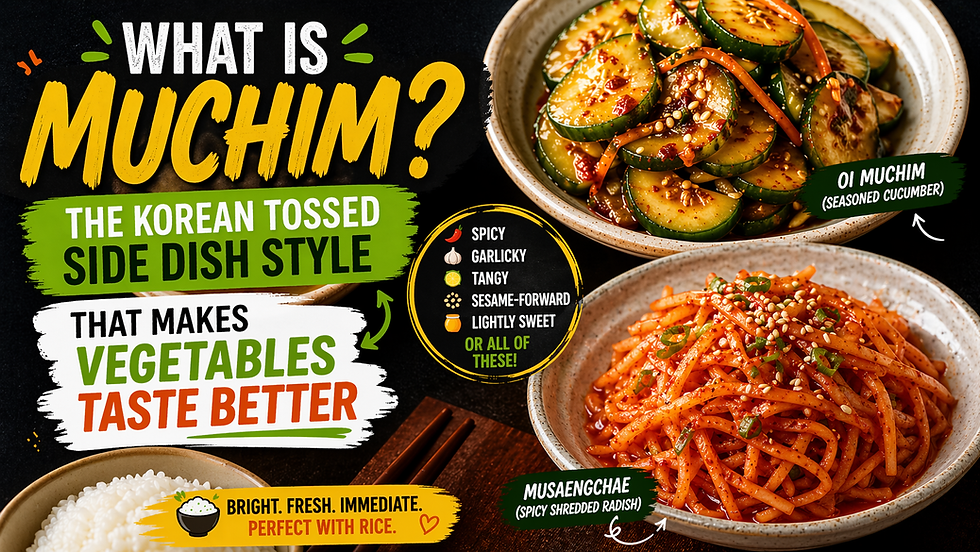
The bowl usually does not look important until you eat it with rice.
A pile of cucumbers. Shredded radish with red pepper. Greens that look too simple to deserve much attention. Nothing about it seems like the part of the meal that should matter most.
Then one bite wakes the whole table up.
That is muchim.
It is the Korean tossed side-dish style that makes vegetables taste brighter, sharper, more seasoned, and much more useful than they did a minute earlier. Not by hiding them. By dressing them just enough that they finally stop tasting like obligation food and start tasting like something you actually want beside rice.
TL;DR
Muchim is a Korean side-dish style where vegetables or other ingredients are mixed and seasoned rather than braised, pickled for a long time, or served plain. That seasoning can be spicy, garlicky, tangy, sesame-forward, lightly sweet, or all of those at once, depending on the dish. The result is usually bright, immediate, and very good with rice. You see the style in dishes like oi muchim (seasoned cucumber), musaengchae (spicy shredded radish), and other tossed vegetable sides that make the meal feel more alive fast.
What muchim actually means
Muchim refers to a Korean dish style where ingredients are tossed or mixed with seasoning.
That is the simple definition, but the useful one is this: muchim is what happens when a vegetable stops being plain because the seasoning actually gets worked into it instead of just drizzled over the top.
The ingredients can be raw, blanched, lightly salted, squeezed dry, or otherwise prepped first. Then they get mixed with seasoning until the whole thing tastes intentional. Garlic, sesame oil, sesame seeds, gochugaru, gochujang, soy sauce, vinegar, scallion, sugar, and salt all show up depending on the dish.
That is why muchim is not one recipe. It is a style word. Once you know it, a lot of Korean side dishes start making more sense.

Why muchim makes vegetables taste better so quickly
Muchim works because it does not ask vegetables to impress anyone on their own.
It gives them help in exactly the places where plain vegetables often fall short. Cucumbers get heat and garlic. Radish gets color, bite, and a little sweetness. Blanched greens pick up sesame oil and salt so they stop tasting like boiled leaves and start tasting finished.
That is the real gift of muchim.
It makes vegetables feel like part of the meal instead of the thing you know you should eat because it is there.
The seasoning is usually strong enough to matter but not so heavy that the vegetable disappears. You still know you are eating cucumber, radish, spinach, watercress, or chives. They just taste more awake.
Muchim is a style, not one dish
This is the easiest thing for beginners to miss.
Muchim is not a single side dish you memorize once.
It is a category signal.
If you see it in a Korean dish name, it usually means the ingredient has been mixed with seasoning rather than braised, stewed, or deeply fermented. That is why oi muchim feels different from musaengchae, and why both still belong in the same family. The vegetable changes. The seasoning balance changes. The tossed, worked-in style stays the same.
Once that clicks, Korean side-dish names stop looking random and start telling you what kind of bite to expect.

The muchim dishes that make the category click fastest
A few examples make the whole style feel obvious.
Oi muchim is seasoned cucumber, usually with garlic, chile, a little acid, and sesame. It is cold, crisp, and exactly the side dish you want when the meal needs freshness with some bite.
Musaengchae is seasoned shredded radish, often spicy, slightly sweet, and crunchy enough to wake up rice or grilled meat instantly. It feels sharper and more direct than cucumber muchim.
Pa muchim uses scallions or green onions and leans punchier still. It is the kind of side that cuts through rich meat fast.
You can even have muchim styles built from blanched greens or herbs, where the dish is less spicy and more sesame-soy focused. The point is not that they all taste alike. The point is that they all depend on mixing the seasoning into the ingredient until the side dish tastes active instead of passive.
Why muchim works so well with rice
Muchim side dishes are built for contrast.
Rice is warm, soft, and quiet.
Muchim is usually cooler, brighter, crunchier, or more assertive.
That is exactly why the pairing works.
A bite of rice with oi muchim tastes fresher. A bite of rice with spicy radish tastes livelier. A richer main dish feels less heavy once something sharp and seasoned is cutting through it. Muchim does not need a big portion to matter. A few bites can change the whole rhythm of the meal.
That is a very Korean kind of usefulness.
Not “eat your vegetables because they are healthy.”
Eat them because they make the rest of the meal taste better.

How muchim feels different from namul
This is the comparison that helps most.
Namul is the broader Korean seasoned-vegetable lane, especially for blanched or gently dressed vegetable sides. It often feels calmer, softer, and more sesame-oil-forward.
Muchim usually feels more actively tossed and more immediate.
That does not always mean spicy, but it often means the seasoning announces itself more clearly. More garlic. More chile. More tang. More of a sense that the vegetable has been worked with instead of just lightly dressed.
If namul often feels gentle and earthy, muchim often feels brighter and more pointed.
That is not a hard rule in every household or every recipe, but it is a very useful buying-and-eating distinction for beginners.
How muchim feels different from pickled side dishes
Pickled sides take time to become themselves.
Muchim usually happens fast.
That changes the whole mood of the dish. Pickled radish, garlic leaves, or sesame leaves in soy sauce feel preserved, settled, and deeper in a different way. Muchim feels fresher and more immediate. It tastes like the vegetable was just pushed into a better version of itself.
That is why muchim side dishes are so good when the table needs something lively right now. They bring freshness without being plain and seasoning without feeling heavy.

Why muchim is such a good banchan style
Muchim is one of the smartest banchan styles because it gives quick payoff.
You do not need a long braise. You do not need a deep fermentation period. You do not need a big shopping list. You just need a vegetable that can hold seasoning and enough balance in the sauce to make the ingredient feel more useful than it did before.
That is why muchim shows up so often in real home meals. It makes the table feel fuller without making cooking feel bigger. One tossed side dish can give rice, soup, grilled meat, fish, or noodles a better supporting bite immediately.
And because it usually brings a different texture and temperature from the rest of the meal, it keeps the whole table from flattening out.
What usually goes into a muchim seasoning
There is no single formula, but most muchim dishes live in a familiar flavor neighborhood.
Garlic is common. Sesame oil or sesame seeds are common. Gochugaru shows up often, especially in spicier versions. Salt helps vegetables release some water or hold the seasoning better. Sugar is often there in small amounts to round out sharp edges. Vinegar sometimes appears, especially when the dish wants more brightness. Scallion helps. Soy sauce appears in some versions, but not all.
The point is not to drown the vegetable.
The point is to make the seasoning cling and matter.
That is why muchim is so satisfying when it is done well. You taste the vegetable and the seasoning at the same time instead of one sitting awkwardly on top of the other.

Why some muchim dishes get better after a few minutes, but not forever
Muchim usually benefits from a little time, just not too much.
Give cucumber or radish a few minutes after tossing, and the seasoning starts settling in. The salt draws a little moisture. The chile and garlic spread better. The dish stops tasting like ingredients that only just met.
But muchim is not usually a “forget it for days” style in the way jorim or some pickled sides can be. It is best when it still has some freshness and structure left.
That is part of its appeal.
Muchim tastes alive.
It is one of the styles that reminds you vegetables can be vivid instead of dutiful.
Is muchim beginner-friendly?
Yes, very.
It is one of the easiest Korean side-dish concepts to understand because the result makes sense fast. Toss a vegetable with seasoning until it tastes better. That is not a difficult idea to like.
It is also one of the most helpful Korean style words to learn because it unlocks a whole category of banchan at once. Once you know what muchim means, you can make much better guesses about what a side dish will taste like before you ever try it.
That is valuable if you are shopping, ordering, or trying to build Korean meals at home without feeling lost every time you see a new name.
Why the word matters beyond one side dish
This is what makes muchim worth learning as a category, not just a vocabulary term.
If you only know oi muchim as one cucumber side, that is useful. But if you understand muchim as the tossed, seasoned style behind several kinds of Korean vegetable dishes, you start seeing how Korean meals create freshness and contrast on purpose.
Jorim gives depth.
Pickles give preservation.
Kimchi gives fermentation.
Muchim gives immediacy.
It is the side-dish lane that makes vegetables feel brighter, sharper, and much more alive next to rice.
👉 Browse our [Kimchi, side dish & deli category] for more options.
Final bite
Muchim is the Korean tossed side-dish style that makes vegetables taste like they actually belong in the meal.
Not because it hides them.
Because it seasons them hard enough, cleanly enough, and quickly enough that they stop feeling like an obligation and start feeling like the bite that wakes everything else up.
That is why the word matters.
Once you know it, a bowl of cucumbers or radish on the table stops looking minor and starts tasting exactly as useful as it is.
Related posts to read next
FAQ
What does muchim mean in Korean food?
Muchim refers to a Korean tossed or mixed side-dish style where ingredients are worked with seasoning until the flavor is built into the dish.
Is muchim always spicy?
No. Many muchim dishes use chile, but not all of them. The bigger idea is the tossed seasoning style, not heat alone.
What vegetables are commonly used for muchim?
Cucumber, radish, scallions, chives, spinach, watercress, and other vegetables that take seasoning well are common choices.
Is muchim the same as namul?
Not exactly. They can overlap, but muchim often feels more actively seasoned and more immediate, while namul often feels calmer and more gently dressed.
Does muchim mean pickled?
No. Muchim is usually a tossed seasoned style, not a preserved pickled style, even though some muchim dishes may include a little vinegar.
Why does muchim taste so good with rice?
Because it adds contrast. Rice is soft and quiet, while muchim is usually brighter, sharper, crunchier, or more seasoned.
Is muchim a good beginner Korean side-dish style?
Yes. It is one of the easiest Korean side-dish styles to understand because the payoff is immediate and the flavor logic makes sense fast.


Comments