
.png)
5-Minute Microwave Korean Steamed Eggs (Gyeran-jjim)

Updated: May 19

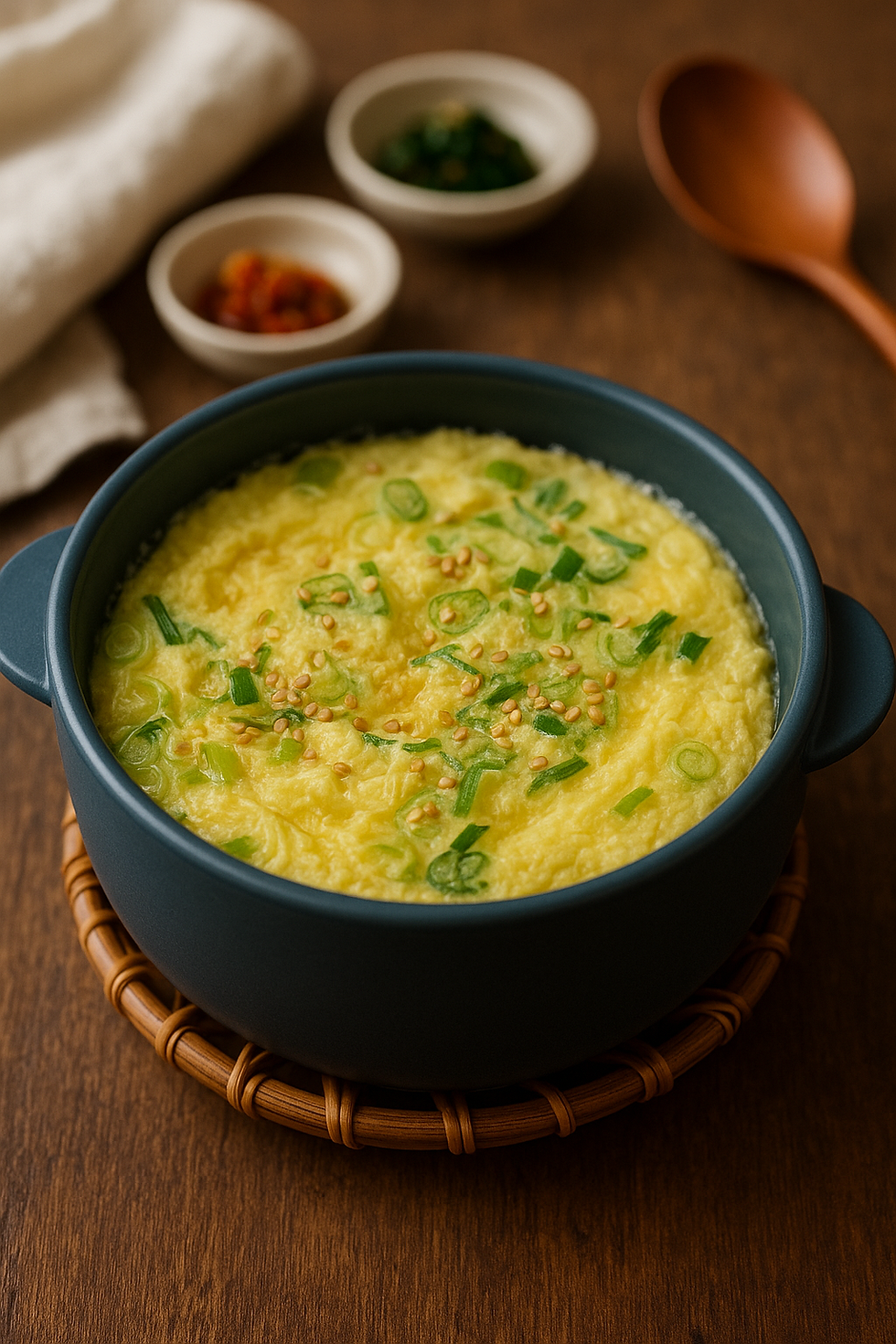
Microwave gyeran-jjim is the side dish you make when rice is almost done and dinner still needs something warm.
It is soft, savory, spoonable, and cozy in the way only Korean steamed eggs can be. The kind of dish that makes kimchi and rice feel like a meal, calms down a spicy jjigae, or turns a nearly empty fridge into something that still feels cared for.
This version skips the steamer and the stovetop. You whisk eggs with water, green onion, and a little saeujeot, cover the bowl loosely, then microwave in two short rounds so the edges do not overcook before the center sets. The result is custardy, jiggly, and tender instead of rubbery or dry.
The best part is how normal the ingredients are. Eggs, water, salt, scallion, and one salty-savory seasoning are enough. Add sesame oil or perilla oil at the end, put hot rice next to it, and you have one of the fastest Korean side dishes worth repeating.
👉 If you are deciding between steamed eggs, soy eggs, and rolled omelets, this guide to Korean egg side dishes can help you choose the right side for the meal.
TL;DR
Make microwave gyeran-jjim when you want fluffy Korean steamed eggs without a steamer, kettle, or stovetop setup.
The basic formula is:
4 eggs + 250–270 ml water + green onion + saeujeot or seasoning + salt.
Cook it in two microwave rounds:
Round 1: Microwave loosely covered for about 3 minutes.
Pause: Vent, poke the center, and gently smooth the edges.
Round 2: Microwave another 1½ minutes or so, stopping when the center is just set and still wobbly.
Rest: Let it sit 30–60 seconds so the carryover heat finishes the texture.
The biggest rule: stop at the wobble.
If you microwave until it looks fully firm, it will keep cooking and can turn watery or rubbery.
Serve hot with rice, kimchi, jjigae, ramen, or a simple breakfast plate.
The texture is soft and jiggly, the flavor clean and savory with a whisper of umami from minced salted shrimp. It slides next to spicy stews, rounds out a simple rice-and-kimchi meal, and doubles as a protein-packed breakfast when the fridge is bare. Cheap, fast, renter-proof weeknight magic.

At a Glance
Microwave time: under 5 minutes
Total time: ~7–9 minutes (including prep)
Serves: 2–3 as a side
Texture: silky, jiggly, custardy
Flavor: savory, light, gently ocean-y from saeujeot

Ingredients
Kitchen math: 1 Tbsp = 15 ml, 1 tsp = 5 ml.
4 large eggs
15 g green onion, finely chopped (about 2 Tbsp)
1 tsp saeujeot (salted shrimp), minced very fine
⅓ tsp fine sea salt (reduce if your shrimp is very salty)
Water 250–270 ml (about 1–1⅛ cups; 62–68 ml per egg)
Finish (optional): ½–1 tsp perilla oil or sesame oil, pinch toasted sesame seeds, extra green onion
Equipment: wide microwave-safe bowl + lid/plate (leave slightly ajar), whisk, fork.
Step-by-Step (Under-5-Minute Microwave Cook)
Whisk, don’t whip
Crack 4 eggs into a wide microwave-safe bowl. Whisk just until combined—no foam.

Season
Add green onion, minced salted shrimp, and salt. Whisk until the salt dissolves.


Add water
Stir in 250–270 ml water (62–68 ml per egg).Ultra-smooth option: strain through a fine mesh back into the bowl.

Round 1
Cover loosely (small gap for steam). Microwave 3:00–3:15 on High.

Vent & smooth
Lift the lid carefully. The top should look ~70–80% set, center still soft. Poke the center once or twice with a fork to release steam; gently stir around the edges to even hot spots.

Round 2
Cover and microwave 1:30–1:45 on High, stopping when the center is just set and wobbly (not runny).

Finish & serve
Rest 30–60 seconds so carryover heat finishes the core. Drizzle perilla or sesame oil, sprinkle sesame seeds and more green onion. Serve hot.


Power & bowl tweaks
700–800W: add 15–30 sec to Round 2.
1100–1200W: start checking 20–30 sec earlier in Round 2.
Tall/narrow bowls cook slower; wide bowls finish faster and more evenly.
Scale it
Keep 62–68 ml water per egg.
For 6 eggs, use a larger wide bowl. Try 3:15–3:30 (Round 1), vent, then 1:45–2:15 (Round 2), finish in 10–15 sec bursts.
Why This Works (Fast, No-Kettle Method)
Microwave = instant steam chamber. Water in the mix means gentle, moist heat from the inside out—no separate steamer required.
Two short rounds > one long blast. The pause vents built-up steam and evens temperature, so edges don’t overcook while the center lags.
Wide bowl, loose lid. More surface area tames hot spots; a barely-ajar lid traps humidity for a glossy top while giving bubbles an exit.
Stop at the wobble. Pulling when it jiggles lets residual heat finish the set. Go long and you’ll squeeze out liquid (weeping) and lose that custardy feel.
Fine-minced seasoning. Tiny bits of saeujeot spread salt and umami evenly—clean flavor, no salty pockets.
Substitutions & Variations
No salted shrimp? Use 1 tsp fish sauce; or ½ tsp light soy + a pinch of salt.
Broth boost: Swap some or all of the water for light anchovy-kelp stock or dashi.
Add-ins: soft tofu cubes, corn, mushrooms, a pinch of white pepper.
Finishers: perilla oil for nutty depth; sesame oil if that’s what you have.
What to Serve With It
Over hot rice with kimchi (5-minute lunch).
Alongside jjigae (kimchi, doenjang, sundubu) to mellow the heat.
Breakfast with toast or leftover rice when time is tight.
Troubleshooting
Bubbled over: Bowl too small or lid sealed tight. Use a wider bowl and keep the lid slightly ajar; stick to two short rounds.
Rubbery or watery: Overcooked. Shorten Round 2 and finish in 10–15 sec bursts.
Center too loose: Add 10–15 sec, then rest 30–60 sec.
👉 Browse our [Korean Recipes] for more options.
Final Verdict
Microwave gyeran-jjim is one of the easiest Korean egg side dishes to make because it gives you the comfort of steamed eggs without needing the usual setup.
The key is not speed alone. It is control.
Use enough water so the eggs stay soft. Use a wide bowl so the heat spreads more evenly. Keep the lid slightly ajar so steam can escape. Cook in two short rounds instead of one long blast. Then pull it while the center still jiggles, because the eggs will finish setting as they rest.
Do that, and you get a soft, spoonable egg custard that belongs next to almost anything: rice and kimchi, spicy stew, noodles, leftovers, or a quick breakfast.
This is not a fancy dish. That is why it works. It is cheap, fast, warm, and useful on exactly the nights when dinner needs one more thing.
Related Posts to Read Next
FAQ
Can you really make gyeran-jjim in the microwave?
Yes. The microwave works well because the water in the egg mixture creates steam inside the bowl. The trick is to cook it in two shorter rounds, not one long blast, so the edges and center cook more evenly.
How long does microwave gyeran-jjim take?
The microwave cooking time is usually under 5 minutes in a roughly 1000W microwave. With whisking, seasoning, and resting time, the full dish usually takes about 7 to 9 minutes.
Why did my gyeran-jjim turn rubbery?
It was probably overcooked. Gyeran-jjim should be pulled when the center is just set and still wobbly. If you keep microwaving until it looks fully firm, carryover heat can push it too far and make the texture rubbery.
Why is my steamed egg watery?
Watery gyeran-jjim usually comes from overcooking or uneven heating. Use a wide bowl, cook in two rounds, vent between rounds, and stop earlier than you think. The eggs should rest for 30–60 seconds after cooking so the center finishes gently.
What can I use instead of saeujeot?
Use fish sauce for a similar savory seafood note. For a vegetarian version, use light vegetable stock, a little soy sauce, and a pinch of salt. The flavor will be different, but the texture still works.
What should I serve with microwave gyeran-jjim?
Serve it with hot rice, kimchi, jjigae, ramen, roasted seaweed, or simple banchan. It is especially good next to spicy or salty foods because the soft egg texture makes the meal feel calmer and more balanced.
Can I double the recipe?
Yes, but use a larger wide bowl so the eggs cook evenly. Add time gradually after the first round and finish in short 10–15 second bursts. A deeper bowl can make the center lag behind while the edges overcook.


Comments