
.png)
Korean Egg Side Dishes Explained: Rolled Omelets, Soy Eggs, Steamed Eggs, and Which One Fits Your Meal Best

Updated: May 19

The easiest way to tell these egg dishes apart is not by the recipe. It is by the moment you want them.
A rolled omelet is the egg dish you make when the plate looks bare and needs something neat enough to sit beside rice without taking over. Soy eggs are what you want when dinner is halfway assembled and the fridge needs to do the rest. Steamed eggs are what you bring to the table when the food is too spicy, the day ran long, or everyone suddenly wants something warm and soft with a spoon.
That is why these dishes are worth separating instead of treating them like three versions of the same idea.
They solve different problems.
And once you start thinking that way, it becomes much easier to know which one actually belongs with the meal in front of you.
TL;DR
Korean egg side dishes usually fall into three very practical lanes. Rolled omelets are best when you want a mild, sliceable side that keeps a rice plate tidy. Soy eggs are best when you want something make-ahead that can keep helping with rice, noodles, and quick meals for days. Steamed eggs are best when the table needs warmth, softness, and a side dish that calms down stronger flavors. The best one depends less on which egg dish sounds nicest and more on what your meal is missing.
Why egg side dishes matter so much in Korean meals
Egg side dishes are often the difference between a meal that feels thrown together and one that feels finished.
They add protein, yes, but that is not the whole job. They also soften spicy food, give plain rice more shape, fill in the quiet spaces on the table, and make small meals feel more intentional. That is why eggs show up so often in Korean home cooking. They are not just economical. They are adaptable in exactly the way everyday meals need.
But the biggest difference is texture.

A sliced rolled omelet changes the meal one way. A jammy soy egg changes it another way. A bowl of fluffy steamed egg changes it again. The egg is doing emotional work as much as practical work.
Rolled omelets are best when you want the plate to look put together
Korean rolled omelets, usually called gyeran mari, are the egg side dish for meals that need order.
They sit cleanly beside rice. They slice neatly for lunchboxes. They make a breakfast plate look more deliberate without adding another saucy dish to manage. They are mild enough to work next to kimchi, grilled fish, stir-fried sides, or even a single salty banchan without competing for attention.
That is their strength. Not intensity. Composure.
When the meal already has enough strong flavor and just needs something gentle that still feels complete, rolled omelet is usually the right answer.
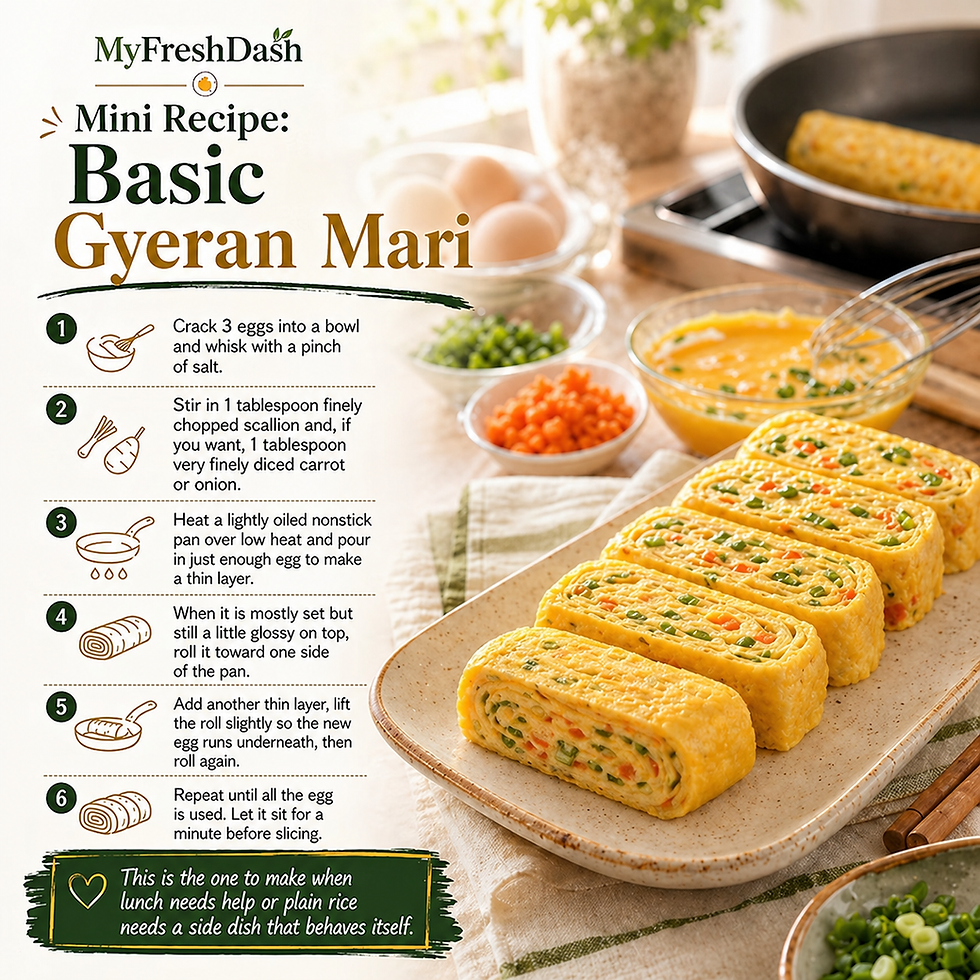
Mini recipe: Basic gyeran mari
Crack 3 eggs into a bowl and whisk with a pinch of salt. Stir in 1 tablespoon finely chopped scallion and, if you want, 1 tablespoon very finely diced carrot or onion. Heat a lightly oiled nonstick pan over low heat and pour in just enough egg to make a thin layer. When it is mostly set but still a little glossy on top, roll it toward one side of the pan. Add another thin layer, lift the roll slightly so the new egg runs underneath, then roll again. Repeat until all the egg is used. Let it sit for a minute before slicing.
This is the one to make when lunch needs help or plain rice needs a side dish that behaves itself.
Soy eggs are the ones that make the fridge look smarter than it is
Soy eggs solve a different kind of weeknight.
They are not about neatness. They are about leverage.
A bowl of rice with nothing much going on becomes dinner once a soy egg lands on top. Leftover noodles get more interesting. A tired lunch suddenly has flavor, protein, and a little bit of sauce to drag through the rice. That is why soy eggs keep earning fridge space. They keep rescuing meals after the cooking part is over.
The best ones have a yolk that stays a little creamy and whites that soak up enough soy-salty sweetness to make the bowl feel deeper than it should for so little effort.
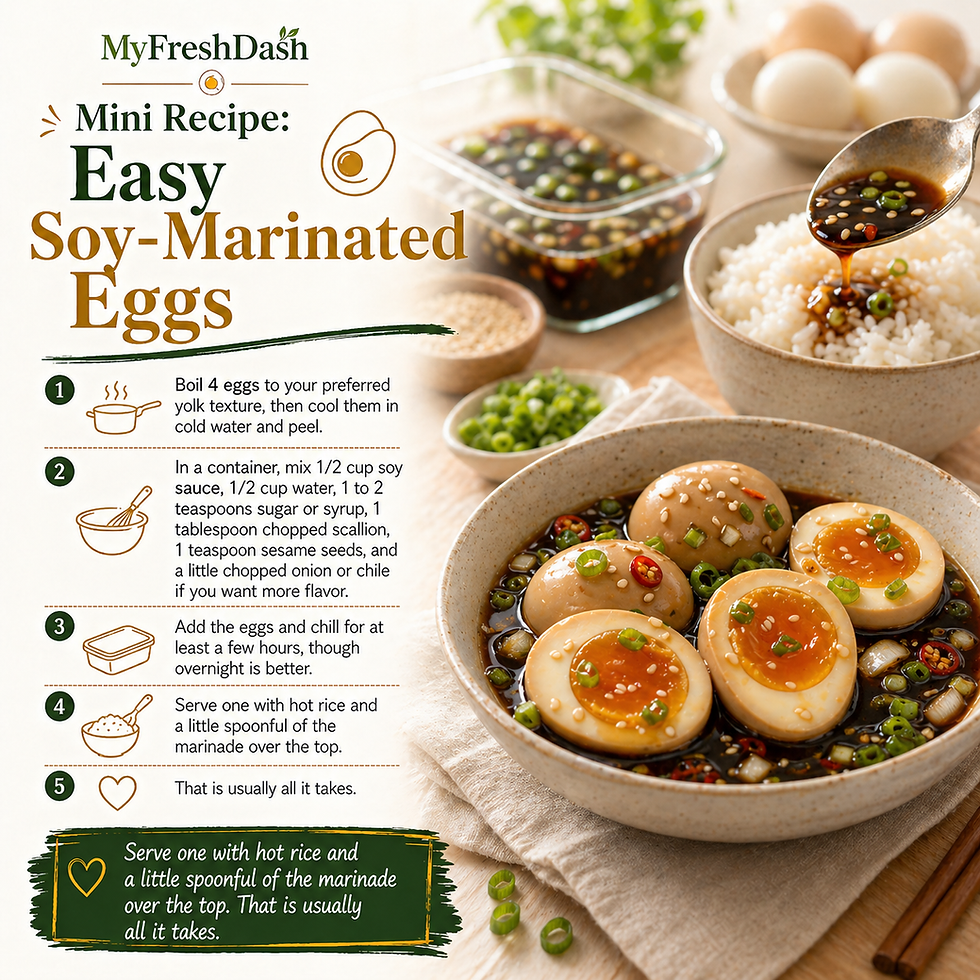
Mini recipe: Easy soy-marinated eggs
Boil 4 eggs to your preferred yolk texture, then cool them in cold water and peel. In a container, mix 1/2 cup soy sauce, 1/2 cup water, 1 to 2 teaspoons sugar or syrup, 1 tablespoon chopped scallion, 1 teaspoon sesame seeds, and a little chopped onion or chile if you want more flavor. Add the eggs and chill for at least a few hours, though overnight is better.
Serve one with hot rice and a little spoonful of the marinade over the top. That is usually all it takes.
👉 If soy eggs sound like the side dish you would actually keep using, this Korean soy sauce eggs recipe is the better next step.
Steamed eggs are what you make when the table needs calming down
Steamed eggs, or gyeran jjim, are less about convenience than they are about comfort.
They show up best when the meal has too much edge and needs something soft to lean against. Kimchi jjigae gets easier to eat with steamed eggs beside it. A grilled meat dinner feels rounder. A sparse rice meal stops feeling thin. Even on their own, steamed eggs make a table feel more cared for.
That is because gyeran jjim does not just add protein. It changes the pace of the meal. Suddenly there is something warm and spoonable that asks you to slow down a little.

Mini recipe: Easy gyeran jjim
Whisk 3 eggs with 3/4 cup water or light broth and a pinch of salt until the mixture looks smooth. Stir in 1 tablespoon chopped scallion. Pour into a small heatproof bowl and steam gently, or microwave in short bursts, until softly set and puffed. Finish with a few drops of sesame oil or a sprinkle of sesame seeds.
It should come out tender and a little jiggly, not tight and dry. This is the bowl to make when the rest of the meal is loud.
👉 If you want the fastest version, this Korean steamed eggs recipe shows how to make gyeran-jjim in the microwave.
Which one fits your meal best?
This is the fastest way to decide.
Choose rolled omelet when the meal needs a neat, mild side that slices cleanly and stays in its lane.
Choose soy eggs when you want the egg to keep helping later, not just right now.
Choose steamed eggs when the meal needs warmth, softness, and something that takes the pressure off stronger flavors.
That is the real difference.
Not which dish is most popular.
Which kind of help the meal is asking for.
👉 If you want another easy protein side beyond eggs, this guide to Korean tofu types explains which tofu works best for stews, soups, pan-frying, and side dishes.
Which one is best with plain rice?
Plain rice makes the differences especially obvious.
Rolled omelet makes rice feel tidier and a little more complete, especially when there are one or two other simple sides nearby.
Soy eggs make rice feel more deliberate. The marinade does a lot of heavy lifting, so even a very plain bowl can start feeling like an actual low-effort meal instead of just rice and an egg.
Steamed eggs make rice feel softer and more comforting, especially when the weather is cold or the rest of dinner is soup-heavy or spicy.
So yes, all three go with rice. They just change the mood of the rice in different ways.
👉 If plain rice still needs a simple protein side, pan-fried Korean tofu is another easy banchan-style option to understand.
Which one is easiest for beginners?
Soy eggs are usually the easiest to like, but not always the easiest to execute perfectly on the first try. Soft-boiled eggs and peeling can still go wrong.
Steamed eggs are probably the most forgiving overall because even a less-than-perfect bowl still tastes warm and good. Rolled omelets take a little more practice if you want them to look neat, though the flavor comes together quickly even before the technique does.
The better beginner question is usually this: which one are you most likely to keep making?
If you like meal prep, start with soy eggs.
If you like immediate comfort, start with steamed eggs.
If you want something lunchbox-friendly or plate-friendly, start with rolled omelet.
Which one is best for meal prep?
Soy eggs, easily.
This is where they separate themselves from the other two. Rolled omelets are best when reasonably fresh. Steamed eggs are best warm. Soy eggs get more useful after they sit.
That is what makes them such a strong fridge-side dish. They improve, then keep helping.
So if the question is which Korean egg side dish gives the best return over several meals, soy eggs win without much argument.
Which one feels most comforting?
Steamed eggs.
Rolled omelets are pleasant. Soy eggs are satisfying. Steamed eggs are comforting in a way the others are not.
They are warm, soft, and quietly filling. They make spicy food easier. They make lean meals feel less lean. They are the egg side dish most likely to make the whole table feel gentler.
That is why they keep showing up next to strong stews and grilled meats. They do not compete. They soften the landing.
👉 Browse our [Korean Recipes] for more options.
Final bite
Korean egg side dishes are not just three different egg recipes sitting in the same category.
They are three different ways to make a meal feel more complete.
Rolled omelets bring neatness.
Soy eggs bring staying power.
Steamed eggs bring comfort.
Once you know which one your meal is missing, the choice gets much easier and the eggs stop feeling interchangeable.
Related posts to read next
FAQ
What is the difference between gyeran mari and gyeran jjim?
Gyeran mari is a rolled omelet that gets sliced and served as a neat side dish. Gyeran jjim is steamed egg that comes out soft, spoonable, and much more like warm comfort food.
Are soy eggs considered banchan?
Yes, they can be. Soy-marinated eggs often work as a fridge-ready side dish or topper that makes rice and noodle meals more substantial.
Which Korean egg side dish is best for lunchboxes?
Rolled omelet is usually the best fit because it slices cleanly, packs neatly, and stays tidy next to rice and other sides.
Which Korean egg side dish is best for meal prep?
Soy eggs are usually the best for meal prep because they hold well in the fridge and keep helping with meals for several days.
Which Korean egg side dish is best with spicy food?
Steamed eggs are usually the best match because their soft, warm texture helps calm strong spicy flavors.
Which one is easiest for beginners?
Steamed eggs are usually the most forgiving, while soy eggs are often the easiest to keep using once you make a batch. Rolled omelets take a little more practice if you want them to look neat.
Can I make all three with basic pantry ingredients?
Yes. Eggs, soy sauce, a little sweetness, scallion, and basic seasonings cover most of what you need for simple home versions of all three.


Comments