
.png)
Mayak Eggs (Korean Soy Sauce Eggs) – Easy No-Simmer Recipe

Updated: May 19

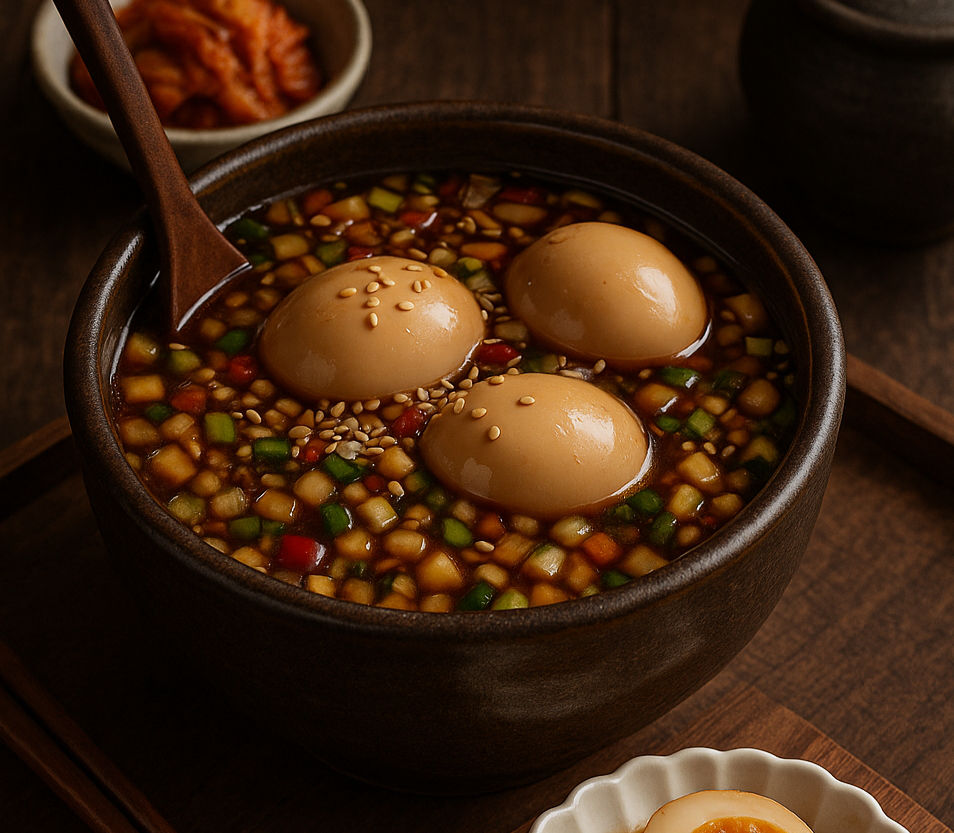
Mayak eggs are the kind of fridge banchan that make plain rice feel unfairly good.
One soft-boiled egg, a spoonful of soy marinade, a little scallion and chili over hot rice, and suddenly lunch does not feel like a backup plan anymore. The whites turn savory and lightly stained. The yolks stay jammy on day one, then grow thicker and silkier as they sit. The sauce does half the work for you.
This version keeps the method simple: boil the eggs, peel them while they are still slightly warm, then soak them in a no-simmer soy marinade with kelp broth, garlic, onion, scallion, chili, and ginger. No braising, no long cooking, no rubbery whites.
The trick is time, not effort. After 6 to 12 hours, the eggs are bright, glossy, and ready for rice bowls. After two or three days, the yolks turn deeper, jelly-soft, and richer. Make a batch once, and the fridge starts feeling much more useful all week.
👉 If you want to compare soy eggs with rolled omelets and steamed eggs, start with this guide to Korean egg side dishes.
TL;DR
Make mayak eggs when you want an easy Korean soy-marinated egg that works over rice, ramen, noodles, lunch boxes, or quick snacks.
The method is simple:
Soft-boil the eggs for about 7 minutes for jammy yolks.Peel them while slightly warm so the shells come off more cleanly.Mix a no-simmer soy marinade with kelp broth, brewed soy sauce, cooking wine or mirin, sugar, oligosaccharide, garlic, onion, scallion, chili, and ginger.Marinate 6 to 12 hours for runny, glossy yolks.Marinate 2 to 3 days for deeper flavor and jelly-soft centers.
The best way to eat them is over hot rice with a spoonful of marinade, crunchy aromatics, sesame seeds, and a tiny drizzle of sesame oil.

What Is a Mayak Egg?
A mayak egg is a Korean soy-marinated egg, usually soft-boiled so the yolk stays jammy, then soaked in a savory-sweet soy sauce marinade with garlic, scallion, onion, chili, and sesame.
The name mayak gyeran is often translated as “addicting eggs,” not because there is anything unusual in them, but because they disappear fast. One egg over hot rice with a spoonful of marinade can easily turn into two.
Unlike soy-braised eggs, mayak eggs are not simmered in the sauce. The eggs are boiled separately, peeled, then marinated cold. That keeps the whites tender and lets the yolks stay soft, glossy, and rich instead of turning firm all the way through.
The best part is how useful they are. Keep a container in the fridge and you have an instant topping for rice, ramen, noodles, lunch boxes, or quick snacks. The egg gives richness, the marinade gives salty-sweet depth, and the chopped aromatics make each bite feel fresh instead of flat.
At a Glance
Prep: 20 min (plus chopping)
Cook: ~7 min
Marinate: 6–12 hr (runny) or 2–3 days (jelly-soft)
Yield: 6–8 eggs
Category: Korean Banchan
Ingredients
Eggs
6–8 large eggs
1 Tbsp coarse salt (for boiling water)
Aromatics
½ onion, finely minced
1 large scallion white, minced
2 Cheongyang chilies (or 1–2 jalapeños), minced
1 red chili, minced
1 Tbsp minced garlic
1 small knob fresh ginger, thick slices
No-Simmer Marinade
100 ml kelp (dashima) broth
100 ml brewed soy sauce (yangjo ganjang or similar light soy)
20 ml cooking wine or mirin
30 ml oligosaccharide (or light corn syrup/honey)
30 ml sugar
To finish (optional)
Toasted sesame seeds or a few drops of sesame oil
Step-by-Step Instructions
1) Temper & prep
If your eggs are fridge-cold, rest them at room temperature for ~20 minutes so the shells don’t crack in boiling water. Mince the onion, scallion, chilies; slice the ginger.
2) Make the no-simmer marinade
In a bowl, mix soy sauce, cooking wine, sugar, and oligosaccharide until the sugar dissolves. Stir in 100 ml kelp broth. Keep it cold—no heating.
3) Boil perfect soft eggs
Bring plenty of water to a rolling boil and add 1 Tbsp salt.

Lower eggs gently with a ladle/strainer so they don’t hit the pot and crack.

Cook 6:30–7:30 minutes for flowing, honey-soft yolks (I like 7:00).
After 1–2 minutes, gently swirl the pot; this recenters the yolks for pretty halves.
Transfer to cold water just until the heat stops. Don’t ice for long—over-chilling tightens the membrane and can tear the whites when peeling.

Peel while slightly warm so the shells slip off in big pieces.

4) Marinate
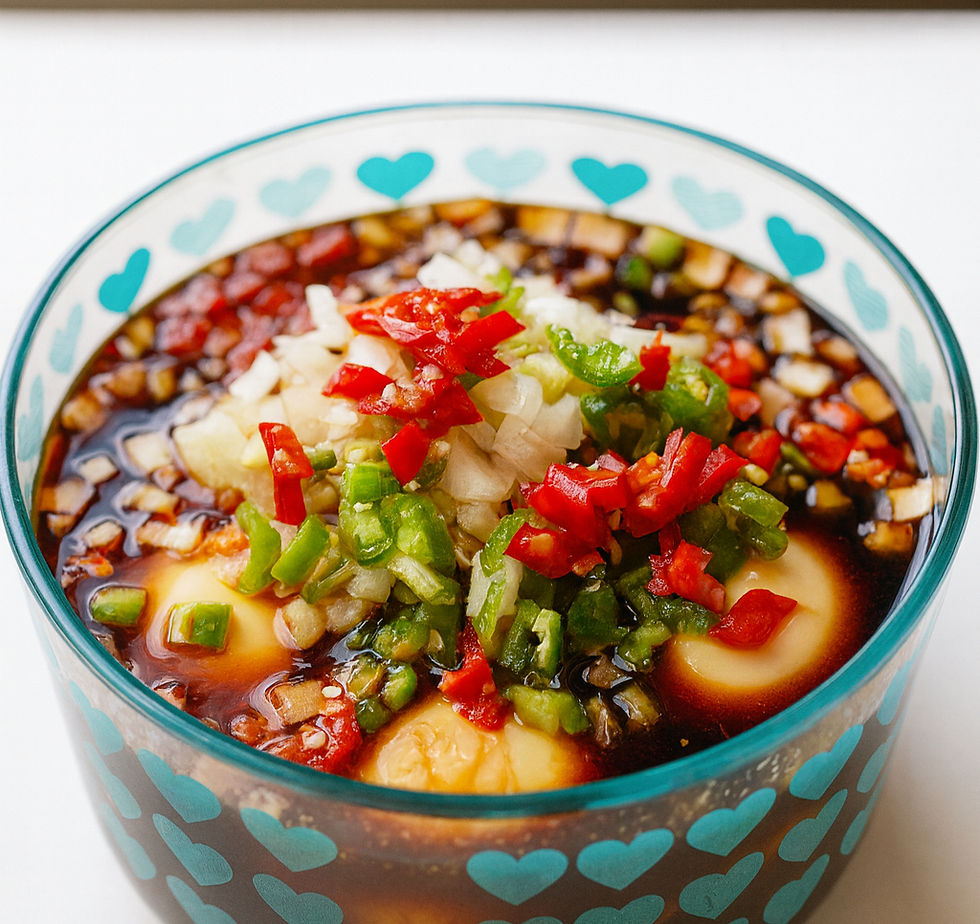
Place peeled eggs in a clean container with all the aromatics. Pour in the marinade to fully submerge. Refrigerate 6–12 hours for runny yolks or 2–3 days for jelly-soft centers and deeper flavor.

5) Serve
Spoon a little marinade over hot rice and top with an egg. Finish with sesame seeds or a light drizzle of sesame oil.


Flavor & Texture Timeline
Day 1 (6–24 hr): bright soy flavor; yolks flow like warm honey.
Day 2–3: yolks set to a tender jelly; marinade tastes rounder and nuttier.
Tips for Success
Center the yolk: that gentle swirl during boiling makes clean halves.
Don’t over-ice: peel when still slightly warm for easy shells.
Use brewed soy: Korean yangjo ganjang is balanced and not overly salty.
Hygiene matters: since the marinade isn’t boiled, keep everything refrigerated and use clean utensils.
👉 Browse our [Korean Recipes] for more options.
Final Verdict
Mayak eggs are one of the easiest Korean banchan to justify keeping in the fridge because they make simple meals better without needing another dish.
The eggs bring softness and richness. The soy marinade adds salt, sweetness, garlic, chili, and kelp-backed umami. The chopped aromatics give each bite crunch and freshness. Together, they turn hot rice, ramen, noodles, or a lunch box into something that tastes planned, even when it was not.
The biggest keys are simple: use a 7-minute soft boil, peel the eggs while they are still slightly warm, keep the marinade cold, and give the eggs enough time to absorb flavor.
Eat them on day one if you want a runnier yolk. Wait until day two or three if you want that deeper, jelly-soft center.
For a low-effort fridge staple, mayak eggs do exactly what great banchan should do: sit quietly in the container, then make every fast meal feel more complete.
Related Posts to Read Next
FAQ
What are mayak eggs?
Mayak eggs are Korean soy-marinated eggs, usually soft-boiled and soaked in a savory-sweet soy sauce marinade with aromatics like scallion, garlic, onion, chili, and sesame. The name is often translated as “addicting eggs” because they are easy to keep eating with rice.
How long should mayak eggs marinate?
Marinate them for 6 to 12 hours if you want runny, glossy yolks and a lighter soy flavor. Let them sit 2 to 3 days if you want deeper flavor and thicker, jelly-soft yolks.
How long should I boil eggs for mayak eggs?
About 7 minutes is the sweet spot for jammy yolks. Go closer to 6:30 for softer centers and closer to 7:30 if you want the yolks a little more set.
Do I need to simmer the marinade?
No. This version uses a no-simmer marinade, which keeps the method fast and helps the eggs stay tender. Just dissolve the sugar well, mix the marinade cold, add the aromatics, and refrigerate the eggs as they soak.
What is the best way to eat mayak eggs?
The easiest way is over hot rice with a spoonful of marinade and some of the chopped aromatics. They are also good on ramen, udon, cold noodles, lunch boxes, rice bowls, or simple vegetable plates.
How long do mayak eggs last in the fridge?
They are best within 4 to 5 days when kept refrigerated and handled with clean utensils. The flavor is usually strongest and most balanced around day two or three.
Can I reuse mayak egg marinade?
Do not reuse the marinade for another batch of eggs. After the eggs are gone, you can boil the leftover marinade briefly, cool it, and use it as a dipping or brushing sauce for tofu, dumplings, rice balls, fish cakes, or roasted vegetables.


Comments