
.png)
Easy Korean Seaweed Soup with Beef & Pollock – No Stir-Frying Needed!

Updated: Nov 29, 2025
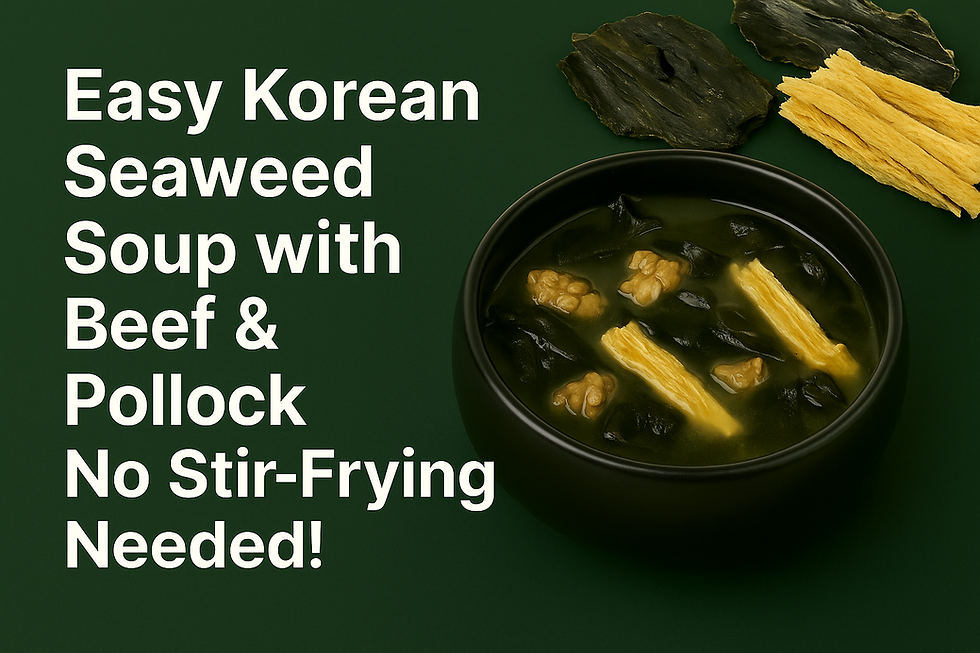
Soak miyeok and dried pollock, add them to a pot with soup-cut beef, water (plus pollock soak), and anchovy-kelp broth tablets; season with garlic and fish sauce and gently simmer ~30 minutes for a clean, rich broth

When you think of Korean seaweed soup (Miyeokguk), it’s often associated with birthdays and special occasions. But what if I told you that you could make a rich, deep-flavored Miyeokguk without stir-frying, and it still tastes like grandma’s cooking? This Beef & Pollock Miyeokguk recipe is all about simplicity — clean flavors, no-fuss cooking, and wholesome ingredients. Perfect for busy days when you want something nourishing but don’t want to spend hours in the kitchen.
TL;DR:
Make easy Korean seaweed soup with beef and pollock in one pot, no stir frying needed, for a light, cozy everyday Korean meal.
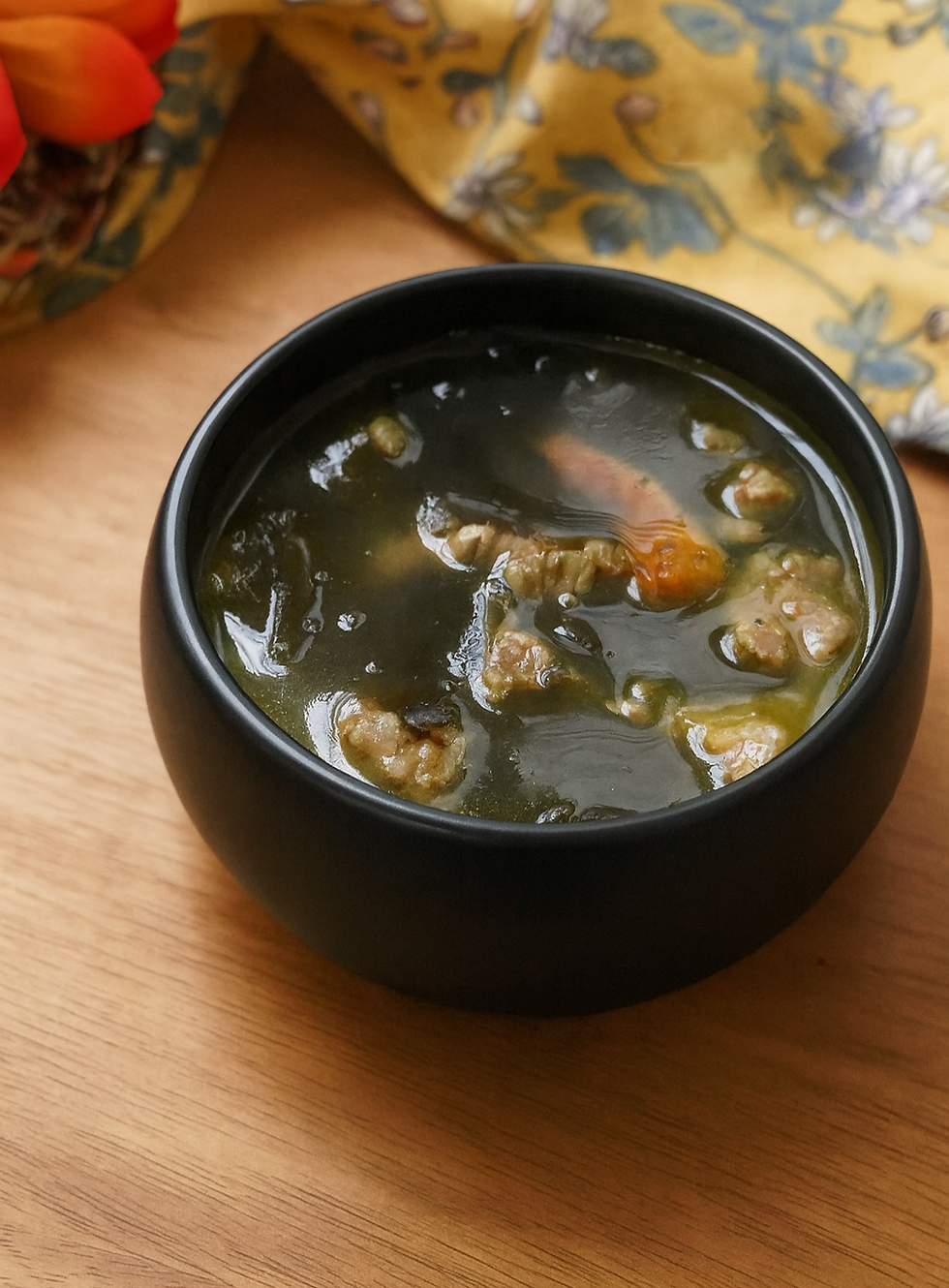
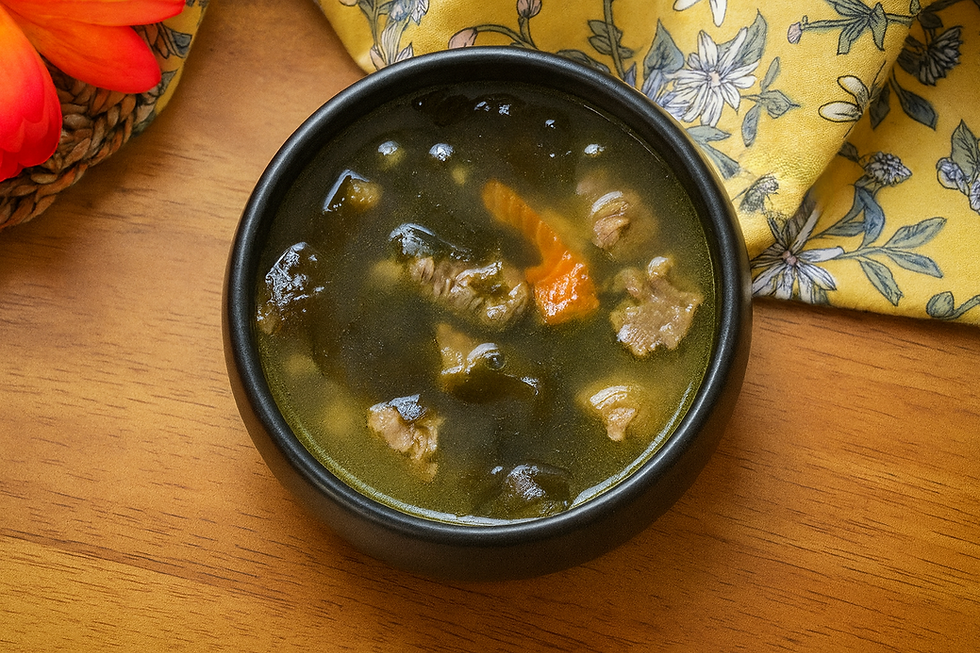
With dried seaweed, tender beef slices, and a secret umami boost from dried pollock (hwangtae), this recipe brings together all the comforting elements of traditional Korean home meals. Best part? You just toss everything into a pot and let it simmer.
If you’re looking for an easy go-to Korean soup that warms you up from the inside out, this is it.
Ingredients:
Dried Seaweed (Miyeok) – 15g
Dried Pollock Strips (Hwangtaechae) – 20g
Beef for Soup (Chuck/Brisket) – 200g
Anchovy & Kelp Broth Tablets – 2 pcs
Water – 1.5 liters (including 200ml pollock soaking water)
Minced Garlic – 1 tbsp (15ml)
Fish Sauce – 1 tbsp (15ml)
Ground Black Pepper – to taste
Instructions
1. Prepare the Ingredients
Soak Seaweed (Miyeok): Soak 15g of dried seaweed in plenty of water for 20–30 minutes until soft. Rinse well, squeeze out water, and cut into bite-sized pieces.


Prepare Beef: Rinse 200g of soup-cut beef (chuck or brisket) to remove blood. Lightly pat dry with kitchen towels.

Handle Dried Pollock (Hwangtaechae): Soak 20g of dried pollock in 250ml water for 10 minutes. Squeeze out water, but keep the soaking liquid. Remove bones and shred pollock into thin strips.


2. Build the Broth
Place beef, soaked seaweed, and pollock into a large pot.

Pour in 1.3 liters of fresh water, along with the reserved 200ml pollock soaking water, making a total of 1.5 liters.

Add 2 anchovy & kelp broth tablets.

Bring to a boil over medium heat. As the broth comes to a boil, foam will form — don’t skim it off right away. Stir it into the broth for added flavor.

3. Season and Simmer
Add 1 tablespoon minced garlic and 1 tablespoon fish sauce.

Reduce the heat to medium-low.
Cover loosely and simmer for about 30 minutes until the beef is tender and the broth is rich.
If using, you can substitute the fish sauce with soup soy sauce or anchovy extract depending on preference.
4. Final Adjustments
As it simmers, beef fat will render into the broth, giving it a naturally rich and nutty flavor.
If the broth reduces too much, add hot water to adjust.
Taste and adjust seasoning with fine sea salt.
Finish with a dash of ground black pepper.

5. Ready to Serve
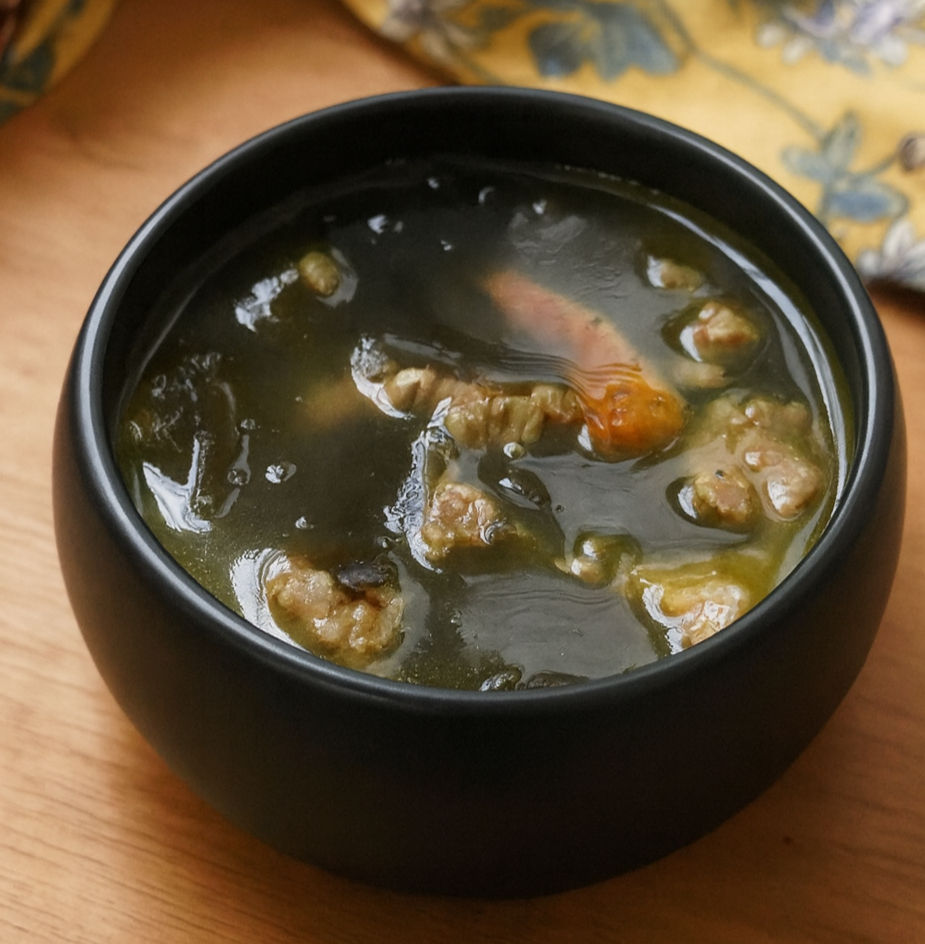
Serve hot in a large bowl with a side of rice. You’ll get a deep, clean taste that feels light but is packed with umami richness. Perfect for birthdays, postpartum recovery, or just a cozy meal at home.
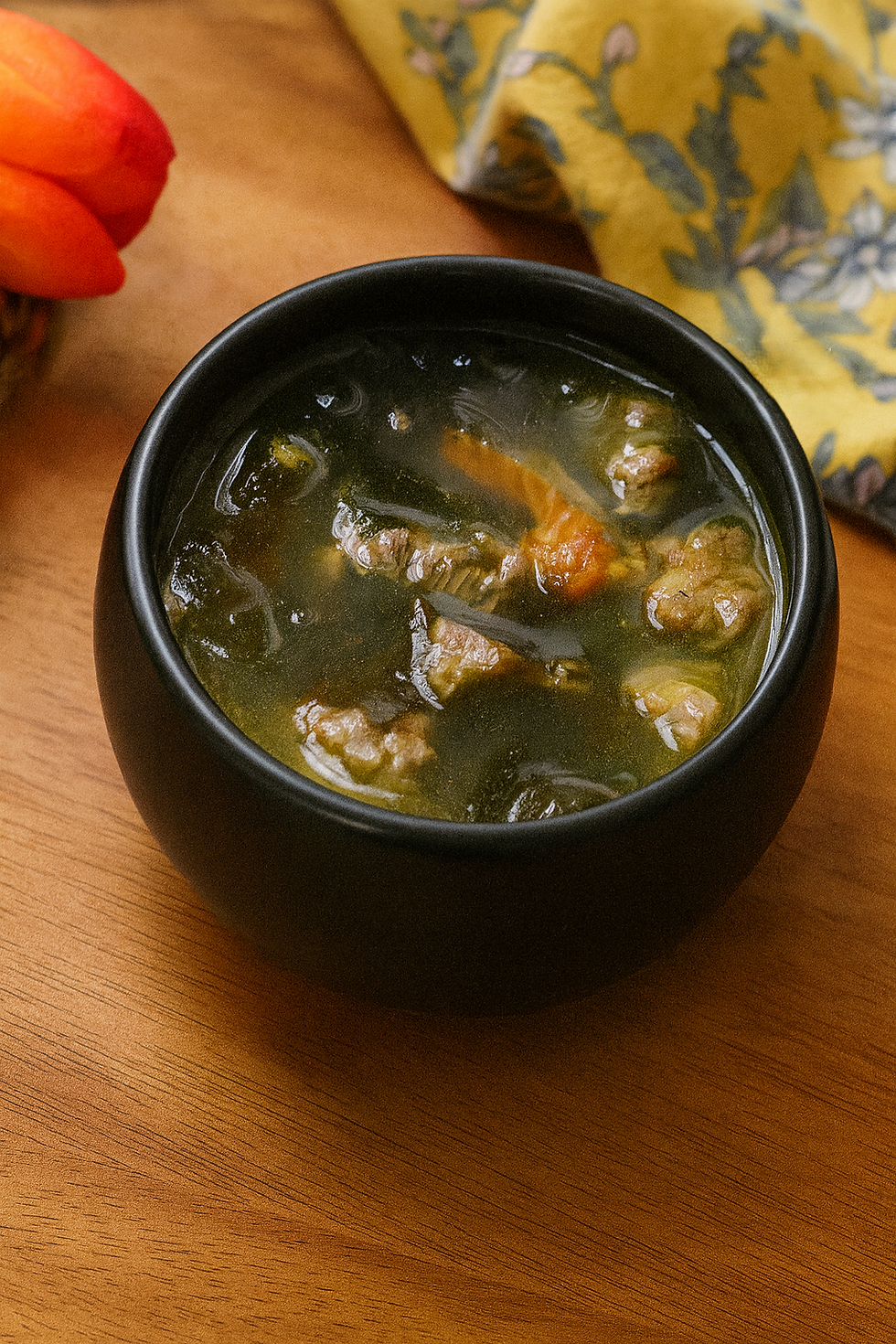
Why This Recipe Works:
No stir-frying: Save time and skip the oil — the broth stays light and refreshing.
Dried Pollock (Hwangtae): Adds a subtle sweet-savory depth.
One-pot method: Everything simmers together, bringing out maximum flavor with minimal effort.
Perfect for any meal: Light enough for breakfast, hearty enough for dinner.
Looking for more simple and delicious Korean recipes like this?👉 Check out more Quick & Easy Recipes here
Recommended from MyFreshDash
• Simple tuna rice porridge — gentle, cozy bowl for sick-day comfort.
• Kimchi budae jjigae — hearty, spicy stew when you want something bolder.
• Mayak eggs (soy-sauce eggs) — jammy protein that pairs with soup + rice.

FAQ: Easy Korean Seaweed Soup with Beef & Pollock – No Stir-Frying Needed
1. What makes this seaweed soup different from regular miyeokguk?
This version skips stir-frying and oil completely. Instead of sautéing seaweed and beef, everything goes straight into a pot with dried pollock, anchovy-kelp broth tablets, and water. The result is a clean, deep broth that tastes like traditional miyeokguk but feels lighter and easier to digest.
2. Why do you add dried pollock along with the beef?
Dried pollock brings a gentle sweet-savory flavor and extra umami to the soup. When it simmers with beef and seaweed, it boosts the broth’s depth without making it heavy. It also helps recreate that comforting “home-cooked” flavor you usually only get from long-simmered soups.
3. Do I really not need to stir-fry anything for this recipe?
Yes. There is no stir-frying step at all. You soak the seaweed and dried pollock, rinse the beef, then add them straight to the pot with water and broth tablets. The garlic, fish sauce, and rendered beef fat naturally build flavor as the soup simmers.
4. How should I soak and prepare the seaweed and dried pollock?
Miyeok should be soaked in plenty of water for about twenty to thirty minutes until it softens, then rinsed, squeezed, and cut into bite-sized pieces. Dried pollock is soaked for about ten minutes, then squeezed, de-boned, and shredded into thin strips, while the soaking liquid is saved and added to the soup for extra flavor.
5. What kind of beef works best, and can I substitute the seasonings?
Soup-cut beef such as chuck or brisket works best because it becomes tender and releases flavor into the broth. If you do not have fish sauce, you can season with soup soy sauce or anchovy extract instead. A final pinch of fine sea salt and black pepper lets you adjust the taste to your preference.
6. Is this seaweed soup only for birthdays and postpartum, or can I eat it anytime?
While seaweed soup is famous as a birthday and postpartum dish, this version is light enough for breakfast and still hearty enough for lunch or dinner. It works for everyday meals, recovery days, and any time you want something warm and nourishing without heavy oil or spice.
7. Can I make this soup ahead of time, and how should I store it?
Yes. The soup actually tastes even better after resting. Once cooled, store it in an airtight container in the refrigerator for up to a few days. Reheat gently on the stove, adding a splash of water if the broth reduced. It can also be frozen in portions, though the seaweed may become slightly softer after thawing.



Comments