
.png)
Frozen Kimbap Guide: What to Expect, How to Heat It, and Who Should Try It First

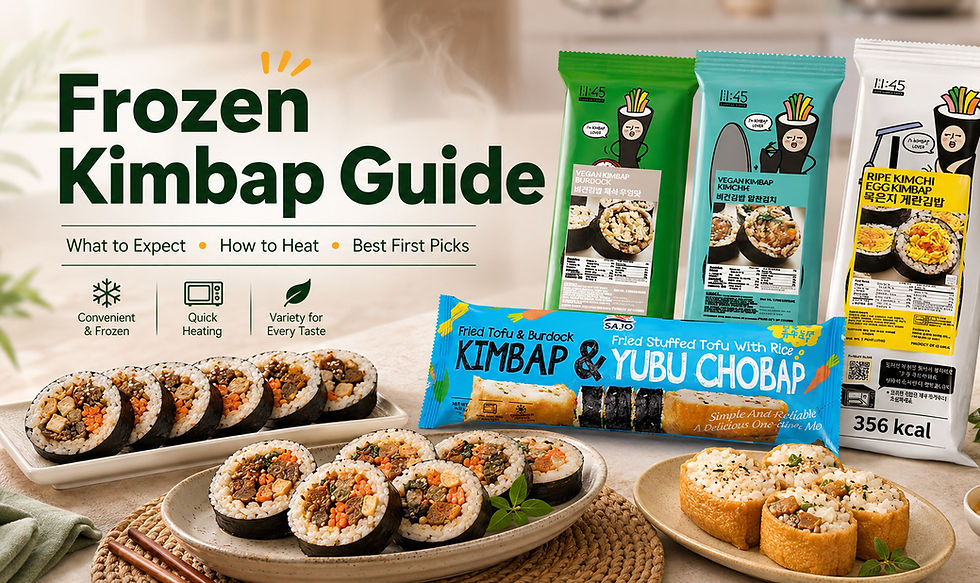
Frozen kimbap is easy to underestimate until the rice comes out wrong.
Heat it too hard and the ends can turn dry before the center wakes up. Eat it too soon and the middle may still feel cold while the seaweed has already gone soft. Treat it like fresh kimbap and it will probably disappoint you.
But when you heat it well, frozen kimbap makes a lot of sense. It gives you rice, seaweed, vegetables, and filling in a real meal shape without cooking rice, prepping fillings, rolling anything, or racing against the short shelf life of fresh kimbap.
That is the right way to judge frozen kimbap. Not as fresh kimbap frozen in time, but as a warm Korean rice meal you can keep in the freezer for the days lunch needs to happen fast.
TL;DR
Frozen kimbap is best for people who want a quick Korean rice meal that feels more complete than a snack but easier than cooking. Expect warm rice, softened seaweed, and fillings that taste best when heated gently and rested briefly before eating.
It will not taste exactly like fresh kimbap from a shop. Freezing changes rice, and reheating softens seaweed. The best frozen kimbap experience is warm, practical, and satisfying, not crisp, cold, and just-rolled.
Try frozen kimbap first if you want quick lunches, freezer-friendly rice meals, plant-based options, or something easier than making kimbap at home. Skip it if you only want cold fresh kimbap with firm seaweed and just-made rice.
What Frozen Kimbap Actually Is
Frozen kimbap is Korean rice and filling rolled in seaweed, then frozen so it can be stored and reheated later. The appeal is not hard to understand once you picture the lunch problem it solves: the roll is already made, the fillings are already balanced, and the rice meal is waiting in the freezer instead of asking you to cook from zero.
For a broader freezer shelf view before narrowing in on kimbap, start with Best Korean Frozen Foods to Try First. This frozen kimbap guide is the closer look if you want a rice-based quick meal instead of dumplings, hotdogs, rice balls, or frozen fried rice.
The important part is expectation. Frozen kimbap is not fresh deli kimbap paused perfectly in time. Freezing changes the rice. Reheating changes the seaweed. The best versions should be judged like convenience rice meals, not picnic kimbap that was rolled that morning.
What the Texture Is Really Like
The rice decides whether frozen kimbap works.
Good frozen kimbap should heat into rice that feels warm, soft, and held together without turning mushy. The center should not be cold. The edges should not feel dry or stiff. The roll should still eat like kimbap, even if the texture is softer than fresh.
The seaweed will soften. That is normal. It is not going to behave like a crisp triangle kimbap wrapper or a fresh roll packed right before lunch. Once rice and seaweed have been frozen, reheated, and steamed together, the seaweed becomes tender and closer to part of the roll than a separate crisp layer.
The best bite usually comes after a short rest. Straight from the microwave, the heat can be uneven and the rice may still be settling. Give it a minute and the center often catches up, the rice softens more evenly, and the filling tastes less muted.
How to Heat Frozen Kimbap Without Ruining It
Follow the package directions first. Different fillings, trays, wrappers, and microwave strengths can change the timing.
The goal is not maximum heat. The goal is even heat. Frozen kimbap tastes worse when the outside gets blasted while the center is still catching up. Shorter heating, a brief rest, and one small follow-up round if needed usually work better than one aggressive microwave run.
Use this as the practical cue:
Heat gently first instead of going straight to the longest time.
Keep the kimbap covered if the package suggests it, so the rice does not dry out.
Let it rest before judging the texture.
Check the center before adding more time.
Add a short extra burst only if the middle is still cold.
Stop trying to make the seaweed crisp. Frozen kimbap is not that format.
The warning sign is dry rice at the ends with a center that still feels cool. That usually means the heat was too strong or too rushed. A short rest is not optional filler here. It is part of getting the rice closer to the texture you want.
Which Frozen Kimbap Should You Try First?
The best first frozen kimbap is the one that fits your normal lunch mood, not the one that sounds most unusual for one bite.
👉 Choose Bokmansa Ripe Kimchi Egg Kimbap if you want the filling to show up clearly. Kimchi gives the roll tang, savory depth, and a little bite, while egg makes it feel more rounded. This is the better first pick for someone who likes bolder Korean flavors and does not want the rice to do all the work.
👉 Choose Bokmansa Japchae Vegan Kimbap if you want the gentlest plant-based start. Japchae gives the filling a soft noodle-and-vegetable feel, which works well for a calm lunch, a light freezer meal, or someone who wants frozen kimbap without strong kimchi or seafood flavor.
👉 Choose Bokmansa Hijiki Tofu Vegan Kimbap if tofu and seaweed already sound good to you. It is more savory and ocean-leaning than the japchae version, so it is not the most neutral first pick. It makes more sense for someone who wants a vegan roll with deeper, less sweet comfort.
👉 Choose Sajo Kimbap & Yubu Chobap if you want variety instead of one full roll mood. The yubu chobap side adds a sweet-savory tofu-skin bite, which makes this feel more like a light plate or snack meal than a single lunch roll.
The easy first-buy split is simple: kimchi egg for flavor, japchae for calm comfort, hijiki tofu for deeper vegan savory, and kimbap with yubu chobap for variety.
Frozen Kimbap vs Fresh Kimbap
Fresh kimbap wins on just-made texture. The rice has more life, the vegetables feel brighter, and the seaweed has not spent time absorbing moisture. If you are near good fresh kimbap and plan to eat it soon, fresh is still the better pure kimbap experience.
Frozen kimbap wins on timing.
You can keep it for the day lunch falls apart. You can heat one when there is nothing cooked. You can try different fillings without buying fresh rolls that need to be eaten quickly. That convenience is not a small thing, especially if you shop for one person or want freezer meals that do not feel like another bowl of noodles.
Think of fresh kimbap as the better texture choice. Think of frozen kimbap as the better backup-meal choice. Both make sense. They just solve different problems.
Frozen Kimbap vs Triangle Kimbap and Rice Balls
Frozen kimbap, triangle kimbap, and rice balls all sit in the Korean quick rice-meal world, but they do not eat the same way.
Frozen kimbap feels more like a sliced meal. You get several bites, visible fillings, and a roll format that works well on a plate. Triangle kimbap is tidier and more portable, especially for desk lunches or on-the-go eating. Rice balls are usually the most heat-and-eat friendly because they are compact and built around warm rice comfort.
For a full format comparison, read Kimbap vs Triangle Kimbap vs Rice Balls: Which Korean Grab-and-Go Meal Fits Your Routine Best?. That guide is better if you are deciding between shapes. This one is for when frozen kimbap is already the format you are considering.
Who Should Try Frozen Kimbap First?
Try frozen kimbap first if lunch is the meal that keeps slipping through the cracks.
It works well for people who want something more complete than chips, crackers, or a snack bar but do not want to cook a full meal. It also fits people who like rice-based lunches, quick plant-based options, and freezer foods that feel lighter than dumplings, fried snacks, or saucy microwave bowls.
It is especially useful if you live alone or buy groceries for one person. Fresh kimbap can be annoying because the clock starts ticking as soon as you bring it home. Frozen kimbap gives you more control. You can eat one when you need it instead of forcing a fresh roll into your day before the rice dries out.
Skip frozen kimbap if you are very texture-sensitive about rice. If slightly softer reheated rice bothers you, this category may frustrate you. Skip it if you want cold, crisp, fresh kimbap. Frozen kimbap is about warm convenience, not fresh-roll snap.
What to Eat With Frozen Kimbap
Frozen kimbap can stand alone, but the right side makes it feel less like a freezer shortcut.
For a desk lunch, add kimchi or pickled radish. You want crunch and acidity because warm rice and softened seaweed can feel too soft on their own.
For a light dinner, add soup. Seaweed soup, miso soup, instant broth, or a simple Korean-style soup gives the plate warmth and makes the kimbap feel more like a meal.
For a snack plate, add cucumber, fruit, a boiled egg, or pickled vegetables. That keeps the plate fresh without turning it into cooking.
For a more filling freezer meal, add dumplings or a small salad. The trick is not to overbuild it. Frozen kimbap is supposed to lower the effort, not become a project.
Common Frozen Kimbap Mistakes
The first mistake is overheating it. Too much heat can dry the rice edges before the center improves. Gentle heating and a short rest usually do more than extra time.
The second mistake is expecting the seaweed to behave like fresh kimbap. It will soften. That is part of the frozen format. If crisp seaweed is the whole point for you, triangle kimbap may be a better match.
The third mistake is eating it without contrast. Warm rice and softened seaweed can feel flat if every bite is soft. Kimchi, pickled radish, cucumber, or a light soup gives the meal a clearer shape.
The last mistake is buying the boldest filling first when you really wanted a calm lunch. Frozen kimbap is easy to keep around, so choose the flavor you would actually eat on a normal day, not the one that only sounds interesting once.
👉 Browse our [Instant & Quick Food category] for more options.
Final Buying Advice: Is Frozen Kimbap a Good First Try?
Frozen kimbap is a good first try if you want Korean frozen food that behaves like a real quick meal.
It is not the best first pick for someone chasing perfect fresh-kimbap texture. It is better for the person who wants rice, filling, and convenience in one neat format. The rice will be softer. The seaweed will be gentler. The best versions feel warm and practical rather than fresh and crisp.
Start with a filling that matches your actual routine. Kimchi egg if you want flavor and tang. Japchae if you want a calmer plant-based lunch. Hijiki tofu if you like tofu, seaweed, and deeper savory flavors. Kimbap with yubu chobap if you want a light mix instead of one full roll direction.
That is the real frozen kimbap test: not whether it can replace fresh kimbap, but whether it makes a busy lunch easier enough that you are glad it is waiting in the freezer.
Related Posts to Read Next
FAQ
What is frozen kimbap?
Frozen kimbap is Korean rice, fillings, and seaweed rolled together, frozen for storage, and reheated before eating. It works best as a warm convenience rice meal, not as a perfect copy of fresh kimbap.
Is frozen kimbap good?
Frozen kimbap can be good if you expect warm rice, softened seaweed, and convenient meal-like texture. It is strongest when you want a fast lunch or light meal, not when you want fresh deli-style kimbap.
How do you heat frozen kimbap?
Follow the package directions first. In general, heat gently, use short intervals if needed, and let the kimbap rest briefly before eating so the rice texture can even out.
Can you eat frozen kimbap cold?
Most frozen kimbap is better heated because the rice needs warmth to soften properly. Cold frozen or poorly thawed rice can taste hard, dry, or uneven.
Why does frozen kimbap seaweed get soft?
Seaweed softens because freezing and reheating move moisture through the rice and wrapper. That texture is normal for frozen kimbap. If you want crisp seaweed, triangle kimbap may be a better fit.
Who should try frozen kimbap first?
Frozen kimbap is best for people who want quick lunches, rice-based meals, plant-based options, or easy freezer food that feels more complete than a snack.
What should you eat with frozen kimbap?
Kimchi, pickled radish, cucumber, light soup, boiled egg, dumplings, or a simple salad all work well. The best sides add crunch, acidity, warmth, or extra protein without making the meal complicated.


Comments