
.png)
Gamjatang: The Korean Pork Bone Soup That Feels Like a Full-On Craving

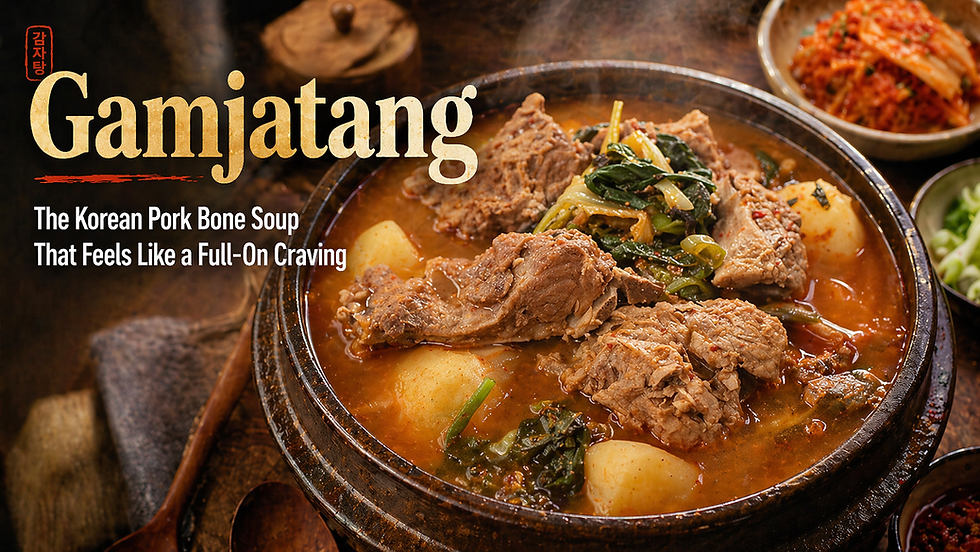
It lands on the table with bones, potatoes, greens, red broth, and enough presence to make everything else look secondary.
That is part of why people get attached to it so fast. It does not eat like a light soup or a side bowl. It eats like the whole meal, with pork clinging to the bone, potatoes breaking apart at the edges, and a broth that feels meaty, spicy, and thick with flavor even when it is not physically heavy.
If you have never had it before, the easiest way to understand gamjatang is this: it is one of those Korean dishes that feels less like something you try once and more like something you suddenly start wanting again.
TL;DR
Gamjatang is a Korean pork bone soup that feels much bigger than the word soup suggests. It is usually made with pork bones with meat still attached, plus potatoes, greens, and a rich red broth seasoned with spice, garlic, and perilla. What makes it stand out is how complete it feels. You are not just sipping broth. You are pulling meat from the bone, eating softened potatoes, spooning broth over rice, and working through a dish that lands closer to a full meal than a simple bowl of soup.
What gamjatang actually is
Gamjatang is usually described as Korean pork bone soup, and that is accurate, but it still undersells the dish.
Yes, broth is central to it. But this is not the kind of soup built around a few neat pieces floating in liquid. Gamjatang is built around pork bones, usually back bones or neck bones, with enough meat still attached that the bowl feels substantial before you even start eating. Potatoes are a common part of the dish, along with greens, scallions, garlic, and the perilla that helps give the broth its unmistakable depth.
The overall effect is closer to a stew-like meal than what many people picture when they hear soup. There is usually a little work involved. You pull the meat free. You break the potatoes with your spoon. You decide when to eat a bite with rice and when to go straight back to the broth.
That hands-on part matters. Gamjatang is not passive food.

What gamjatang tastes like
The first thing most people notice is the broth.
It tastes meaty, savory, garlicky, and warmly spicy, with the kind of depth that only really comes from simmering bones long enough for the broth to take on real body. Not creamy body. Bone-broth body. The spice is there, but it is not usually the whole point. The bigger impression is richness balanced by heat and a slightly earthy, nutty edge from perilla.
Then the other parts start changing the bowl. Potatoes absorb the broth and make each bite feel heavier in a good way. Greens bring a little softness and contrast. The pork itself adds another layer, especially when it is tender enough to pull apart but still feels like actual meat, not shreds disappearing into the soup.
That is why gamjatang tastes more complete than a lot of other soups. It has more than one thing going on at once.
Why the meat changes the whole experience
A big part of gamjatang’s appeal is that the pork is still on the bone.
That may sound like a small detail, but it changes how the dish feels from the first bite. Bone-in meat makes the bowl feel rougher, fuller, and more serious. You are not eating tidy slices dropped into broth at the last minute. You are getting meat that tastes like it belongs there.

It also changes the pace of the meal. You do not finish gamjatang in the same absentminded way you finish a lighter soup. You slow down, pull meat loose, go back for broth, then get a bite of potato, then rice. The bowl gives you more to do, which is exactly why it feels so satisfying.
This is one of the reasons people who are not usually “soup people” still end up liking gamjatang. It gives them something more substantial to lock onto.
Perilla is one of the reasons it tastes so specific
If someone describes gamjatang as just spicy pork soup, they are leaving out one of the things that makes it taste like itself.
Perilla is a big part of the dish.
Depending on the version, that may mean fresh leaves, ground perilla seed, or both. Either way, it adds a dark, nutty, slightly herbal note that keeps the broth from tasting flat or predictable. It gives the soup a deeper flavor profile than plain heat and pork alone would.

This is often the detail first-time eaters cannot quite name but still notice. The broth does not just taste rich. It tastes distinct.
Why it feels like a full meal instead of “just soup”
Gamjatang comes with too much built in to feel small.
There is broth, but there is also meat on the bone, potatoes that have soaked up the broth, greens, and usually rice on the side. The dish has starch, protein, heat, and enough weight to make ordering extra food feel optional.
That is part of why it lands so differently from lighter brothy soups. Even when the broth is the first thing you notice, it is not the only thing carrying the bowl. Gamjatang gives you multiple ways into the meal.
You can sip it.
You can treat it like a meat dish with broth.
You can spoon broth into rice and let the bowl keep changing as you eat.
That flexibility is part of the appeal.
When gamjatang sounds especially good
Cold weather helps, obviously.
But that is not the only time people want it. Gamjatang also makes sense when you are tired, underslept, run-down, or just in the mood for a meal that feels like it can actually pull its weight. It sits in that category of food people reach for when something lighter would feel annoying.
That is also why it comes up so often in conversations about late-night eating and hangover food. The dish has enough strength behind it to feel restorative without turning delicate or bland.
Who usually loves it fastest
Gamjatang tends to click quickly for people who like soups with structure.
If you already like bone-based broths, stews that eat like full meals, or dishes where the meat still feels close to the bone, gamjatang makes immediate sense. It also tends to win over people who like Korean flavors that are savory and deep first, with spice doing support work instead of trying to dominate everything.
Where it can be less immediate is for people who only want very clean broths or very tidy bowls. Gamjatang is neither. It is generous, a little rugged, and much more interested in satisfaction than elegance.
That is exactly why the people who love it usually do not feel neutral about it.
👉 Browse our [Ready-to-Eat Soup, Stew, & Porridge category] for more options.
Why gamjatang stays in your head
Because it does more than warm you up.
It gives you broth with depth, meat that actually feels substantial, potatoes that make the bowl heavier and softer at the same time, and that perilla note that keeps the whole thing from tasting generic. The dish keeps changing as you eat it, which is part of why it feels bigger in memory than many soups do.
A lot of soups are good in the moment and then disappear.
Gamjatang usually does not disappear.
It is the kind of bowl that makes sense while you are eating it, then makes even more sense the next time you are cold, hungry, or choosing between something light and something that will actually satisfy you.
That is usually when the craving starts.
Related posts to read next
FAQ
What is gamjatang?
Gamjatang is a Korean pork bone soup usually made with pork back bones or neck bones simmered into a rich, savory broth. It often includes potatoes, greens, and perilla, and it eats more like a full meal than a light soup.
What does gamjatang taste like?
Gamjatang tastes deep, savory, garlicky, and warmly spicy, with a bone-rich broth and an earthy, nutty note from perilla. It is hearty and filling rather than light or delicate.
Is gamjatang a soup or a stew?
It is technically a soup, but it often feels closer to a stew-like meal because it is so substantial. Between the pork bones, meat, potatoes, and rice on the side, it usually eats much heavier than the word soup suggests.
Why is gamjatang so comforting?
It is comforting because it combines long-simmered bone broth, tender meat, potatoes, spice, and heat in one bowl. It feels warming, filling, and restorative in a way lighter soups often do not.
Is gamjatang very spicy?
Usually it has a clear spicy edge, but the bigger impression is depth rather than pure heat. The richness of the broth and the savoriness of the pork matter just as much.
What makes gamjatang different from other Korean soups?
Its combination of pork bones, stew-like weight, potatoes, and perilla gives it a very specific identity. It is heartier and more rugged than many Korean soups, and it tends to feel more like a full meal than a simple broth dish.
Do you eat gamjatang with rice?
Usually yes. Rice makes sense with gamjatang because the soup has enough broth and intensity to carry it, and the whole meal feels more complete that way.


Comments