
.png)
How to Make Dakbokkeumtang (Korean Spicy Braised Chicken)

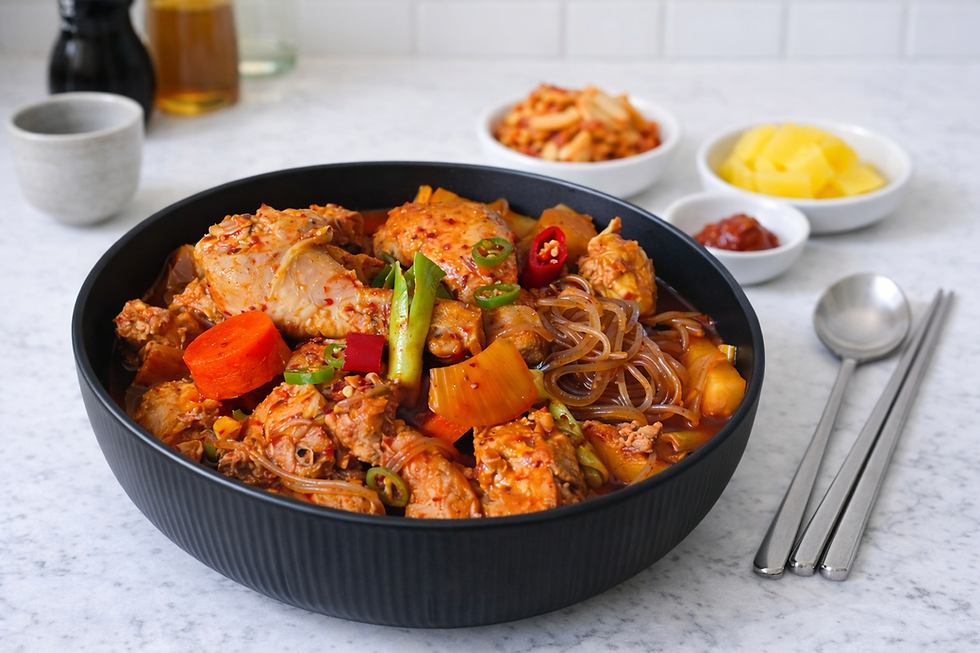
If you want a one-pot Korean dinner that tastes like it came from a real mom-and-pop spot, Dakbokkeumtang is it. Tender chicken, potatoes and carrots that soak up flavor, and a spicy red broth that’s savory, slightly sweet, and made for spooning over rice.
This version uses a simple trick that’s especially helpful if you’re cooking a whole chicken: a quick milk soak. It takes the edge off any strong chicken smell and helps the broth taste cleaner. And if you’re a noodle person, adding dangmyeon (Korean glass noodles) at the end turns this into a “why didn’t I make more?” situation.

Quick Tips Before You Start
Use bone-in chicken if you can. It makes the broth richer.
Add onion a bit later so it stays sweet and doesn’t disappear into the stew.
Fine vs. coarse gochugaru matters: fine hits sharper, coarse builds deeper chili flavor.
Skim the foam when boiling the chicken. It really helps the broth taste cleaner.
Dangmyeon goes in at the end or it can get too soft.

TL;DR
Soak chicken in milk 30 minutes, rinse well
Boil chicken with water, skim foam
Add potatoes + carrots first, onion later
Season with soy sauce, sugar, garlic, tuna fish sauce, and gochugaru
Finish with green onion + chilies (and glass noodles if using)

What Is Dakbokkeumtang?
Dakbokkeumtang (닭볶음탕) is a Korean braised chicken stew simmered with potatoes and vegetables in a spicy gochugaru-based broth. It’s hearty, bold, and meant to be eaten with rice. Like a lot of Korean stews, it’s even better after it sits for a bit, so leftovers are a win.
Ingredients (Serves 3–4)
Chicken + Base
1 whole chicken, cut into pieces (or a mix of bone-in thighs/drumsticks)
Milk (about 400 ml / 1⅔ cups), for soaking
Water (800 ml / 3⅓ cups)
Vegetables
1 potato, cut into large chunks
1 carrot, sliced thick
1 onion, roughly chopped
1 green onion, cut into 2-inch pieces
1 tbsp minced garlic (or 2–3 cloves, minced)
Seasoning (from your source)
Soy sauce (jin ganjang) – 90 ml (6 tbsp)
Sugar – 3 tbsp
Tuna fish sauce (chamchi aekjeot) – 2 tbsp
Coarse gochugaru – 4 tbsp
Fine gochugaru – 2 tbsp
Black pepper, to taste
Optional (but highly recommended)
1–2 Korean chilies (like Cheongyang chili pepper), sliced. (Skip this if you do not like or cannot eat spicy food )
Substitution notes (MyFreshDash-style):
No tuna fish sauce? Anchovy fish sauce works well. If you have neither, skip it and add 1 extra tbsp soy sauce to deepen the broth.
No Korean chilies? Use a serrano or jalapeño.
No dangmyeon (glass noodle)? You can skip noodles entirely, or add them only if you know you’ll finish the pot that night (they keep soaking up broth).

How to Make Dakbokkeumtang
1) Milk-soak the chicken (30 minutes)

Place chicken pieces in a bowl and pour in enough milk to cover (about 400 ml / 1⅔ cups). Soak for 30 minutes.

Drain, rinse the chicken thoroughly under cold water, and let it drain well.
Why this helps: it reduces odor and helps the broth taste cleaner, especially with a whole chicken.
2) Prep your vegetables
While the chicken soaks:


Potato: big chunks
Carrot: thick rounds
Onion: rough chunks
Green onion: 2-inch pieces
Chilies: slice if using
Minced Garlic
Cutting vegetables larger helps them hold their shape while simmering.

3) Boil the chicken + skim the foam

Add chicken to a wide pot and pour in 800 ml / 3⅓ cups water. Bring to a boil.
As it boils, foam will rise to the top. Skim it off for a cleaner, better-tasting broth.
4) Add potatoes and carrots first

Add potatoes and carrots to the pot. Simmer a few minutes.


Then add the onion and minced garlic (onion cooks fast, so adding it later keeps a nicer texture and sweetness).
5) Season the stew
Add the following directly into the pot:


Stir gently and keep simmering until the chicken is tender and the potatoes are soft but not falling apart.
Taste tip: If it feels a little too sharp/spicy, a small pinch more sugar helps round it out.
6) Finish with green onion (and noodles if using)
If using dangmyeon:

Soak noodles in warm water until flexible

Add them to the pot near the end and simmer until they turn clear and tender


Add green onion and sliced chilies near the end so they stay bright.
What to Serve With Dakbokkeumtang

Steamed rice (non-negotiable, the broth is made for it)
Simple banchan like cucumber salad, bean sprouts, or spinach namul
A cold drink on the side if you went heavy on the chilies

Extra Notes for the Best Pot
Want it less spicy? Reduce the fine gochugaru first (it hits sharper than coarse).
Want it richer? Simmer uncovered a bit longer to reduce and concentrate flavor.
Broth too salty? Add a splash of water.
Broth tastes flat? It usually needs either a touch more soy sauce or a small pinch of sugar.

FAQ
Do I have to soak the chicken in milk?
No, but it helps a lot if you’re using a whole chicken or you’re sensitive to chicken odor. If you skip it, rinse well and skim foam carefully.
How spicy is this?
Spicy. The best way to mellow it without losing flavor is to cut the fine gochugaru in half first. You’ll still get the red color and the chili flavor.
Can I use boneless chicken?
You can, but bone-in tastes better here. If you use boneless thighs, reduce simmer time a bit so they don’t dry out, and expect a slightly lighter broth.
Can I add glass noodles?
Yes, and they’re amazing here. Add them near the end after soaking so they don’t get mushy.
What can I use instead of tuna fish sauce?
Anchovy fish sauce works best. If you have no fish sauce at all, skip it and add 1 extra tbsp soy sauce for depth.
How do I store leftovers?
Cool completely, then refrigerate in a sealed container for 2–3 days. Reheat gently on the stove with a splash of water.
Can I make it ahead?
Absolutely. Like most braised dishes, the flavor often gets even better the next day.
Quick Recipe Summary (Skimmer-Friendly)
Soak chicken in milk 30 min → rinse and drain
Boil chicken with water → skim foam
Add potato + carrot → add onion a bit later
Season (soy sauce, sugar, garlic, tuna fish sauce, gochugaru, pepper)
Simmer until chicken tender
Add green onion + chilies → add dangmyeon at the end if using



Comments