
.png)
How to Make Hobakjuk at Home: Sweet Korean Pumpkin Porridge for Cozy Days


Hobakjuk is the kind of bowl that makes a rainy day feel less annoying.
It is warm, silky, softly sweet, and quiet in the best way. Not flashy. Not heavy. Not the sort of thing that tries to wake you up with spice or richness. It just lands right when toast sounds too dry, soup sounds too savory, and cereal sounds completely wrong.
The part that throws people off is that good hobakjuk is not just mashed pumpkin in a pot. It needs the right squash, the right amount of liquid, and just enough rice to give it that smooth, spoonable body without turning it gummy. Once you get that balance down, it becomes one of the easiest Korean comfort foods to make well at home.
TL;DR
The best homemade hobakjuk starts with kabocha or Korean sweet pumpkin, not canned pumpkin. Steam or roast it until fully soft, blend it smooth, then thicken it gently with sweet rice flour or blended soaked sweet rice. For a reliable home batch, use about 3 cups pumpkin flesh, 3 1/2 cups water to start, 1/4 cup sweet rice flour, 2 to 3 tablespoons sugar, and 1/2 teaspoon salt. The finished porridge should be silky and softly mounding, not stiff or paste-like.
Hobakjuk is a Korean sweet pumpkin porridge made with cooked squash and a rice thickener, known for its silky texture and gentle sweetness.
What Makes Hobakjuk Worth Making at Home
A good bowl has a very specific feel.
It should look glossy, settle softly in the bowl, and taste more like pumpkin than sugar. The sweetness is there, but it is usually gentle. The rice thickener is there too, but it should support the texture instead of announcing itself. When hobakjuk misses, it usually misses in one of two ways: too thin and watery, or too thick and baby-food heavy.
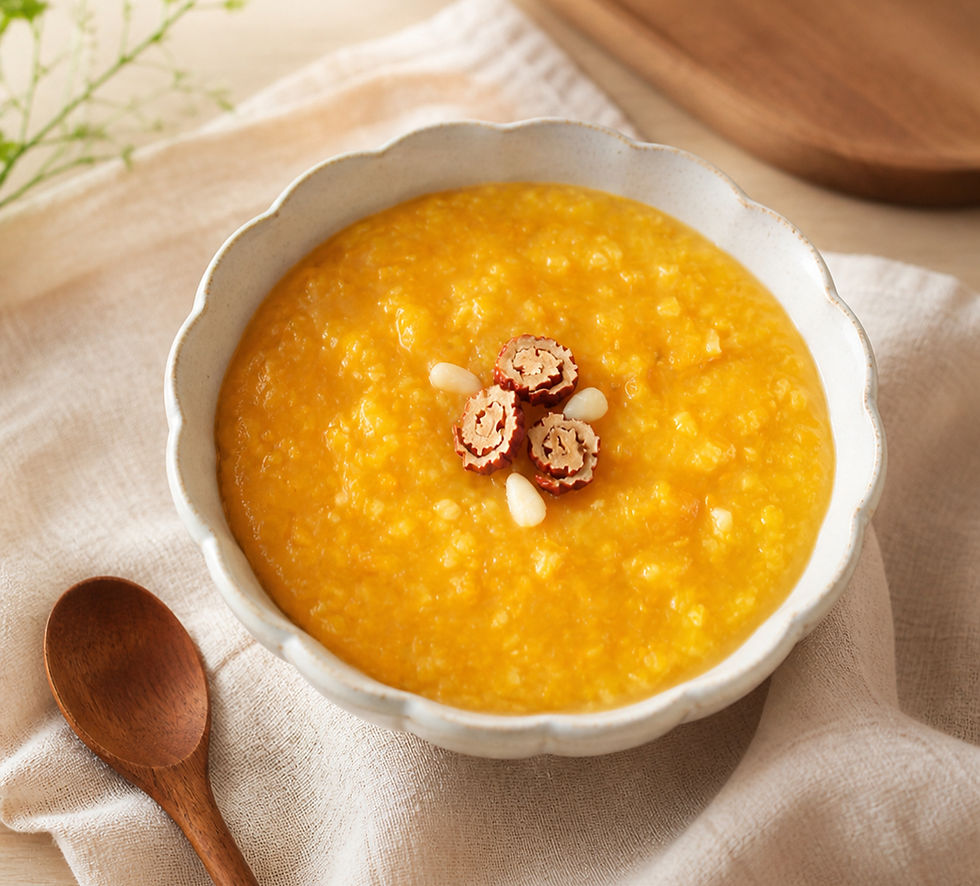
Homemade hobakjuk is worth it because the texture is easy to control once you know what to watch. You can keep it looser for breakfast, slightly thicker for a more traditional dessert-style bowl, or add little rice balls when you want it to feel more complete.
The Best Pumpkin for Hobakjuk
Kabocha is the best choice, and Korean sweet pumpkin is even better if you can get it.
It gives the porridge that dense, chestnut-like sweetness that makes hobakjuk taste full without much added sugar. The flesh cooks down smoothly, the color stays deep and golden, and the finished bowl has that calm richness people usually want from pumpkin porridge.
If you cannot find kabocha, butternut squash is the easiest backup. It is milder and a little less deep, but it still works. Sugar pumpkin can work too, though it tends to hold more water and may need a little longer on the stove.
Canned pumpkin is the shortcut version, not the best version. It can get you something warm and pleasant, but not quite the same thing.
Ingredients for a Reliable 4-Bowl Batch
This makes about 4 modest servings, or 3 larger cozy bowls.
1 medium kabocha squash, about 2 to 2 1/2 pounds whole
3 1/2 cups water, plus more as needed
1/4 cup sweet rice flour
1/2 cup cool water for the slurry
2 tablespoons sugar, plus more to taste
1/2 teaspoon fine salt
1 to 2 teaspoons honey or maple syrup, optional, if your squash is not very sweet
You should end up with about 3 packed cups of cooked pumpkin flesh after steaming or roasting.
If you prefer the more traditional soaked-rice route instead of flour, you can soak 1/4 cup Raw Nature Sweet Rice for at least 2 hours, then blend it with water until very smooth and use that in place of the flour slurry.

How to Make Hobakjuk at Home
1. Cook the squash until it fully gives way
Cut the kabocha into large wedges and scoop out the seeds.
Then either:
steam it for 20 to 25 minutes, until completely tender
or roast it cut-side down at 400°F for about 35 to 45 minutes, until very soft

Steaming gives you a cleaner pumpkin flavor. Roasting gives you a slightly deeper sweetness. Both work. The bigger issue is undercooking. If the flesh still feels firm at the center, keep going.
2. Scoop out the flesh and blend it smooth
Let the squash cool just enough to handle, then scoop out the flesh. You want about 3 packed cups.
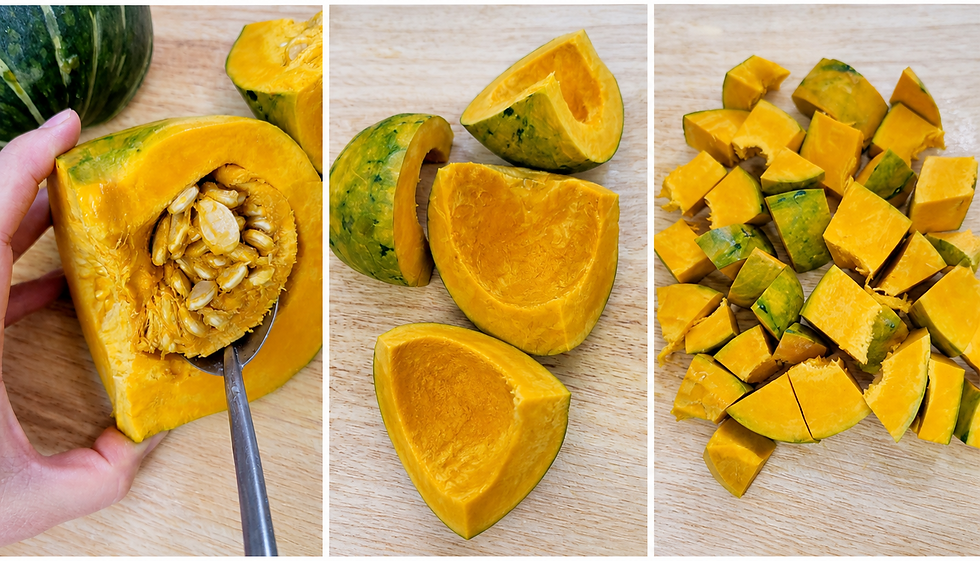
Blend the pumpkin with 2 cups of the water until very smooth. Do not be shy here. Hobakjuk is one of those foods where a silkier puree genuinely makes the whole bowl feel better.
If you do not have a blender, mash very thoroughly and press through a sieve if needed.
3. Start the base in the pot
Pour the pumpkin puree into a medium pot. Add the remaining 1 1/2 cups water and set it over medium-low heat.

At this point it should look a little thinner than finished hobakjuk. That is what you want.
4. Make the slurry properly
In a small bowl, whisk the sweet rice flour with 1/2 cup cool water until completely smooth.
No dry pockets. No little lumps.

If you want the easiest pantry option for this step, Raw Nature Sweet Rice works well for the soaked-and-blended version, while the ready-made sweet rice flour route is faster when you want a weeknight bowl without extra soaking.
5. Thicken slowly and keep stirring
Once the pumpkin base is hot and just starting to move toward a simmer, stir the slurry again and pour it in slowly while stirring.
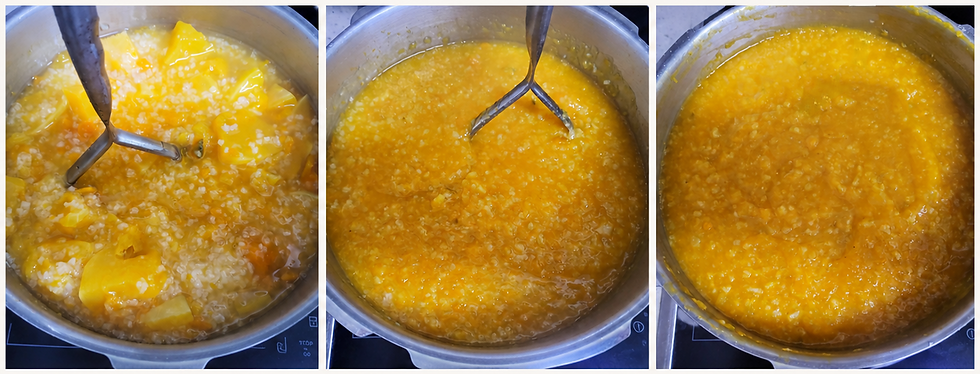
Lower the heat if needed and cook for 5 to 8 minutes, stirring often, until the porridge turns silkier, glossier, and slightly thicker. You are looking for gentle body, not instant heft.
If it starts to look too thick before it feels silky, add hot water 2 tablespoons at a time.
6. Season in the right order
Stir in the salt first.
Then add the sugar and taste. Most kabocha-based batches taste right with 2 to 3 tablespoons sugar total. If your squash is not very sweet, a little honey or maple syrup can round it out without making the bowl taste obviously honeyed.

The final taste should be softly sweet and pumpkin-led. It should not eat like dessert soup.
How to Tell When the Texture Is Right
This is the part that makes hobakjuk feel homemade in a good way instead of homemade in a compromise way.
Dip in a spoon and lift it. The porridge should coat the spoon in a smooth layer, then fall back in a slow ribbon. It should not run off like broth, and it should not sit there like mashed baby food.

Another good check is the bowl test. Ladle some into a bowl and wait 30 seconds. It should settle into an even surface with a slight mound at the center. If it stays stiff and holds every swirl mark, it is too thick. If it spreads flat like soup, it needs another minute or two.
Optional Rice Balls If You Want the More Traditional Finish
The little white rice balls, usually called saealsim, are optional but very nice.
To make a small batch:
1/3 cup sweet rice flour
about 3 tablespoons hot water
Mix until you get a soft dough, roll into tiny balls, then boil them until they float. Rinse briefly in cool water and add them to the porridge right before serving.
This is another place where Raw Nature Sweet Rice can be useful if you like making Korean sweets and porridges often enough to keep glutinous rice in the pantry.
Three Mistakes That Flatten the Whole Bowl
👉 Starting with a bland squash
Hobakjuk is not heavily seasoned, which means the squash matters a lot. If the kabocha tastes weak, roasting usually gives you a better result than steaming.
👉 Using too much thickener
People often panic when the pumpkin base looks loose and add more flour too soon. That is how you end up with a dull, gluey bowl. Let the slurry cook for a few minutes before deciding it needs help.
👉 Sweetening before salting
Salt is what makes the sweetness taste round instead of flat. Even in a sweet porridge, it matters.
How to Serve It So It Feels Like an Actual Treat
Serve hobakjuk hot, not lukewarm.
Small bowls usually work better than oversized ones. This is a soft, comforting bowl, and it feels nicest when the portion looks intentional rather than cafeteria-sized. If you want a finishing touch, a few pine nuts on top are classic. The little rice balls make it feel more traditional. Even plain, it works beautifully when the texture is right.
It is especially good on cold mornings, quiet afternoons, and those odd in-between meals when you want something warm but not savory-heavy.
How to Store and Reheat It Without Ruining the Texture
Let it cool, then refrigerate it in a covered container for up to 3 days.
It will thicken noticeably overnight. That is normal.
To reheat, add a splash of water before warming, then stir and adjust again at the end. Low heat on the stove is best, but the microwave works too if you stop once or twice to stir.
Do not judge cold hobakjuk straight from the fridge. It always looks thicker and less elegant than it will once reheated properly.
👉 Browse our [Korean Recipes] for more options.
Final Thoughts
Hobakjuk is one of the easiest Korean comfort foods to get wrong in a boring way and one of the easiest to get right once you understand the texture.
Use a sweet, dense squash. Keep the puree smooth. Do not overdo the thickener. Salt before you chase sweetness. Stop cooking when it looks just a little looser than you think it should.
That is usually the difference between a bowl you politely finish and a bowl you start craving again the next time the weather turns gray.
Related posts to read next
FAQ
What is hobakjuk made of?
Hobakjuk is usually made with sweet pumpkin, water, a rice thickener, salt, and sugar. Some versions also include little sweet rice balls on top.
Is hobakjuk supposed to be dessert-sweet?
Usually no. It should be gently sweet and pumpkin-forward, not sugary like pie filling.
What kind of pumpkin is best for hobakjuk?
Kabocha or Korean sweet pumpkin is the best fit because it is dense, naturally sweet, and blends into a rich silky porridge.
Can I make hobakjuk without sweet rice flour?
Yes. You can soak sweet rice and blend it with water instead. That route is a little more traditional and gives excellent body.
Can I use canned pumpkin?
You can, but the result is usually flatter and less rich than hobakjuk made from fresh kabocha.
Why did my hobakjuk turn out gluey?
That usually means too much rice flour, too much reduction, or both. Hobakjuk should feel silky and softly spoonable, not stiff.
Can I make hobakjuk ahead of time?
Yes. It keeps well for about 3 days in the fridge. Just add water when reheating so it loosens back into porridge instead of sitting like paste.



Comments