
.png)
How to Make Korean Seafood Jjamppong at Home (Spicy, Deep Broth, and Loaded with Seafood)


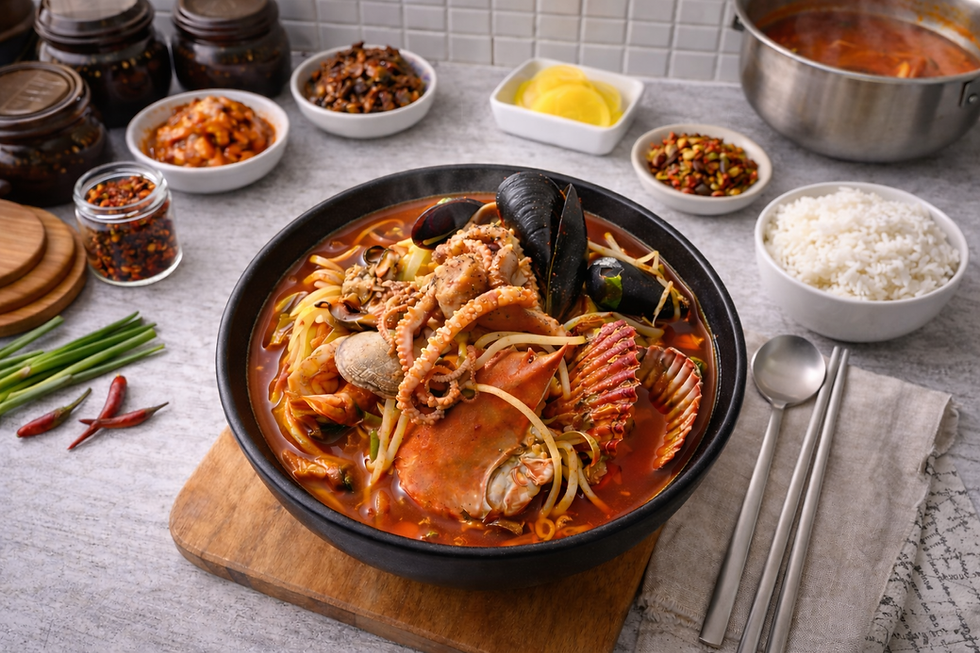
Jjamppong is the bowl you order when you want everything at once: spicy red broth, real seafood flavor, and noodles that soak up every drop.
A lot of people skip making it at home because it feels like a restaurant-only dish. But homemade jjamppong is completely doable if you focus on the two things that actually matter:
A clean chili oil base (do not burn the gochugaru)
A quick stir-fry that wakes up the seafood flavor before you add water
This method gives you a broth that tastes spicy, deep, and balanced without needing a commercial wok burner.


What Is Jjamppong
Jjamppong is a Korean-Chinese spicy seafood noodle soup known for its bold red broth and wok-fried aroma. The base is built by stir-frying garlic, gochugaru, vegetables, and seafood, then simmering with stock to create a broth that’s spicy, savory, and slightly sweet from the seafood.
It’s typically served with chewy wheat noodles and a mix of seafood like shrimp, clams, mussels, squid, or crab. You’ll find it on nearly every Korean-Chinese restaurant menu, especially on cold or rainy days when you want something hot and intense.
You may also see it spelled jjampong. Same dish, different spelling.
TL;DR
Build flavor fast with garlic + gochugaru chili oil
Stir-fry seafood first for a richer base
Add soy sauce + mirin, then vegetables
Simmer with coin stock + oyster sauce + chicken stock
Finish with bean sprouts + cheongyang chili
Serve with Chinese noodles, kalguksu noodles, or udon

Ingredients (Serves 2)
Seafood
Jjamppong is flexible. For a strong, satisfying bowl, aim for about 450–600 g total seafood (or one large bag of frozen seafood mix), plus a few shellfish if you have them.
From the source example:
Flower crab: 1/2 crab
Octopus: 2 small
Oysters: 1 cup
Mussels: 15
Clams: 10
Large shrimp: 4
Whiteleg shrimp: 2
Scallops: 2
Shortcut option: frozen seafood mix works great. Thaw fully and drain well.
Vegetables
Bean sprouts: 1 handful
Green onion: 1 stalk
Onion: 1/2
Cabbage: 100 g
Garlic: 3 cloves, minced
Cheongyang chili: 1–2 (optional, but great)
Broth and seasonings
Neutral cooking oil: 3–4 tbsp
Gochugaru (Korean chili flakes): 3 tbsp
Water: 900 ml
Soy sauce: 1 tbsp
Mirin: 1 tbsp
Oyster sauce: 1 tbsp
Chicken stock: 1 tbsp
Sea salt: 1/4 tbsp (adjust to taste)
Black pepper: a few shakes
Noodles
Chinese-style noodles or kalguksu noodlesor
Udon noodles: 2 servings
Step 1: Prep the Seafood the Right Way
Clean jjamppong starts with seafood that is not watery.
Rinse shellfish (mussels, clams, scallops) well and drain.

Lightly rub octopus and oysters with a bit of salt, rinse quickly, then drain well.

Why this matters: if the seafood is dripping wet, your pan will steam instead of sear, and your broth will taste weaker.
Step 2: Prep the Vegetables

Slice:
Cabbage into bite-size pieces (keep some thickness so it stays crisp)
Onion into medium slices
Green onion into thick pieces
Mince the garlic
Slice cheongyang chili (optional)

For the bean sprouts (콩나물):
Rinse quickly under cold water
Drain well (don’t leave them soaking)
Set aside to add at the end for a clean, fresh finish
Step 3: Make the Chili Oil Base


In a deep pan or wok, add:
Oil (3–4 tbsp)
Minced garlic
Gochugaru (3 tbsp)
Cook on low heat, stirring constantly, until the oil turns red and smells fragrant.
Key rule: do not rush this. Burned gochugaru makes jjamppong taste bitter and gritty.
Step 4: Stir-Fry the Seafood
Turn heat up to medium-high.

Add shellfish first (crab, scallops, mussels, clams). Stir-fry quickly, about 1–2 minutes, until the pan smells like seafood and the shells look glossy.

Then add octopus, oysters, and shrimp. Stir-fry briefly just to coat everything in the chili oil.
This step gives you that restaurant-feeling depth before the broth even exists.
Step 5: Add Soy Sauce and Mirin
Add:
Soy sauce (1 tbsp) around the edge of the pan

Mirin (1 tbsp)

Stir well. That edge pour builds deeper flavor without extra ingredients.
Step 6: Stir-Fry the Vegetables
Add cabbage, onion, and green onion. Stir-fry on high heat just until the vegetables start to soften.

You are not cooking them fully here. You are building aroma and sweetness so the broth tastes strong.
Step 7: Build and Simmer the Broth
Add:
Water (900 ml)

Oyster sauce (1 tbsp)
Chicken stock (1 tbsp)

Bring to a boil. Once boiling, reduce to medium or medium-low and simmer about 5 minutes.
Skim foam if it forms.
Taste checkpoint: the broth should taste spicy, savory, and slightly seafood-sweet. If it tastes sharp, it will smooth out after sprouts and pepper.
Step 8: Finish with Bean Sprouts and Chili
Add:
Bean sprouts (1 handful) & Cheongyang chili (1–2)

Cook 2–3 minutes:
Uncovered for a cleaner finish, or
Covered if you prefer softer sprouts
Taste, then finish with:
Sea salt as needed
Black pepper at the end

Final taste checkpoint: you want a broth that feels bright, spicy, and clean, not heavy or muddy.
Step 9: Cook the Noodles
Cook noodles according to package instructions.

If using udon noodles, boil in plenty of water (the source uses about 1.8 L) and cook until chewy (often 7–8 minutes, depending on thickness). Drain well.
Step 10: Assemble and Serve
Add noodles to a bowl. Ladle jjamppong broth and seafood generously over the top.


Serve immediately while the broth is hot and the noodles are still springy.
If you have leftover broth, it is excellent the next day with rice or fresh noodles.
Helpful Tips
You will not get full wok hei at home, but you can get the same flavor impact by focusing on chili oil + fast stir-fry.
Frozen seafood mix works fine. Thaw completely and drain well.
Do not overcook octopus. Add it after shellfish and keep the stir-fry quick.
Skim foam during simmering for a cleaner finish.

FAQ
Can I use frozen seafood mix instead of buying everything separately?
Yes. Thaw and drain well so your stir-fry stays hot.
Do I have to use coin stock?
Coin stock makes the broth taste deeper with less effort. If you skip it, the soup still works, but it will taste lighter.
How spicy is this jjamppong?
Spicy but balanced. For mild, reduce gochugaru slightly and skip cheongyang chili.
What noodles work best?
Chinese-style noodles are classic, but kalguksu noodles and udon also work well.
How do I keep the broth clean and not gritty?
Low heat for chili oil, quick stir-fry, skim foam while simmering.

Final Thought
Homemade jjamppong does not need to be complicated. Prep seafood, build chili oil, stir-fry fast, simmer clean, finish bright.
When the broth tastes spicy and deep and the noodles turn glossy in the bowl, it stops feeling like a home version. It is just jjamppong.
If you liked this jjamppong, try these next
How to Make Jjajangmyeon with Otoki 3 Minutes Jjajang Sauce (Fast, Rich, and Restaurant Feeling)
The classic Korean-Chinese pairing. Thick, savory black bean sauce noodles that balance out spicy jjamppong.
How to Make Korean Yukgaejang Deep Spicy and Rich Beef Soup
If you want another bold, spicy broth, yukgaejang is the ultimate comfort bowl.
How to Make BCD Style Sundubu Jjigae at Home Spicy Korean Soft Tofu Soup
Spicy, silky, and fast. Perfect when you want heat with a lighter texture than noodles.


Comments