
.png)
Nongshim Ramen Guide: Shin, Neoguri, Chapagetti, and What to Try First


Nongshim ramen is not one lane.
It is the red Shin pack for spicy broth cravings. Neoguri for thicker noodles and seafood heat. Chapagetti for the day soup sounds wrong and black bean sauce sounds exactly right. Chapaguri sits in the middle, darker and saucier than Neoguri, livelier than plain Chapagetti.
That is why “which Nongshim should I try first?” is a better question than “which one is best?”
Some Nongshim noodles are pantry staples. Some are weekend bowls with toppings. Some are easy first buys. Some only make sense after you know whether you are a broth person, a sauce person, or the kind of person who wants both in the same bowl.
The goal is not to buy the most famous pack. It is to buy the bowl you are most likely to finish, adjust, and rebuy.
TL;DR
Start with Shin Ramyun for the classic Nongshim ramen experience: spicy red broth, chewy noodles, garlic, chili, and a bowl that handles egg, green onion, mushrooms, dumplings, or rice without losing itself.
Choose Neoguri for thicker noodles and spicy seafood broth. Choose Chapagetti for saucy black bean noodles instead of soup. Choose Chapaguri when Chapagetti’s black bean sauce sounds better with Neoguri’s spicy seafood lift.
For most first-time buyers, the cleanest path is Shin first, Neoguri second, Chapagetti third. Move Chapagetti up the list when sauce sounds better than broth from the start.
The Quick Nongshim Ramen Map
Nongshim’s best-known products are famous for different reasons, which is why the shelf can feel messier than it should. Shin is not trying to be Chapagetti. Chapagetti is not trying to be Neoguri. Each one has a job once you know what kind of bowl you are trying to build.
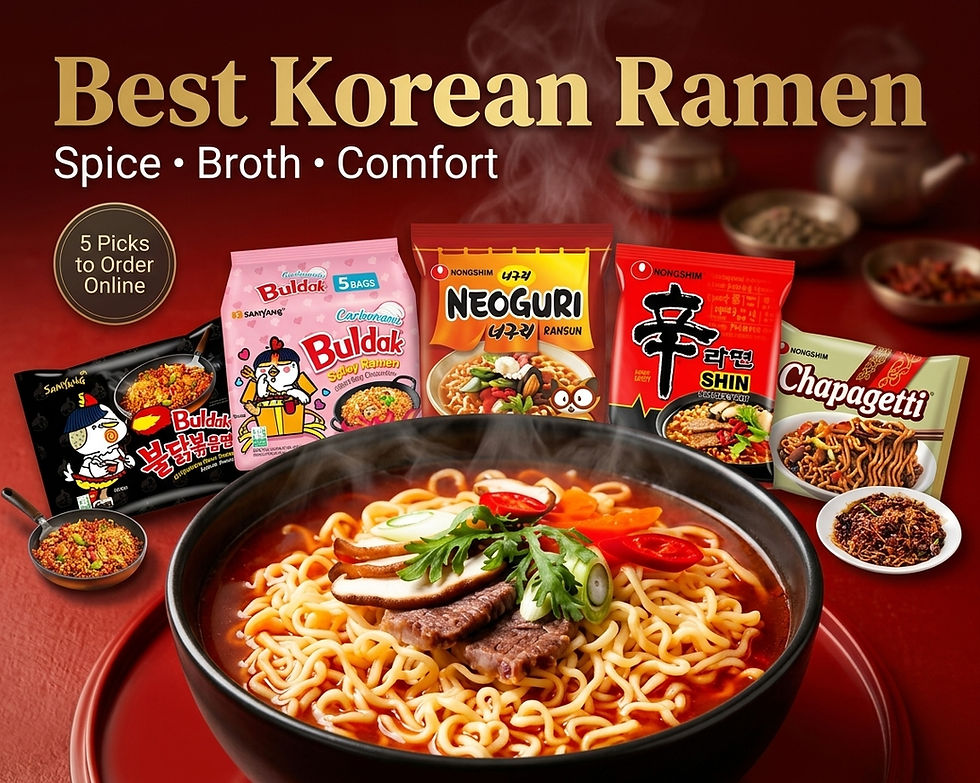
For a broader ramen shelf view before narrowing down by brand, start with Best Korean Ramen to Order Online: 5 Picks for Spice, Broth, and Comfort. This guide is the next step when you already know you want Nongshim ramyun and need help choosing the right pack.
Nongshim noodles | What the bowl feels like | Best first-buy reason |
Shin Ramyun | Spicy, brothy, garlicky, classic | Best all-around start |
Shin Black / Gold | Richer or lighter premium Shin | Better after you know Shin |
Neoguri | Thick noodles, spicy seafood broth | Best for broth and texture lovers |
Chapagetti | Saucy black bean noodles, no soup | Best mellow sauce pick |
Chapaguri | Black bean sauce plus spicy seafood kick | Best mashup bowl |
Shin Stir Fry / Toomba | Sauce-coated or creamy Shin styles | Best after the classics |
Kimchi / seafood cups | Quick, tangy, convenient | Best for cup-noodle moods |
The decision is mostly soup versus sauce. Then texture. Then heat. Once those three things are clear, the right Nongshim noodles get much easier to spot.
Best First Nongshim Ramen for Most People: Shin Ramyun
Shin Ramyun is the obvious starter because it gives you the strongest Nongshim baseline in one bowl.
The broth has chili bite, garlic, a savory beef-style base, and enough depth to taste complete without a refrigerator raid. The noodles have chew. The spice is noticeable, but it is not Buldak-style challenge heat. Plain Shin works, but egg and green onion make it feel like a proper hot meal.
That is why Shin Ramyun is the cleanest first Nongshim ramen pick. It works as a baseline, a pantry backup, a late-night bowl, and a topping-friendly ramen all at once.
Start here for the classic spicy Korean ramen experience. Move to Neoguri when seafood broth and thicker noodles sound more exciting than garlic-heavy red broth. Move to Chapagetti when sauce sounds better than soup.
Shin also makes the rest of Nongshim easier to understand. Once you know that red broth, you can tell when Black gets deeper, Gold gets lighter, Toomba gets creamier, and Stir Fry leaves broth behind.
Shin Black, Gold, Toomba, and Stir Fry: The Shin Branches After Original
The Shin name can make these feel like simple upgrades. They are better treated as different answers to the same craving.
Shin Black is for the person who likes Original but wants the broth to feel fuller. Less sharp edge, more body, more dinner energy. It makes the most sense when a satisfying bowl sounds good but you do not feel like building it from scratch with mushrooms, beef, egg, and rice.
Shin Gold moves lighter. It leans chicken-broth comfort, so the bowl feels warmer and cleaner than Black. Still Shin, still spicy, but less heavy. Gold is the better pick when egg, cabbage, tofu, or green onion sound natural instead of turning the bowl into a deeper beefy soup.
Toomba is the biggest turn. It is creamy, saucy, and heavier, with more cling than sip. It makes sense for noodle eaters who like something closer to spicy pasta than classic ramyun. Shin Stir Fry also leaves broth behind, but it is more about sauce-coated Shin flavor than creamy comfort.
The mistake is buying these first because the packaging looks more interesting. Buy them when Original has told you what you want next: more depth, lighter comfort, creamier sauce, or no broth at all.
Neoguri Is for Thick Noodles and Seafood Broth
Neoguri is the Nongshim pick for someone who wants the noodles to push back a little.
The noodles are thicker and rounder than Shin’s, with more bounce and chew. The broth leans spicy seafood, so the bowl feels ocean-savory instead of beefy and garlicky. It is not as universally easy as Shin, but for the right eater it can feel more satisfying because the texture is doing as much work as the soup.
Nongshim Neoguri Spicy makes sense when the noodle itself matters. Add fish cake, cabbage, mushrooms, scallions, egg, or a few rice cakes and the bowl starts feeling closer to a small seafood noodle stew than a quick snack.
Shin tastes more familiar. Neoguri feels more specific. That is the split.
Buy Neoguri first when seafood broth sounds like a feature, not a warning. Wait when briny flavors sound risky or the safer spicy red broth experience is the real craving.
For the direct choice between the two, read Shin Ramyun vs Neoguri: Which Korean Ramen Is Better?. Shin is the safer first buy. Neoguri is the better pick when seafood broth and thicker noodles are what pulled you in.
Chapagetti Is for the Day You Do Not Want Soup
Chapagetti does not belong in the same craving as Shin or Neoguri. There is no spicy red broth to sip. No seafood soup base. No cold-weather broth moment.
The point is the sauce.
Chapagetti gives you chewy noodles coated in a savory black bean-style sauce that feels mellow, slightly sweet, and easy to keep around. It is not as deep or glossy as restaurant jjajangmyeon, but it does not need to be. Its job is to give you a quick black bean noodle bowl that can stay simple or take a few add-ins without falling apart.
That is why Chapagetti Chajang Noodle is the Nongshim ramen to buy when spicy broth is not the mood. A fried egg makes it richer. Cucumber gives it crunch. Scallions wake it up. A small pat of butter makes the sauce glossier. Leftover meat or sautéed onion can make it feel more like lunch than a pantry fallback.
The main warning is water. Too much leftover water makes the sauce dull and loose. Save a little noodle water, mix carefully, and keep the sauce glossy rather than soupy.
Chapagetti is usually the easiest black bean noodle first buy because it is flexible and less demanding. It does not need a whole plan. It just needs the sauce handled well.
Chapaguri Is the Shortcut When You Want Both Worlds
Chapaguri is what happens when Chapagetti and Neoguri stop being separate decisions.
You get black bean sauce, chewy noodles, and a spicy seafood edge in one bowl. It is darker and saucier than Neoguri, but livelier than plain Chapagetti. The flavor has more tension: savory black bean depth on one side, chili-seafood lift on the other.
Nongshim Chapaguri Big Bowl is useful when you want that mashup without cooking two packs together. It is not the same as making ram-don at home with your own water control, but it scratches the craving quickly.
Chapaguri makes the most sense after you understand the two parts. Already like Chapagetti but wish it had more kick? It works. Like Neoguri but want something darker and saucier? It works. Brand new to both? It can still be fun, but it will not teach you the classics as clearly.
For the full homemade version, read How to Make Jjapaguri (a.k.a. Ram-Don): The Viral Korean Noodle Mashup That Took Over the World. That is the better route when you want the beef-topped, saucier, more meal-like version.
Cup, Bowl, and Pack: Which Nongshim Format Should You Buy?
The format decides how much control you get.
Packs usually give you better noodle texture and more room to cook the bowl the way you like it. You can adjust water, add egg at the right time, simmer vegetables, throw in dumplings, or let the broth concentrate a little. That matters most for Shin, Neoguri, and any sauce noodle where texture can make or break the bowl.
Cups and bowls are about speed. The noodles are often softer, and the broth or sauce is less customizable, but they win at work, in a dorm, while traveling, or during a tired lunch when a pot feels like too much.
Buy packs when the bowl is dinner. Buy cups and bowls when the bowl is a hot, fast fix with no dishes waiting after.
Which Nongshim Ramen Should You Try First?
Start with Shin Ramyun for the classic. It is the best all-around first buy because it shows what Korean spicy broth ramen can be: bold, garlicky, chewy, and easy to upgrade.
Choose Neoguri first when noodle texture matters most. It is thicker, brothier, and more seafood-driven, so it suits people who want ramen to feel heartier and more ocean-savory.
Choose Chapagetti first when soup is not the craving. It is the easiest Nongshim sauce noodle to keep around because it works for quick lunches, lower-spice moods, and simple add-ins.
Choose Chapaguri first only when the mashup is what caught your attention. It is fun, bold, and convenient, but it makes more sense once Chapagetti and Neoguri already make sense to you.
The cleanest path is Shin, then Neoguri, then Chapagetti, then Chapaguri. After that, explore Shin Black, Gold, Toomba, Stir Fry, hotter Shin styles, kimchi bowls, and seafood cups based on what your first few picks taught you.
Keep rebuying broth? Go deeper into Shin and Neoguri. Keep wanting sauce? Move toward Chapagetti, Chapaguri, Toomba, and Stir Fry. That is the real Nongshim path: broth to sauce, classic to specific, safe first buy to personal favorite.
👉 Browse our [Korean Ramen Bundle category] for more options.
How to Upgrade Nongshim Noodles Without Making Them Muddy
Nongshim ramen usually has enough flavor to stand on its own, so upgrades should sharpen the bowl, not bury it.
For Shin, start with egg and green onion. Mushrooms deepen the broth, dumplings turn it into dinner, and tofu softens the heat. Cheese can work, but use it when the bowl needs a new mood, not because every spicy ramen needs cheese.
For Neoguri, think seafood and texture. Fish cake, cabbage, mushrooms, scallions, egg, and rice cakes all make sense. Heavy cheese is usually not the first move because it can flatten the seafood broth.
For Chapagetti, keep the sauce glossy. Fried egg, cucumber, scallions, butter, leftover meat, or sautéed onion work better than watery vegetables that loosen the sauce too much.
For Chapaguri, add beef for the classic ram-don direction. Add egg for the cheaper, easier version. Keep a little noodle water nearby so the sauce stays shiny instead of turning pasty.
The best upgrade should make the original ramen taste more like itself, not like a completely different bowl.
Related Posts to Read Next
FAQ
What is the best Nongshim ramen to try first?
Shin Ramyun is the best Nongshim ramen to try first for most people because it gives you the classic spicy broth, chewy noodles, garlic, chili, and easy upgrade potential. It is the cleanest baseline before moving into Neoguri, Chapagetti, Chapaguri, or premium Shin versions.
Is Nongshim ramen the same as Nongshim ramyun?
Yes, shoppers usually use both terms for the same category. “Ramyun” is the Korean-style term, while “ramen” is the broader spelling many people use when searching online.
Which Nongshim noodles are not soup ramen?
Chapagetti, Chapaguri, Shin Stir Fry, and Toomba-style noodles are more sauce-driven than classic soup ramen. They are better picks when you want coated noodles, glossy sauce, or creamy richness instead of broth.
What is the difference between Shin Ramyun and Neoguri?
Shin Ramyun has spicy red broth with garlic and a beef-style savory base. Neoguri has thicker noodles and spicy seafood broth, so it feels chewier, brothier, and more ocean-savory.
Is Chapagetti spicy?
Chapagetti is usually not spicy in the same way Shin or Neoguri is. It is more savory, mellow, and black-bean-sauce focused, which makes it a good pick for noodle cravings without strong heat.
What is Chapaguri?
Chapaguri is a Chapagetti and Neoguri mashup. It combines black bean sauce with Neoguri’s spicy seafood flavor, giving you a darker, saucier bowl with more kick than plain Chapagetti.
Should I buy Nongshim cup noodles or packs?
Buy packs when noodle texture and toppings matter. Buy cups or bowls when convenience matters more. Packs usually give you better control over water, broth strength, sauce thickness, and add-ins.


Comments