
.png)
Samgyeopsal Guide: Korean Pork Belly, Wraps, Sauces, and How People Eat It at Home

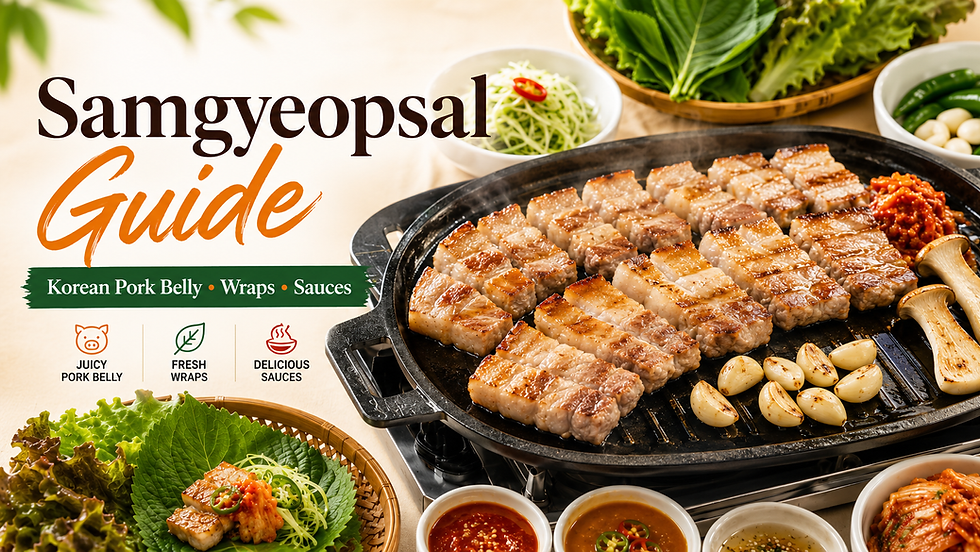
Samgyeopsal is Korean pork belly BBQ, but the meat is only half the point.
The real experience is the table. Hot pork belly comes off the grill. Someone reaches for lettuce or perilla leaves. A little rice goes in, then ssamjang, garlic, kimchi, maybe a slice of green chili, and the whole thing turns into one bite. The pork is rich, the wrap is fresh, the sauce is salty and savory, and the side dishes keep the meal from feeling too heavy.
That is why samgyeopsal works so well at home. You do not need a complicated marinade or a long recipe. You need good pork belly, a hot pan or grill, enough wraps, a few sharp sides, and sauces that make the fat taste balanced instead of overwhelming.
For the broader table setup, start with Korean BBQ at Home Starts Before the Meat: The Wraps, Sides, and Sauces Worth Buying First. This guide stays focused on samgyeopsal, Korean pork belly, Korean samgyeopsal wraps, sauces, sides, and how people actually eat it at home.
TL;DR
Samgyeopsal is Korean pork belly, usually grilled or pan-cooked in thick slices and eaten with wraps, sauces, rice, kimchi, garlic, and banchan.
Korean pork belly BBQ is usually not about a heavy marinade. The point is rich pork, crisp edges, rendered fat, fresh wraps, and bold sides.
The easiest samgyeopsal setup is pork belly, lettuce, ssamjang, sesame oil salt, rice, kimchi, sliced garlic, and one or two simple banchan.
Lettuce gives crunch and freshness. Perilla leaves add a stronger herbal flavor.
Ssamjang is the easiest first sauce for wraps. Sesame oil with salt is cleaner and lets the pork flavor stay more direct.
Kimchi, pickled radish, garlic, green chili, and fresh vegetables help cut through the richness.
Samgyeopsal works best when every bite has contrast: fatty pork, fresh wrap, salty sauce, rice, and something sharp or crunchy.
What Is Samgyeopsal?
Samgyeopsal is sliced pork belly cooked Korean BBQ style.
The word is often used for pork belly grilled at the table, but the home version can be just as simple: cook pork belly in a hot pan, let the edges brown, cut it into bite-size pieces, and eat it with wraps and sides.

Unlike bulgogi or galbi, samgyeopsal is often cooked without a sweet soy marinade. That is part of the appeal. The pork itself stays simple, so the table does the work. Ssamjang brings savory depth. Sesame oil salt brings clean richness. Kimchi brings acid and heat. Garlic brings bite. Lettuce and perilla leaves make each piece feel lighter.
Samgyeopsal is less about seasoning the meat heavily and more about building the right bite around it.
Why Korean Pork Belly Works So Well for BBQ
Pork belly has fat, and that is exactly why it works for Korean BBQ.
As the meat cooks, the fat renders and the edges crisp. The inside stays juicy, while the outside turns browned and savory. That gives you the contrast Korean pork belly BBQ needs: rich meat against fresh greens, sharp kimchi, salty sauce, and plain rice.
If the pork is too pale, the meal tastes greasy. If it is cooked until dry, it loses the whole point. Good samgyeopsal should have browned edges, tender meat, and enough rendered fat that each bite feels rich but not raw or flabby.
The best pieces are usually cut thick enough to stay juicy but not so thick that they feel like steak. Thin slices cook faster and can crisp well. Thicker slices feel more substantial and are often cut into pieces after cooking.
How People Eat Samgyeopsal
Most people do not eat samgyeopsal like a plain steak.
They build ssam, which means a wrap. A piece of pork belly goes into lettuce or a perilla leaf with sauce, rice, and small toppings. The wrap is usually eaten in one bite if possible.
A classic samgyeopsal bite might include:
lettuce or perilla leaf
one piece of grilled pork belly
a small spoon of rice
ssamjang
sliced garlic
kimchi or pickled radish
green chili if you like heat
The point is balance. Pork belly is fatty. Ssamjang is salty and savory. Rice calms the sauce. Lettuce refreshes the bite. Kimchi or pickles cut through the fat. Garlic wakes everything up.
That is why the sides matter so much. Without them, pork belly can feel heavy fast.

The Best Wraps for Samgyeopsal
Lettuce is the easiest first wrap.
It is crisp, familiar, and light enough to work with rich pork belly. Romaine, red leaf lettuce, green leaf lettuce, and butter lettuce can all work depending on what you like. The leaf should be sturdy enough to hold pork, rice, sauce, and toppings without tearing right away.
Perilla leaves are more distinct. They have a stronger herbal, slightly minty, almost spicy flavor. Some people love them immediately. Others need a few bites. Perilla is especially good when the pork belly is rich because the leaf has enough personality to cut through the fat.
Use lettuce when you want:
mild crunch
beginner-friendly wraps
a clean fresh bite
easy family-style eating
Use perilla leaves when you want:
stronger Korean flavor
herbal contrast
a more fragrant wrap
a bite that can stand up to pork belly fat
The best table has both if possible. Lettuce is easy. Perilla makes the meal feel more distinctly Korean.
Ssamjang, Sesame Oil Salt, and Other Sauces
Ssamjang is the easiest first sauce for samgyeopsal.
It is thick, savory, slightly sweet, salty, and usually a little spicy. It is made for wraps, which is why it works so well with pork belly, rice, lettuce, garlic, and green chili. A small amount can make the whole bite taste complete.
Sesame oil salt is simpler. It is usually toasted sesame oil with salt and sometimes pepper. It does not hide the pork. It makes the pork taste richer and cleaner while adding a toasted aroma.
Soy-vinegar dipping sauce can also work if you want brightness. It is not always the first sauce people think of for samgyeopsal, but it can help when the table feels too rich.
Use this sauce split:
Sauce | Best for |
Ssamjang | Lettuce wraps, pork belly, rice-heavy bites |
Sesame oil salt | Clean pork flavor, simple dipping, rich slices |
Soy-vinegar dip | Brightness, vegetables, lighter bites |
Gochujang-based sauce | Extra heat and sweetness |
For a deeper sauce breakdown, read Korean BBQ Dipping Sauce Guide: Ssamjang, Sesame Oil Salt, and Soy-Vinegar Dip.
Kimchi and Sides That Make Pork Belly Better
Samgyeopsal needs sharp sides.
Pork belly is rich, so the table needs something sour, spicy, crunchy, or fresh. Kimchi is the obvious first side because it gives chile heat, garlic, acidity, and crunch. It can be eaten cold on the side, tucked into wraps, or lightly cooked with pork belly if you like a richer, softer kimchi bite.
Good sides for samgyeopsal include:
napa kimchi
radish kimchi
pickled radish
seasoned scallion salad
cucumber sticks
sliced garlic
green chili
bean sprout side dish
spinach side dish
pickled garlic
rice
Do not overbuild the table at first. Pork belly, wraps, ssamjang, rice, kimchi, garlic, and one fresh side are already enough.
For another pork wrap meal built around sides and sauce, read Tender Korean Pork Wraps with Kimchi, Sauce, and Crisp Sides.
Rice Is Not Just Filler
Rice matters because samgyeopsal is rich.
A small spoon of rice inside a wrap softens the salt of ssamjang, the sharpness of kimchi, and the fat of pork belly. It makes the bite feel complete instead of aggressive.
You do not need a huge amount in each wrap. Too much rice can make the bite bulky and dull. A small spoonful is enough.
Rice is especially useful when:
the pork belly is very fatty
the ssamjang is salty
the kimchi is strong
the garlic or chili is sharp
the wrap needs more body
Plain rice also helps the meal feel like dinner rather than just grilled meat.
How to Cook Samgyeopsal at Home
You do not need a restaurant grill to make samgyeopsal at home.
A grill pan, cast iron pan, nonstick pan, tabletop grill, or outdoor grill can all work. The key is heat and spacing. If the pan is too crowded, the pork steams instead of browning.

Basic home method:
Heat the pan or grill.
Lay pork belly slices in a single layer.
Let the first side brown before moving too much.
Flip and cook until the fat renders and the edges crisp.
Cut into bite-size pieces if the slices are thick.
Move finished pieces aside and keep cooking in batches.
Eat with wraps, sauces, rice, and sides while hot.
Good texture cues:
browned edges
rendered fat
tender center
no raw-looking white fat
pieces hold their shape
pork tastes rich, not greasy
If the pork tastes greasy, it probably needs more browning or better contrast from sides. If it tastes dry, it may be too thin, overcooked, or left on heat too long after browning.
Should Samgyeopsal Be Marinated?
Usually, no.
Classic samgyeopsal is often appreciated because it is simple pork belly cooked directly and eaten with sauces and sides. The flavor comes from browning, pork fat, ssamjang, sesame oil salt, kimchi, garlic, and wraps.
That makes it different from marinated Korean BBQ like bulgogi or galbi. Bulgogi is sweet-savory and tender. Galbi is rich and rib-focused. Samgyeopsal is more direct: pork belly, heat, sauce, wrap, bite.
You can season lightly with salt and pepper if you want. You can also add garlic or kimchi to the pan. But a heavy marinade changes the style.
For samgyeopsal, the table is the seasoning.
How to Build a Good Samgyeopsal Wrap
A good wrap should not be overstuffed.
Start with one lettuce or perilla leaf. Add one piece of pork belly, a small spoon of rice, a little ssamjang, and one or two extras. Do not add everything on the table into every bite.
Try these combinations:
👉 Classic beginner wrap
Lettuce, pork belly, rice, ssamjang, garlic.
👉 Fresh and sharp wrap
Lettuce, pork belly, kimchi, cucumber, sesame oil salt.
👉 Stronger Korean flavor wrap
Perilla leaf, pork belly, rice, ssamjang, green chili.
👉 Richer wrap
Lettuce, pork belly, rice, ssamjang, grilled garlic, cooked kimchi.
👉 Cleaner pork-focused bite
Pork belly dipped in sesame oil salt, then wrapped with lettuce and a little rice.
The goal is one balanced bite, not the biggest possible bite.
Samgyeopsal at Home vs Restaurant Korean BBQ
Restaurant samgyeopsal is fun because the grill, sides, and table energy are built in.
At home, you have to build that feeling yourself. The good news is that samgyeopsal is one of the easiest Korean BBQ meals to recreate because the meat does not need a complicated marinade. The success comes from table setup.
Restaurant version usually gives you:
tabletop grill
multiple banchan
lettuce and perilla
ssamjang
garlic and chili
kimchi
rice or fried rice finish
Home version needs:
hot pan or grill
pork belly
wraps
ssamjang or sesame oil salt
kimchi
rice
one or two simple sides
You do not need a huge spread. You just need enough contrast.
Common Samgyeopsal Mistakes
Cooking the pork on heat that is too low is the first mistake. Low heat can make pork belly feel greasy instead of crisp.
Crowding the pan is another. Give the slices room to brown.
Skipping wraps makes the meal feel too heavy. Lettuce or perilla leaves are not decoration. They balance the pork.
Using too much ssamjang can overpower the meat. Start small.
Forgetting rice can make the meal feel salty and rich without enough calm in the bite.
Skipping kimchi or pickles removes the sharp contrast pork belly needs.
Overstuffing wraps makes them messy and hard to eat. Smaller bites usually taste better.
Treating samgyeopsal like marinated BBQ can also miss the point. Korean pork belly BBQ is usually about simple pork plus a full table of sauces and sides.
What to Put on the Table First
If you are making samgyeopsal at home for the first time, keep the setup simple.
Start with:
pork belly
lettuce
perilla leaves if you like stronger flavor
ssamjang
sesame oil with salt
rice
kimchi
sliced garlic
green chili
one fresh side like cucumber
one calm banchan like bean sprouts or spinach
That is enough for a good Korean samgyeopsal meal.
Add more only after the basics work. The easiest way to ruin a first Korean BBQ night is to buy too much and forget what each bite actually needs.
👉 Browse our [K-Food Guide] for more options.
Final Verdict
Samgyeopsal is one of the clearest examples of why Korean BBQ is not only about meat.
The pork belly matters, but the wrap makes it easier to eat. Ssamjang gives it punch. Sesame oil salt keeps it clean. Rice softens the bite. Kimchi and pickles cut through the fat. Garlic and green chili wake everything up.
If you are making Korean pork belly BBQ at home, do not start by overthinking the meat. Start by building the table around it. Pork belly, wraps, sauce, rice, kimchi, and a few sharp sides are what turn grilled pork into samgyeopsal.
The best bite is simple: hot pork belly, fresh wrap, a little sauce, a little rice, and something sharp enough to make you want the next one.
Related Posts to Read Next
Korean BBQ at Home Starts Before the Meat: The Wraps, Sides, and Sauces Worth Buying First
Korean BBQ Dipping Sauce Guide: Ssamjang, Sesame Oil Salt, and Soy-Vinegar Dip
Doenjang vs Ssamjang: What's the Difference and Which One Should You Buy First?
Tender Korean Pork Wraps with Kimchi, Sauce, and Crisp Sides
Kimchi and Rice Guide: Why This Simple Korean Meal Works So Well
FAQ
What is samgyeopsal?
Samgyeopsal is Korean pork belly, usually grilled or pan-cooked and eaten with lettuce or perilla wraps, ssamjang, sesame oil salt, rice, kimchi, garlic, and other side dishes.
Is samgyeopsal the same as Korean pork belly BBQ?
Yes. Samgyeopsal is one of the most common Korean pork belly BBQ meals. It usually focuses on simple grilled pork belly rather than a heavy marinade.
Is samgyeopsal marinated?
Often, no. Samgyeopsal is commonly cooked plain or lightly seasoned, then eaten with sauces, wraps, rice, kimchi, garlic, and banchan.
What sauce do you eat with samgyeopsal?
Ssamjang is the most common wrap sauce. Sesame oil with salt is also popular when you want a cleaner pork flavor.
What do you wrap samgyeopsal in?
Lettuce is the easiest first wrap. Perilla leaves are also common and add a stronger herbal flavor.
What sides go with samgyeopsal?
Kimchi, pickled radish, scallion salad, cucumber, sliced garlic, green chili, bean sprouts, spinach, and rice all work well with samgyeopsal.
Can you cook samgyeopsal at home without a tabletop grill?
Yes. A hot pan, grill pan, cast iron pan, outdoor grill, or nonstick pan can work. The key is enough heat and space so the pork browns instead of steaming.
Why is rice served with samgyeopsal?
Rice calms the richness of pork belly and the saltiness of sauce. A small spoon of rice inside a wrap helps the bite feel balanced.


Comments