
.png)
How to Make Bossam at Home: Tender Korean Pork Wraps with Kimchi, Sauce, and Crisp Sides


Bossam is one of those meals that looks generous before it looks complicated.
Slices of tender pork on a platter. Lettuce or perilla leaves on the side. Kimchi, sauce, garlic, maybe salted shrimp, maybe radish, maybe a few fresh chiles if you want more bite. Nothing about it feels fussy once it is on the table. It just looks like the kind of meal people settle into and keep building one wrap at a time.
That is the appeal of bossam.
It is rich without being chaotic. The pork is soft, but the meal never gets sleepy because the wraps, kimchi, sauce, and crisp sides keep cutting through it. That is what makes bossam so satisfying at home. It is not just boiled pork. It is a full wrap meal where every bite can lean a little different depending on what you tuck in.
That is why bossam keeps working for both quiet dinners and bigger tables. The pork does the heavy lifting. Everything around it keeps the meal alive.
TL;DR
Bossam is a Korean pork wrap meal built around tender boiled or simmered pork, usually served with kimchi, ssamjang, salted shrimp, garlic, greens, and other crisp or punchy sides for wrapping. The easiest way to make it well at home is to cook the pork until it slices cleanly but stays soft, then build enough contrast around it that each wrap feels balanced instead of heavy. Good bossam is not just about the meat. It is about what happens when rich pork meets sharp kimchi, savory sauce, and something fresh or crisp in the same bite.
What bossam actually is
Bossam is a Korean dish of tender pork served for wrapping, usually in lettuce, napa leaves, or other greens with condiments and side ingredients layered in.
That is the simple definition.

The more useful one is that bossam is a pork meal built around contrast. The meat is supposed to be soft, mild, and rich enough to carry the wrap. The kimchi and condiments are there to keep that richness from flattening out. The meal only really makes sense once everything lands together.
That is why bossam is so much more than sliced pork on a plate. The pork is the center, but the wrap logic is the dish.
What makes bossam so good at home
Bossam works unusually well in a home kitchen because the main idea is strong even when the setup stays simple.
You do not need restaurant plating. You do not need ten banchan. You do not need to build every possible side. If the pork is tender and you have something sharp, something savory, and something fresh to wrap with it, the meal already understands itself.
That is what makes bossam such a good home-cook dish.
It feels generous without asking for a complicated cooking style once the meat is on. And because everyone can build their own wrap, the meal naturally feels more interactive and more complete than a basic sliced-pork dinner would.
Start with the right pork expectation
Bossam is not supposed to eat like crisp pork belly or heavily glazed barbecue.
It should be tender, sliceable, and rich in a quieter way.
That matters because a lot of the flavor will come from what you wrap around it. If the meat is over-seasoned or overworked, the whole meal gets loud too early. Bossam pork should taste good on its own, but it should still leave room for kimchi, ssamjang, saeujeot, garlic, and greens to do their part.
That is why the meat usually works best when it is simmered until fully softened, then sliced once it has rested enough to stay neat on the platter.

The simplest home formula that actually works
For about 3 to 4 people, this is a very workable home setup:
2 to 2 1/2 pounds pork belly, pork shoulder, or a mix
1 onion, halved
Sliced Apples for Broth
4 to 6 garlic cloves
1 piece ginger
enough water to cover
1 tablespoon doenjang or a splash of cooking alcohol, optional but helpful for aroma
salt only if needed later
For serving:
lettuce or napa leaves
kimchi
ssamjang
sliced garlic
green chile, optional
saeujeot, optional but classic
rice, optional but very welcome
That is already enough to make bossam feel like bossam.

How to make bossam at home without overcomplicating it
1. Simmer the pork gently, not aggressively
Put the pork in a pot with the onion, garlic, ginger, and enough water to cover. Add a spoonful of doenjang or a splash of cooking alcohol if you like. Bring it up, then lower it to a gentle simmer.
You want the meat to soften gradually, not seize up in a hard boil.

2. Cook until the pork is tender enough to slice cleanly
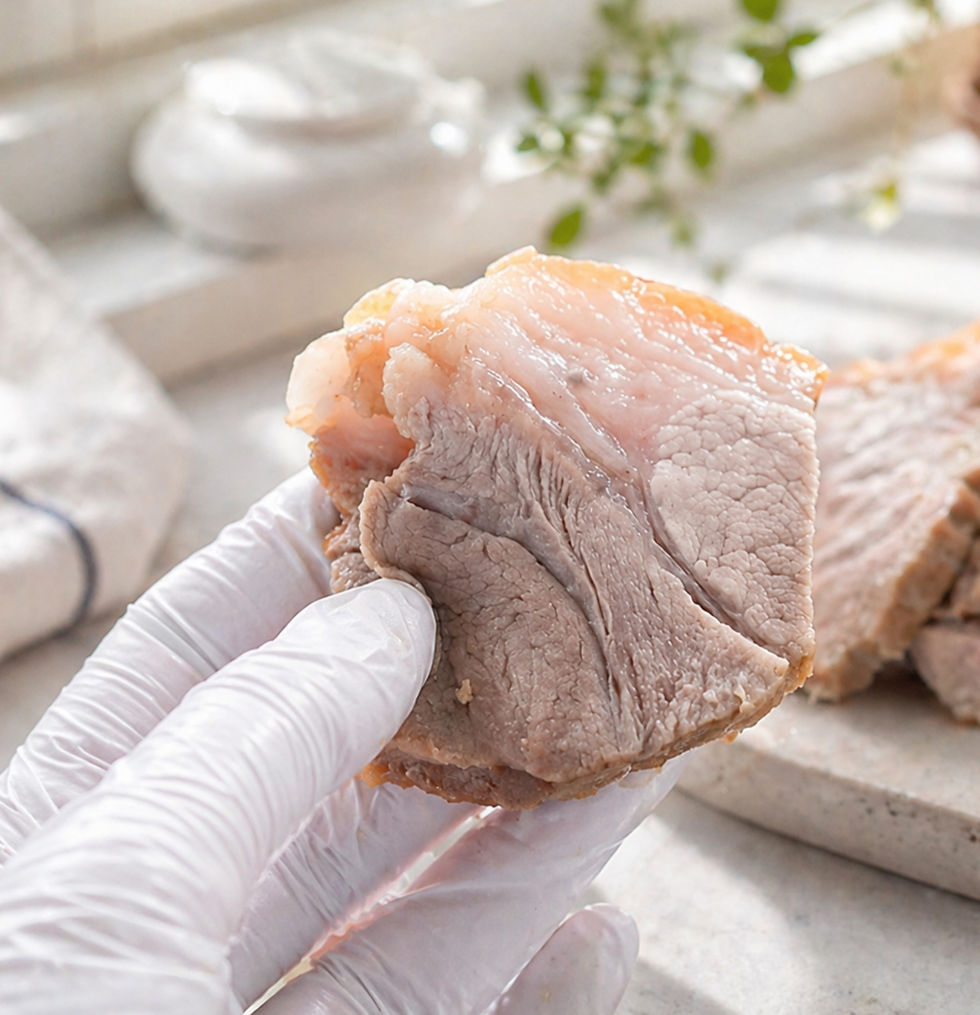
This usually takes time, but it is not difficult time. You are waiting for the pork to become soft enough that a slice bends slightly instead of fighting back, while still holding together on the cutting board.

3. Rest before slicing
If you cut it too early, the juices run and the slices look rougher than they need to. A short rest helps the platter look much more intentional.

4. Slice thick enough to stay satisfying
Bossam slices should feel substantial. Too thin and they lose part of the point. The pork needs enough body to stand up to kimchi and condiments in the wrap.
5. Build the table around contrast, not quantity
One good kimchi. One ssamjang. One fresh wrap leaf. A few slices of garlic. Maybe saeujeot. That is already a real bossam meal. You do not have to overload the table for the dish to feel complete.

The wrap is where the dish becomes bossam
This is the part people sometimes underestimate.
Tender pork by itself is not yet the full meal.
Bossam becomes bossam when the wrap comes together.
A leaf gives structure and freshness. Kimchi brings acid, chile, and crunch. Sauce adds depth. Garlic or chile adds bite. Sometimes a little saeujeot gives the whole thing a salty seafood push that makes the pork taste even richer. All of that lands at once.
That is why the meal feels so satisfying. The pork is soft, but the bite never goes flat.
The sauce matters more than people think
Bossam is one of those meals where the sauce does not need to be complicated, but it does need to be right.
Ssamjang is the easiest answer because it already tastes finished. It brings savory depth, a little sweetness, and enough fermented backbone to make the pork feel more complete inside the wrap.
That is why Chung Jung One Mild Ssamjang Seasoned Soybean Paste fits this article so naturally. MyFreshDash explicitly frames it as a dipping and wrap sauce, which is exactly the bossam job. It saves you from having to mix a wrap sauce from scratch when what you really need is something savory that goes on the leaf and gets out of the way.
Kimchi is not a side note here
Kimchi is not optional in the emotional sense, even if your exact table can still work without it.

Bossam needs something sharp and seasoned enough to cut through the pork. Kimchi does that better than almost anything else. It brings acid, heat, crunch, and fermentation, all of which make the meat feel more awake inside the wrap.
That is why bossam without a strong kimchi partner can feel a little too gentle. The pork is still good, but the meal loses one of the main forces that keeps it from turning into soft-on-soft eating.
In practice, the richer the pork tastes, the more the kimchi matters.
Why saeujeot makes so much sense with bossam
This is one of those details that makes the meal feel much more Korean much more quickly.
A tiny spoon of salted shrimp can do an enormous amount of work in bossam. It adds salinity, seafood depth, and a sharper kind of savoriness than ssamjang gives. Used lightly, it does not overwhelm the wrap. It just pushes the pork into a deeper, more finished place.

That is why Kwangchun Salted Shrimp makes such a natural bossam add-on. MyFreshDash explicitly lists pork wraps as one of its uses, which is exactly the kind of beginner-friendly guidance that helps people understand saeujeot as a condiment instead of treating it like a full side dish.
The crisp sides are doing real work
Bossam can go heavy fast if the table is all soft components.
That is why crisp sides matter.
Fresh greens, cucumber, radish, green chiles, or a brighter side dish give the wraps somewhere to go besides rich pork plus rich sauce. Even plain lettuce does more than just hold the food together. It resets the bite.
That is what makes bossam feel so complete when it is done well. The meal knows that richness needs interruption.
What bossam should feel like when it is right
A good bossam meal should feel rich, but never clogged.
The pork should be tender enough to bite through easily but not so loose that it falls apart into mush. The wrap should feel layered rather than overloaded. The kimchi should bring edge. The ssamjang should deepen the bite without swallowing it. The crisp parts should keep the meal moving.
That is the easiest quality check.
If bossam feels boring, it usually needed stronger contrast around the meat.
If it feels too heavy, it usually needed more kimchi or more fresh crunch.
If it feels salty in the wrong way, one of the condiments probably got overused.

The weeknight version vs the full-table version
For a weeknight bossam, keep the table smaller. Pork, lettuce, kimchi, ssamjang, maybe garlic, done. That is enough for a very satisfying wrap dinner.
For a full-table bossam, layer in more of the details that make the meal feel generous: saeujeot, extra greens, fresh chiles, radish, rice, maybe one or two simple banchan. You do not need a huge spread, but you do want enough contrast that people can build different kinds of wraps.
That is the nice thing about bossam. The same core dish can stay simple or open outward depending on the day.
Why bossam keeps working for gatherings
Bossam is one of those meals that gets more sociable as the table fills.
People build their own wraps. They choose more kimchi or more sauce or more garlic. The meal naturally creates variation without you having to cook five separate things.
That is why bossam works so well for sharing. It gives people a structure instead of a fixed plate.
And because the pork can be cooked ahead and sliced when you are ready, it is easier to manage than many dishes that look equally generous on the table.
👉 Browse our [Korean Recipes] for more options.
Final bite
Bossam is one of the smartest Korean meals to make at home because it understands that tender pork is only half the point.
The rest is the wrap.
Kimchi for edge. Ssamjang for depth. Crisp greens and sides for contrast. Maybe a little saeujeot when you want the bite to hit harder.
Once all of that comes together, bossam stops being boiled pork on a plate and starts feeling like exactly what it is supposed to be: a rich, balanced wrap meal that keeps getting better one bite at a time.
Related posts to read next
Korean BBQ at Home Starts Before the Meat: The Wraps, Sides, and Sauces Worth Buying First
Gochujang vs Ssamjang: What’s the Difference and Which One Should You Buy First?
What Is Jeotgal? The Salty Korean Seafood Side Dish That Makes Plain Rice More Interesting
Best Korean Side Dishes to Keep in the Fridge for Easy Meals All Week
FAQ
What cut of pork is best for bossam?
Pork belly and pork shoulder are both common choices. Pork belly gives you more richness, while shoulder can feel a little meatier and less fatty.
Does bossam have to be made with kimchi?
The pork can still be cooked without it, but kimchi is one of the main things that gives the wraps the contrast they need.
What sauce goes with bossam?
Ssamjang is the most common and easiest bossam sauce because it already tastes finished and works naturally in wraps.
What is saeujeot and why is it served with bossam?
Saeujeot is Korean salted shrimp. In bossam, a small amount works as a sharp, salty condiment that deepens the pork without needing much volume.
Can I make bossam for a weeknight dinner?
Yes. A simplified version with pork, lettuce, kimchi, and ssamjang is already enough to make a very good bossam meal.
Is bossam the same as Korean BBQ?
Not exactly. Bossam is more of a tender pork wrap meal than a grill-at-the-table experience, even though both share wrap logic and similar condiments.
What makes bossam taste complete?
Tender pork helps, but the meal really clicks when the wrap has enough contrast from kimchi, sauce, and something fresh or crisp.


Comments