
.png)
What Is Jeotgal? The Salty Korean Seafood Side Dish That Makes Plain Rice More Interesting


Jeotgal is one of those Korean foods that can look almost punishing if nobody tells you how it is supposed to be eaten.
A small dish of salted shrimp. A spoonful of roe. Something glossy, briny, and obviously not meant to be treated like a full side dish. If you approach it the wrong way, it can feel too salty, too intense, too narrow.
Then you put a little on hot rice and the whole thing clicks.
That is jeotgal.
It is the Korean salted seafood category built for small, concentrated bites that wake up plain food fast. Not by taking over the meal, but by giving soft, mild things exactly the push they were missing.
TL;DR
Jeotgal is a Korean category of salted and often fermented seafood, usually eaten in small amounts as a side dish, condiment, or seasoning. It can be made from shrimp, roe, squid, shellfish, fish intestines, and other seafood depending on the style. Jeotgal is usually salty, briny, savory, and strongly umami-forward, which is why it works best with plain rice, porridge, tofu, or other mild foods that can absorb that intensity. It is not one single dish. It is a whole Korean flavor category built around concentrated seafood depth.
What jeotgal actually is
Jeotgal refers to Korean salted seafood, often fermented, that can show up either as something you eat directly in tiny amounts or as something you use to season other food.
That is one reason the category can feel slippery at first.
A jar of jeotgal might be a rice companion. It might be a kimchi ingredient. It might be the thing that makes a soft tofu dish or soup taste more rounded. The form changes, but the logic stays the same: seafood preserved through salt until the flavor becomes much more concentrated than the ingredient looked at the start.
That is why jeotgal matters. It is one of the ways Korean food gets a lot of impact from a very small amount of something.

How jeotgal is actually supposed to be eaten
This is the part beginners need most.
Jeotgal is usually not a big-bite food.
It is the kind of thing you take a little of and let it work against something plainer. Warm rice is the most obvious example. A bit of jeotgal tucked into a spoonful of rice tastes balanced in a way the jeotgal alone often does not. The rice softens the salt, the seafood flavor wakes the rice up, and suddenly the whole point of the category becomes much easier to understand.
The same logic works with porridge, tofu, bossam, or simple home meals where one strong supporting flavor can carry a surprising amount of the table.
That is why first impressions go wrong so easily. When people taste jeotgal without the rice logic, they often think the category is harsher than it really is.
Why jeotgal makes plain rice so much more interesting
Plain rice is exactly the kind of food jeotgal was made to help.
Rice is warm, soft, and nearly silent in flavor terms. Jeotgal brings salt, brine, savoriness, and often a fermented edge that pulls the whole bowl into focus. Even a very small amount changes the pace of eating. The rice stops feeling blank. The meal stops feeling under-seasoned.
That is the real appeal.
Jeotgal does not need size to matter. It just needs the right partner.
This is also why people who love strong banchan keep coming back to it. The category is efficient. A tiny spoonful can do more for a plain bowl than a much larger mild side dish.

Jeotgal is a category, not one dish
This is the first thing that makes Korean menus and jars easier to read.
Jeotgal is not one seafood side you memorize once. It is a family word.
There are shrimp versions, roe versions, shellfish versions, squid versions, and other variations depending on ingredient, region, and how the jeotgal is being used. Some are clearer as direct rice-side bites. Some are more useful as cooking ingredients. Some feel quite approachable. Some are much more assertive.
Once that clicks, the category stops feeling random. The word is telling you the food belongs to the salty fermented seafood lane, not promising that every version will eat the same way.
What jeotgal usually tastes like
Jeotgal is usually salty first, then savory, then briny, with fermentation showing up more or less depending on the type.
The stronger versions can feel abrupt if you are not expecting that. But the category is not trying to be mild. It is trying to be concentrated.
That is why the right question is not “Is jeotgal salty?” It obviously is. The better question is what kind of saltiness it brings. Some versions taste cleaner and more seasoning-like. Some feel richer and more roe-forward. Some lean funkier and more marine. All of them make more sense once they are doing a job in the meal instead of being judged as if they were meant to be eaten by the forkful.
The jeotgal types that make the category click fastest
A few examples make the whole thing easier to picture.
Saeujeot, or salted shrimp, is one of the best-known jeotgal types. It is deeply salty, seafood-heavy, and extremely useful in kimchi, soups, bossam, and tofu dishes. It can be eaten with rice too, but it often reads most clearly as a seasoning-strength jeotgal.
That is why Kwangchun Salted Shrimp is such a good example for beginners. MyFreshDash explicitly describes it more like a seasoning paste or condiment than a big direct side dish, which is exactly how saeujeot makes the most sense.
Myeongnanjeot, made from pollock roe, often feels easier for many beginners to read as something you can eat directly with rice. The roe texture and seasoning give it a more obvious banchan identity.
That is why Danya Seasoned Pollock Roe works as a stronger first try for people who want jeotgal that already behaves more like a rice-side dish than a pantry seasoning.
There are also squid, shellfish, and other seafood-based jeotgal versions that can push much harder depending on fermentation and ingredient.
Not every jeotgal is the same kind of beginner bite
This is where the category usually either opens up or closes down for people.
If you start with the saltiest, most seasoning-driven jeotgal and expect it to behave like a regular chilled side dish, you can come away thinking the whole category is hostile.
It is not hostile. It is just specific.
Some jeotgal is easier to understand as a cooking helper or a rice accent. Some is easier to understand as a direct banchan. That is why picking the right first one matters more here than it does with broader categories like namul or pickles.
The easiest first jeotgal is usually the one that makes its role obvious.

Why jeotgal works so well as banchan
Jeotgal is one of the clearest examples of how Korean banchan is not always about abundance.
A side dish can be tiny and still carry real weight if the flavor is focused enough. Jeotgal does that extremely well. It gives the table a concentrated seafood edge that can wake up rice, sharpen a porridge meal, or make a very simple spread feel more deliberate.
That is a very Korean kind of meal logic.
The side dish does not need to be large.
It needs to know exactly what role it is playing.
How jeotgal feels different from fish sauce
This comparison helps because both live in the salty fermented seafood world.
Fish sauce is usually a liquid seasoning that disappears into cooking more fully.
Jeotgal is usually chunkier, more textured, and more visible. It can still season food, but it is also much more likely to show up as a spoonable condiment or a direct side in very small amounts.
They overlap in flavor family, but not in table role. Fish sauce vanishes into the dish. Jeotgal often stays present enough to be noticed.
Why people who like strong banchan keep coming back to it
Jeotgal is one of those categories that often makes more sense after the first try than during it.
Once you understand the scale it belongs in, the category starts feeling much smarter. You stop asking why it is so salty and start noticing how efficiently it changes a bowl of rice, a little tofu, or a soft meal that needs more backbone.
That is the real repeat value.
It is not about broad appeal. It is about how much work a small spoonful can do.
Is jeotgal beginner-friendly?
Yes and no.
It is beginner-friendly in the sense that the category is easy to use once someone explains how little of it you actually need and what kinds of meals it belongs with.
It is not beginner-gentle in the sense that the flavor walks in softly.
That is why jeotgal usually works best for beginners who already like anchovies, roe, fish sauce, or other stronger seafood flavors. For everyone else, it helps to start with the versions that read more clearly as rice-friendly banchan rather than the saltiest seasoning-style types.
Why the word matters beyond one salty jar in the fridge
This is what makes jeotgal worth learning as a category, not just as one thing to try once.
If you only think of jeotgal as “salted shrimp,” the whole lane stays narrower and stranger than it really is. But if you understand it as the Korean salted-and-fermented seafood category that can act as banchan, condiment, or seasoning, a lot more of the table starts making sense.
Muchim gives freshness.
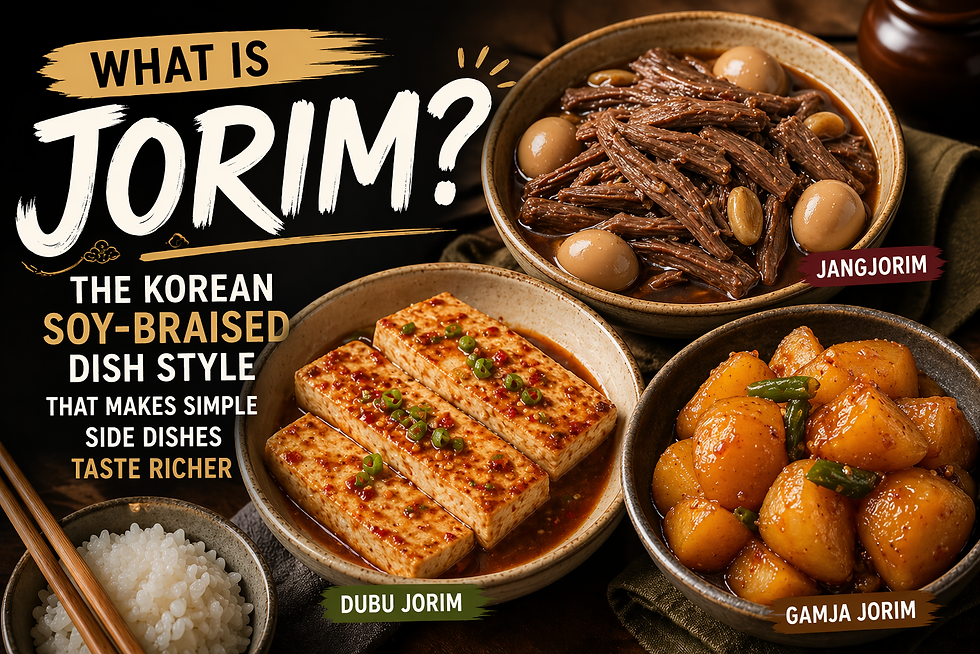
Jorim gives depth.
Kimchi gives fermentation through vegetables.
Jeotgal gives concentrated seafood force.
That is a very useful category to recognize once you start seeing how Korean meals build contrast.
👉 Browse our [Seafood category] for more options.
Final bite
Jeotgal is the Korean salted seafood category that makes plain rice more interesting by giving it exactly what it cannot create on its own: salt, brine, umami, and a little fermented push.
It is not a generous-looking side dish.
It is not trying to win everyone over on the first bite.
But in the right amount, with the right meal, it does a huge amount of work.
That is why the word matters.
Once you understand jeotgal, a very small dish of seafood on the table stops looking severe and starts looking like one of the smartest flavor tools Korean meals have.
Related posts to read next
FAQ
What does jeotgal mean in Korean food?
Jeotgal refers to Korean salted seafood, often fermented, served as a side dish, condiment, or seasoning ingredient depending on the type.
Is jeotgal always fermented?
Many jeotgal styles are fermented or at least salt-cured in ways that create a fermented flavor, but the exact intensity depends on the ingredient and preparation.
Is jeotgal eaten by itself?
Usually in very small amounts, and often with rice or another mild food. It is not usually meant to be eaten in large bites on its own.
What is the easiest jeotgal for beginners?
A seasoned roe version is often easier for beginners than the strongest shrimp-based seasoning styles because it reads more clearly as a small rice side.
Is saeujeot the same as jeotgal?
Saeujeot is one type of jeotgal. Jeotgal is the broader category, and saeujeot is the salted shrimp version within it.
How is jeotgal different from fish sauce?
Fish sauce is usually a liquid seasoning that disappears into food more fully. Jeotgal is usually chunkier, more textured, and more likely to be noticed as a small side dish or condiment.
Why does jeotgal taste so good with plain rice?
Because rice is soft and mild, while jeotgal is salty, briny, and umami-rich. The contrast makes the rice feel much more interesting.


Comments