
.png)
Top Korean Pantry Add-Ons That Make Simple Meals Taste Better

Updated: May 18
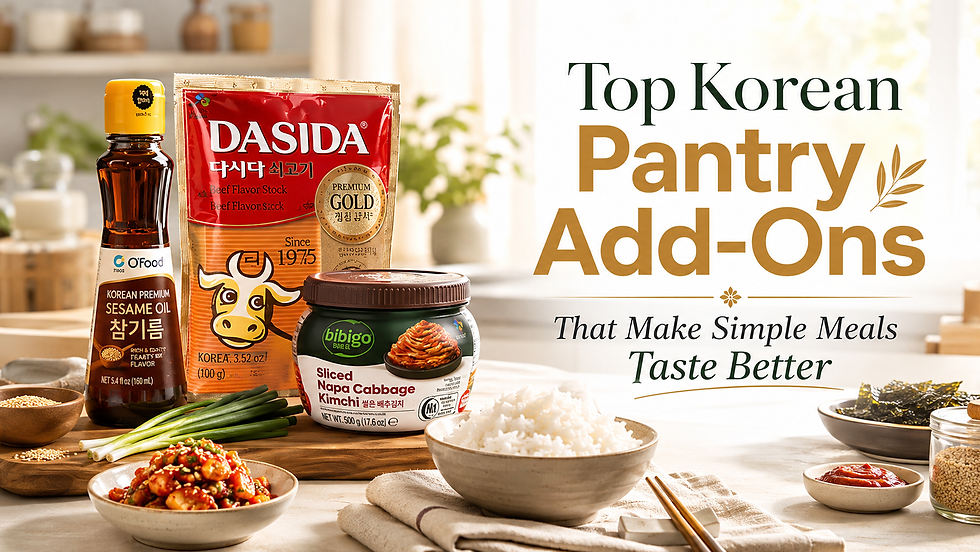
The fastest way to make a plain meal taste better is usually not another recipe.
It is one good add-on.
A bowl of rice with eggs can feel flat or feel finished. Instant noodles can taste like a packet or like an actual meal. Frozen dumplings can sit there looking lonely, or they can turn into dinner with kimchi, roasted seaweed, sesame oil, or a better broth behind them.
That is what Korean pantry add-ons are good at. They do not ask you to cook from scratch. They do not need a big plan. They fix the part of the meal that is missing: crunch, heat, aroma, acidity, salt, depth, or enough protein to make the bowl feel real.
This guide is for the small helpers that earn their space fast. The ones you reach for on tired weeknights when dinner is technically done, but still needs one more thing.
👉 If you want the bigger pantry setup beyond small add-ons, read our guide to essential Korean pantry staples beyond sauce.
TL;DR
The best Korean pantry add-ons are the ones that fix simple meals quickly.
Start with these:
Sesame oil for making rice, eggs, noodles, vegetables, and soups taste finished.
Roasted seaweed for instant salt, crunch, and easy rice wraps.
Kimchi for acidity, spice, and the cold crunch that wakes up soft food.
Canned tuna for turning plain rice into a more filling meal.
Gochujang for heat, body, and a stronger flavor shift.
Dashida or anchovy stock for soups, ramen upgrades, stews, and brothy bowls that taste too thin.
If you only buy three first, make it sesame oil, roasted seaweed, and kimchi. That gives you aroma, texture, and brightness, which are the three things plain weeknight meals usually miss most.
What Makes a Pantry Add-On Actually Worth Keeping?
A good add-on does not need to be impressive.
It just needs to fix something quickly.
That is the real test.
If a meal feels too plain, too soft, too sleepy, too thin, or too one-note, a good pantry add-on should help without forcing you to start over. That is why these ingredients matter so much. They are not there to become the meal. They are there to rescue the meal.
And honestly, that is what most weeknight cooking needs.
Not more ambition.
Better second moves.
1. Sesame Oil
Best for making plain food taste finished
This is probably the smallest thing on the list with the biggest effect.
A little sesame oil can make plain rice, eggs, noodles, vegetables, and quick bowls taste like someone actually finished them. That sounds minor until you use it a few times and realize how often that last nutty, toasted note is exactly what was missing.
Rice and egg without sesame oil can still be fine.
Rice and egg with a little sesame oil tastes more complete.
That is the difference.
It does not make food louder. It makes it rounder. Warmer. A little more intentional. And that is why it earns a permanent place in the pantry.
2. Roasted Seaweed
Best for adding salt and texture fast
Roasted seaweed is one of those things that sounds small until you keep it around for a week and realize it keeps saving meals.
Plain rice gets better with it. Egg bowls get better with it. Tuna bowls get better with it. Even a very simple lunch feels less blank once there is something salty and crisp on the side.
That is what makes it so useful.
A lot of easy meals fail because everything in the bowl is soft. Seaweed fixes that without making the meal heavier or more complicated. It gives you a little crunch, a little salt, and just enough contrast that the food starts feeling more awake.
That is a lot of work for something so simple.
3. Kimchi
Best for waking a meal up

Kimchi does one job especially well:
It stops food from feeling sleepy.
Rice, eggs, porridge, dumplings, noodles, even richer leftovers — all of those can taste a little flat or too soft if there is nothing sharp next to them. Kimchi changes that fast. It gives you acid, spice, cold crunch, and that fermented bite that cuts straight through blandness.
That is why it is one of the best add-ons to keep around.
A bowl can go from “fine” to “actually good” just because kimchi showed up on the side.
And it works in more moods than people think. It is not only for spicy meals. Sometimes it helps most with the plainest food in the kitchen.
4. Canned Tuna
Best for turning rice into a real meal
This is where “add-on” starts becoming “meal saver.”
Canned tuna is one of the most practical things you can keep around because it does not just add flavor. It adds substance. If plain rice feels like nothing, tuna can fix that in about thirty seconds. If lunch is looking weak, tuna usually helps. If the fridge is almost empty, tuna still gives you somewhere to go.
That is why it earns a spot here.
It is not subtle, but subtle is not always what dinner needs.
Hot rice, tuna, seaweed, maybe kimchi if you have it — that is already a real meal. Add an egg and it gets even better.
A lot of pantry items help food taste better.
Tuna helps food exist more convincingly in the first place.
5. Gochujang
Best when the meal needs heat and body
Sometimes a meal does not need brightness.
It needs more presence.
That is what gochujang is for.
A spoonful can change a bowl very quickly. Rice gets more interesting. Dipping sauces get more real. Leftovers stop feeling bland. Quick stir-fries taste like they were supposed to taste that way. It adds heat, but more importantly, it adds body. That thick, fermented, savory richness is what makes it so useful.
It is not the most flexible ingredient in the pantry.
But when the meal needs that particular kind of push, almost nothing else does the same job as well.
If sesame oil is the finishing move, gochujang is the thing you reach for when dinner needs more attitude.
6. Dashida or Anchovy Stock
Best for making brothy food taste deeper
This is the pantry helper people usually realize they need after they make a few soups that somehow still taste thin.

A lot of simple meals rely on sauce first. But once you start making soups, stews, ramen upgrades, or soft tofu dishes, you notice pretty quickly when the base flavor is not carrying enough weight.
That is where Dashida or anchovy stock comes in.
This is not about making restaurant-level stock from scratch. It is about giving brothy food enough depth that it does not taste empty. That makes a big difference in noodle soups, quick stews, or the kind of warm bowls you throw together when you want comfort without spending all evening on it.
If a soup tastes like it should be better than it is, this is usually the kind of pantry add-on that fixes it.
The easiest picks depending on what kind of meal help you need
Some add-ons make food richer. Some make it brighter. Some make it feel more substantial. Some just keep plain meals from tasting dead.
If that is how you want to choose, here is the easiest way to think about it:
For making plain bowls taste finished: sesame oil
For adding salt and crunch fast: roasted seaweed
For waking soft or bland food up: kimchi
For turning rice into a real meal: canned tuna
For adding heat and body: gochujang
For making soups and broths taste deeper: Dashida or anchovy stock
That is already enough range to make simple meals feel much better all week.
How these actually show up on real weeknights
This is the part that matters most.
If dinner were just rice and eggs, I would reach for sesame oil and roasted seaweed first.
If leftovers felt too heavy or too dull, I would put kimchi next to them.
If lunch felt flimsy, canned tuna would fix it fastest.
If a bowl needed more heat and more actual personality, that is when gochujang would make sense.
And if I were making soup, ramen, or anything brothy and the whole thing still tasted a little thin, that is the point where Dashida or anchovy stock earns its place.
That is why these are the add-ons worth keeping around.
They do not repeat the same job. They solve different kinds of boring.
👉 Browse our [Korean sauces & pantry category] for more options.
Final Verdict
The best Korean pantry add-ons are not the ones that look most exciting on the shelf. They are the ones that rescue boring meals without making you cook a second dish.
Start with sesame oil when food tastes almost done but needs warmth and aroma. Keep roasted seaweed around when rice, eggs, tuna, or leftovers need salt and crunch. Add kimchi when the whole meal feels too soft, too heavy, or too sleepy.
After that, build by problem.
Need more substance?
Keep canned tuna.
Need heat and body? Use gochujang.
Need soup or ramen to taste deeper? Reach for Dashida or anchovy stock.
That is the smarter way to stock this part of the pantry: not by buying everything that sounds Korean, but by keeping the add-ons that solve the most common weeknight problems fast.
Related posts to read next
FAQ
What is the best Korean pantry add-on for plain rice?
For most people, sesame oil or roasted seaweed is the fastest fix because both make plain rice feel more finished almost immediately.
What pantry add-on makes simple meals taste less bland?
Kimchi is one of the best answers because it adds acidity, spice, and contrast quickly.
Is canned tuna really a pantry add-on?
Yes. In Korean meal-building, canned tuna often works like a very practical add-on because it can turn plain rice into lunch or dinner fast.
When should I use gochujang instead of soy sauce or sesame oil?
Use gochujang when the meal needs actual heat, body, and a stronger flavor shift, not just seasoning or finishing aroma.
What is Dashida good for?
Dashida is useful when soups, ramen upgrades, or stews need more savory depth without making stock from scratch.
Is anchovy stock better than Dashida?
They do different jobs. Dashida is the faster shortcut, while anchovy stock gives a cleaner, more traditional broth feel.
If I only want three pantry add-ons, which should I buy first?
Start with sesame oil, roasted seaweed, and kimchi if your goal is making simple meals taste better quickly.


Comments