
.png)
What to Buy After Gochujang: 5 Korean Staples That Expand Your Cooking

Updated: May 18
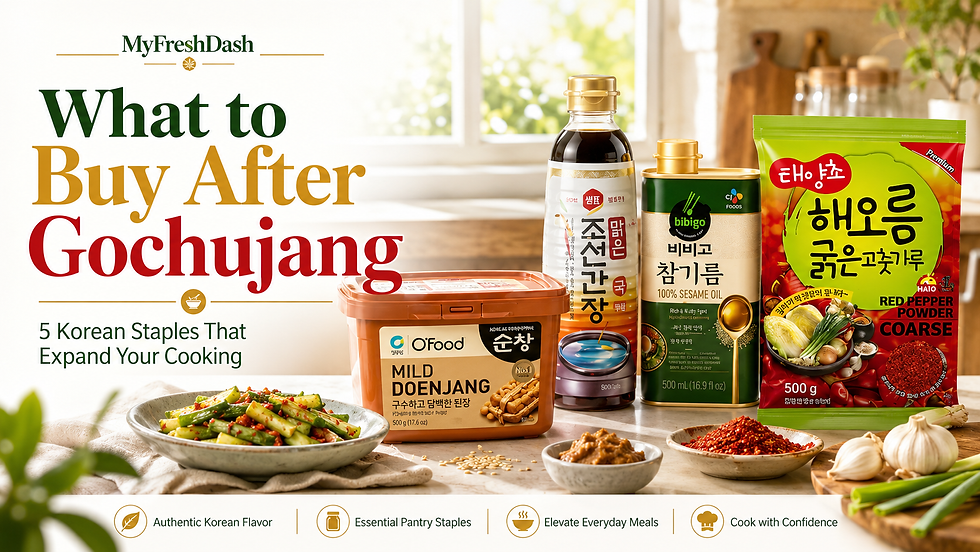
A lot of simple meals do not need a better recipe. They need one better move.
Rice with eggs can be plain, or it can taste finished with sesame oil and roasted seaweed. Instant noodles can feel like a packet, or they can get deeper with a little stock base. Frozen dumplings can sit on a plate looking sad, or they can turn into dinner with kimchi, gochujang, or a quick tuna-rice bowl on the side.
That is the point of Korean pantry add-ons. They are not the ingredients you buy because they look impressive. They are the ones you reach for when the meal is already there but still missing something: crunch, heat, acid, aroma, salt, depth, or enough substance to feel like dinner.
This guide is about the small helpers that earn their space fast. Not because they do everything, but because each one fixes a different kind of boring.
TL;DR
The best Korean pantry add-ons make simple meals better without turning dinner into a project.
Start with:
Sesame oil for making rice, eggs, noodles, vegetables, and soups taste finished.
Roasted seaweed for salt, crunch, and easy rice wraps.
Kimchi for acidity, spice, cold crunch, and the sharp bite that wakes up soft food.
Canned tuna for turning plain rice into a more filling meal.
Gochujang for heat, body, and a stronger flavor shift.
Dashida or anchovy stock for making soups, ramen upgrades, stews, and brothy bowls taste deeper.
If you only buy three first, choose sesame oil, roasted seaweed, and kimchi. That gives you aroma, texture, and brightness, which are the three things plain weeknight meals usually need most.
Why Gochujang Is Not Enough on Its Own
Gochujang is powerful, but it is also pretty specific.
It is thick, fermented, spicy, slightly sweet, and very much its own thing. That is what makes it great, but it is also why it can only do so much by itself. If every Korean dish you make starts from gochujang, the food can start leaning in the same direction over and over.
That is usually when people realize they do not just need “more Korean ingredients.”
They need ingredients that do different jobs.
Some ingredients help with soup. Some help with seasoning. Some help with finishing. Some help with spice without making everything taste like gochujang again.
That is the real goal here.
Not building a giant pantry all at once. Building a smarter one.
👉 For a fuller pantry setup with oils, stock, seaweed, and seasonings, read our guide to Korean pantry staples beyond sauce.
1. Gochugaru
Best next buy if you want more control over spice
If gochujang got you interested in Korean cooking, gochugaru is one of the smartest things to buy next.
It gives you chili flavor, color, and heat, but in a much more flexible way. Gochujang brings fermentation, thickness, sweetness, and body. Gochugaru is cleaner. It lets you build spice into a dish without automatically turning it into a gochujang-based sauce.
That makes a huge difference.
Once you have gochugaru, you can season soups more naturally, make lighter marinades, build kimchi-style flavors more easily, and control the heat level better. It also helps when you want a dish to taste spicy, but not heavy.
If gochujang taught you the richer side of Korean chili flavor, gochugaru teaches you the more adjustable side.
That is why it is such a good second step.
2. Doenjang
Best next buy if you want deeper savory cooking
This is where Korean home-cooking flavor really starts opening up.
Doenjang is not for the same mood as gochujang. It is deeper, earthier, more savory, and much more about comfort than punch. If gochujang gives you heat and boldness, doenjang gives you depth.
That is why it matters.
Once you have doenjang, your cooking expands in a completely different direction. Soups get better. Vegetable side dishes get more interesting. Simple broths stop tasting flat. Even a basic spoonful mixed into soup or sauce can make a dish feel more grounded.
This is also one of the ingredients that helps people move from “I made a spicy Korean-style sauce” into “this actually tastes more like Korean cooking.”
It is not flashy. But it changes a lot.
3. Ganjang
Best next buy if you want a more useful everyday base
A lot of people skip straight past ganjang because soy sauce feels too obvious.
That is a mistake.
Once you start using more Korean ingredients, ganjang becomes one of the most practical things in the kitchen. It helps with marinades, dipping sauces, vegetable sides, soup seasoning, noodle dishes, and easy rice meals. It is not there to steal attention. It is there to make everything else work better.
That is exactly why it matters after gochujang.
If gochujang is one strong voice, ganjang is the thing that helps you build the rest of the sentence. It gives dishes structure. It gives balance. It gives you a savory base that is easier to use across different meals.
And unlike gochujang, it does not lock you into one flavor profile.
That flexibility goes a long way.
4. Sesame Oil
Best next buy if you want simple food to taste finished
This is one of those ingredients that feels small until you start using it regularly.
A little sesame oil at the end of a dish can make simple food taste more complete almost immediately. Rice bowls, spinach, cucumber sides, noodles, dipping sauces, egg dishes, even quick leftovers — they all get a little more aroma and a little more roundness from it.
That is why sesame oil is such a good pantry staple after gochujang.
Gochujang gives you intensity. Sesame oil gives you finish.
That sounds minor, but it is not. Sometimes the difference between food that tastes decent and food that tastes put together is just that last little nutty layer. It makes convenience meals better. It makes easy side dishes better. It makes basic bowls feel less bare.
And it does all of that without much effort.
5. Dashida or Korean Soup Stock Base
Best next buy if you want soups and stews to stop tasting flat
This is the ingredient people often do not realize they need until they start making brothy food more often.
A lot of beginner Korean cooking starts with sauce-forward dishes, so gochujang feels like enough. But once you want to make soups, stews, ramyun upgrades, soft tofu dishes, or quick comforting broths, you start noticing something: seasoning alone is not enough. The dish needs more base flavor.
That is where a good soup stock base helps.
Dashida or another Korean-style soup base makes quick soups taste fuller and more complete without requiring an all-day stock. It is one of those pantry shortcuts that actually earns its place because it makes weeknight cooking easier and more satisfying.
If you want to cook more Korean food that feels warm, brothy, and home-style, this kind of ingredient makes a real difference.
Which One Should You Buy First After Gochujang?
That depends on what kind of food you want to make more often.
👉 Buy gochugaru if:
you want better control over spice
you want lighter chili flavor
you want to make more soups, sauces, and side dishes without everything tasting like gochujang
👉 Buy doenjang if:
you want deeper savory cooking
you want to make Korean soups or stews
you want your food to feel more home-style and less one-note
👉 Buy ganjang if:
you want the most flexible everyday seasoning base
you want to make marinades, dipping sauces, and side dishes more easily
you want one ingredient that works in a lot of directions
👉 Buy sesame oil if:
you want simple meals to taste more finished
you make a lot of rice bowls, noodles, egg dishes, or vegetable sides
you want the easiest flavor upgrade
👉 Buy dashida or soup stock base if:
you want better soups and stews
you want brothy meals to taste fuller
you want easy weeknight comfort food
The Best Starter Path After Gochujang
If you want the simplest shopping path, this is the order that makes the most sense:
➡️ First: Gochugaru
This gives you more freedom with Korean chili flavor right away.
➡️ Second: Doenjang
This opens up a completely different kind of Korean cooking.
➡️ Third: Ganjang
This makes everyday seasoning and meal-building easier.
➡️ Fourth: Sesame Oil
This improves simple dishes fast.
➡️ Fifth: Dashida or Soup Stock Base
This helps once you start wanting more soups, broths, and stew-style meals.
That order is not the only right answer, but it is a good one for people who want to expand their cooking without buying too much at once.
The Biggest Mistake After Buying Gochujang
The biggest mistake is assuming the next step is buying more spicy things.
It usually is not.
What most people actually need after gochujang is not “another bold sauce.” It is ingredients that broaden what they can cook. More depth. More balance. More flexibility. More base flavor. More finishing flavor.
That is what makes a pantry useful.
If every new ingredient is doing the same job as gochujang, your cooking stays narrow even if your shelf gets fuller.
The smarter move is to buy ingredients that change the direction of the meal.
👉 Explore our [Korean sauces & pantry category] for more options.
Final Verdict
The best Korean pantry add-ons are the ones that rescue ordinary food quickly.
Start with sesame oil when rice, eggs, noodles, vegetables, or soup taste almost done but not quite. Keep roasted seaweed nearby when a soft meal needs salt and crunch. Add kimchi when the plate feels too plain, too heavy, or too sleepy.
Then build around the problem you run into most.
Need more substance? Keep canned tuna.
Need heat and body? Use gochujang.
Need soup, ramen, or stew to taste less thin? Reach for Dashida or anchovy stock.
That is the smarter way to stock this part of the pantry. Do not buy add-ons just because they sound Korean. Buy the ones that solve the meals you actually make: rice that needs help, noodles that need depth, leftovers that need contrast, and dinners that need one more thing to feel complete.
Related posts to read next
FAQ
What should I buy after gochujang?
The best next ingredients are usually gochugaru, doenjang, ganjang, sesame oil, and dashida or soup stock base because they expand your cooking in different ways instead of repeating the same flavor job.
Is gochugaru better than buying another sauce?
In many cases, yes. Gochugaru gives you more control over spice and makes it easier to season soups, sauces, and side dishes without everything tasting like gochujang.
Why is doenjang a good next staple?
Doenjang adds deeper savory flavor and helps open the door to Korean soups, stews, and home-style dishes that do not rely on spicy chili paste.
Do I really need ganjang if I already have soy sauce?
If you cook Korean food often, ganjang is still useful because it fits naturally into Korean-style marinades, side dishes, soups, and dipping sauces.
What does sesame oil add to Korean cooking?
Sesame oil adds aroma and a finishing flavor that makes simple dishes like rice bowls, vegetables, noodles, and egg dishes taste more complete.
What is dashida good for?
Dashida or another Korean soup stock base helps broths, soups, ramen upgrades, and stew-style dishes taste fuller and more developed without much extra effort.
Which one should I buy first if I only pick one?
If you want more spice flexibility, buy gochugaru first. If you want more savory depth, buy doenjang first.


Comments