
.png)
Doenjang vs Gochujang: When to Use Each in Korean Cooking

Updated: May 18
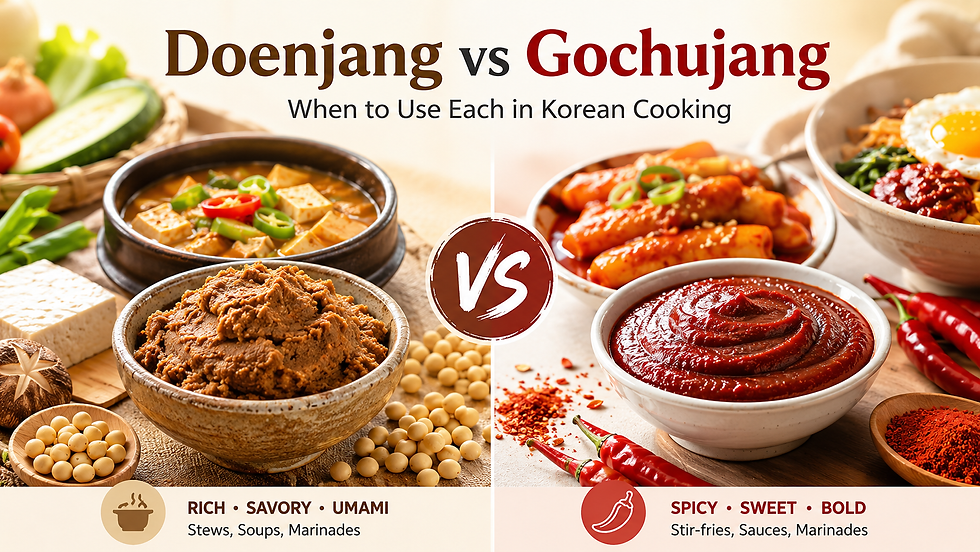
Doenjang and gochujang both belong in a Korean pantry, but they do very different jobs. That is where beginners usually get stuck. They see two thick fermented pastes, assume they can swap one for the other, and then wonder why the dish tastes too sweet, too spicy, too earthy, or not deep enough.
The simple difference is this: gochujang brings punch, while doenjang brings depth.
Gochujang is a Korean fermented chili paste that adds heat, sweetness, red color, body, and sauce-building power. It works best when the dish needs to feel bold, spicy, glossy, and more sauce-forward.
Doenjang is a Korean fermented soybean paste that adds savory depth, saltiness, earthy flavor, and brothy backbone. It works best when the dish needs to feel deeper, fuller, and more home-cooked rather than hotter.
So instead of asking which paste is better, ask what the dish needs. If it needs heat, color, and bold sauce energy, reach for gochujang. If it needs savory depth, broth strength, and fermented richness, reach for doenjang.
👉 For the bigger picture across gochujang, doenjang, ssamjang, soy sauce, oils, stocks, and marinades, this complete Korean sauce guide explains how the main Korean sauces fit together.
TL;DR
Use gochujang when you want a dish to taste spicy, slightly sweet, red, bold, and sauce-forward. It works best for marinades, noodle sauces, rice bowl sauces, spicy stir-fries, tteokbokki, tofu glazes, and stews where chili flavor should lead.
Use doenjang when you want deeper savory flavor, earthy fermented depth, and a broth or sauce that feels fuller rather than hotter. It works best for doenjang jjigae, soups, vegetable dishes, mushroom dishes, savory sauces, and Korean home-style cooking where the flavor should feel grounded.
The fast rule is simple: gochujang adds punch, while doenjang adds depth. If the dish needs heat, color, and a glossy sauce, use gochujang. If the dish needs savory backbone, broth depth, and fermented richness, use doenjang. If it needs both, use both on purpose instead of treating them as substitutes.
Start With What the Dish Is Missing
When you are deciding between these two, stop thinking about the jar and think about the food in front of you.

If the dish tastes:
flat
pale
not bold enough
like it needs heat and body
you are probably closer to gochujang.
If the dish tastes:
thin
savory but boring
brothy without much character
like it needs more backbone than spice
you are probably closer to doenjang.
That is a more useful way to cook with them than memorizing definitions.
What Gochujang Actually Does in a Dish
Gochujang usually changes the personality of the food fast.

It brings:
heat
a little sweetness
red color
thickness
that sticky, sauce-building quality that helps a dish feel more intentional
It is not just there to make something spicy. It makes food feel more vivid.
That is why gochujang works so well in:
spicy pork or chicken marinades
bibimbap-style sauces
noodle sauces
rice bowl sauces
spicy stir-fries
richer stews where you want the chili to be obvious
If dinner needs more presence, gochujang is often the answer.
It is especially useful when the food already has structure but still lacks punch. Leftover rice, roasted vegetables, tofu, plain noodles, cooked chicken, even a quick mayo sauce can all wake up with gochujang.
👉 If you want the deeper beginner-friendly breakdown of chili paste, this gochujang guide explains what it tastes like, how spicy it is, and how to use it without overpowering food.
What Doenjang Actually Does in a Dish
Doenjang works in a quieter way, but it can be just as important.

It brings:
saltiness
savory depth
earthy fermented flavor
a more grounded, home-cooked feel
the kind of richness that sits underneath the rest of the dish instead of shouting over it
It does not usually make the first bite more exciting in the same way gochujang does. It makes the whole dish feel more complete.
That is why doenjang makes more sense in:
doenjang-jjigae
simple soups
brothy vegetable dishes
mushroom dishes
savory sauces that need more depth than heat
meals where you want the flavor to feel fuller, not brighter
If gochujang pushes flavor forward, doenjang settles it in.
👉 For a deeper look at the soybean paste side, this doenjang guide explains what it tastes like, why it feels so savory, and how Korean home cooks use it.
Use Gochujang When You Want the Sauce to Matter
One of the easiest ways to decide is to ask how visible you want the paste to be.
Use gochujang when you want the paste to show up clearly in the final dish.
That usually means:
the sauce should taste red and spicy
the marinade should coat the meat
the noodles should feel dressed, not just seasoned
the bowl should have a sauce that ties everything together
the stew should clearly taste chili-based
Gochujang is a good choice when you want the dish to feel built around the paste.
It likes being out front.
Use Doenjang When You Want the Flavor to Sit Deeper
Use doenjang when you do not want the dish to announce itself as spicy, but you still want it to taste strong.
That usually means:
the broth needs more depth
the vegetables need more savory weight
the stew needs more backbone than heat
the dish should taste fermented and earthy, not sweet and chili-led
you want something closer to everyday Korean comfort cooking
Doenjang is the better choice when the paste is supposed to support the dish instead of dominate it.
It is less about sparkle and more about foundation.
👉 If you already know Japanese miso but are new to Korean soybean paste, this doenjang vs miso guide explains why the two are not exactly interchangeable.

Which One Makes More Sense for Common Korean Dishes?
👉 For marinades
Use gochujang.
It gives meat or tofu heat, color, body, and that sticky sauce quality that makes a marinade feel like more than just seasoning.
👉 For soups and stews
Use doenjang when the stew is meant to be savory and earthy.
Use gochujang when the stew is meant to be spicy and bold.
This is one of the biggest differences between the two. One gives you brothy depth. The other gives you chili-driven force.
👉 For noodle dishes
Usually gochujang.
It blends more naturally into sauce-heavy noodle dishes and gives you the bold flavor most people expect.
👉 For vegetable side dishes
Often doenjang, especially when you want something more savory than spicy.
It brings more fermented depth to greens, mushrooms, and other simple sides.
👉 For rice bowls
Usually gochujang if you want a mixed sauce.
Sometimes doenjang if the bowl is built around soup, vegetables, or a deeper savory profile.
👉 For Korean BBQ-style meals
Depends on the role.
If you are building a spicy marinade, use gochujang.
If you are making a deeper savory sauce or wrap-style flavor profile, doenjang may show up alone or as part of something like ssamjang.
👉 If you want the comfort of doenjang jjigae without building the broth from scratch, this ready-to-eat doenjang jjigae guide helps you choose a faster option.
When Recipes Use Both
This is where people sometimes assume the two are interchangeable.
They are not. But they do work well together.
When a recipe uses both, it is usually because each one is solving a different problem.
Doenjang adds savory funk and depth
Gochujang adds heat, color, and a little sweetness
That pairing makes a sauce or stew taste more rounded. One fills in the base. The other lifts the top.
Ssamjang is the easiest example to understand. It tastes more complete than plain gochujang because it has that deeper fermented soybean backbone underneath the chili.
So yes, they can overlap. But overlap is not the same thing as being swappable.
Can You Replace One With the Other?
You can, but you should expect the dish to change.
If you swap gochujang for doenjang, you usually lose:
heat
color
sweetness
that glossy sauce feel
If you swap doenjang for gochujang, you usually lose:
earthy depth
brothy backbone
some of the savory weight that makes the dish feel grounded
That is why a straight substitute often disappoints people. The food may still be edible. It just starts becoming a different dish.
A better rule is this:
Substitute only if you are comfortable changing the style, not just the seasoning.
The Most Common Beginner Mistake
Beginners usually do not misuse these pastes because they are hard.
They misuse them because they expect them to do the same job.
The usual mistakes look like this:
using gochujang when the dish really needs depth, not heat
using doenjang when the dish needs a sauce, not just savory backbone
expecting gochujang to taste finished straight from the tub
expecting doenjang to behave like a chili paste
Once you stop treating them like cousins that can fill in for each other, they get much easier to use.
👉 If doenjang tastes too strong the first time you use it, this guide to using doenjang without overpowering soup or stew shows how to balance the flavor more gently.
Which One Should You Learn First?
For most beginners, gochujang is easier to understand first.
It gives faster payoff. You can mix it into sauces, marinades, rice bowls, noodles, and quick weeknight meals without needing much else. It is easier to “see” what it is doing.
Doenjang becomes more important once you start cooking in a deeper way. It matters more when you want real stew flavor, more savory vegetable dishes, and meals that feel less like assembled sauce and more like actual Korean home cooking.
So the honest answer is:
learn gochujang first for heat and sauce-building
learn doenjang next for depth and cooking range
That is usually the smoother path.
👉 Browse our [Korean sauces & pantry category] for more options.
Final Verdict
Use gochujang when the dish needs heat, color, body, and a sauce that tastes clearly built around chili paste.
Use doenjang when the dish needs savory depth, earthy fermented flavor, and the kind of backbone that makes soups, stews, and simple savory dishes feel finished.
So when you are standing at the stove deciding between them, ask this:
Does this dish need more punch or more depth?
If it needs punch, start with gochujang.
If it needs depth, start with doenjang.
If it needs both, use both on purpose.
That is when Korean cooking starts getting easier.
Related Posts to Read Next
The Ultimate Korean Sauce Guide: from Soy Sauce to Gochujang
What Is Doenjang? The Soulful, Funky, Salty Heart of Korean Cooking
What Is Gochujang? The Bold, Funky, Spicy Heart of Korean Cooking
Doenjang vs Miso: What’s the Difference and Which One Makes More Sense for Korean Cooking?
Doenjang vs Ssamjang: What’s the Difference and Which One Should You Buy First?
FAQ
Is doenjang the same as gochujang?
No. Doenjang is a fermented soybean paste with a deeper savory, earthy flavor, while gochujang is a fermented chili paste that brings heat, sweetness, and color.
Which one is spicier?
Gochujang is spicier. Doenjang is more about savory fermented depth than chili heat.
Which one is better for soups and stews?
Doenjang is usually better for savory, earthy soups and stews. Gochujang is better when you want the stew to taste spicy and chili-led.
Which one is better for marinades?
Gochujang is usually the better choice for marinades because it gives meat or tofu more heat, color, and sauce-building power.
Can I use doenjang instead of gochujang?
Only if you are okay changing the dish. The food may still work, but it will taste deeper and earthier, not spicy and sauce-forward.
Do recipes ever use both?
Yes. Some sauces and stews use both to get depth from doenjang and heat from gochujang.
Which one should I buy first?
For most beginners, gochujang is the easier first buy because it works so well in quick sauces, bowls, noodles, and marinades. Doenjang is the smarter next buy when you want soups, stews, and deeper savory cooking.


Comments