
.png)
Best Korean Sauces for Beginners: What to Buy for Your First Pantry


The first time you try to build a Korean pantry, everything starts to look like something you’re supposed to own.
There’s a soy sauce that looks familiar but not quite. A red tub you’ve seen in recipes. Another brown tub that seems important. A bottle of sesame oil that looks optional until you cook without it. Then suddenly a simple first order turns into ten items and a lot of guesswork.
That’s the mistake.
A good first Korean pantry is not about buying everything that matters eventually. It’s about buying the few things that will make you feel smart the first week you own them.
For most beginners, that means starting with five:
regular Korean soy sauce, gochujang, sesame oil, ssamjang, and doenjang.
Not because you’ll use them all the same way. You won’t. But together they cover the five jobs beginners usually need most: seasoning, spicy sauce-building, finishing flavor, ready-to-eat punch, and deeper savory cooking.
👉 If you are confused by tubs, bottles, pastes, marinades, and ready-to-use sauces, this Korean sauce formats explained guide can make the first shopping trip easier.
TL;DR
If you want a Korean pantry that feels useful right away, buy these five first:
Regular Korean soy sauce for everyday seasoning, marinades, dipping, bowls, and quick sauces
Gochujang for spicy-sweet depth in noodles, rice bowls, glazes, and marinades
Sesame oil for finishing flavor and quick sauce-building
Ssamjang for lettuce wraps, grilled meat, cucumbers, mushrooms, and low-effort meals
Doenjang for soups, stews, savory marinades, and deeper home-cooking flavor
If you want the buying order, not just the list, do it like this:
Buy soy sauce, gochujang, and sesame oil first
Add ssamjang next if you assemble meals more than you cook them
Add doenjang next if you want soups, stews, and deeper savory range
Then buy the other one after that
That gives you a five-item pantry that actually grows with you instead of turning into shelf clutter.
What This Post Is Really Helping You Decide
This is not a list of every Korean sauce worth knowing.
It’s a first-cart guide.
That matters because beginners do not usually need the most complete pantry. They need the one that gets opened. The one that turns eggs and rice into dinner. The one that works on a weeknight when you have half a cucumber, leftover chicken, and no patience for a complicated recipe.
That’s why this list is built around repeat use, not just importance.
👉 For the bigger picture beyond a first-cart setup, this complete Korean sauce guide explains the main sauces, pastes, oils, stocks, and seasonings used across everyday Korean cooking.
The 5 Korean Sauces and Flavor-Builders Worth Buying First
1. Regular Korean soy sauce
If you buy one Korean bottle first, make it this one.
Regular Korean soy sauce is the easiest pantry entry point because it behaves in a way most people already understand. It works in marinades, vegetable dishes, rice bowls, noodle sauces, dipping sauces, dumpling sauces, and quick stovetop meals. You do not need a plan for it. It slips into food naturally.
That sounds basic, but it matters. A beginner pantry needs at least one ingredient that feels useful on day one without a learning curve.
You’ll probably use this most if your meals already look like:
eggs and rice
dumplings
tofu or mushrooms
noodles
simple chicken or beef
quick fridge-cleanout dinners
It’s not the most exciting item here. It might be the most important one.
👉 If soy sauce is the bottle you are most likely to buy first, this Korean soy sauce comparison guide explains the difference between jin ganjang, yangjo ganjang, and guk ganjang.
2. Gochujang
Gochujang is the tub that makes a Korean pantry feel real.
It gives you heat, sweetness, body, and that fermented depth people usually mean when they say they want Korean flavor at home. But beginners do better with gochujang once they stop expecting it to act like a table sauce.
Plain gochujang is concentrated. It’s better as a builder.
👉 For a sweet-spicy pork belly meal that uses gochujang as a marinade and glaze for rice bowls or lettuce wraps, use the gochujang pork belly recipe.
A spoonful can turn into:
a rice bowl sauce
a noodle sauce
a chicken glaze
a tofu marinade
a soup booster
a spicy mayo
a quick mix for roasted vegetables
This is also one of the best repeat-buy items in the whole pantry. Once you get comfortable with it, it stops feeling like a specialty paste and starts feeling like a shortcut.
Buy it early if you want bold meals and do not mind mixing a few ingredients together.
👉 If rice bowls are your main reason for buying gochujang, this bibimbap sauce guide shows how to balance it with sesame oil, soy sauce, sweetness, and water so it actually mixes well.
3. Sesame oil
This is the item beginners underestimate and then end up reaching for constantly.
Technically, it’s not a sauce. In practice, it belongs in the first pantry anyway because it fixes a problem almost every beginner runs into: the food is fine, but it does not quite taste finished.
That is where sesame oil earns its place.
A little bit can make:
spinach taste intentional
a rice bowl feel fuller
a dipping sauce feel rounder
noodles taste richer
cucumbers taste like a real side dish instead of an afterthought
It is also one of the fastest ways to make simple ingredients feel more Korean without adding another full condiment.
The only real caution is not to overdo it. Sesame oil is useful because it is strong, not because it is subtle.
👉 For a noodle example where soy sauce and sesame oil have to stay in balance, this japchae sauce guide explains how sweetness, sesame aroma, and glass noodle texture work together.
4. Ssamjang
Ssamjang is the easiest item on this list to love immediately.
You open it, put it on food, and it already makes sense.
That is what makes it so good for beginners who are not trying to “cook Korean food” in a big project sense. If your version of dinner is grilled meat, rice, lettuce, mushrooms, cucumbers, or a snack plate built from whatever is in the fridge, ssamjang can carry the whole meal.
It is especially good for people who:
like wraps
like dipping
like strong savory flavor
want dinner to taste finished fast
assemble meals more often than they cook them from scratch
The only reason it does not rank higher than soy sauce or gochujang is range. Ssamjang is fantastic, but it lives in a narrower lane. People either use it constantly or let it sit for two weeks and then remember it exists when they buy lettuce again.
👉 For a full table setup, this Korean BBQ dipping sauce guide explains when to use ssamjang, sesame oil salt, and soy-vinegar dips with grilled meat, wraps, mushrooms, and vegetables.
5. Doenjang
Doenjang is the one that makes your pantry deeper instead of just spicier.
It is earthy, savory, and more fermented than many first-time buyers expect. It is also the ingredient that starts to matter the moment you want your meals to feel less like “sauce on top of food” and more like actual cooking.
This is the jar that opens up:
stews
soups
savory marinades
mushroom dishes
vegetable sides with more depth
richer, more grounded weeknight meals
Doenjang does not usually win on first-bite appeal. Ssamjang often does. But doenjang tends to win later, once you start cooking with it and realize it fills a gap nothing else in the pantry really fills.
If you like brothy meals, savory food, and a little more kitchen time, buy this sooner rather than later.
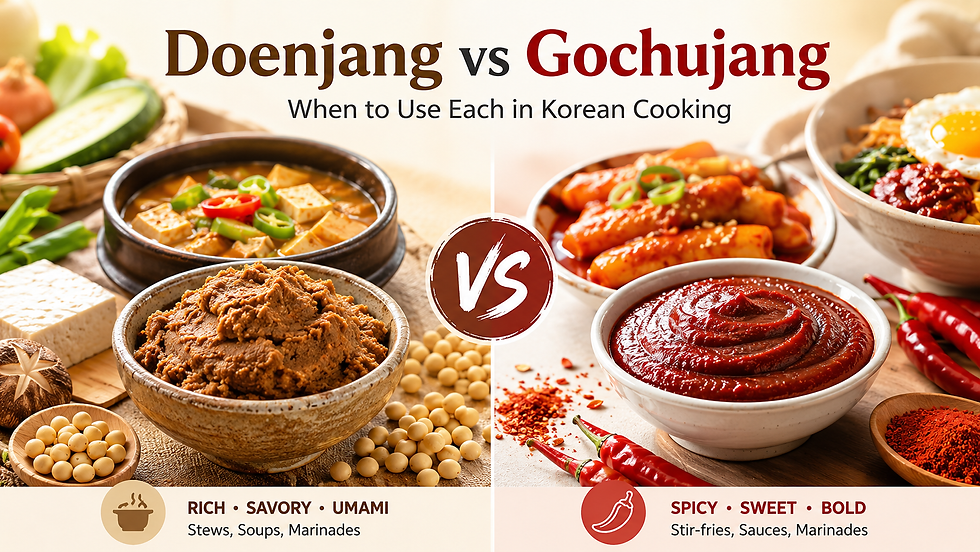
👉 For a clearer side-by-side look at spicy chili paste and savory soybean paste, this doenjang vs gochujang guide explains when each one makes more sense.
The Smart Buying Order for Beginners
A lot of pantry guides stop at the list. That is exactly where beginners still get stuck.
So here is the practical order.
Buy these first
Regular Korean soy sauce
Gochujang
Sesame oil
These three do the most work the fastest. They cover seasoning, sauce-building, and finishing flavor. With just these, you can already make bowls, noodles, marinades, dipping sauces, and better leftovers.
👉 If your main goal is faster dinners instead of pantry building, this Korean sauces for easy weeknight meals guide focuses on the bottles that help most on busy nights.
Then decide what kind of beginner you are then,
👉 Buy ssamjang next if:
you want Korean BBQ flavor at home
you eat lettuce wraps, cucumbers, mushrooms, or grilled meat often
you prefer spoon-on-top convenience over cooking depth
you want the quickest payoff
👉 Buy doenjang next if:
you want to cook soups and stews
you like deeper savory flavor
you want your pantry to feel broader, not just hotter
you enjoy cooking more than assembling
Then buy the other one after that.
That is still a five-item pantry. It is just a more honest one.
👉 If you are deciding between spicy paste and ready-to-eat dipping sauce, this gochujang vs ssamjang guide makes the choice much easier.
What Most Beginners Get Wrong
Usually it’s not the list itself. It’s the expectation.
They buy gochujang and expect a ready dip.
They buy ssamjang and expect a cooking base.
They buy doenjang and then realize they do not actually make stews on weeknights.
They skip sesame oil because it looks secondary, then wonder why everything tastes a little flat.
A good beginner pantry works when each item has a clear job.
That is why these five make sense together. They are not five versions of the same flavor profile. They are five different kinds of usefulness.
👉 Marinades work the same way: this Korean marinade guide explains when galbi, bulgogi, and jeyuk make sense so you do not use the wrong sweet soy or spicy sauce for the meat in front of you
What I Would Skip on the First Order
This is just as important as what to buy.
👉 Soup soy sauce
Worth buying later. Not usually the best first soy sauce unless you already know soups are your main goal.
👉 Fish sauce
Useful in some Korean cooking, but not one of the first five I would hand to most beginners.
👉 Specialty syrups and sweeteners
Helpful in certain recipes. Rarely the thing that makes a first pantry succeed or fail.
👉 Extra condiments just because they seem authentic
This is how people end up with a crowded fridge and no idea what to reach for.
Your first pantry should feel active, not ceremonial.
👉 If you already have gochujang and want to build a sauce instead of buying another bottle, this yangnyeom sauce guide shows how to turn it into a sticky Korean sweet spicy sauce for fried chicken, dumplings, fries, and snack plates.
Which of the Five Will You Probably Use Most?
Not everyone ends up loving the same item.
You’ll probably use regular soy sauce and sesame oil the most if your meals are quick, flexible, and built from leftovers.
You’ll probably use gochujang the most if you like spicy bowls, noodle dishes, and turning basic ingredients into something bolder.
You’ll probably use ssamjang the most if your meals lean toward rice, meat, lettuce, cucumbers, and simple assembly.
You’ll probably use doenjang the most if you’re the kind of person who says you want a pantry and actually means you want to cook.
That is why this post is a first-pantry guide, not a universal ranking. The five are right. The order they become favorites depends on your kitchen.
➡️ If your first pantry is mostly for bowls, noodles, and quick dipping sauces, this guide to Korean sauces for rice bowls and noodles can help you choose the most useful bottles first.
👉 Browse our [Korean sauces & pantry category] for more options.
Final Verdict
For a first Korean pantry, buy five:
regular Korean soy sauce, gochujang, sesame oil, ssamjang, and doenjang.
That is the strongest beginner setup because it gives you the full range of what a first pantry should do. You get one easy everyday bottle, one spicy paste, one finishing oil, one ready-to-eat condiment, and one deeper fermented paste for real cooking.
If you want the simplest version of the advice, here it is:
Start with soy sauce, gochujang, and sesame oil.
Add ssamjang if you eat by assembling.
Add doenjang if you eat by cooking.
Then keep both.
That is a pantry you can actually grow into.
Related Posts to Read Next
FAQ
Which Korean sauce should beginners buy first?
Regular Korean soy sauce is usually the best first buy because it fits the widest range of everyday meals without much effort.
What are the best Korean sauces for a first pantry?
For most beginners, start with regular Korean soy sauce, gochujang, sesame oil, ssamjang, and doenjang.
Is gochujang or ssamjang better for beginners?
Gochujang is better as a broad pantry buy. Ssamjang is better for beginners who want a ready-to-use sauce for wraps, grilled meat, and dipping.
Why is sesame oil included if it is not technically a sauce?
Because it solves a real beginner problem. It is one of the fastest ways to make simple food taste finished and more distinctly Korean.
Is doenjang too strong for a first pantry?
Not at all, but it makes the most sense for beginners who want soups, stews, and deeper savory cooking, not just quick sauces.
Do I need soup soy sauce right away?
Usually no. It is useful later, especially for soups, but most beginners get more value from regular Korean soy sauce first.
Can I build a real Korean pantry with just these five?
Yes. You may add more later, but these five are enough to make a first pantry feel flexible, useful, and worth reaching for.


Comments