
.png)
What Is Bokkeum? The Korean Stir-Fry Style Behind Kimchi, Anchovies, Spam, and More
- MyFreshDash
- 6 days ago
- 8 min read

Updated: 5 days ago
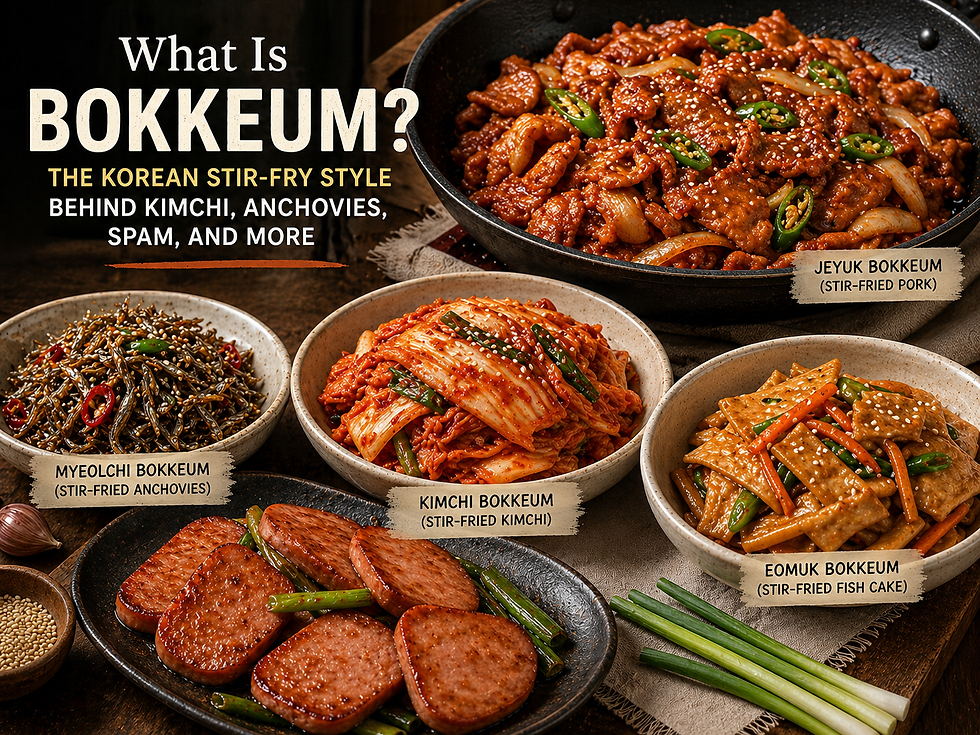
The same word shows up on tiny anchovies, spicy pork, fish cake, kimchi, and pantry-friendly spam, which is exactly why bokkeum confuses people at first.
Those foods do not look alike.
They do not eat alike either.
But they do share one important thing: they are built in the pan, fast, with direct heat and seasoning that is meant to cling instead of slowly settle in over time.
That is bokkeum.
It is the Korean stir-fry style that can turn a handful of anchovies into a rice side dish, fish cake into a fridge staple, kimchi into a faster companion for rice, or pork into the kind of spicy dinner that barely needs anything else. Once you understand bokkeum as a style word instead of one recipe, a huge chunk of Korean dish names starts making much more sense.
TL;DR
Bokkeum means stir-fry in Korean food. It usually refers to ingredients cooked fairly quickly in a pan with seasoning, sauce, or aromatics until the flavor clings to the surface instead of sitting separately. That is why myeolchi bokkeum (stir-fried anchovies), eomuk bokkeum (stir-fried fish cake), kimchi bokkeum (stir-fried kimchi), and jeyuk bokkeum (spicy stir-fried pork) can all share the same word while tasting completely different. Bokkeum is not one dish. It is the Korean stir-fry lane behind a wide range of side dishes and main dishes.
What bokkeum actually means
Bokkeum refers to a Korean stir-fry style.
That is the short definition. The more useful one is that bokkeum usually tells you the ingredient was cooked in the pan with enough heat and seasoning to make the flavor feel built into the outside of the food.

This is different from a long braise. It is different from a soup. It is different from a tossed side dish. Bokkeum usually feels quicker, more direct, and more surface-driven. The ingredient picks up seasoning fast, and the pan becomes part of the flavor.
That is why the same word can cover tiny dry side dishes and full dinner skillets. The ingredient changes. The stir-fry logic stays the same.
Why bokkeum dishes can taste so different from each other
Bokkeum is a method word, not a flavor word.
That is the key.
A bokkeum dish can be sweet-savory, spicy, salty, glossy, dry, meaty, seafood-heavy, or vegetable-forward depending on what is in the pan. The method only tells you how the dish is being built, not what mood it will land in.
That is why myeolchi bokkeum and jeyuk bokkeum do not feel remotely like the same food even though both are bokkeum. One is a small anchovy side dish that clings to rice in sweet-savory bites. The other is a spicy pork stir-fry with enough sauce and heat to carry a whole dinner.
The word connects them through technique, not through identical taste.
The bokkeum dishes that make the category click fastest
A few examples explain the whole category better than a definition can.
Myeolchi bokkeum is stir-fried anchovies, often seasoned until they turn glossy, savory, a little sweet, and extremely rice-friendly. It is one of the clearest side-dish versions of bokkeum because the food stays small and the pan work matters a lot.

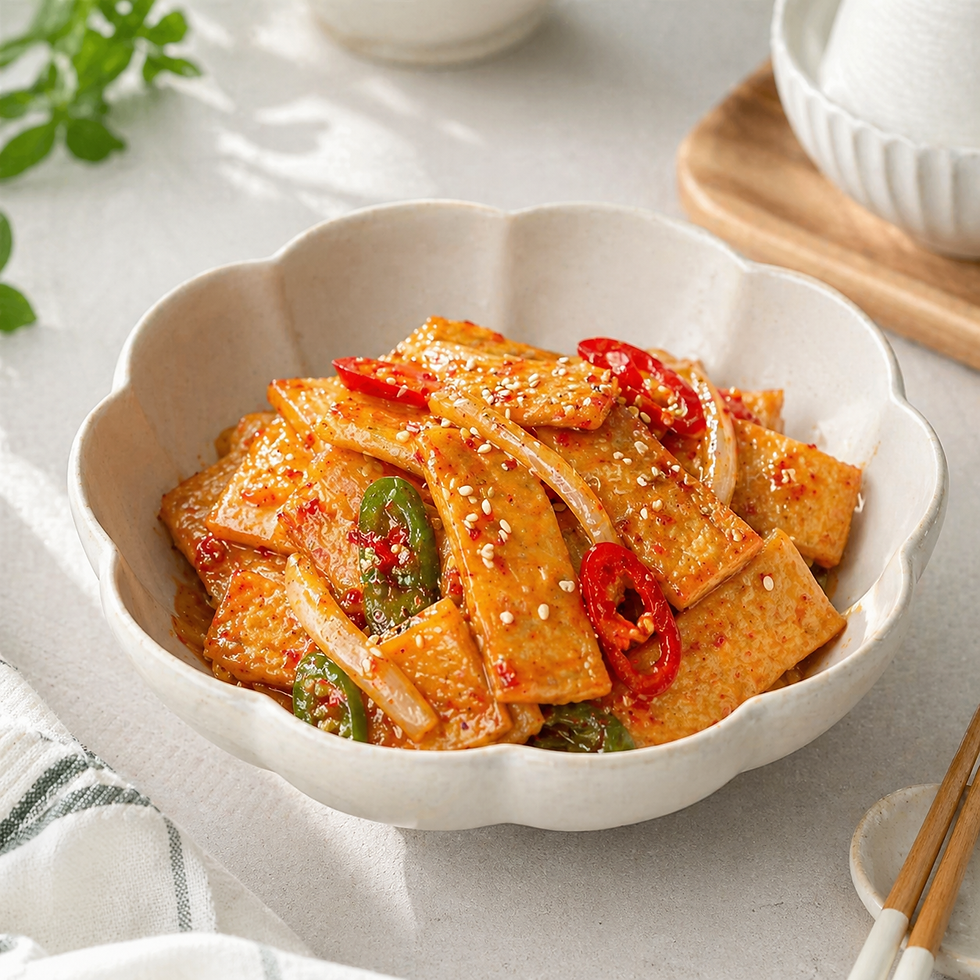
Eomuk bokkeum is stir-fried fish cake, usually with onion and a soy-based sauce. It shows the softer, more flexible side of bokkeum. The pieces stay chewy, glossy, and very practical next to rice.
Kimchi bokkeum takes fermented kimchi and gives it direct heat until it tastes more cooked, darker, and calmer than kimchi eaten cold. It is still punchy, but the pan changes the tone.

Jeyuk bokkeum pushes bokkeum into main-dish territory. Thin sliced pork gets stir-fried in a spicy gochujang-based sauce until the pan gives it enough caramelized, clinging intensity to feel like a full meal.

Once those examples line up, bokkeum stops feeling vague. It starts feeling like a very flexible Korean pan-cooking category.
Why bokkeum works so well in Korean meals
Bokkeum is one of the most useful Korean styles because it scales up and down so easily.
It can be a tiny side dish that sits in the fridge and helps rice all week. It can be a medium banchan with some chew and sauce. Or it can be a full skillet dinner that only needs rice and maybe one cool side to feel complete.
That is a huge part of why the word shows up so often. If the bokkeum you make most often is the tiny side-dish kind, Tong Tong Bay Dried Anchovy is exactly the kind of ingredient that shows why this style works so well in small amounts: it is already meant for quick pan-building instead of soup stock work.
The pan work is fast. The flavor lands clearly. And the result usually feels more intentional than the amount of effort suggests.
That is the kind of cooking style that survives real life.
Bokkeum usually tastes more immediate than jorim
This comparison helps a lot.
Jorim is the braised lane. It simmers in liquid long enough for the sauce to reduce and settle in more deeply.
Bokkeum usually happens faster.
That means the flavor often stays brighter on the outside of the ingredient. The dish can still be glossy and strongly seasoned, but it usually feels less absorbed and more actively stir-fried. You taste the contact with the pan, the quick reduction, the tossing, the directness.
That is why eomuk bokkeum feels very different from dubu jorim, even though both might involve soy sauce. One tastes tossed and pan-finished. The other tastes simmered and reduced into itself. That is also why Chung Jung One Fish Cake (Slice) fits bokkeum so naturally: the sliced format is already halfway to the pan.
Bokkeum is not always spicy
This is another easy beginner misunderstanding.
Because famous dishes like jeyuk bokkeum and spicy kimchi stir-fries get a lot of attention, people sometimes assume bokkeum means hot or red.
It does not.

Bokkeum can absolutely be spicy, but it can also be mild, sweet-savory, soy-based, sesame-forward, or only lightly seasoned. The word is telling you about the stir-fry approach, not promising one fixed sauce profile.
That is why anchovies, fish cake, kimchi, zucchini, mushrooms, spam, and even pork can all live under the same method word and still go in very different directions. On the kimchi side, Bibigo Aged Kimchi is the kind of ingredient that makes bokkeum click fast because older, deeper kimchi responds to the pan much better than fresher eating kimchi does.
Why bokkeum side dishes are so good with rice
Rice gives bokkeum exactly what it needs.
A lot of bokkeum dishes are built with concentrated flavor on purpose. They are meant to deliver impact in a small amount. That is true of anchovies, kimchi, fish cake, and plenty of other side-dish bokkeum versions.
Put that next to hot rice and the whole thing makes sense immediately.
A spoonful of rice softens the seasoning. The stir-fried ingredient gives the rice more personality. Neither one has to do all the work alone.
That is why bokkeum fits so naturally into Korean meals. It is one of the easiest ways to make plain rice feel like a meal with actual direction.

Why bokkeum can mean side dish or main dish
This is one of the most useful things to understand about the word.
Bokkeum is not locked to one size of meal.
When the ingredient is small and concentrated, like anchovies or fish cake, bokkeum often becomes banchan. When the ingredient is something bulkier, like pork or chicken, bokkeum often becomes the main thing in the meal.
The method stays the same. The role shifts. And if your version of bokkeum tends to lean more pantry-savory than traditional banchan, Chung Jung One Luncheon Meat Pork 12 oz (340 g) is the kind of ingredient that makes spam-style bokkeum or fried-rice-adjacent pan meals make immediate sense.
That flexibility is part of why bokkeum matters so much in Korean home cooking. You can use the same general cooking logic to make something tiny and supportive or something dinner-sized and center-of-plate.
What usually goes into a bokkeum dish
There is no single formula, but bokkeum dishes often live in a familiar cooking rhythm.
Oil goes into the pan. Aromatics like garlic, onion, or scallion often follow. The main ingredient goes in and gets stir-fried with seasoning or sauce. Soy sauce, gochujang, gochugaru, sugar, syrup, sesame oil, or sesame seeds may all appear depending on the dish. Some bokkeum versions stay fairly dry. Some turn glossy. Some hold sauce. Some barely do.
The point is not one ingredient combination.
The point is that the pan is actively shaping the dish in real time.
That is why bokkeum so often feels fast, direct, and satisfying.

Is bokkeum beginner-friendly?
Yes, especially once you stop trying to make the word mean one flavor.
The technique itself is very approachable. You take an ingredient, stir-fry it with seasonings, and let the pan help you concentrate the flavor quickly. That is not a hard cooking idea to understand.
It is also one of the most useful Korean food words to learn because it unlocks so many dish names at once. Once you know what bokkeum means, you stop reading Korean menus and side-dish labels like they are random collections of ingredients. You start seeing the method behind them.
That helps with shopping, ordering, and cooking at home.
Why the word matters beyond one spicy pork dish
This is what makes bokkeum worth learning as a category.
If you only know jeyuk bokkeum, that is useful. But once you understand bokkeum as the stir-fry style behind anchovies, fish cake, kimchi, pork, and more, you start seeing how much of Korean cooking depends on quick pan-built flavor.
Muchim gives freshness.
Jorim gives depth.
Kimchi gives fermentation.
Bokkeum gives immediacy through heat.
It is the category that makes quick, concentrated, pan-shaped flavor feel like a real meal, whether the dish ends up in a tiny side bowl or in the middle of the table.
👉 Browse our [Korean Recipes] for more options.
Final bite
Bokkeum is the Korean stir-fry style behind a huge range of dishes that have almost nothing in common except how the pan builds them.
Anchovies. Fish cake. Kimchi. Spam. Pork. More.
The ingredients change. The job changes. But the method stays recognizable: quick heat, worked-in seasoning, and flavor that clings instead of wandering off.
That is why the word matters.
Once you know it, Korean dish names stop looking disconnected and start revealing the cooking logic that ties so many small side dishes and fast dinners together.
Related posts to read next
Myeolchi Bokkeum: The Tiny Korean Anchovy Side Dish That Makes Plain Rice Worth Finishing
What Is Eomuk Bokkeum? The Easy Korean Fish Cake Side Dish That Makes Plain Rice Better
How to Make Kimchi Fried Rice at Home: The Fast Korean Rice Dish That Always Delivers
Jeyuk Bokkeum (Korean Spicy Pork with Gochujang) Easy 20-Minute Recipe for Beginners
What Is Jorim? The Korean Soy-Braised Dish Style That Makes Simple Side Dishes Taste Richer
FAQ
What does bokkeum mean in Korean food?
Bokkeum means stir-fry. It refers to a Korean cooking style where ingredients are cooked fairly quickly in a pan with seasoning or sauce.
Is bokkeum always spicy?
No. Many bokkeum dishes are spicy, but plenty are mild, soy-based, or sweet-savory instead. The word describes the stir-fry method, not one flavor profile.
Is kimchi bokkeum the same as kimchi fried rice?
No. Kimchi bokkeum is stir-fried kimchi as a dish or side, while kimchi fried rice uses rice as the main base of the meal.
What foods are commonly made into bokkeum?
Anchovies, fish cake, kimchi, pork, chicken, zucchini, mushrooms, spam, and other ingredients that respond well to quick pan cooking are all common choices.
Is bokkeum the same as jorim?
No. Bokkeum is stir-fry, while jorim is braised or simmered in liquid that reduces as it cooks. Bokkeum usually feels faster and more pan-driven.
Is bokkeum a side dish or a main dish?
It can be either. Small, concentrated bokkeum dishes often work as banchan, while meatier versions like jeyuk bokkeum often work as main dishes.
Why is bokkeum so good with rice?
Because the flavor is often concentrated and pan-built. Rice softens the seasoning and gives the dish something plain to lean against


Comments