
.png)
What is Ojingeochae? Chewy Sweet-Spicy Squid Banchan That Makes Plain Rice Way Better

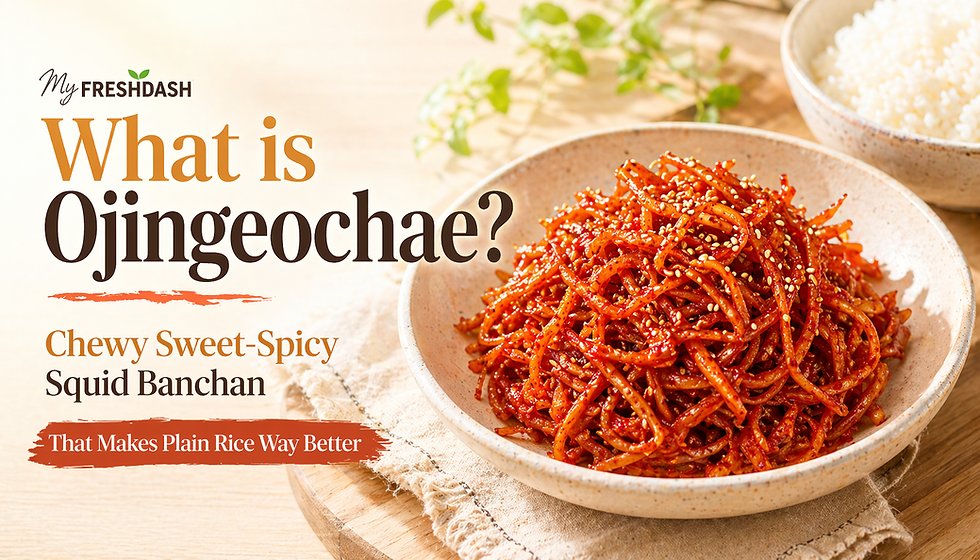
Ojingeochae earns its place at the table very quickly.
You take a bite of plain rice, then a little tangle of that glossy shredded squid, then another bite of rice, and the whole meal suddenly feels less sleepy. The rice tastes warmer. The chew slows everything down. The sweetness hits first, the spice comes in right after, and the savory squid flavor hangs around just long enough to make the next spoonful matter.
That is why this side dish punches above its size.
It does not need a big plate. It does not need a fancy dinner around it. It just needs a quiet meal with one blank spot in it.
TL;DR
Ojingeochae is a Korean side dish made from dried shredded squid tossed in a sweet-spicy sauce until it turns glossy, chewy, and intensely good with rice. The dish works because it brings exactly what a plain meal is missing: chew, sweetness, heat, salt, and a little drag in the bite. The easiest first homemade version uses a friendlier shredded squid and a sauce that leans balanced rather than punishing.
What ojingeochae actually is
Ojingeo means squid. Chae points to the shredded form.
So yes, the ingredient itself is shredded dried squid.

But when most people talk about ojingeochae at the table, they are talking about the side dish. They mean the squid after it has been softened a little, dressed, and turned into that sweet-spicy banchan that keeps making rice taste more interesting.
That difference matters.
The dried squid is the starting point.
The side dish is the reason you finish your rice.
Why it works so well with rice
Ojingeochae is not trying to be the center of the meal.
It is there to stop the meal from flattening out.
Rice is soft, warm, and a little blank on purpose. Ojingeochae fixes that with almost no effort. The squid gives you resistance. The sauce gives you sweetness first, then heat, then savory depth under that. A little sesame on top makes the whole thing smell warmer than it has any right to.

That is also why this dish works better in small amounts than in giant piles. A few strands next to rice, soup, eggs, or a lunchbox plate do more than a whole bowl that tries to take over dinner.
The chew is not the obstacle. It is the whole point
People who do not enjoy chewy foods are not going to be converted by slogans.
Ojingeochae lives or dies on the chew.
That is what makes the sauce land the way it does. If you put the same seasoning on tofu, cucumber, or fish cake, it would be good, but it would not have the same pull. The squid resists just enough to make the bite linger. That gives the sweetness and spice more time to register.
It is not crisp. It is not tender. It is chewy in the exact way that makes you go back for another bite of rice.
If that sounds good already, this is probably your kind of banchan.
The first batch usually fails before the sauce even matters
The squid is too tough.
That is usually the real beginner problem.
A first try goes much better when the squid already feels manageable in your hands. You want strands you can cut a little shorter, toss easily, and soften without feeling like you are fighting your own side dish.
That is where ShinHwa Dried Shredded Squid makes sense as a first-date version of the ingredient. The bag is small, the format is already shredded, and it lets you learn the texture without committing to a big pantry purchase.
Once you know you are actually making ojingeochae and not just testing the chew, Choripdong Dried Red Shredded Squid becomes the more natural buy. It reads like the real cooking ingredient version of the same idea.

The sauce needs sweetness as much as heat
This is one of those dishes that sounds spicier than it should eat.
A good ojingeochae does not try to punish you.
The point is not maximum gochujang. The point is a sauce with enough sweetness to round the edges, enough heat to wake the bite up, and enough body to cling instead of sliding off.
That is why a milder paste often makes more sense for a first homemade batch than the hottest tub in the fridge. Haechandle Gochujang Hot Pepper Paste Mild is a good fit here because it gives you the fermented chili depth without turning the whole side dish into a heat test.

And this is exactly the kind of banchan where syrup is doing real work. Chung Jung One Cooking Oligosaccharide (Isomalto Oligo Syrup) helps the sauce stay glossy and cling to the squid instead of pooling at the bottom.
Why it wins over people who did not think they wanted squid banchan
Because it does not eat like a heavy seafood dish.
Yes, it tastes like squid.
But what you notice first is usually the combination of chew, sauce, and rice payoff. It ends up feeling stronger than a plain vegetable side, less messy than kimchi in certain meals, and more useful than a banchan that disappears after one bite.
That is why people keep it around. It does one job unusually well. It makes the quiet parts of dinner stop feeling quiet.
If that is the kind of side dish you reach for again and again, a larger pantry bag like Tong Tong Bay Dried Sliced Red Squid starts making sense later. Not on day one. On the day you realize the container keeps emptying faster than expected.
The easiest way to understand it is still the simplest meal
Hot rice is enough.
Maybe a fried egg. Maybe a bowl of soup. Maybe leftovers and nothing else especially impressive.
That is exactly the kind of meal where ojingeochae proves itself. It does not need a full spread to be useful. In fact, the simpler the meal, the easier it is to notice what this side dish is doing.
One bite of rice alone tastes fine.
One bite with ojingeochae tastes like dinner woke up.
👉 Browse our [Seaweed & Dried goods category] for more options.
Why it turns into a repeat side dish
Because it asks so little and changes so much.
That is a good bargain.
It does not need a special occasion. It does not need plating. It does not need a big Korean meal around it. It just needs one quiet bowl and a little room on the side.
That is usually enough to make the appeal obvious.
Related posts to read next
FAQ
Is ojingeochae the squid itself or the side dish?
It can mean the shredded dried squid itself, but at the table people often mean the seasoned side dish made from it.
What does ojingeochae taste like?
It tastes sweet-spicy, savory, and distinctly chewy, with a little smoky depth depending on the squid. With rice, it usually feels less intense than it sounds.
Is ojingeochae very spicy?
Not necessarily. A good version is balanced more than fiery. The sweetness matters almost as much as the heat.
Why is ojingeochae so good with rice?
Because rice needs contrast. Ojingeochae gives it chew, sauce, salt, sweetness, and enough heat to keep the meal from going flat.
Is ojingeochae hard to make at home?
Not really, but the squid texture matters a lot. A friendlier shredded format makes the first batch much easier.
What kind of dried squid is easiest for a first homemade batch?
A smaller shredded-squid pack is the easiest place to begin if you are still figuring out whether you like the chew. Once you know you do, the larger cooking-friendly bags make more sense.
What kind of meal does ojingeochae fit best?
It fits best with plain rice, eggs, soup, lunchbox-style meals, and simple dinners that need one banchan with enough personality to wake the whole plate up.


Comments