
.png)
What Is Twigim? The Crispy Korean Street Fry Category Behind Kimari, Dumplings, and Sweet Potato


Tteokbokki brings the chew.
Twigim brings the crack.
That is why the category matters.
Korean street food already has plenty of softness built into it: rice cakes, fish cake, noodles, sauce. Twigim is the fried lane that cuts through all of that with crisp edges, hot centers, and the kind of bite that makes the whole meal more exciting. Kimari, dumplings, sweet potato, squid, shrimp, and vegetables can all live in that category. Different fillings, same job: bring the texture the table was missing.
That is what makes twigim worth knowing. It is not just “fried stuff.” It is the Korean fry category that gives so many famous snack meals their contrast.
TL;DR
Twigim means Korean fried foods, especially the crisp street-snack category built around battered and fried vegetables, seafood, dumplings, seaweed rolls, sweet potato, and similar small bites. You see it in foods like kimari (fried seaweed rolls), fried dumplings, fried squid, and goguma twigim (fried sweet potato). Twigim is not one recipe. It is the crunchy street-food lane that often shows up beside tteokbokki, fish cake soup, and other softer foods because it gives the meal the texture those dishes need.
What twigim actually means
Twigim refers to Korean fried foods, especially battered or coated items fried until the outside turns crisp and the inside stays soft, chewy, or tender depending on what is underneath.
That is the simple definition. The more useful one is that twigim is a category word. When you see it, think less about one exact ingredient and more about one exact job.
That job is contrast.
Twigim is what shows up when the meal needs a harder bite than the rest of the table is giving you. That is why the category can include vegetables, seafood, noodles wrapped in seaweed, dumplings, and more without feeling random. The ingredient changes. The fry logic stays the same.

Why twigim matters so much in Korean street food
A lot of Korean street foods lean soft by design.
Tteokbokki is chewy and saucy. Fish cake soup is tender and brothy. Even a lot of rice-cake and noodle snacks pull more toward bounce than crispness.
Twigim changes the pacing.
Once something fried lands beside those foods, the meal stops eating in one texture. The bite gets sharper. The sauce has something to cling to. A snack spread that might have felt repetitive suddenly has a reason to stay interesting.
That is the real value of twigim. It does not replace the softer foods. It makes them work harder.
Twigim is a category, not one snack
This is the first thing that helps beginners.
Twigim is not one famous item you memorize once.
It is a whole fried lane.
That is why kimari, fried mandu, fried squid, fried vegetables, sweet potato, shrimp, and more can all live under the same word without tasting remotely the same. The category is built around coating and frying, not one flavor profile or one filling.
Once that clicks, Korean street-food menus stop feeling like long lists of disconnected fried things. You start seeing the structure underneath them.

The twigim items people notice first
A few examples make the whole category click quickly.
Kimari is one of the clearest. Glass noodles wrapped in seaweed, battered, and fried give you one of the most recognizable twigim textures: crisp outside, chewy inside, and especially good once it gets dragged through tteokbokki sauce.
Fried dumplings are another easy entry point. They keep the dumpling filling familiar, but the shell pushes the snack fully into twigim territory.
Goguma twigim, or fried sweet potato, shows the gentler side of the category. It is less about savory filling and more about that contrast between caramelizing sweet potato and a hot crisp coating.
Fried squid, shrimp, and mixed vegetables show how well the category works when the goal is pure snackability. They do not need much explanation once they are in front of you.
That is the shared lesson of twigim. Different interiors, same promise: the outside should break in a way that makes the rest of the meal more fun to eat.
Why kimari makes the category easiest to understand
Kimari is probably the fastest way to understand why twigim matters.
On paper, it does not sound especially dramatic. Seaweed, noodles, batter, oil. Fine.
Then it lands next to tteokbokki, the shell cracks after the dip, and the whole pairing makes sense immediately. The seaweed brings a toastier edge, the noodles keep some chew inside, and the sauce gets into the crisp shell just enough to make both foods taste more complete.
That is why a product like CJ Crispy Seaweed Rolls Hot & Spicy fits this article so naturally. It is one of the easiest ways to understand kimari’s role in the twigim category without having to build the snack from scratch first.
Why sweet potato twigim keeps showing up
Sweet potato is one of the best proofs that twigim is about texture as much as flavor.
A plain steamed sweet potato can be good, but it is steady and soft. A fried sweet potato slice brings something much more dramatic. The edges crisp, the inside turns hotter and sweeter, and the whole bite starts doing that sweet-savory street-snack thing that feels simple but very hard to stop eating.
That is why goguma twigim keeps showing up in mixed assortments. It gives the lineup a sweeter note without giving up the shell that makes the category work.
Twigim is not always about spicy food or meaty fillings. Sometimes it is just about what happens when a mellow ingredient gets the right exterior.
Fried dumplings make more sense here than they do as a full category on their own
This is another place where the street-food logic helps.
A steamed or pan-fried dumpling can be its own meal lane. A fried dumpling in a twigim assortment is doing something slightly different. It is not trying to be a delicate dumpling experience. It is there to be hot, crisp, dippable, and easy to eat between other snacks.

That is why dumplings make so much sense under the twigim umbrella. They bring a familiar filling, but the fry pushes them into a more casual, immediate, street-food role.
What makes good twigim taste different from average fried food
Twigim is not just “anything fried in Korea.”
The good version has a specific feel.
The coating should be crisp enough to matter right away, but not so thick that it turns the inside irrelevant. The ingredient underneath should still read clearly. Squid should still taste like squid. Sweet potato should still taste like sweet potato. Kimari should still give you seaweed and noodle, not only shell.
That is where a proper frying mix matters. A product like Beksul Tempura Frying Mix fits naturally in a twigim conversation because it is built for that light, crisp Korean tempura-style coating that lets the ingredient keep its identity instead of burying it.
That balance is why good twigim feels snacky instead of greasy. The fry is supposed to sharpen the bite, not suffocate it.
Why twigim and tteokbokki belong together so often
This pairing is not random.
Tteokbokki brings chew, heat, sauce, and softness. Twigim gives the meal something to push against.
That is why so many people understand twigim best through tteokbokki first. The combo explains the whole category in one move. You dip the fried piece into the spicy sauce, the shell starts giving way, and suddenly both foods taste better than they did on their own.
That is also why tteokbokki without some sort of crisp partner can feel like it is missing a step. The sauce does a lot, but the meal gets more complete once something fried is there to interrupt all that softness.

How twigim feels different from bokkeum or jeon
This comparison helps because those categories can all involve a pan and some kind of coating logic.
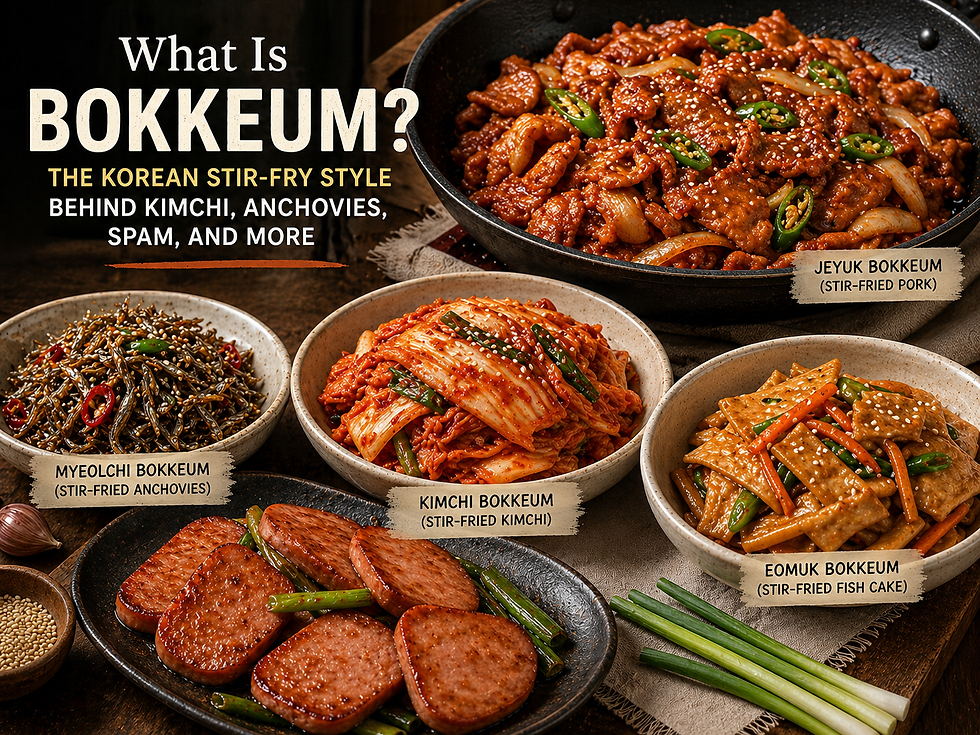
Bokkeum is the stir-fry lane. It is built fast in the pan with seasoning that clings.
Jeon is the pancake lane. It is flatter, pan-fried, and more batter-integrated.
Twigim is the true fry lane.
It is about deep crispness, not just surface browning or pan contact. That is why kimari and sweet potato twigim do not feel remotely like jeon, even when flour mixes overlap somewhere in the pantry conversation. The point is a different kind of break.
Why twigim is such a good beginner Korean snack category
Twigim is one of the easiest Korean street-food categories for beginners because the reward is immediate.
You do not need to decode fermentation, broth depth, or a complicated seasoning structure to understand it. Something is crisp, hot, and easy to dip. That logic travels well.
It also has range. If you want something familiar, there are dumplings and vegetables. If you want something more distinctly Korean street-food coded, there is kimari, sweet potato, squid, and mixed assortments built for sharing.
That is why twigim works so well as a first freezer or snack-barrier-breaker. The category explains itself fast once you hear that first crack.
Why the word matters beyond one fried seaweed roll
This is what makes twigim worth learning as a category, not just as a menu word.
If you only know kimari, that is useful. But once you understand twigim as the Korean fried lane behind dumplings, sweet potato, squid, vegetables, seaweed rolls, and more, you start seeing how Korean street food builds balance on purpose.
Tteokbokki gives sauce and chew.
Fish cake soup gives warmth.
Twigim gives the hard edge.
That is a very useful category to recognize because it explains why so many Korean snack meals feel more complete once something fried joins the table.
👉 Browse our [Korean Recipes] for more options.
Final bite
Twigim is the Korean street fry category behind some of the crispiest, easiest-to-crave foods on the snack table.
Kimari. Dumplings. Sweet potato. Squid. More.
The ingredient changes, but the reason people keep ordering it stays the same.
A sharper bite where the meal needed one.
That is why the word matters.
Once you know twigim, a plate of assorted fried pieces stops looking like random extras and starts looking like exactly the texture strategy Korean street food knew it needed.
Related posts to read next
FAQ
What does twigim mean in Korean food?
Twigim refers to Korean fried foods, especially battered or coated street-food-style snacks and sides fried until crisp.
Is kimari a type of twigim?
Yes. Kimari is one of the most recognizable twigim items because it combines crisp coating, seaweed, and chewy glass noodles in one fried snack.
Is twigim always spicy?
No. Many twigim items are mild on their own. The heat often comes from what they are served with, especially tteokbokki.
What foods are commonly made into twigim?
Kimari, dumplings, sweet potato, squid, shrimp, vegetables, and other small snackable items are common twigim choices.
What is the difference between twigim and jeon?
Twigim is the deeper-fried, crisp category, while jeon is the flatter pancake-style category usually cooked in a pan.
Why is twigim so good with tteokbokki?
Because tteokbokki is soft, chewy, and sauce-heavy, while twigim adds the crunch and texture contrast the meal often needs.
Is twigim a good beginner Korean snack category?
Yes. It is one of the easiest categories to understand quickly because the appeal is immediate: crisp, hot, dippable, and easy to pair with other Korean street foods.

Comments