
.png)
A Beginner’s Guide to the Korean Refrigerated Aisle: What to Buy First and Why It Matters

Updated: May 19
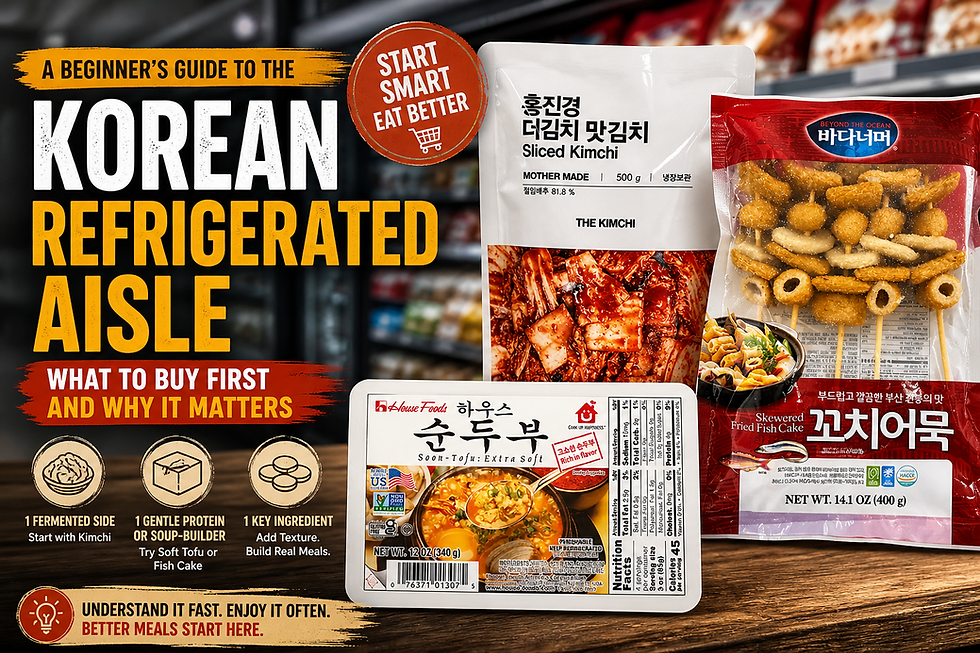
The Korean refrigerated aisle is where a lot of first-time shoppers get weirdly indecisive.
The pantry shelves feel easier. Sauces look important. Ramen looks familiar. Snacks explain themselves.
Then you get to the fridge and suddenly everything looks like it might matter.
Rows of kimchi. Tofu in different textures. Fish cake packs. Pickled things. Rice cakes. Meal kits. Side dishes in containers that clearly belong to people who already know exactly what they are doing.
That is the aisle where a lot of people either overbuy or retreat.
But this is also the aisle where Korean food starts feeling real.
Not because everything there is complicated. Because this is where the ingredients stop being background groceries and start changing the meal right away. A jar of kimchi can rescue plain rice. Soft tofu can turn broth into dinner. Fish cake can make ramen feel like it came from somewhere more specific than your pantry shelf. Pickled radish can teach you, in one cold bite, why Korean meals do not usually want to be all one texture.
That is why this aisle matters more than it looks like it should.
If you shop it the right way, you do not need to understand everything. You just need to buy the things that unlock the rest.
TL;DR
If you are new to the Korean refrigerated aisle, do not shop it like a checklist.
Shop it like you are trying to make your next few meals better with the least confusion.
The smartest first buys are usually one fermented side, one gentle protein or soup-builder, and one ingredient that gives you a more specifically Korean texture or meal shape. That usually means starting with kimchi, then adding something like soft tofu, fish cake, rice cakes, or pickled radish depending on how you actually eat.
What matters is not buying the most “authentic” basket. It is buying the refrigerated items you will understand fast enough to want again.
Why the refrigerated aisle matters so much
This aisle does a different kind of work from the pantry.
The pantry gives you base flavors. Soy sauce, sesame oil, gochujang, seaweed, stock powders. Useful, yes. But the refrigerated aisle is where Korean meals get their rhythm.
This is where the contrast comes from.
Cold against hot. Crunch against softness. Tang against broth. Gentle tofu against spicy stew. Chewy rice cake against a thinner soup. Small side dishes that keep the bowl of rice from feeling unfinished.
That is why people who are new to Korean food sometimes feel like they can cook the flavors but still miss the feeling. The sauces are there. The rice is there. The noodles are there. But the meal does not quite land.
Very often, the thing missing is refrigerated.
👉 If ready-made side dishes are the part you want to use first, this guide to ready-made Korean banchan packs can help you choose the ones that actually make meals easier.
What to buy first if you want the biggest payoff fast
1. Start with cut kimchi
If you buy only one thing from the Korean refrigerated aisle on your first trip, make it kimchi.
Not because it is the most famous. Because it is the fastest way to understand how Korean meals build contrast.
A little kimchi next to rice, eggs, noodles, grilled meat, soup, or even a tired lunch plate changes the whole thing. Suddenly the meal has crunch, acid, heat, and lift. It stops tasting flat.
For beginners, cut kimchi is almost always the smartest first move. You do not have to trim leaves, portion a whole head, or guess how to serve it. You open it, plate a little, and the logic makes sense immediately.
Hong Jin-kyung The Kimchi Cut Kimchi is exactly the kind of first buy that works because it gives you the classic napa-kimchi lane in an easy, ready-to-use format.
If you are not sure which kimchi direction makes the most sense for you yet, Napa Kimchi vs Radish Kimchi vs White Kimchi: Which Type Fits Your Taste and Meals Best? is the cleanest next read.
2. Buy soft tofu if you want the easiest path from fridge item to actual dinner
Some refrigerated foods are interesting.
Soft tofu is useful.
This is one of the smartest first buys because it does not ask much from you. Drop it into soup. Slide it into kimchi stew. Warm it gently in broth. Spoon it into a simple bowl with soy sauce, sesame oil, and green onion. Suddenly the meal feels softer, fuller, and more like something you meant to make.
It is especially good for people who like calm food. If kimchi is the thing that wakes the plate up, soft tofu is often the thing that settles it back down.
House Foods Extra Soft Soon Tofu makes sense as a first refrigerated tofu buy because the use case is obvious: stew, soup, gentle bowl, fast comfort.
The bigger point is not the brand. It is understanding what the aisle is offering you here. Korean refrigerated shopping is not only about side dishes. It is also about fast ingredients that make dinner feel less assembled and more complete.
3. Buy fish cake when you want one refrigerated item that can keep showing up all week
Fish cake is one of those ingredients that starts sounding niche until you actually use it once or twice.
Then it becomes obvious why people keep it around.
It can go into broth. It can slip into ramen. It can get stir-fried with sauce. It can sit next to rice as a quick side. It can make a pan of tteokbokki feel more rounded and snack-shop-like.
That is a lot of reuse from one pack.
The texture is part of the point. It is savory, springy, and a little sweet in the way Korean fish cake usually is. Not fancy. Just extremely useful.
Beyond The Ocean Fish Cake is a strong beginner pick because it works across several easy Korean meals instead of being locked into one specific recipe. You can use it for quick soup, ramen upgrades, stir-fried fish cake, or tteokbokki, which makes the pack feel practical even if you are still figuring out how often you will cook with it.
If fish cake still feels a little abstract, Korean Fish Cake Guide for Beginners: What to Try First and How to Use It helps make the category feel much less mysterious.
4. Buy rice cakes when you want the meal to feel more specifically Korean
This is where the aisle starts teaching you something deeper than flavor.
Korean food is not only about seasoning. It is also about texture that changes the whole mood of the dish.
Rice cakes do that immediately.
They bring chew. They make soup feel more substantial. They make a spicy sauce feel more like tteokbokki and less like just another stir-fry. They turn a bowl from thin into satisfying without needing meat.
This is also why first-time shoppers sometimes buy the wrong rice cake. They shop it like a general carb instead of a texture choice.
For a beginner, sliced rice cakes are one of the easiest places to start because they work in soup and adapt well to a lot of fast meals.
Jinga Sliced Rice Cake is a good first refrigerated tteok because it gives you that chewy, soup-friendly lane without forcing you straight into one specific street-food dish.
The small refrigerated item that explains Korean meals faster than people expect
Pickled radish is not always the first thing people reach for.
It probably should be closer to the top.
This is one of the fastest ways to understand why Korean meals often feel balanced even when the main dish is rich, soft, hot, or heavily seasoned. One cold, crisp, lightly tangy bite of radish next to heavier food makes the whole plate feel less stuck.
That matters more than it sounds like it should.
A lot of beginner Korean meals fail because everything is warm and soft at the same time. Rice. Protein. Soup. Maybe noodles. Maybe eggs. Nothing is wrong, but nothing is cutting through anything else.
Pickled radish fixes that.
HAIO White Tong Pickled Radish is the kind of refrigerated side that teaches that lesson quickly. It works with fried food, kimbap, ramen, rice bowls, and all kinds of quick lunches.
This is also the point where a lot of beginners start understanding banchan more clearly. These small cold dishes are not filler. They are part of how the meal works. What Is Banchan? The Korean Side Dish System Beginners Should Understand First is worth reading once that idea starts clicking.
What not to buy first unless you already know your mood
This is the part that saves people from a cart full of things they admire more than they use.
Do not start with the most specialized item in the aisle just because it looks interesting.
Meal kits can be great, but some are mood-specific. Specialty banchan can be excellent, but not always beginner-friendly. A giant tub of one thing can be smart if you already love it and annoying if you are still learning how often you will reach for it.
Your best first refrigerated buys should answer clear questions:
Will this make tonight’s meal better fast?
Can I use this more than once this week?
Does it solve a texture or side-dish problem I keep having?
If the answer is yes, it belongs in the basket.
If the answer is mostly “this seems authentic,” leave it for trip two.
The smartest first refrigerated basket, depending on how you eat
👉 If you want the safest first basket
Start with kimchi, soft tofu, and pickled radish.
That gives you one bold side, one gentle soup-builder, and one cold crunchy reset. It is a very easy way to make rice, eggs, noodles, or leftover protein feel more Korean without having to plan a whole project.
👉 If you want the most useful weeknight basket
Start with kimchi, fish cake, and soft tofu.
That basket is built for fast dinners. Ramen upgrade. Soup night. Rice plus sides. Late lunch that needs to turn into real food. It gives you more meal directions than it looks like it should.
👉 If you want the most specifically Korean texture basket
Start with kimchi, sliced rice cakes, and fish cake.
This is the basket that moves fastest toward tteokbokki, brothier street-food-style meals, and the kind of chew-and-bounce textures that make Korean convenience cooking feel distinct.
👉 Browse our [Frozen & Refrigerated Category] for more options.
Final thought
The Korean refrigerated aisle is not where you prove how adventurous you are.
It is where you start making smarter meals.
That is why the best first buys are not necessarily the most dramatic ones. They are the ones that solve the problems you actually have. A plate that needs contrast. A soup that needs softness. A weeknight that needs one ingredient to make dinner feel less improvised. A bowl that needs chew. A lunch that needs one cold, bright side to keep the whole thing awake.
Once you understand that, the aisle gets much easier.
You stop shopping it like a wall of unfamiliar products.
You start shopping it like a set of meal fixes.
Related posts to read next
Napa Kimchi vs Radish Kimchi vs White Kimchi: Which Type Fits Your Taste and Meals Best?
What Is Banchan? The Korean Side Dish System Beginners Should Understand First
Korean Fish Cake Guide for Beginners: What to Try First and How to Use It
Korean Rice Cake Guide: Which Tteok Works Best for Soup, Tteokbokki, Grilling, and Dessert
Best Korean Side Dishes to Keep in the Fridge for Easy Meals All Week
FAQ
What is the best first thing to buy from the Korean refrigerated aisle?
For most beginners, kimchi. It is the fastest, clearest way to understand how Korean meals use contrast, acidity, crunch, and fermentation to wake up rice, noodles, soup, and simple proteins.
What Korean refrigerated item is easiest to cook with?
Soft tofu is one of the easiest because it slides into soups, stews, and simple bowls with very little effort. It makes dinner happen fast without needing much prep.
Is fish cake too advanced for beginners?
Not at all. It sounds more unfamiliar than it actually is. Once you use it in broth, ramen, stir-fries, or a rice-side setup, it starts making a lot of sense.
Are rice cakes a good first buy if I am not making tteokbokki?
Yes, especially sliced rice cakes. They work well in soup and quick brothy meals, so you do not need to commit to a spicy street-food dish just to start using them.
Why does pickled radish matter so much in Korean meals?
Because it brings cold crunch and a lightly tangy reset. It helps rich, soft, or spicy meals feel more balanced and less one-note.
Should I buy a meal kit first or basic refrigerated items first?
Basic refrigerated items are usually smarter first because they teach you more and give you more reuse. Meal kits make more sense once you know which Korean textures and meal moods you already like.
How many refrigerated items should I buy on my first Korean grocery trip?
Usually three is enough. One fermented side, one gentle protein or soup-builder, and one item that adds a distinctly Korean texture or side-dish role will teach you more than a crowded basket will.


Comments