
.png)
How to Make Bibim Guksu at Home: Sweet-Spicy Korean Cold Noodles for Fast Meals


Bibim guksu is the kind of meal that feels like a relief halfway through making it.
The noodles cook fast. The sauce comes together in one bowl. The toppings are usually already in the fridge. And by the time you sit down, you have something cold, spicy, slippery, crunchy, and much more satisfying than the amount of work should allow.
That is why this dish stays in rotation.
A good bowl tastes sweet first, then spicy, then tangy, then garlicky, with enough cucumber or kimchi on top to keep every bite from feeling too red or too soft. It should feel cold and lively, not cold and dull. Fast, but not thrown together.
That is the part people miss.
Bibim guksu is easy, but it is only really good when the bowl still feels awake after everything is mixed.
TL;DR
Bibim guksu is a fast Korean cold noodle dish made with thin wheat noodles, a sweet-spicy-tangy gochujang-based sauce, and simple toppings like cucumber, kimchi, sesame seeds, and boiled egg. The best version at home is not the one with the most ingredients. It is the one where the noodles stay cool and springy, the sauce tastes bright before it hits the bowl, and the toppings add crunch or freshness instead of clutter.
What bibim guksu actually is
Bibim guksu is a cold mixed-noodle dish built around somyeon and a red sauce that leans sweet, spicy, tangy, and a little garlicky.
It is not a broth noodle, and it is not trying to be a heavy sauced noodle either. It sits in a very useful middle zone where the bowl still feels light, but the sauce has enough punch to make it feel like a real meal.
That is a big reason it works so well at home.
You boil the noodles, rinse them cold, toss them in sauce, and finish with a few toppings that bring freshness or texture. Cucumber is common. Kimchi is common. Sesame seeds help. A boiled egg helps. Sometimes a few slices of pear make the whole thing feel sharper and cooler in the best way.
It is a simple format, but it does not taste simple when it is balanced well.

Why bibim guksu is such a strong fast meal
Some fast meals feel fast in the wrong way.
They taste like you skipped steps.
Bibim guksu usually does not have that problem because the dish is built for speed in the first place. Thin noodles cook quickly. The sauce is mostly pantry work. The toppings do not need much handling. And because the bowl is supposed to be cold and direct, you are not chasing the kind of layered depth that takes an hour.
That makes it one of the smartest Korean noodle meals for days when you want something real but do not want to stand over the stove longer than necessary.
It also helps that the bowl feels active once you start eating. The sauce wakes you up. The noodles stay light. The cucumber cools things down. The kimchi adds bite. It is quick food, but it does not eat like compromise.
Start with the right noodle
Bibim guksu usually works best with somyeon, the thin wheat noodle that cooks fast and stays light enough to let the sauce lead.
That is part of why the bowl feels the way it does. A thicker noodle can turn the whole dish heavier and blunter. Somyeon keeps it moving.
A very clean fit here is Gompyo Thin Wheat Flour Noodles Somyeon. This is exactly the kind of noodle bibim guksu wants: quick-cooking, slim, and neutral enough that the sauce still gets to do the real work.
The noodle texture matters more than people expect. When bibim guksu is right, the strands should feel cold, a little springy, and easy to lift. Not bloated. Not gummy. Not so soft that the sauce sits on them like paste.
The sauce should taste stronger than seems reasonable
This is the part that fixes most disappointing bowls.
Before the sauce touches the noodles, it should taste a little louder than you think it needs to.
That does not mean harsher. It means sharper, sweeter, saltier, and more alive than feels comfortable in a tiny spoonful. Once the cold noodles go in, everything softens a bit. The heat spreads out. The sweetness drops back. The whole bowl gets quieter.
So if the sauce tastes merely fine before mixing, the finished bowl will often taste flat.

The basic pieces are simple: gochujang, vinegar, a little sweetness, soy sauce, garlic, and usually sesame oil. Some people add gochugaru for more heat. Some add kimchi juice. Some like more vinegar than sweetness. But the core rule stays the same.
The sauce has to bring enough energy to carry cold noodles.
A home ratio that usually gets you very close
For two servings, this is a strong place to start:
2 servings somyeon
2 to 2 1/2 tablespoons gochujang
1 1/2 to 2 tablespoons vinegar
1 to 1 1/2 tablespoons sugar or syrup
1 tablespoon soy sauce
1 teaspoon minced garlic
1 to 2 teaspoons sesame oil
1 teaspoon gochugaru if you want more heat
Then finish with some combination of:
cucumber
kimchi
sesame seeds
boiled egg
pear or apple
scallion
crushed roasted seaweed
That is not the only correct version, but it is a very reliable starting point for a bowl that tastes like bibim guksu instead of just noodles under seasoned gochujang.

How to make bibim guksu at home so it actually feels good to eat
1. Boil the somyeon just until done
Thin noodles do not give you much room to drift. Once they are ready, drain them right away.

2. Rinse them very well in cold water
Do not rush this.
The rinse is what gives bibim guksu that cleaner, colder, springier texture. It washes off excess starch and keeps the noodles from clumping into one sticky mass. Rub them lightly between your hands under cold running water, then drain them well.

3. Mix the sauce in a separate bowl first
Taste it before it goes anywhere near the noodles.
If it tastes too thick, add a little more vinegar. If it tastes too sharp, add a little more sweetness. If it tastes dull, it usually wants more salt, garlic, or sesame oil. Fixing the sauce first is much easier than trying to rescue the whole bowl later.

4. Toss only with well-drained noodles
Watery noodles are one of the fastest ways to kill bibim guksu. The sauce turns thin, slides off, and never really grabs the strands. The noodles should be cool and clean, not wet.

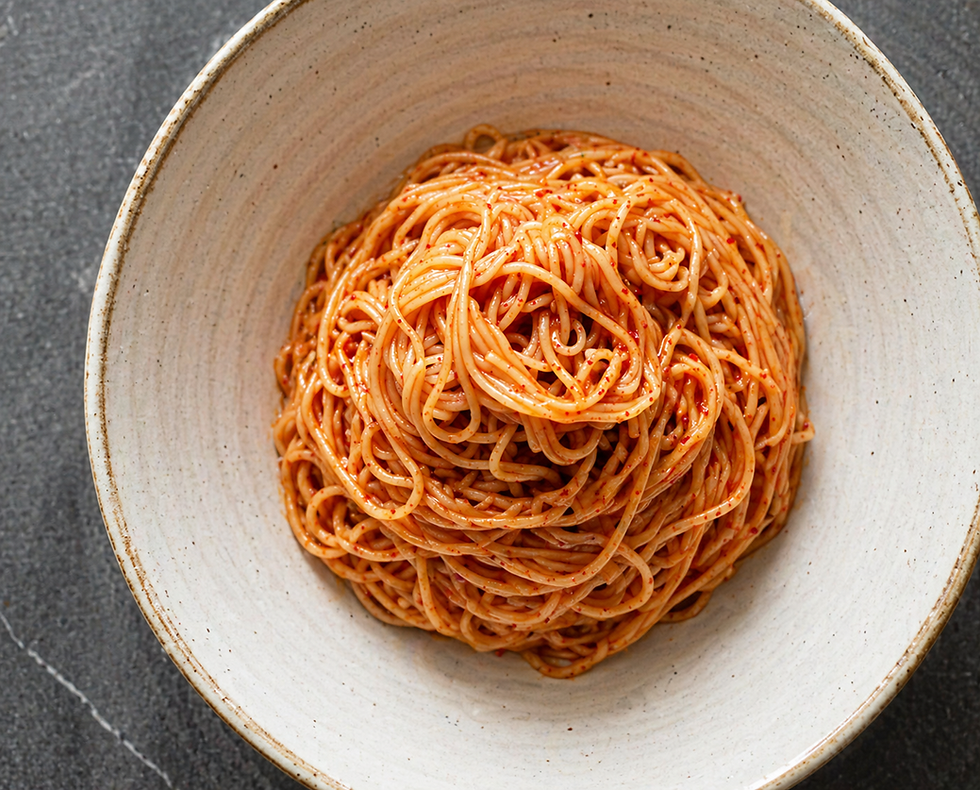
5. Add toppings that open the bowl up
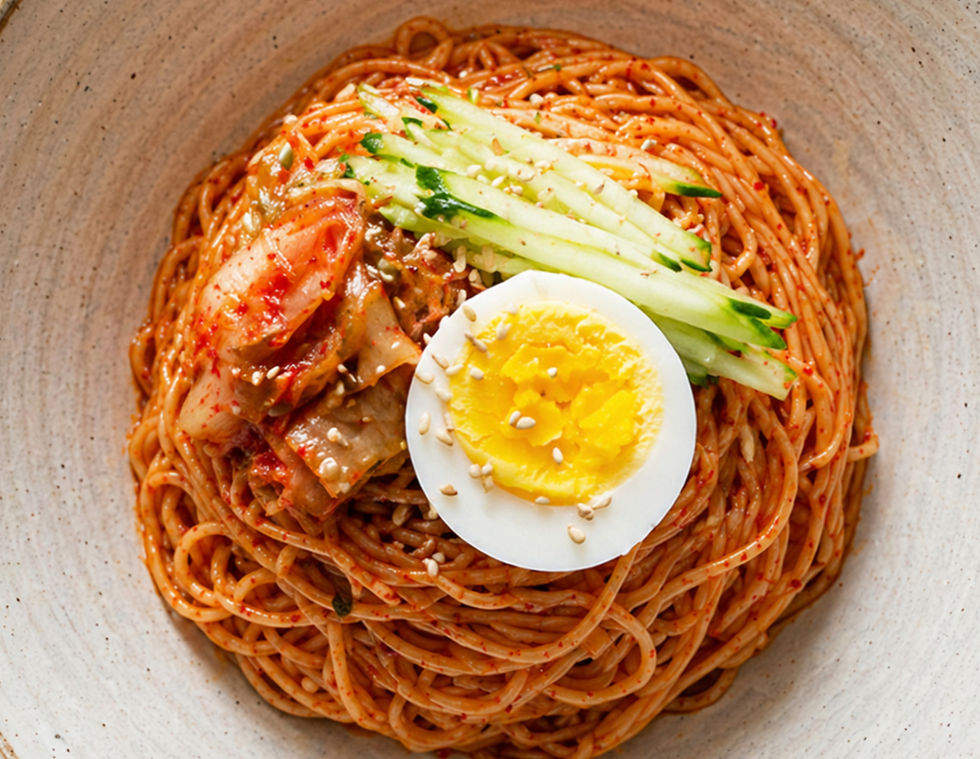
Cucumber, kimchi, sesame, egg, and fruit all work because they break up the sauce in helpful ways. You want freshness, crunch, or coolness. You do not need a topping pile so tall it hides the noodles.
What bibim guksu should feel like when it is right
This is the easiest quality check.
A good bowl should feel cold but not lifeless, spicy but not blunt, and sauced but not heavy. The noodles should separate easily. The sauce should cling without turning sticky. The cucumber or kimchi should keep cutting through the red sauce so the bowl still feels bright halfway through.
When bibim guksu is wrong, it usually goes wrong in very predictable ways.
It gets gummy because the noodles were not rinsed enough.
It tastes flat because the sauce was too timid.
It feels exhausting because the bowl got overloaded with too much paste, too many toppings, or noodles that were too thick for the job.
That is why restraint matters here. The bowl is at its best when it stays quick on the fork and quick on the tongue.
The toppings that help most
The best toppings are the ones that bring relief.
Cucumber is almost always worth adding because it gives water, crunch, and coolness. Kimchi brings acid and extra depth. Sesame seeds make the bowl smell finished. Egg softens the edges. Pear is especially good when you want the sweetness to land juicier and less sticky.
That is the logic.
Add things that make the bowl feel more alive, not more crowded.
When a shortcut version is actually smart
There are days when even a simple sauce feels like more than you want to do.
That is where a shortcut can earn its place without apology.
Bibim Men Spicy Cold Noodles works well for exactly that kind of day. It gets you into that sweet-spicy-cold noodle mood fast, and it makes sense for people who already know they like bibim-style noodles but do not always want to build the sauce from scratch.
It is not the same as making your own bowl with fresh toppings and a tuned sauce. But it is absolutely the kind of shortcut that keeps the craving practical.
How bibim guksu fits into real meals
Bibim guksu can stand alone very easily, which is part of why it is such a good fast meal.
But it also plays well with dumplings, jeon, grilled meat, or a few simple banchan. What it usually does not want is another dish that is equally sweet, equally spicy, and equally sauce-heavy. That starts making the table feel tiring.
The best pairings usually cool it down or leave it space.
A couple dumplings. A cucumber side. Kimchi. A boiled egg. Even just iced water and nothing else. Bibim guksu does not need much help. It just needs not to get crowded.
👉 Browse our [Korean Recipes] for more options.
Final bite
Bibim guksu is one of the best Korean noodle meals to know because it gives you a real craving-level bowl on a very short timeline.
Thin noodles, a sauce with enough edge, something crisp on top, done.
That is the whole trick.
Once you get the sauce loud enough and the noodles cold enough, bibim guksu stops feeling like a special noodle project and starts feeling like the fastest bowl in your rotation that still tastes like you meant it.
Related posts to read next
Korean Cold Noodles Explained: Naengmyeon, Bibim Guksu, Jjolmyeon, and Which Style Fits You Best
What Is Chogochujang? When to Use It and What It Makes Taste Better
8 Types of Korean Noodles to Know and What Each One Is Best For
Top 5 Korean Noodles Without Broth: Which Ones Have the Best Sauce, Texture, and Repeat Craving?
FAQ
What noodles are best for bibim guksu?
Somyeon is usually the best choice because it cooks quickly, stays light, and lets the sweet-spicy sauce stay in front.
Is bibim guksu very spicy?
It can be, but the bowl is usually more sweet-spicy-tangy than pure heat. You can make it milder by dialing back the gochujang or gochugaru and keeping the sweetness and vinegar in balance.
Why do you rinse the noodles in cold water?
Because it cools them down and removes excess starch. That helps the noodles stay springy and keeps the bowl from turning gummy.
What is the difference between bibim guksu and bibim naengmyeon?
Bibim guksu usually uses thin wheat noodles and feels lighter and easier for everyday home meals. Bibim naengmyeon uses colder, chewier noodles and usually feels more intense and specialty-driven.
Can I make bibim guksu without kimchi?
Yes. Kimchi helps, but it is not required. Cucumber, sesame seeds, egg, and a balanced sauce can still give you a very good bowl.
What toppings are best for bibim guksu?
Cucumber, kimchi, sesame seeds, boiled egg, and sliced pear are some of the most helpful because they add crunch, freshness, or a little cooling contrast.
Is bibim guksu a good fast weeknight meal?
Yes. It is one of the best fast Korean noodle meals because the noodles cook quickly and the sauce comes together fast, especially if your pantry already has gochujang, vinegar, and sesame oil.


Comments