
.png)
Korean BBQ Meat Cuts Guide: Pork Belly, Short Ribs, Brisket, and What Each Cut Is For


Korean BBQ meat cuts can feel confusing because the table makes everything look simple.
At the restaurant, meat arrives sliced, marinated, plated, and ready for the grill. At home, you have to decide what kind of Korean BBQ meat actually fits the meal you want. Pork belly is rich and wrap-friendly. Short ribs feel special and sauce-ready. Brisket cooks fast and tastes clean. Bulgogi-style beef is easier for beginners. Spicy pork is bold, saucy, and rice-friendly.
That is why the best meat for Korean BBQ is not one cut. It depends on the kind of meal you want: quick, rich, marinated, plain, wrap-heavy, rice-heavy, beginner-friendly, or more restaurant-style.
For the table setup around the meat, start with Korean BBQ at Home Starts Before the Meat: The Wraps, Sides, and Sauces Worth Buying First. This guide stays focused on Korean BBQ meat cuts, Korean BBQ meat types, what each cut is for, and how to choose without turning the meal into a fresh meat sales page.
TL;DR
The main Korean BBQ meat cuts to understand are pork belly, short ribs, brisket, bulgogi-style sliced beef, spicy pork, and sometimes pork shoulder or collar.
Pork belly is best for wraps, ssamjang, sesame oil salt, kimchi, garlic, and a classic Korean BBQ table.
Short ribs are best when you want a richer, more special beef BBQ meal, especially with galbi-style marinade.
Brisket is best when you want thin, fast-cooking beef with a clean flavor and dipping sauce.
Bulgogi-style sliced beef is the easiest beginner beef option because it works well with sweet-savory marinade, rice, and lettuce wraps.
Spicy pork is best when you want bold flavor, rice bowls, lettuce wraps, and less guesswork from dipping sauces.
The best Korean BBQ meat choice depends on cut thickness, fat level, marinade, cooking speed, and what sides are on the table.
If you are new, start with one plain cut and one marinated cut instead of buying too many meat types at once.
Quick Guide: Which Korean BBQ Meat Cut Should You Choose?
What you want | Best meat direction | Why |
Classic pork belly wraps | Samgyeopsal / pork belly | Rich, simple, perfect with ssamjang and lettuce |
Special beef BBQ meal | Galbi / short ribs | Rich, beefy, marinade-friendly, restaurant-style |
Fast clean beef | Chadolbaegi / thin brisket | Cooks quickly and works with sesame oil salt or soy dip |
Beginner marinated beef | Bulgogi-style sliced beef | Easy sweet-savory flavor and rice-friendly texture |
Bold spicy pork | Jeyuk-style pork | Strong seasoning, easy with rice and wraps |
Leaner pork BBQ | Pork shoulder or collar | More meat-forward than pork belly, still good for grilling |
First Korean BBQ night | One plain cut plus one marinated cut | Easier to manage than five different meats |

The easiest beginner setup is pork belly plus bulgogi-style beef. One gives you the classic wrap experience, and the other gives you a safe marinated beef option.
Why Korean BBQ Meat Cuts Matter
Korean BBQ is not just “grilled meat.”
The cut changes the whole meal. Fatty cuts need sharper sides. Thin cuts cook fast and need attention. Marinated cuts need lower heat and a little patience because sugar can burn. Plain cuts need better dipping sauces and wraps because the meat itself is not carrying all the flavor.
That means the meat choice affects:
how fast the meal cooks
whether you need marinade
which sauce tastes best
how many sides you need
whether rice is essential
how heavy the meal feels
whether beginners can manage the grill easily
Korean BBQ works best when the meat and table setup match. A rich pork belly meal needs kimchi, lettuce, garlic, ssamjang, and rice. A brisket meal needs quick dipping sauce and good timing. Short ribs need enough heat to brown, but not so much that the marinade burns before the meat cooks.

Pork Belly: Best for Classic Korean BBQ Wraps
Pork belly, or samgyeopsal, is one of the most recognizable Korean BBQ meat types.
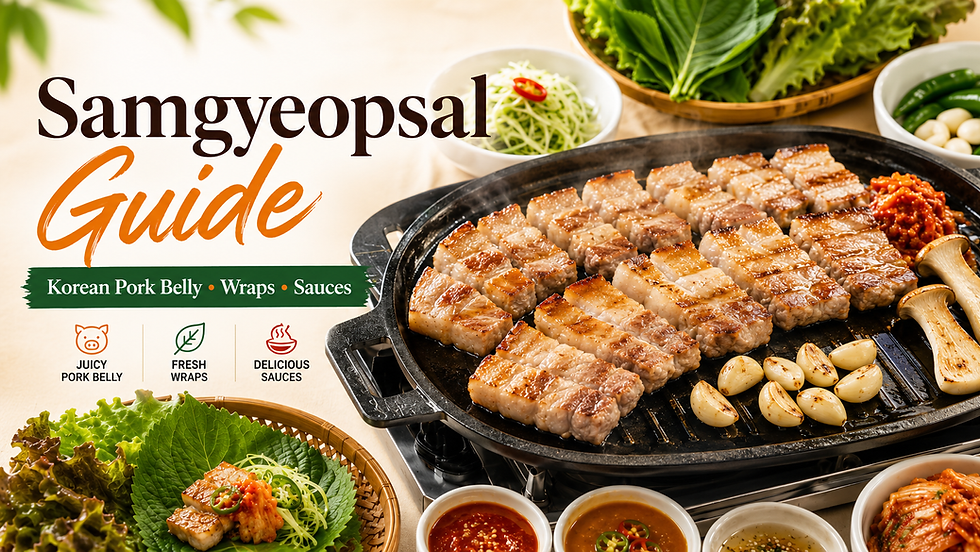
It is usually cooked plain or lightly seasoned, then eaten with wraps and sauces. The appeal is the fat. As pork belly cooks, the fat renders and the edges brown. The meat becomes rich, savory, and perfect for lettuce or perilla wraps.
Pork belly is best for:
lettuce wraps
ssamjang
sesame oil salt
kimchi
garlic
green chili
rice
simple at-home Korean BBQ
It is not usually the cut to choose if you want a sweet marinade to do all the work. Pork belly is more direct than that. The meat stays simple, and the table builds the flavor around it.
Choose pork belly when you want the classic Korean BBQ feeling: sizzling meat, fresh greens, sauce, rice, kimchi, and one-bite wraps.
For a deeper dish-specific explanation, read Samgyeopsal Guide: Korean Pork Belly, Wraps, Sauces, and How People Eat It at Home when that article is live.
Short Ribs: Best for Galbi-Style BBQ
Short ribs are the cut people often think of when they want Korean BBQ to feel special.
Galbi usually uses beef short ribs, often cut thin across the bone or prepared in a style that helps the meat cook well on the grill. The flavor is rich, beefy, and satisfying. When marinated, short ribs take on sweet-savory depth from soy sauce, garlic, sugar, pear or fruit, sesame oil, and other aromatics.
Short ribs are best for:
galbi-style BBQ
special dinners
richer beef flavor
sweet-savory marinade
rice-heavy meals
lettuce wraps with bolder sauce
grilling when you want something more impressive
The main thing to watch is heat. Galbi marinade often has sugar, so it can burn if the grill or pan is too hot. You want browning, not blackened sugar.
Choose short ribs when you want Korean BBQ to feel more like a centerpiece meal.
Brisket: Best for Fast, Clean Beef Flavor
Thinly sliced brisket, often called chadolbaegi, cooks very quickly.
This is one of the best Korean BBQ meat cuts when you want beef flavor without a heavy marinade. The slices are thin, so they hit the grill, curl, brown, and finish fast. That makes brisket exciting at the table, but it also means you need to pay attention.
Brisket is best for:
fast grilling
clean beef flavor
sesame oil salt
soy-vinegar dipping sauce
lighter lettuce wraps
people who do not want sweet marinade
a beef option that cooks almost immediately
Brisket can get tough if overcooked. It is not a cut to ignore on the grill while talking. Cook it quickly, dip it simply, and eat while hot.
Choose brisket when you want fast beef and clean dipping sauce rather than a heavy marinade.
Bulgogi-Style Sliced Beef: Best Beginner Marinated Beef
Bulgogi-style sliced beef is one of the easiest Korean BBQ meat choices for beginners.
The meat is usually thin, tender, and designed to work with sweet-savory marinade. The flavor is familiar even for people new to Korean BBQ: soy sauce, garlic, sweetness, sesame, and onion or fruit notes. It works over rice, in lettuce wraps, or as part of a bigger BBQ table.
Bulgogi-style beef is best for:
first Korean BBQ nights
sweet-savory marinade
rice bowls
lettuce wraps
quick pan cooking
people who want less dipping-sauce guesswork
family-style meals
Because the meat is thin and marinated, it can cook fast and may release liquid. Do not crowd the pan too much or it can steam instead of brown. If cooking at home, a hot pan and smaller batches help.
Choose bulgogi-style beef when you want the safest beginner beef option.
Spicy Pork: Best for Bold Flavor and Rice
Spicy pork, often associated with jeyuk-style or dwaeji bulgogi-style meals, is for people who want the seasoning to lead.
Unlike plain pork belly, spicy pork usually gets its flavor from gochujang, gochugaru, garlic, soy sauce, sweetness, and sesame oil. It is bold, saucy, and built for rice. It also works in lettuce wraps, but the sauce is already doing more of the work.
Spicy pork is best for:
bold Korean BBQ flavor
rice bowls
lettuce wraps
people who like gochujang heat
weeknight pan cooking
casual BBQ meals
meals where sauce should lead
Because the marinade can include sugar and chile paste, watch the heat. Too high, and the sauce can scorch before the pork cooks through. Medium-high heat with attention usually works better than blasting it.
Choose spicy pork when you want strong flavor without needing many dipping sauces.
Pork Shoulder or Collar: Best for Meatier Pork BBQ
Pork belly is rich, but not everyone wants that much fat.
Pork shoulder or pork collar can make sense when you want pork BBQ that feels meatier and less fatty. These cuts can still stay juicy when sliced properly, and they work well with marinades, grilling, or pan cooking.
They are best for:
people who want pork but less fat than belly
spicy pork marinades
soy-garlic pork marinades
rice bowls
wraps with ssamjang
weeknight grilling
These cuts can dry out more easily than pork belly if sliced too thin or overcooked. They need enough seasoning, sauce, or table support to stay satisfying.
Choose pork shoulder or collar when pork belly feels too heavy but you still want Korean BBQ-style pork.
Plain Cuts vs Marinated Cuts
This is one of the most useful buying splits.
Plain cuts are about meat flavor, dipping sauce, and wraps. Pork belly and brisket are the clearest examples. They need ssamjang, sesame oil salt, garlic, kimchi, rice, and fresh vegetables to feel complete.
Marinated cuts carry more flavor by themselves. Bulgogi, galbi, and spicy pork already have seasoning. They work well with rice and simple sides because the meat is doing more of the flavor work.
Use this split:
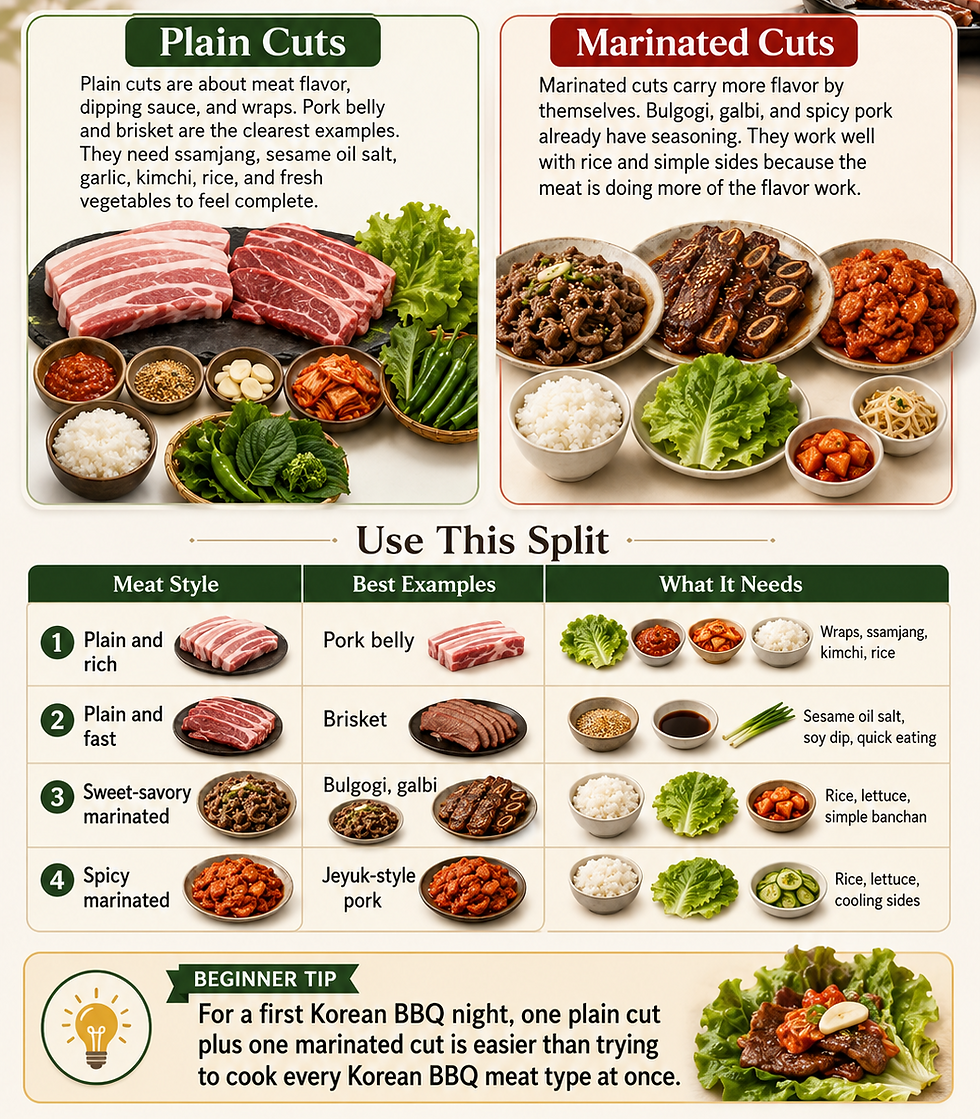
For a first Korean BBQ night, one plain cut plus one marinated cut is easier than trying to cook every Korean BBQ meat type at once.
Best Meat for Korean BBQ at Home
The best meat for Korean BBQ at home is the cut you can cook well with your setup.
If you have a tabletop grill, you can handle more variety. If you are using a pan on the stove, choose cuts that cook cleanly and do not create too much smoke or liquid. If you are new, avoid managing too many marinades, thicknesses, and cooking times at once.
Best beginner choices:
pork belly for classic wraps
bulgogi-style beef for easy marinade flavor
brisket for fast beef if you can watch it closely
spicy pork if you want bold rice-friendly flavor
More special choices:
short ribs for galbi-style BBQ
thicker pork belly for restaurant-style grilling
pork collar for meatier pork BBQ
The easiest first setup is not the most expensive one. It is the one that lets you cook confidently and still build good wraps.
How Thickness Changes the Meal
Thickness matters as much as the cut.
Thin meat cooks fast and is easier to eat right away, but it can overcook quickly. Thick meat feels juicier and more substantial, but it needs more time and often needs to be cut after cooking.
Thin cuts are better for:
brisket
bulgogi-style beef
quick pork slices
fast pan cooking
beginner meals if you watch closely
Thicker cuts are better for:
pork belly
short ribs
pork collar
restaurant-style BBQ texture
meals where meat is cut into bite-size pieces after cooking
If you are cooking at home, do not choose thickness only by appearance. Choose it by how comfortable you are managing heat.
Which Sauces Match Which Meat?
Sauce should fit the cut.
Pork belly loves ssamjang because the sauce gives salty, savory punch to rich meat. It also works well with sesame oil salt when you want a cleaner pork flavor.
Brisket works well with sesame oil salt because the beef is thin and quick. A bright soy-vinegar dip can also help.
Galbi and bulgogi do not need heavy dipping sauce because the marinade already brings sweetness and savory depth. A little ssamjang can still work in wraps, but do not bury the meat.
Spicy pork usually needs cooling sides more than extra sauce.
For a deeper sauce breakdown, read Korean BBQ Dipping Sauce Guide: Ssamjang, Sesame Oil Salt, and Soy-Vinegar Dip.
Wraps, Rice, and Sides Still Matter
Even though this guide is about Korean BBQ meat cuts, the table still matters.
The same cut can feel completely different depending on what you serve with it. Pork belly without kimchi or wraps can feel heavy. Brisket without sauce can feel plain. Galbi without rice can feel too rich or sweet. Spicy pork without fresh vegetables can feel intense.
For most Korean BBQ meat types, the basic table should include:
lettuce or perilla leaves
ssamjang
sesame oil salt
rice
kimchi
garlic
green chili
one crisp or pickled side
one calm banchan like spinach or bean sprouts
This is where the pillar article helps. The meat matters, but Korean BBQ at home works better when the table is built around it.
Common Meat-Cut Mistakes
Buying too many meat cuts at once is the first mistake. You spend more time managing the grill than enjoying the meal.
Choosing only rich cuts can make the table feel heavy. Pork belly plus short ribs can be delicious, but you need enough kimchi, pickles, greens, and rice to balance it.
Choosing only marinated cuts can make everything taste sweet or saucy. Add one plain cut if you want contrast.
Cooking marinated meat over heat that is too high can burn the sugar before the meat cooks properly.
Overcooking brisket makes it tough. It needs quick cooking and quick eating.
Crowding the pan makes meat steam instead of brown. Cook in batches if needed.
Skipping sauces and sides makes plain cuts taste unfinished. Pork belly and brisket need the table around them.
What to Choose First
👉 Choose pork belly if you want the classic Korean BBQ wrap experience
Pork belly is the best first cut if samgyeopsal, lettuce wraps, ssamjang, kimchi, garlic, and rice are the meal you picture.
👉 Choose short ribs if you want a special beef BBQ meal
Short ribs are the better pick when you want galbi-style richness and a more occasion-worthy Korean BBQ plate.
👉 Choose brisket if you want fast plain beef
Brisket is best when you want quick cooking, clean beef flavor, and simple dipping sauce.
👉 Choose bulgogi-style sliced beef if you want beginner-friendly marinated meat
Bulgogi-style beef is the safest first marinated beef option because it is sweet-savory, familiar, and rice-friendly.
👉 Choose spicy pork if you want bold flavor
Spicy pork is the best choice when you want the seasoning to lead and rice to be part of the meal.
👉 Choose one plain cut and one marinated cut if you are unsure
This is the best beginner strategy. Pork belly plus bulgogi-style beef, or brisket plus spicy pork, gives contrast without making the meal hard to manage.
👉 Browse our [K-Food Guide] for more options
Final Verdict
Korean BBQ meat cuts are easier to understand when you stop looking for one “best” meat.
Pork belly is for classic wraps. Short ribs are for galbi-style richness. Brisket is for fast clean beef. Bulgogi-style sliced beef is for easy marinated comfort. Spicy pork is for bold rice-friendly flavor. Pork shoulder or collar is for meatier pork BBQ when belly feels too rich.
The best meat for Korean BBQ is the one that matches the table you want to build. Rich cuts need sharp sides. Plain cuts need dipping sauces. Marinated cuts need rice. Thin cuts need attention. Thick cuts need time.
If you are new, keep it simple: one plain cut, one marinated cut, lettuce, ssamjang, sesame oil salt, rice, kimchi, garlic, and one or two banchan. That is enough to make Korean BBQ at home feel complete without turning dinner into a cooking puzzle.
Related Posts to Read Next
Korean BBQ at Home Starts Before the Meat: The Wraps, Sides, and Sauces Worth Buying First
Korean BBQ Dipping Sauce Guide: Ssamjang, Sesame Oil Salt, and Soy-Vinegar Dip
Korean Marinade Guide: Galbi, Bulgogi, and Jeyuk Sauces Explained
Doenjang vs Ssamjang: What's the Difference and Which One Should You Buy First?
Samgyeopsal Guide: Korean Pork Belly, Wraps, Sauces, and How People Eat It at Home
Tender Korean Pork Wraps with Kimchi, Sauce, and Crisp Sides
Kimchi and Rice Guide: Why This Simple Korean Meal Works So Well
FAQ
What are the main Korean BBQ meat cuts?
The main Korean BBQ meat cuts include pork belly, short ribs, thin brisket, bulgogi-style sliced beef, spicy pork, and sometimes pork shoulder or pork collar.
What is the best meat for Korean BBQ beginners?
Pork belly and bulgogi-style sliced beef are the easiest beginner combination. Pork belly gives the classic wrap experience, while bulgogi-style beef gives easy sweet-savory flavor.
What Korean BBQ meat is usually not marinated?
Pork belly and brisket are often cooked plain or lightly seasoned, then eaten with dipping sauces, wraps, rice, garlic, kimchi, and side dishes.
What Korean BBQ meat is usually marinated?
Bulgogi, galbi, and spicy pork are commonly marinated. Bulgogi is usually sweet-savory, galbi is rich and rib-focused, and spicy pork is bold and gochujang-style.
Is pork belly the same as samgyeopsal?
Yes. Samgyeopsal is Korean pork belly, usually grilled or pan-cooked and eaten with lettuce wraps, ssamjang, sesame oil salt, kimchi, garlic, and rice.
What is brisket used for in Korean BBQ?
Thin brisket is used for fast grilling and clean beef flavor. It cooks very quickly and works well with sesame oil salt or soy-vinegar dipping sauce.
What is short rib used for in Korean BBQ?
Short rib is used for galbi-style Korean BBQ. It is rich, beefy, and usually works well with sweet-savory marinade.
Should I buy marinated or plain Korean BBQ meat first?
Buy one of each if you are unsure. A plain cut gives you clean meat flavor and dipping sauce. A marinated cut gives you easy flavor and rice-friendly comfort.


Comments