
.png)
Korean Cold Noodle Broth Guide: Naengmyeon Broth, Dongchimi Style, and What to Buy First


Korean cold noodle broth should hit before the noodles do. Not loudly. More like a cold snap: icy, tangy, clean, a little savory, and sharp enough that the first sip wakes up your mouth before you even find the cucumber or egg.
That is why buying korean cold noodle broth is not the same as buying any random cold noodle kit. The broth decides whether the bowl feels refreshing or watery, bright or flat, classic or too sweet, clean or aggressively sour.
Naengmyeon broth can lean mild and beefy, bright and dongchimi-style, radish-kimchi sharp, or balanced for a beginner kit. Mul naengmyeon lives or dies by that liquid. The noodles matter, but the broth is the reason people crave the bowl on a hot day.
For the broader kit picture, use Korean Meal Kits Explained: Tteokbokki Kits, Naengmyeon Kits, Jjajang Kits, and Which One Fits You Best.
This guide stays narrower: how to choose naengmyeon broth, what dongchimi style tastes like, how cold broth changes the experience, and what to buy first if you want Korean cold noodles that actually feel refreshing.
TL;DR
Korean cold noodle broth is the main decision in mul naengmyeon. Choose the broth style before you choose the noodle kit.
Classic naengmyeon broth is the safest first buy if you want a clean, icy, lightly tangy bowl without too much sharpness.
Dongchimi-style broth is brighter and more radish-forward. It fits people who want a cleaner, tangier finish.
Radish kimchi broth is bolder and sharper. It makes sense if you already like kimchi tang and want the broth to wake up the noodles.
Very cold broth matters because naengmyeon should feel crisp, not just cool. A slushy or deeply chilled broth makes the noodles taste tighter and the tang sharper.
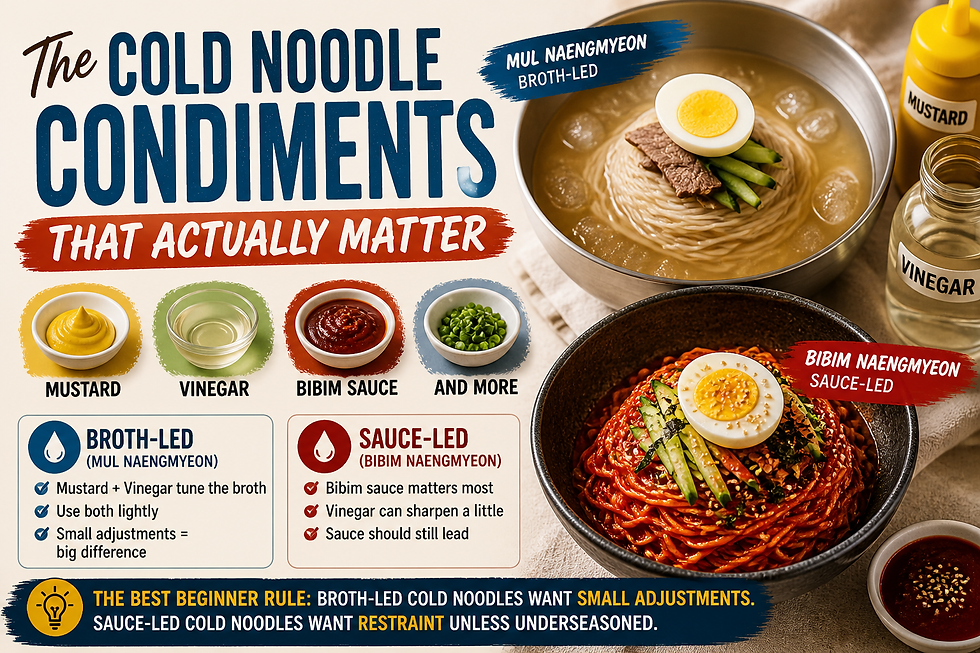
Vinegar and mustard are finishing tools, not automatic fixes. Add them after tasting the broth cold.
Start With the Broth, Not the Noodles
Cold noodles can fool shoppers because the package usually shows the full bowl: noodles, broth, cucumber, egg, maybe pear, maybe beef slices, maybe ice. It looks like one decision.
It is not.
For mul naengmyeon, the broth is the decision. The noodles bring chew and chill, but the broth decides the mood. A mild broth makes the bowl calm and beginner-friendly. A dongchimi-style broth makes it brighter and more radish-clean. A radish kimchi broth brings more tang and edge. A mixed kit gives you options when one person wants broth and another wants sauce.
If you are shopping for Korean cold noodles and you care most about refreshment, read the broth language first. “Mul,” “dongchimi,” “radish kimchi broth,” and “with broth” matter more than package photography.
What Naengmyeon Broth Should Taste Like
Good naengmyeon broth should taste cold before it tastes complicated.
It usually has a savory base, light sweetness, vinegar-like brightness, and a clean finish that makes the noodles feel sharper instead of heavier. The broth should not taste like plain sour water. It should have enough depth to carry the noodles, but enough chill and tang to make the bowl feel refreshing.
The best versions leave your mouth cleaner after each sip. That is the appeal. Naengmyeon broth does not comfort you the way hot soup does. It resets you.
If the broth tastes dull, the bowl feels like cold noodles in weak liquid. If it tastes too sweet or too sour, the noodles become an afterthought. The right broth lands in the middle: icy, savory, lightly tangy, and crisp enough to keep the next bite interesting.
Classic Mul Naengmyeon Is the Safest First Buy
Mul naengmyeon is the broth-led version of Korean cold noodles. It is the right place to start if you want the clean, classic cold-bowl experience without jumping straight into a sharper radish-kimchi broth.
Choung Soo Mul Naengmyeon Korean Cold Noodle is the safest first-buy product here because it keeps the promise simple: chewy noodles with a clean, icy broth. It is the one to choose if you want to understand the basic mul naengmyeon appeal before comparing dongchimi, radish kimchi, or bibim-style options.
This is also a good pick when you are serving someone who has never had cold broth noodles before. The bowl still feels Korean and refreshing, but it does not ask the broth to be the sharpest thing on the table.
Add cucumber, boiled egg, sliced pear, or a few ice cubes if you want the bowl to feel more complete. Keep the first bowl simple enough that you can actually taste the broth.
Dongchimi Style Is Cleaner, Brighter, and More Radish-Led
Dongchimi is Korean radish water kimchi, and dongchimi-style naengmyeon broth borrows that clean, tangy, radish-forward feeling. It is not supposed to taste heavy. It should feel brisk, lightly fermented, and refreshing in a way that makes sense cold.
A product like GSS FCS Yeoju Buckwheat Noodles (Dongchimi) fits shoppers who already know they want that dongchimi direction. The kit is built around buckwheat noodles and light, tangy radish-water kimchi broth, so the broth is not just a background pouch. It is the point.
Choose dongchimi style if you want:
a cleaner, sharper finish than basic mild broth
a radish-water kimchi mood without making the bowl spicy
Korean cold noodles that feel especially refreshing on hot days
a broth that stays bright with cucumber, pear, egg, and sesame seeds
For a deeper look at the flavor itself, read What Is Dongchimi? The Cold, Clean Korean Radish Water Kimchi That Changes the Whole Meal. That article explains the radish-water kimchi side so this guide can stay focused on cold noodle broth buying.
Radish Kimchi Broth Is for a Sharper Bowl
Radish kimchi broth is the better pick when “clean and mild” sounds too quiet.
Pulmuone Cold Noodles with Radish Kimchi Broth goes brighter and bolder than a neutral cold noodle broth. The radish kimchi angle gives the liquid more tang and personality, which helps if you want the broth to wake up the noodles rather than just cool them down.
This style makes sense if you already like kimchi acidity, crunchy radish banchan, dongchimi, or cold soups with a sharper finish. It may be a little less neutral for first-timers, but it can be more memorable for people who find classic broth too calm.
Use this style when the broth should have bite. The noodles still matter, but the liquid should be the reason the bowl feels lively.
A Combo Kit Makes Sense When the Household Is Split
Not every cold noodle eater wants broth.
Some people want mul naengmyeon because the cold broth is the whole craving. Others want bibim-style noodles because sauce feels easier, louder, and more immediately satisfying. A combo kit helps when you are buying for both moods.
CJ Cold Noodle Set (Dongchimi and Bibim) makes sense when one person wants clean dongchimi-style broth and another wants spicy bibim sauce, or when you want to learn which side you actually rebuy. It is not the purest broth-only pick, but it is a smart kit-selection choice.
Use this as a test kit. If the dongchimi side wins, move toward broth-led naengmyeon. If the bibim side wins, you probably want sauce-led cold noodles more than Korean cold noodle broth.
Cold Broth Texture Matters
Naengmyeon broth needs to be cold enough to feel intentional.
A broth that is only lightly chilled can taste flat, even if the flavor is technically fine. A deeply chilled or slightly slushy broth makes the noodles firmer, the tang cleaner, and the whole bowl more refreshing.
That is why preparation matters. Chill the broth before serving. Rinse the noodles well so they do not warm the bowl. Add ice only if it helps keep the broth cold without watering it down too much.
The temperature changes the flavor. Slightly cold broth tastes like a shortcut. Icy broth tastes like the point.
Vinegar and Mustard Are Not Automatic
Vinegar and mustard can make naengmyeon broth better, but they can also ruin the balance fast.
Taste the broth cold first. Not room temperature. Not before the noodles are rinsed. Cold.
If the broth tastes flat, a small amount of vinegar can make it sharper. If it tastes clean but too gentle, a little mustard can add lift. If the broth already tastes bright and balanced, leave it alone. More tang is not always more refreshment.
The mistake is treating vinegar and mustard like required toppings instead of adjustment tools. A good naengmyeon broth should not need to be rebuilt at the table.
For a deeper condiment breakdown, read The Cold Noodle Condiments That Actually Matter: Mustard, Vinegar, Bibim Sauce, and More. It covers the finishing side in more detail without turning this broth guide into a condiment guide.
What to Buy First
👉 Buy classic mul naengmyeon first if you are new
Start with a clean broth-led kit like Choung Soo Mul Naengmyeon if you want to understand the category. It gives you cold broth, chewy noodles, and a straightforward first bowl.
👉 Buy dongchimi style if you want a brighter finish
Choose a dongchimi-style kit if the idea of radish-water kimchi broth sounds refreshing rather than strange. This is the cleaner, tangier lane.
👉 Buy radish kimchi broth if mild broth usually disappoints you
Radish kimchi broth gives the bowl more bite. It is better for people who already like kimchi tang and want the broth to feel more active.
👉 Buy a combo kit if you are unsure about broth versus sauce
A dongchimi-and-bibim set is useful when you want to compare clean broth with spicy sauce before committing to one cold noodle style.
👉 Do not buy a broth kit if you really want sauce
If the craving is sweet-spicy, thick, and coating the noodles, you may want bibim naengmyeon or bibim guksu instead. Broth-led cold noodles are refreshing first. They are not trying to be the loudest bowl.
Common Buying Mistakes
Buying bibim when you wanted mul is the big one. Bibim noodles are sauce-led. Mul naengmyeon is broth-led. If you want cold noodle broth, look for mul, broth, dongchimi, or radish kimchi broth language.
Skipping the chilling step is another. The broth has to be very cold. A good kit can taste disappointing if the pouch is only lightly chilled.
Adding vinegar before tasting can flatten the broth. Some kits are already tangy enough.
Adding too much mustard can cover the clean finish. Mustard should lift the broth, not turn every sip nasal and sharp.
Ignoring the broth style can also lead to the wrong bowl. Mild broth, dongchimi-style broth, and radish kimchi broth do not create the same eating experience.
👉 Browse our [Soup Bases & Cooking Seasonings] for more options.
Final Verdict
The best Korean cold noodle broth depends on how sharp you want the bowl to feel.
Start with classic mul naengmyeon if you want the safest first bowl. Choose dongchimi style if you want clean radish-water kimchi brightness. Choose radish kimchi broth if you want more tang and personality. Choose a combo kit if your household is split between broth and sauce.
The broth should be icy, clean, and balanced before you reach for vinegar or mustard. If the broth works, the noodles make sense. If the broth misses, the whole bowl feels like cold noodles looking for a reason.
Related Posts to Read Next
The Cold Noodle Condiments That Actually Matter: Mustard, Vinegar, Bibim Sauce, and More
Korean Cold Noodles Explained: Naengmyeon, Bibim Guksu, Jjolmyeon, and Which Style Fits You Best
Mul Naengmyeon or Bibim Naengmyeon? How to Pick the Right Korean Cold Noodle for Your Taste
Choung Soo Mul Naengmyeon Review: Is This the Best First Korean Cold Noodle Kit for Beginners?
What Is Dongchimi? The Cold, Clean Korean Radish Water Kimchi That Changes the Whole Meal
FAQ
What is Korean cold noodle broth?
Korean cold noodle broth is the chilled savory broth used in broth-led cold noodles like mul naengmyeon. It usually tastes icy, lightly tangy, clean, and refreshing rather than rich or heavy.
What is naengmyeon broth supposed to taste like?
Naengmyeon broth should taste cold, clean, savory, lightly sweet, and tangy. It should refresh your mouth without tasting like plain sour water.
What is mul naengmyeon?
Mul naengmyeon is broth-led Korean cold noodles served with chilled broth. It is different from bibim naengmyeon, which is usually mixed with spicy-sweet sauce instead of served in broth.
What is dongchimi-style cold noodle broth?
Dongchimi-style broth is inspired by Korean radish water kimchi. It usually tastes cleaner, brighter, and more radish-forward than a neutral cold noodle broth.
Should I add vinegar to naengmyeon broth?
Taste the broth cold first. Add a small amount of vinegar only if the broth tastes flat or needs more sharpness. Too much vinegar can make the bowl taste one-note.
Do Korean cold noodles need mustard?
Not always. Mustard can lift mild naengmyeon broth, but it should be used lightly. Too much can cover the clean broth flavor.
What should beginners buy first?
Beginners should usually start with a classic mul naengmyeon kit if they want broth. Choose dongchimi style next if you want brighter tang, or a combo kit if you are unsure whether you prefer broth or sauce.


Comments