
.png)
What Is Musaengchae? The Crisp Korean Radish Banchan That Makes Heavy Meals Feel Lighter

Updated: May 19

Musaengchae is the kind of side dish that starts doing its job before you even finish the bite.
The radish hits cold. Then crisp. Then spicy, a little sweet, a little garlicky, and just sharp enough to make whatever rich thing was on your tongue a second ago feel less heavy than it did before.
That is why this dish matters.
On paper, it can look too simple to deserve much attention. Just shredded radish, seasoning, and a small bowl on the side. At the table, though, it is often the bite that resets everything. Pork tastes less fatty. Fried food tastes less sticky. Rice wakes back up. The meal gets another wind instead of flattening out.
That is the real appeal of musaengchae. It is not there to be the whole story. It is there to keep the rest of the meal moving.
TL;DR
Musaengchae is a Korean seasoned shredded radish side dish, usually made with Korean radish, chile flakes, garlic, scallion, and a little sweetness, and sometimes vinegar depending on the version. It is crisp, cold, spicy, slightly sweet, and very good with rich or heavy foods because it cuts through them quickly. It belongs to the muchim lane of Korean side dishes, which means it is tossed and seasoned rather than long-fermented or braised. The reason people keep coming back to it is simple: it makes the rest of the table taste lighter.
What musaengchae actually is
Musaengchae is seasoned shredded radish.
That is the short definition. The more useful one is that it is one of the sharpest, crispest Korean banchan for giving a meal more contrast without adding another heavy dish.

The radish is usually cut into thin strips, then tossed with seasoning until it turns bright, spicy, and more expressive than plain raw radish has any right to be. The dish usually stays cold, crisp, and direct. It is not trying to soften into the meal. It is there to cut into it.
That is why musaengchae makes such a strong impression once it is on the table. It is a small bowl with a very clear job.
Why it makes heavy meals feel lighter
Musaengchae works because heavy food usually does not need more flavor. It needs interruption.
That is what this dish gives you.
Rich pork, fried food, noodles, rice, pancakes, and heavier soups can all start to feel a little slow after a few bites. Musaengchae breaks that pattern. The radish stays crisp enough to matter. The seasoning lands quickly. The whole bite feels colder and more pointed than the rest of the meal.
That is why it is so effective next to bossam, pajeon, fried dishes, richer rice meals, and meat-heavy tables. It does not fight those foods. It clears space around them.
What musaengchae tastes like
Musaengchae usually tastes spicy first, then crisp, then lightly sweet and garlicky, with the radish still very much tasting like radish.
That last part matters.

The dish is not trying to disguise the vegetable. It is trying to wake it up. Good musaengchae should still have that clean radish bite underneath the seasoning. The chile, garlic, and sweetness are there to sharpen it, not bury it.
Some versions lean a little brighter or more tangy. Some stay more chile-and-garlic-forward. But the overall effect should feel lively and cold rather than deep or settled.
Musaengchae is a side dish with a very specific job
Not every banchan needs to do the same kind of work.
Some side dishes bring comfort.
Some bring salt.
Some bring fermentation.
Musaengchae brings lift.
That is what makes it such a good table side. It is not the thing you eat in big comforting spoonfuls. It is the thing you reach for when the meal starts leaning too rich, too soft, or too one-directional. A few bites can change the pace of the whole table.
That is a very Korean kind of usefulness.
Why the texture matters as much as the seasoning
This dish would not work the same way if the radish were soft.
The crunch is part of the point.
A lot of what makes musaengchae so effective is that the texture stays active even after the seasoning goes on. The strips bend a little, but they should still snap. That gives the dish more force than a softer seasoned side would have.
That is also why it keeps showing up beside foods that are already rich or chewy. The radish does not just add flavor. It changes the shape of the bite.
How musaengchae feels different from pickled radish
This comparison helps because both are radish sides, but they do very different jobs.
Pickled radish usually feels more preserved, sweeter, and more settled into itself. It often brings refreshment in a calmer way.
Musaengchae feels fresher and more immediate.
It tastes like the seasoning was worked into the radish to make it sharper right now, not preserved for later. That is why pickled radish works so well with fried chicken, kimbap, and convenience meals, while musaengchae often feels more at home beside bossam, richer Korean meals, and dishes that need something more actively spicy or punchy.
They are both useful. They just reset a meal in different ways.
How musaengchae feels different from dongchimi
This is the other radish comparison that helps fast.
Dongchimi is cold and radish-based too, but it works through chilled broth and a quieter kind of refreshment. It calms a meal down.
Musaengchae is drier, punchier, and more immediate.
Dongchimi cools from around the meal.
Musaengchae cuts straight through it.
That is why the two dishes can both feel refreshing while still doing very different work on the table.
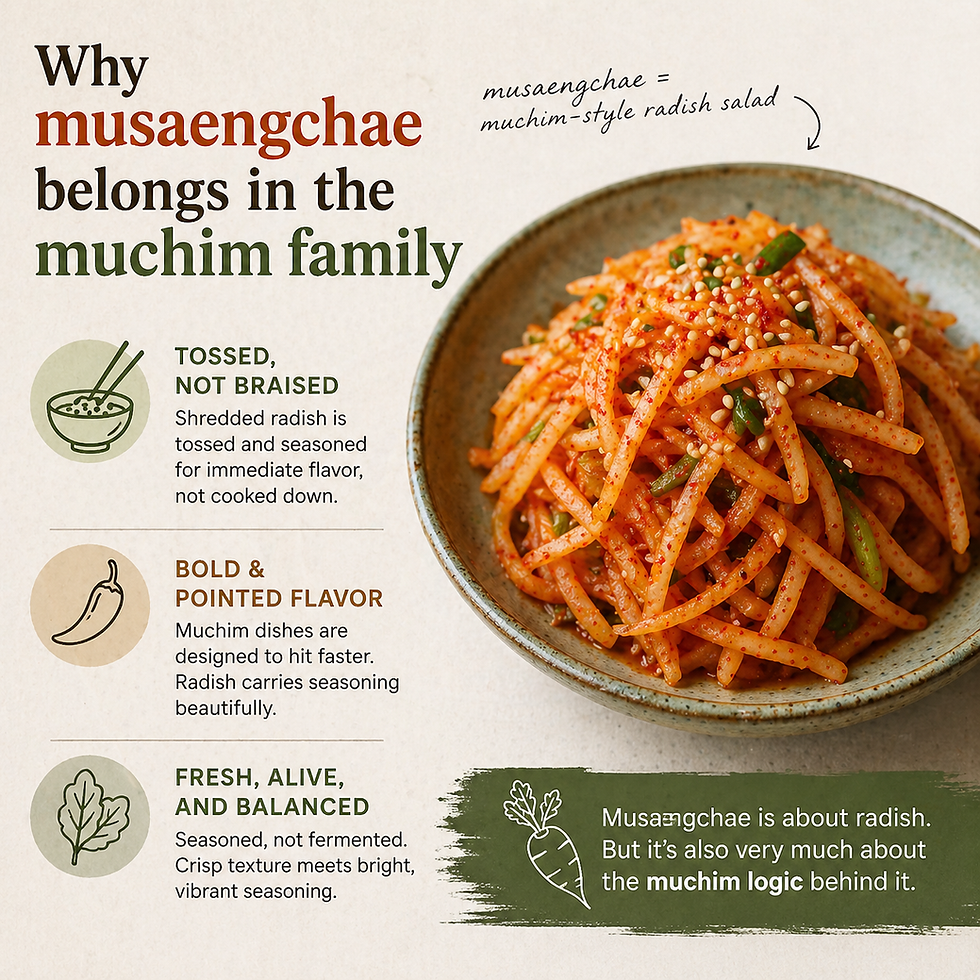
Why musaengchae belongs in the muchim family
Musaengchae makes the most sense once you recognize it as a muchim-style dish.
That means the radish is tossed and seasoned rather than braised or long-fermented. The flavor is supposed to feel worked in and immediate. That is why the dish tastes so alive when it is fresh.
It also explains why musaengchae can feel stronger and more pointed than gentler namul-style vegetables. Muchim dishes are often built to hit a little faster, and shredded radish is especially good at carrying that kind of seasoning.
So yes, musaengchae is about radish. But it is also very much about the muchim logic behind it.
What kind of meals it helps most
Musaengchae makes the most sense when the table has richness to cut.
It is especially good with:
bossam
pajeon
fried foods
richer rice plates
heavier meat meals
meals that feel like they need one cold, sharp thing on the side
That is where the dish really earns its place. It brings the meal back into focus without asking for much room.
Why musaengchae is more useful than it first looks
A lot of people underestimate this dish because shredded radish does not sound like a dramatic idea.
But musaengchae is one of those Korean sides where the function is the drama.
It makes the fatty bite cleaner. It makes the fried bite less sticky. It makes the next spoonful of rice worth taking. That is a very strong return for a bowl this small.
And because it does its work so quickly, it often ends up being one of the most necessary things on the table rather than one of the most decorative.
Is musaengchae beginner-friendly?
Yes, especially if you already understand why a meal needs a side like this.
The flavor itself is not especially hard to grasp. If you like spicy, crisp, garlicky vegetable sides, musaengchae makes sense fast. The bigger beginner issue is knowing when it belongs.
Once you realize it is a richness-cutter rather than a comfort side, the whole dish becomes easier to understand.
That is why it works so well as an early Korean side-dish category to learn. It teaches you how much contrast matters in the meal, not just how the radish tastes on its own.
Why the word matters beyond one shredded-radish dish
This is what makes musaengchae worth learning as more than just a side-dish name.
If you only see it as shredded spicy radish, that is useful enough. But if you understand it as one of the clearest Korean banchan examples of how a small cold side can keep a richer meal from going dull, the table starts making more sense.
Muchim gives immediacy.
Jorim gives depth.
Kimchi gives fermentation.
Musaengchae gives the meal a cleaner second wind.
That is why the dish matters.
👉 Browse our [Kimchi, side dish & deli category] for more options.
Final bite
Musaengchae is the crisp Korean radish side dish that makes heavy meals feel lighter by doing exactly what they need most: breaking their momentum.
It is cold, sharp, spicy, and just sweet enough to keep coming back to.
Not because it takes over the table.
Because it keeps the table from getting stuck.
That is why this little bowl matters as much as it does.
👉 If you want to compare musaengchae with pickled radish, sesame leaves, and garlic sides, start with this Korean pickled side dishes guide.
Related posts to read next
FAQ
What is musaengchae made of?
Musaengchae is usually made from shredded Korean radish mixed with seasonings like gochugaru, garlic, scallion, salt, and a little sweetness. Some versions also use vinegar.
Is musaengchae the same as pickled radish?
No. Musaengchae is a tossed seasoned radish side that feels fresher and more immediate, while pickled radish is preserved and usually sweeter or more settled in flavor.
Is musaengchae spicy?
Usually yes, at least a little. It often has a clear chile presence, though the exact heat level depends on the version.
What does musaengchae taste like?
It tastes crisp, spicy, lightly sweet, garlicky, and radish-forward, with a cold bite that helps cut through rich food.
What foods go well with musaengchae?
Bossam, pajeon, fried foods, richer rice meals, and heavier meat dishes are especially good with it.
Is musaengchae a muchim?
Yes. It belongs to the muchim family because the radish is tossed and seasoned rather than braised or long-fermented.
Is musaengchae good for beginners?
Yes, especially if you already like crisp, spicy vegetable sides and want something that makes richer meals feel less heavy.


Comments