
.png)
Whole Kimchi or Pre-Cut? The Smarter Buy Depends on How You Eat It

Updated: May 19
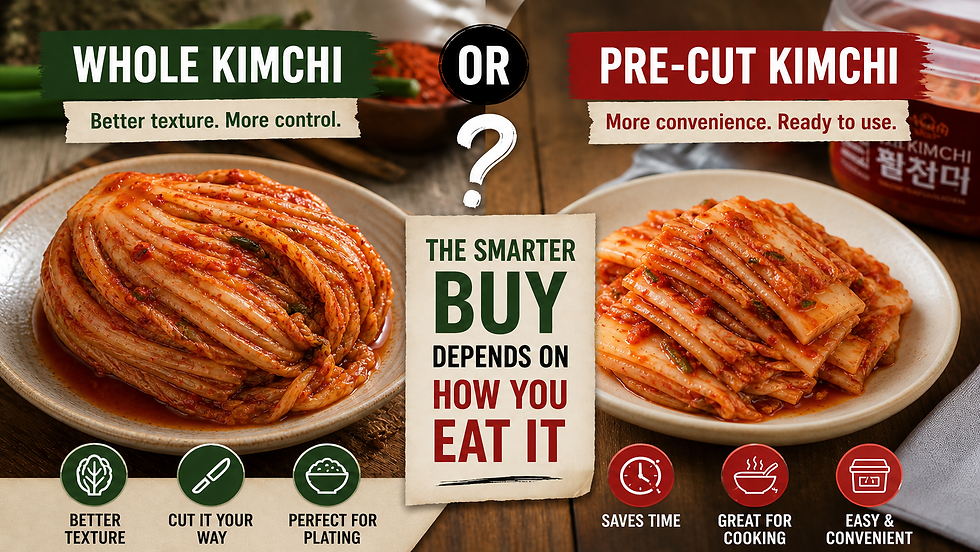
Kimchi format changes daily life more than people expect.
Not in a vague food-writer way. In a very ordinary kitchen way.
One version asks you to cut it every time, deal with the mess, and decide how big the pieces should be. The other removes all of that, but gives up some control over texture and how neatly it lands on the plate. That is why whole vs. pre-cut is not really a question of which one is better. It is a question of which one keeps making sense once the jar is open.
If you mostly cook with kimchi, the answer is usually easy. If you mostly serve it, the answer changes. And if you keep buying the format that sounds more right instead of the one you actually reach for, you will feel the mismatch fast.
👉 If you are deciding what kind of kimchi to buy first, this Korean kimchi buying guide can help before you choose whole or pre-cut.
TL;DR
Whole kimchi is usually the smarter buy when texture matters, serving matters, and you want control over how it is cut. Pre-cut kimchi is usually the smarter buy when convenience matters most, when kimchi gets used in cooking more than plating, or when you want something fast enough to reach for without thinking. Neither format wins on principle. The better one is the one that fits the next ten times you are realistically going to use kimchi.
What changes when the kimchi comes home
Whole and pre-cut kimchi may be the same product in spirit, but they do not behave the same once they are in your fridge.
Whole kimchi gives you more control. You decide how much to cut, how large the pieces should be, and whether you want long strips for the table or smaller bites for a bowl of rice. It usually feels closer to the version people imagine when they think of napa kimchi served as an actual side dish.
Pre-cut kimchi changes the relationship immediately. It becomes easier to grab, easier to mix into food, easier to portion quickly, and easier for everyone in the house to use without creating a small red cleanup problem. That may sound like a small shift, but in real kitchens it is often the whole decision.
Buy whole kimchi if kimchi shows up as a side dish, not just an ingredient
Whole kimchi makes the strongest case for itself at the table.
If kimchi regularly sits next to rice, soup, fish, grilled meat, or a few banchan, whole kimchi usually feels better to live with. The cabbage holds together more cleanly, the bite feels more deliberate, and you can cut exactly what the meal needs instead of working with whatever shape was packed into the container days ago.

That control matters more than people think. Big pieces eat differently from chopped ones. Longer cuts feel more like a real side dish. Small cuts feel more like something tossed on top.
A product like Jongga Whole Cabbage Kimchi makes sense in exactly this kind of kitchen. It is the format for people who actually want to plate kimchi, not just throw it into something hot.
If kimchi is part of how you set the meal, not just something you stir into it, whole kimchi usually earns the extra step.
Buy pre-cut kimchi if your real life is built around speed
Pre-cut kimchi wins when the main goal is use, not ideals.
It is easier in the most practical way possible. You open it, take what you need, and move on. No board. No scissors. No wiping kimchi juice off the counter after a rushed lunch.

That matters if kimchi shows up in the kind of meals people make half-awake or half-hungry: eggs, instant noodles, fried rice, grain bowls, grilled cheese, leftover rice with whatever protein is around. In that kind of kitchen, convenience is not a minor perk. It is the reason the kimchi gets used often enough to justify buying it.
Hong Jin-kyung The Kimchi Cut Kimchi is the kind of product that fits this use case well. It is already in the format weekday kimchi people usually want.
A format that is slightly less ideal but much more likely to be eaten is usually the smarter format.
If you cook with kimchi more than you plate it, pre-cut almost always makes more sense
This is the easiest rule in the category.
Once kimchi is headed for a pan, a pot, or a mixing bowl, the main advantage of whole kimchi starts shrinking. You are going to cut it anyway, or at least break it down. That means the extra structure matters less, while convenience matters more.
Pre-cut kimchi fits kimchi fried rice, kimchi jjigae, ramyeon, pancakes, dumpling filling, budae jjigae, or any quick meal where kimchi is there to bring acid, funk, heat, and depth rather than to look especially nice.
That is also where something like CJ Sliced Kimchi earns its keep. If the kimchi is headed into a skillet more often than onto a small side plate, sliced is usually the more useful form.
There is no bonus for making cooking kimchi harder to use.
Whole kimchi still wins on texture and control
This is where whole kimchi keeps its advantage.
Once kimchi has been chopped and stored that way, it starts living as chopped kimchi. The leaves shift more. The structure feels looser. When you serve it straight from the container, it can look and eat a little more ragged.
That is not a problem if the kimchi is headed into a skillet. It matters much more when the kimchi is the thing people are actually picking up with chopsticks.
Whole kimchi lets you keep that cleaner structure longer. You decide when to cut it. You decide how much to expose. You keep more control over the exact experience of serving it.
For households that go through a lot of kimchi and want that fuller table-side feel, Bibigo Whole Cabbage Kimchi is the kind of buy that makes more sense in whole form than cut.
For people who eat kimchi on the table almost every day, that is not a fussy detail. That is the point.
The mess factor is real
This part is less romantic, but it matters.
Whole kimchi is messier. You need a knife or scissors. You usually need a plate, board, or bowl. Your hands may smell like garlic, chili, and fermentation afterward. The container gets chaotic faster if different people keep reaching in and pulling leaves out.
Pre-cut kimchi removes most of that. It is easier to portion, easier to serve quickly, and easier in shared kitchens where not everyone wants to perform a mini prep session just to add kimchi to dinner.
That alone is enough to decide the issue for plenty of households.
Value only matters if the format actually gets used
Whole kimchi can feel like the better value, especially if you eat kimchi regularly and do not mind cutting it yourself. It often feels more substantial in the container, and there is something satisfying about buying kimchi in the form that gives you the most control.
But value gets theoretical very quickly if the product keeps sitting in the fridge because it feels annoying to use.
That is why pre-cut kimchi can still be the smarter buy even if whole kimchi looks better on paper. Convenience is part of value when it changes whether the food gets eaten.
If you know you go through a lot of chopped kimchi, Jongga Cut Cabbage Kimchi (Mat Kimchi) is the kind of product that proves pre-cut does not have to mean small or disposable. It can still be the practical bulk buy.
The smarter buy depends on which version of you is shopping
Not the version that wants to be more organized.
Not the version that imagines beautiful little side dishes every night.
The version that is actually going to open the container on a Wednesday.
If kimchi mostly ends up beside proper meals, whole kimchi makes sense. If it mostly ends up in eggs, noodles, fried rice, quick lunches, or straight onto leftover rice, pre-cut usually wins. And if you care every time kimchi looks messy on the plate, that matters too. The right format is not the one that sounds more authentic. It is the one that fits your habits closely enough that you stop thinking about the format at all.
There is also a smaller-fridge version of this decision. If you want pre-cut convenience without committing to a large tub, Jongga Original Kimchi is the kind of easy starter buy that makes sense for beginners or lighter kimchi users.
👉 Browse our [Kimchi Category] for more options.
So which one should most people buy?
Most people should buy the version that matches how kimchi gets used most often, not the version that sounds better in theory.
Buy pre-cut if kimchi mostly functions as a shortcut, an add-in, or a quick side you do not want to prep.
Buy whole if kimchi regularly gets served at the table and you care about texture, structure, and how it looks when it lands there.
That is the whole decision.
The smarter buy is the one that makes kimchi easier to eat the way you already eat it.
Related posts to read next
What Makes Good Kimchi? The Flavor, Crunch, and Balance That Actually Matter
Old Kimchi vs Fresh Kimchi: Which One You Want Depends on What You’re Cooking
Best Korean Side Dishes to Keep in the Fridge for Easy Meals All Week
What Is Banchan? The Korean Side Dish System Beginners Should Understand First
FAQ
Is whole kimchi better than pre-cut kimchi?
Not automatically. Whole kimchi is usually better for texture, serving, and cut control, while pre-cut kimchi is usually better for convenience and everyday cooking.
Which kimchi is better for cooking?
Pre-cut kimchi is usually better for cooking because it is already easy to portion into fried rice, stew, noodles, pancakes, or other quick meals.
Which kimchi is better for serving as a side dish?
Whole kimchi usually works better as a side dish because the cabbage structure stays more intact and you can cut it to the size you want right before serving.
Does pre-cut kimchi go bad faster?
Not in a simple yes-or-no way, but once kimchi is cut and stored that way, texture can shift faster in how it feels when served. For cooking, that usually matters much less.
Is whole kimchi more authentic?
Whole kimchi may feel more traditional to some people, but pre-cut kimchi is also a practical and completely legitimate format. Authenticity is not the most useful way to judge this choice.
What is the best kimchi format for beginners?
Pre-cut kimchi is often easier for beginners because it is lower-effort and easier to use across many meals. Whole kimchi makes more sense if you already know you want to serve it regularly as a side dish.
Should I buy whole kimchi or pre-cut kimchi?
Buy whole kimchi if texture and serving matter most to you. Buy pre-cut kimchi if ease, speed, and cooking convenience matter more.


Comments