
.png)
Anchovy Kelp Stock Guide: Anchovy Stock, Dashima, and Korean Broth Packets for Soups

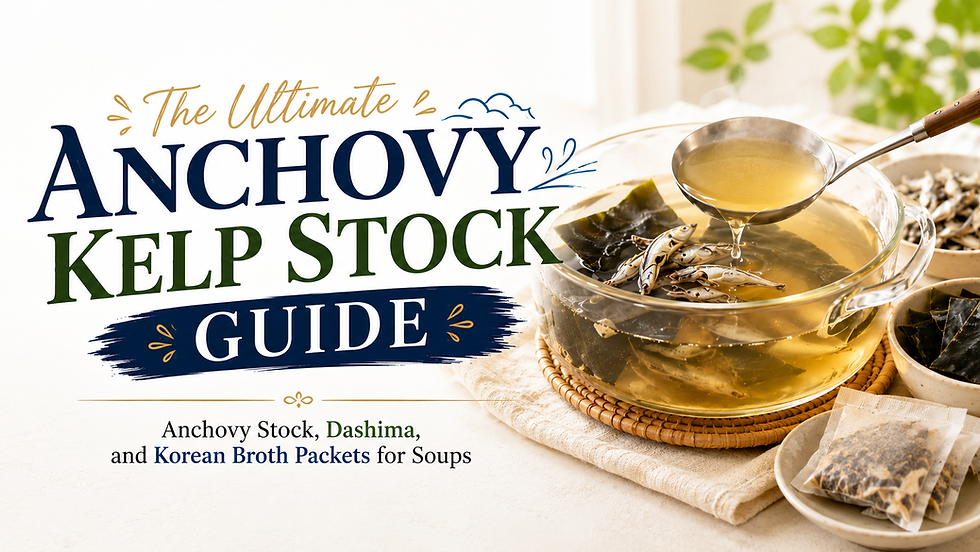
The smell of Korean anchovy stock is different from plain soup water pretending to be broth. It has a clean, savory edge first, then the kelp comes in underneath and makes the whole pot feel calmer. Not heavier. Not fishier. Just more like the soup has somewhere to stand.
That is why anchovy kelp stock matters so much in Korean cooking. Dried anchovies give the broth its backbone. Dashima, or Korean dried kelp, gives it shape. Together, they build the kind of base that makes fish cake soup taste alive, kalguksu taste like more than noodles in hot water, and tteokguk taste like it started with intention.
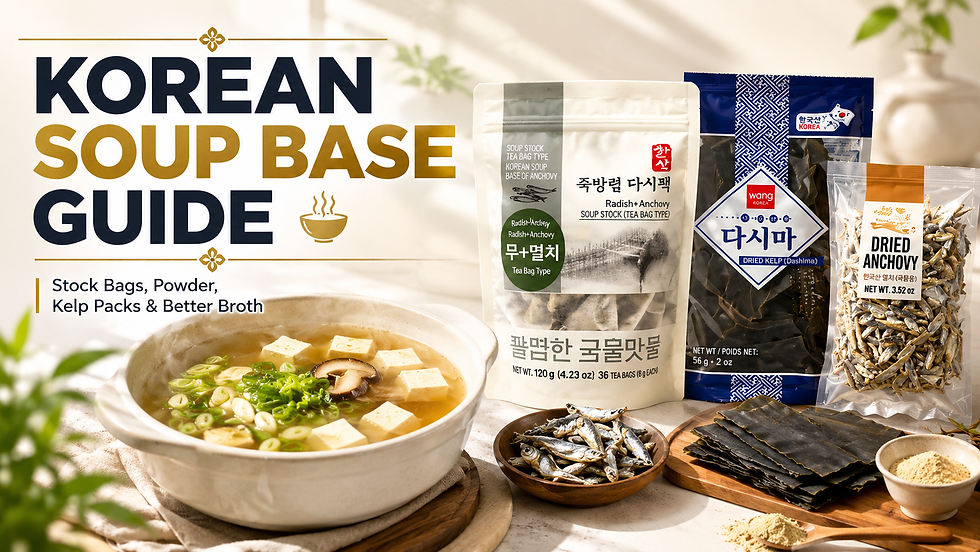
For the broader soup-base setup, start with Korean Soup Base Guide: Stock Bags, Powder, Kelp Packs, and the Fastest Path to Better Broth. This guide stays narrower: anchovy stock, anchovy broth, anchovy kelp stock, Korean anchovy stock, kelp broth, dashima, broth packets, and the fastest way to choose the right format for Korean soups.
TL;DR
Anchovy stock is a clean Korean broth base made with dried anchovies, often supported by dashima, radish, onion, scallion roots, or mushrooms.
Anchovy kelp stock is usually better than plain anchovy broth for Korean soups because kelp rounds out the liquid and softens the anchovy edge.
Dashima is Korean dried kelp. It gives broth quiet depth and a smoother finish without making the soup taste loud.
Korean broth packets are the easiest first buy for beginners because they give brewed anchovy-stock flavor without loose fish, straining, or cleanup.
Loose dried anchovies plus dried kelp are the better long-term setup if you want more control over broth strength and batch size.
Good Korean anchovy stock should taste clean, savory, and ready. It should not taste harsh, muddy, or aggressively fishy.
What Anchovy Stock Does in Korean Soup
Anchovy stock gives light Korean soups a clean savory line. It is not supposed to turn every bowl into fish soup. It is supposed to make the liquid taste like a base instead of seasoned water.
You notice it most in soups that do not hide behind heavy sauces. Fish cake soup, tteokguk, mandu soup, kalguksu, sujebi, tofu soup, radish soup, zucchini soup, and egg soup all expose the broth. If the base is weak, every spoonful feels a little unfinished no matter how many scallions you add.
The best anchovy broth has a short, clean finish. It tastes savory, then leaves room for the rice cakes, dumplings, noodles, fish cake, tofu, or vegetables. If the broth takes over the bowl, the stock went too far.
Why Dashima Belongs With Anchovies
Plain anchovy broth can work, but anchovy kelp stock is usually the better Korean soup base.
Dashima does not add drama. It adds width. It gives the broth a low, steady, slightly mineral depth, the kind that makes the liquid feel smoother without becoming heavy.
That matters because dried anchovies alone can sometimes taste sharp. Kelp rounds that edge. It makes the soup feel more settled, especially in clear broths where there is nowhere for rough stock to hide.
Wang Dried Kelp is the flexible pantry move when the kelp broth side of this guide is the problem you are trying to solve. Add a piece with dried anchovies, radish, onion, scallion roots, or mushrooms. Let it support the pot, then pull it before it starts making the broth dull or slick.
For a wider seaweed pantry split, read Gim, Miyeok, and Kelp: Which Korean Seaweed Belongs in Your Pantry?. The guide helps separate seaweed you eat from seaweed you use to build broth.
The Best First Buy Is a Korean Broth Packet
Loose anchovies and kelp are classic, but stock packets are the easiest way to make anchovy broth a normal weeknight habit.
The best stock packet does not just make water taste salty. It makes the pot smell like something has been simmering on purpose. You drop it in, let it brew, pull it out, and build the soup from there. No loose anchovies floating around. No strainer. No guessing whether the pot needs five anchovies or twelve.
Hansang Green Onion Root & Anchovy Soup Stock is the clearest hero product for this article because it stays directly in the anchovy-stock lane while adding aromatic depth. Green onion root makes the broth smell more cooked and rounded, which works especially well in fish cake soup, kalguksu, mandu soup, sujebi, and colder-weather noodle bowls.
This is the first buy for someone who wants brewed Korean anchovy stock without turning broth into a separate project. It gives the soup a cleaner base than plain water and a more natural Korean direction than a random all-purpose soup powder.
When Shiitake-Anchovy Packets Make More Sense
Shiitake-anchovy stock packets are not the universal first buy. They are the better pick when the broth needs more body.
Hansang Shiitake & Anchovy Soup Stock fits kalguksu, sujebi, dumpling soup, tofu soup, and noodle bowls where the broth has to carry starch, filling, and soft textures. The anchovy still gives the soup its Korean stock direction. Shiitake adds a broader finish behind it.
Use this when you want rounder anchovy broth, not when you want the cleanest possible clear stock. It is especially useful when noodles, dumplings, or tofu make the bowl feel soft and the broth needs a little more weight behind it.
Loose Dried Anchovies Are for Control
Stock packets win on ease. Loose dried anchovies win on control.
Tong Tong Bay Dried Anchovy (Dashi) is the type to buy when you want to build Korean anchovy stock yourself. It is meant for broth, soups, and sauces, not glossy anchovy banchan. That distinction saves a lot of wrong purchases.
Loose anchovies let you decide how assertive the broth should be. Use less for a clear tteokguk. Use more for kalguksu or fish cake soup. Pair them with dashima when the broth needs a smoother middle. Add radish or onion when you want the anchovy edge softened.
For a full dried-anchovy shelf breakdown, read A Shopper’s Guide to Korean Dried Anchovies: Soup Packs, Stir-Fry Sizes, and the Right One for Your Pantry. That article explains broth anchovies versus banchan anchovies. This guide stays on the broth side.
The Basic Anchovy Kelp Stock Method
This is not a full recipe, but the method explains why the shopping choice matters.
Start with water, dried anchovies, and a piece of dashima. Add radish, onion, scallion roots, or mushrooms if you want a softer or rounder broth. Bring the pot up gently. A rolling boil from the beginning can pull out a harsher anchovy smell before the broth has a chance to stay clean.
Pull the dashima once the broth has taken on depth. The kelp should leave the liquid smoother and slightly fuller, not slippery or dull. If the broth starts feeling thick around the edges, the kelp stayed too long or boiled too hard.
Let the anchovies simmer until the liquid tastes savory but still clear. Strain the broth, then build the soup. Season after the stock exists. Soup soy sauce, salt, garlic, fish sauce, doenjang, gochugaru, or gochujang should finish the broth, not replace it.
A good cue: the broth should smell savory when it steams, but the spoon should still feel clean after you taste it. If it tastes fishy before the soup ingredients go in, it will taste even more distracting later.
The Soups That Benefit Most
👉 Fish cake soup
Fish cake soup needs anchovy kelp stock more than almost anything else here. The fish cake brings sweetness and bounce, but the broth has to give the bowl its street-cart-style backbone. Weak broth makes the soup taste like hot water around fish cake.
👉 Kalguksu and sujebi
Noodles and hand-torn dough thicken the eating experience, so the broth needs enough pull to stay interesting. A green onion root and anchovy packet works well when you want convenience. Loose anchovy kelp stock gives you more control if you make these soups often.
👉 Tteokguk
Rice cakes soften the broth as they cook. Korean anchovy stock keeps the bowl savory and clean, especially when egg, scallion, and gim are the main toppings.
👉 Mandu soup
Dumplings bring filling, fat, garlic, and texture. The broth underneath should be clean enough to balance them. Anchovy broth keeps the soup light while still making it taste complete.
👉 Light guk and tofu soups
Zucchini soup, radish soup, tofu soup, egg soup, and simple vegetable guk show every weakness in the base. Kelp broth and anchovy stock make these soups taste settled before final seasoning.
Stock Packets vs Loose Anchovies
Stock packets are for people who want better broth without chores. They are also the safest first buy if you are still learning what Korean anchovy stock should taste like. The flavor is controlled, the cleanup is easy, and the pot gets a brewed base without much thought.
Loose anchovies and kelp are for people who want to adjust. More anchovy for noodle soup. Lighter broth for tteokguk. More kelp for roundness. Radish or onion for softness. A bigger batch for the fridge.
Use this as the quick buying split:
Buying situation | Better choice | Why |
First time making anchovy broth | Stock packet | Easier and more consistent |
Weeknight fish cake soup | Stock packet | Fast brewed flavor with less cleanup |
Kalguksu or sujebi for several servings | Loose anchovies plus kelp | More control and stronger batch potential |
Broth tastes sharp | Add kelp | Rounds the anchovy edge |
You cook Korean soup often | Loose anchovies plus kelp | Better control over strength and style |
Start with packets if you want the habit to stick. Move to loose anchovies and kelp when you start caring about small broth differences.
Anchovy Stock vs Dashida
Dashida and anchovy stock are both useful, but they are not the same tool.
Dashida powder is fast and direct. It can rescue a pot that needs savory depth right now. Anchovy kelp stock tastes more brewed, cleaner, and more naturally suited to simple Korean soups where the broth is easy to notice.
Use powder when dinner is already late. Use anchovy broth when the soup is light enough that the base matters.
For the full shortcut comparison, read Dashida vs Anchovy Stock: Which Korean Soup Base Should Beginners Start With?.
Why Anchovy Stock Turns Fishy
Harsh boiling is the fastest way to make anchovy stock taste rough. Gentle simmering keeps the broth cleaner.
Too many anchovies can also push the base past savory and into fishy. More is not always better.
Skipping kelp makes the broth sharper. Dashima gives the stock its roundness.
Leaving kelp in too long creates the opposite problem. The broth can turn dull, slick, or oddly flat.
Using the wrong anchovy type matters too. Stir-fry anchovies are meant to be eaten. Broth anchovies are meant to flavor the water and get strained out.
Seasoning too early can hide the real issue. Taste the stock before adding soup soy sauce, salt, fish sauce, doenjang, or gochugaru. Weak broth and weak seasoning are different problems.
What to Buy First
Buy Hansang Green Onion Root & Anchovy Soup Stock first if you want the easiest path to Korean anchovy stock for fish cake soup, noodle broth, tteokguk, mandu soup, and light guk.
Buy dried kelp if your soups are already seasoned but still feel flat. Kelp broth gives the liquid a smoother middle.
Buy loose dried anchovies if you want better control, larger batches, or a more traditional Korean anchovy stock habit.
Buy shiitake-anchovy packets if your noodle soups or dumpling soups need a rounder finish.
Skip banchan anchovies for this job. They may be great next to rice, but this guide is about broth.
👉 Browse our [Soup Bases & Cooking Seasonings] for more options.
Final Verdict
Anchovy stock is the Korean soup base to learn when light broth keeps tasting unfinished.
Start with a broth packet if you want the habit to be easy. Start with loose dried anchovies and dashima if you want control. Keep kelp around either way, because dashima is what turns anchovy broth from sharp to rounded.
For fish cake soup, kalguksu, sujebi, tteokguk, mandu soup, tofu soup, and clear vegetable broths, anchovy kelp stock is one of the most useful Korean pantry skills you can build.
Related Posts to Read Next
Korean Soup Base Guide: Stock Bags, Powder, Kelp Packs, and the Fastest Path to Better Broth
Dashida vs Anchovy Stock: Which Korean Soup Base Should Beginners Start With?
Gim, Miyeok, and Kelp: Which Korean Seaweed Belongs in Your Pantry?
Essential Korean Pantry Staples Beyond Sauce: Oils, Stock, Seaweed, and Seasonings to Keep at Home
FAQ
What is anchovy stock?
Anchovy stock is a Korean broth base usually made by simmering dried anchovies in water, often with dashima, radish, onion, scallion roots, or mushrooms. It gives soups and noodles a clean savory backbone.
Is anchovy broth the same as anchovy stock?
For most shoppers, yes. Anchovy broth and anchovy stock both refer to the savory liquid base made from anchovies. “Broth” sounds more ready-to-eat, while “stock” sounds more like an ingredient, but the cooking use is very similar.
What is anchovy kelp stock?
Anchovy kelp stock is broth made with dried anchovies and dashima, or Korean dried kelp. The anchovies give the broth savory depth, while the kelp makes it rounder and smoother.
What does dashima do in Korean anchovy stock?
Dashima adds quiet depth and body. It helps anchovy broth taste less thin and less sharp without making it heavier or fishier.
Should beginners buy stock packets or loose anchovies?
Beginners should usually start with stock packets if they want ease and consistency. Loose anchovies are better once you want more control over strength, ingredients, and batch size.
Which soups use Korean anchovy stock best?
Fish cake soup, tteokguk, kalguksu, sujebi, mandu soup, tofu soup, radish soup, zucchini soup, egg soup, and light noodle broths all benefit from Korean anchovy stock.
Why does my anchovy stock taste fishy?
The broth may have boiled too hard, used too many anchovies, skipped kelp, simmered too long, or used the wrong anchovy type. Good anchovy stock should taste clean and savory, not harsh.


Comments