
.png)
Korean Beef Bone Broth Guide: Gomtang, Sagol Broth, and Ready-to-Eat Soup Packs


Gomtang is the bowl you want when the meal needs to be gentle but not bland. The broth should feel clean and beefy, the rice should soften into it, and a handful of scallions should be enough to make the bowl feel finished.
That is a different craving from spicy jjigae, anchovy stock, or soup powder. Korean beef bone broth is usually not a background shortcut. It is the thing you build the meal around: a pouch of broth warmed with rice, a sagol-style soup with a milkier body, a rice cake cup for quick comfort, or gomtang ramen when noodles sound better than rice.
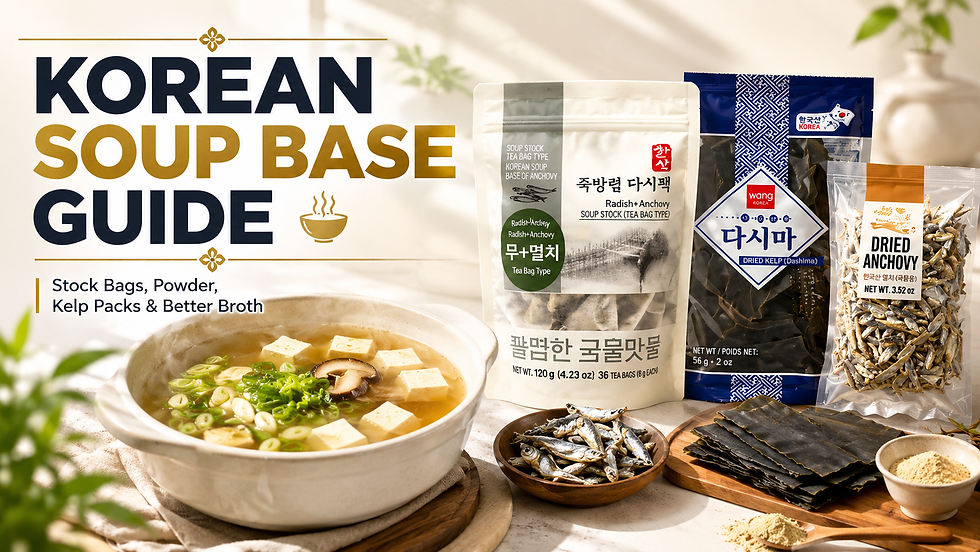
For the broader soup-base pantry, start with Korean Soup Base Guide: Stock Bags, Powder, Kelp Packs, and the Fastest Path to Better Broth (https://www.myfreshdash.com/post/korean-soup-base-guide). This guide stays focused on gomtang, korean bone broth, sagol broth, ready-to-eat packs, rice meals, and mild soup cravings.
TL;DR
Gomtang is a mild Korean beef soup built around clean, steady beef broth.
Korean beef bone broth is the best first buy when you want a flexible mild meal base for rice, rice cakes, dumplings, noodles, or simple scallion-and-pepper soup.
Sagol broth usually points toward ox bone or beef bone soup with a milkier, fuller body than clear gomtang-style broth.
Ready-to-eat soup packs are the easiest starting point because they let you heat the broth and choose the meal: rice, tteok, mandu, noodles, or plain soup.
Rice cake soup cups make sense when you want beef bone broth comfort with chew already built in.
Gomtang ramen is the noodle version of the craving: mild, beefy, easy, and less spicy than standard Korean ramen.
What You Are Really Buying With Korean Beef Bone Broth
Korean beef bone broth is not trying to do the same job as Dashida, anchovy-kelp stock, or a soup stock bag. Those products help build a pot. Gomtang-style broth can become the pot.
A good ready-to-eat beef bone broth should taste calm but not empty. It should have enough body to carry rice, enough beef flavor to feel like a meal, and a finish that stays mild enough for kimchi or kkakdugi on the side. If the broth needs twenty toppings to taste interesting, it is not doing enough.
That is the buying cue. Choose Korean beef bone broth when you want comfort you can eat simply. Scallions, pepper, salt if needed, rice, maybe sliced beef or rice cakes. The broth should not need much more than that.
For the definition side, read What Is Gomtang? The Korean Beef Soup People Crave When They Want Something Clean and Comforting. The article explains the dish. This one helps you choose the format to buy.
Gomtang, Sagol, and Seolleongtang-Style Broth: The Practical Difference
The labels can overlap, but they do not always promise the same bowl.
Gomtang usually feels cleaner and more direct. Think mild beef broth, rice, scallions, black pepper, and a broth that tastes savory without feeling thick. It is comforting because it is steady, not because it is rich.
Sagol broth points more toward bones. In shopping terms, it often means ox bone or beef bone broth with more body. The broth may look milkier, feel fuller, and coat the spoon a little more than a cleaner gomtang-style soup.
Seolleongtang-style soup sits close to that sagol lane. It often feels softer, cloudier, and more bone-led than clear beef broth. That can be exactly right on a cold day, but it is not the same mood as a clean bowl of gomtang over rice.
If you want... | Look for... | The bowl feels like... |
Clean mild beef soup | Gomtang or beef bone broth | Light rice-soup comfort |
Fuller bone broth body | Sagol or ox bone soup | Milkier, rounder, more substantial |
Meal with chew included | Rice cake soup cup | Beef broth plus tteok texture |
Mild noodle comfort | Gomtang ramen | Beefy broth with ramen ease |
The smartest buy starts with texture and use case, not just the name. Clearer broth for rice meals. Milkier broth for sagol-style comfort. Cups and ramen when you want the meal decided for you.
The Best First Buy: Ready-to-Eat Beef Bone Broth Packs
A ready-to-eat broth pack is the best starting point because it gives you the most control after purchase.
Beef Bone Soup is the hero first-buy product for this guide. It gives you Korean beef bone broth in a ready-to-serve pouch format, which means you can heat it and decide what kind of meal it becomes. That flexibility matters more than it sounds.
Use it plain with scallions and black pepper when you want the simplest gomtang-style bowl. Pour it over rice when you want a soft, mild meal. Add rice cakes for a quick tteokguk-style lunch. Add mandu when anchovy broth feels too light. Add glass noodles or mushrooms when you want a bigger bowl without making the broth spicy.
This is the product to buy first if you are unsure whether you want gomtang, rice soup, dumpling soup, or a mild beef-broth base. A cup meal locks you into one texture. A ramen product locks you into noodles. A broth pack lets the craving decide later.
Ox Bone Soup Fits the Fuller Sagol Broth Craving
Some shoppers say gomtang but picture something richer: pale broth, soft beef, scallions, pepper, rice, and a bowl that feels almost creamy without cream. That is the sagol-style lane.
PK Ox Bone Soup with Beef is the better pick for that fuller comfort. The product is described as seolleongtang-style, with slow-simmered ox bones and beef slices, so it fits people who want the broth to carry more weight.
Choose this if you want:
a milkier beef bone soup
beef slices already included
a fuller spoonfeel than clear broth
a rice meal that feels more substantial
scallions, black pepper, and kkakdugi on the side
This is not the cleanest gomtang-style first buy. It is richer and more bone-led. That is the whole reason to choose it.
For a deeper taste comparison, read Seolleongtang vs Gomtang: Which Mild Korean Beef Soup Fits Your Taste Better?.
Rice Cake Beef Bone Soup Is the Built-In Meal Option
A broth pack gives you options. A rice cake soup cup gives you direction.
Dongwon Rice Cake with Beef Bone Soup makes sense when you want beef bone broth comfort plus chew without buying rice cakes separately. The tteok gives the bowl structure, so it feels more like a small meal than a mug of broth.
This is useful for lunch, office meals, late-night comfort, or a quick tteokguk-style craving. It is also a smart first buy for someone who knows they will not add rice, scallions, egg, or toppings on their own.
The tradeoff is flexibility. You get convenience and texture, but you lose the open-ended use of a plain broth pack.
Gomtang Ramen Is for the Noodle Craving
Gomtang ramen belongs here because it answers the same mild beef-broth craving in a different format.
Samyang Korean Gomtang Ramen is the pick when noodles are the point. It gives you a mild beef-style broth without the chili heat of many Korean ramens, so it works for people who want comfort but not spice.
Add scallions and black pepper first. Add egg, mushrooms, cabbage, or sliced beef if you want it to feel more like a meal. Keep the additions simple because the appeal is the mild beef broth, not a crowded ramen bowl.
For a broader noodle-kit decision, read A Shopper’s Guide to Korean Broth Noodle Kits: Mild, Beefy, and Spicy Bowls That Actually Earn Space at Home.
How to Make Ready-to-Eat Gomtang Taste Better
The best upgrades for gomtang-style broth are quiet.
Scallions make the broth smell fresher. Black pepper gives it lift. Salt can help, but only after tasting the soup hot. Kimchi or kkakdugi belongs on the side because the crunch and acidity make mild broth more satisfying without turning the soup spicy.
Rice is the real upgrade. Korean beef bone broth can taste plain by itself, then make perfect sense once rice enters the bowl. The rice catches the broth and turns it into a meal instead of a sip.
Use this simple buying-to-bowl logic:
What you add | What it turns into |
Rice, scallions, pepper | Classic mild gomtang-style meal |
Rice cakes, egg, scallions | Quick tteokguk-style bowl |
Mandu, scallions, pepper | Soft beef-broth dumpling soup |
Glass noodles or mushrooms | More filling mild soup |
Kimchi or kkakdugi on the side | Needed contrast without changing the broth |
Heavy sauces can get in the way. Gochujang, doenjang, chili oil, and too much soy sauce push the broth away from the clean comfort that makes gomtang useful.
What to Buy First
👉 Buy Beef Bone Soup if you want the most flexible first pick
This is the best first buy for most shoppers because it can become rice soup, rice cake soup, dumpling soup, noodle broth, or a plain mild bowl. Start here if you want Korean beef bone broth but are not sure how you will use it yet.
👉 Buy PK Ox Bone Soup with Beef if you want sagol-style body
Choose this when you want the broth fuller, milkier, and more bone-led. It is better for a soft rice meal than for a light broth base.
👉 Buy Dongwon Rice Cake with Beef Bone Soup if you want chew built in
Choose this when you want the tteokguk feeling without buying broth and rice cakes separately.
👉 Buy Samyang Korean Gomtang Ramen if noodles are the craving
Choose this when you want mild beef-broth comfort in ramen form instead of a rice meal.
➡️ Do not buy plain broth if you will not build from it
A broth pouch is flexible only if you actually add rice, tteok, mandu, noodles, scallions, or toppings. If you want the meal decided, buy the cup or ramen format.
Common Buying Mistakes
Buying gomtang when you want spicy soup is the first mistake. Gomtang is mild by design. It will not scratch the same itch as yukgaejang, kimchi jjigae, or spicy ramen.
Buying sagol-style soup when you wanted a cleaner beef broth is another. Ox bone soup can feel milkier and fuller than gomtang. That is good only if that is the comfort you wanted.
Buying ramen when you wanted broth flexibility can also disappoint. Gomtang ramen is easy, but it will not give you the same build-your-own use as a ready-to-eat broth pouch.
Oversalting is the easy table mistake. Mild broth often tastes understated at first, but ready-to-eat packs and noodle products may already carry enough seasoning. Taste hot, then adjust.
👉 Browse our [Soup Bases & Cooking Seasonings] for more options.
Final Verdict
Start with ready-to-eat Korean beef bone broth if you want the most useful first buy. It can become a rice meal, tteokguk-style bowl, dumpling soup, noodle broth, or plain gomtang-style soup with scallions and pepper.
Choose ox bone soup when the craving is fuller, milkier, and more sagol-style. Choose the rice cake soup cup when you want the meal built in. Choose gomtang ramen when noodles matter more than rice.
Clean gomtang comfort is about restraint. The broth should be mild enough to eat with rice, but strong enough that the bowl does not feel empty. Buy the format that matches how much work you actually want to do.
Related Posts to Read Next
Korean Soup Base Guide: Stock Bags, Powder, Kelp Packs, and the Fastest Path to Better Broth
What Is Gomtang? The Korean Beef Soup People Crave When They Want Something Clean and Comforting
Seolleongtang vs Gomtang: Which Mild Korean Beef Soup Fits Your Taste Better?
The Best Non-Spicy Korean Convenience Foods That Still Feel Like a Real Meal
FAQ
What is gomtang?
Gomtang is a mild Korean beef soup with a clean, savory broth. It is usually eaten with rice, scallions, black pepper, and kimchi or kkakdugi on the side.
Is Korean beef bone broth the same as gomtang?
Not always. Korean beef bone broth can be used for gomtang-style meals, but it may also be sold as sagol, ox bone soup, seolleongtang-style soup, or a ready-to-eat broth pack.
What does sagol mean in Korean soup?
Sagol usually refers to beef or ox bones used for broth. In shopping terms, sagol broth often means a fuller, milkier beef bone soup rather than a very clear light broth.
What should I buy first if I want Korean bone broth?
Start with a ready-to-eat beef bone broth pack if you want flexibility. Choose ox bone soup with beef if you want a fuller bowl, or a rice cake soup cup if you want the meal already built.
What do you eat with Korean beef bone broth?
Rice is the classic pairing. You can also add rice cakes, dumplings, glass noodles, sliced beef, egg, scallions, black pepper, and kimchi or kkakdugi on the side.
Is gomtang spicy?
No. Gomtang is usually mild. Its comfort comes from beef broth, warmth, rice, and simple seasoning, not chili heat.
Why does my ready-to-eat gomtang taste plain?
It may need rice, scallions, black pepper, or a little salt after heating. Gomtang-style broth is meant to be mild, so the bowl often comes alive once rice and simple toppings are added.
Reverse Link to Add to Pillar Page
After checking the pillar page, add this link only if this support post is not already linked there.
Verified pillar URL:https://www.myfreshdash.com/post/korean-soup-base-guide
Suggested new subsection:Add a short subsection near the “What to use when you need the answer fast” area of the Korean Soup Base Guide: Stock Bags, Powder, Kelp Packs, and the Fastest Path to Better Broth article.
New subsection title:Ready-to-eat beef bone broth covers a different comfort need
Add this sentence:If the craving is mild beef-bone comfort rather than anchovy stock, kelp, or powder, use the Korean beef bone broth guide to compare gomtang, sagol broth, ready-to-eat packs, rice meals, and noodle options.
Link anchor text:Korean beef bone broth guide
Reason:The live pillar has strong sections for stock bags, powder, kelp, and anchovy-kelp broth, but no clean beef-bone or gomtang section. A new subsection is better than forcing this support link into an anchovy or powder section because ready-to-eat beef bone broth solves a different meal problem.


Comments