
.png)
Korean Soup Base Guide: Stock Bags, Powder, Kelp Packs, and the Fastest Path to Better Broth

Updated: May 18
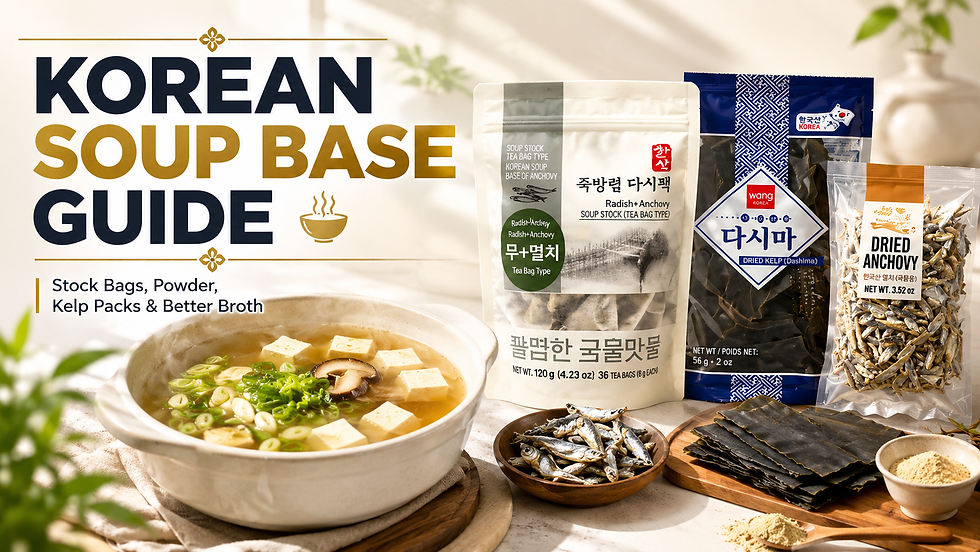
The worst soup has a very specific taste. Not bad, exactly. Just thin. You add garlic, soy sauce, scallions, maybe tofu, maybe dumplings, and the pot still tastes like hot water wearing clothes.
That is usually not an ingredient problem. It is a broth problem.
Once you fix that, a lot of Korean cooking gets easier fast. Suddenly tteokguk tastes like something you meant to make. Mandu soup stops feeling improvised. Doenjang jjigae gets a floor under it. Even a quick ramen upgrade starts tasting more settled, more savory, more like an actual meal instead of a rushed pot.
The good news is that better broth does not have to mean a long simmer and a sink full of strained anchovies. Sometimes it is a tea bag-style stock pouch. Sometimes it is powder. Sometimes it is one strip of kelp doing quiet work in the corner of the pot.
TL;DR
If you want the safest first buy, start with stock bags.
If you want the fastest possible fix, keep powder at home.
If your broth always tastes flat even when it is seasoned properly, add kelp.
If you want the most classic Korean soup foundation, use anchovy plus kelp.
For most people, the smartest setup is one stock-bag option, one powder option, and one pack of kelp. That gives you real broth when you want it, emergency depth when you need it, and a quiet upgrade for the nights when the pot tastes almost right but not quite.
The first mistake is thinking seasoning and broth are the same thing
They are not.
Seasoning can make soup saltier, deeper, louder, or sharper. Broth makes it feel built.
That difference shows up the second the pot starts steaming. A seasoned-but-empty soup smells fine for a second, then falls off. A broth with actual backbone hangs in the kitchen a little. It smells rounder. Less like ingredients stacked on top of water and more like the liquid itself has somewhere to stand.
That is why broth shortcuts matter so much in Korean cooking. A lot of Korean soups are not trying to bury the liquid under cream or thick puree. You can taste the base. If the base is weak, the whole thing feels unfinished.
👉 If you are still confused by Korean soup names, this guide to Korean soup names explained can help you understand how jjigae, guk, and tang feel different at the table.
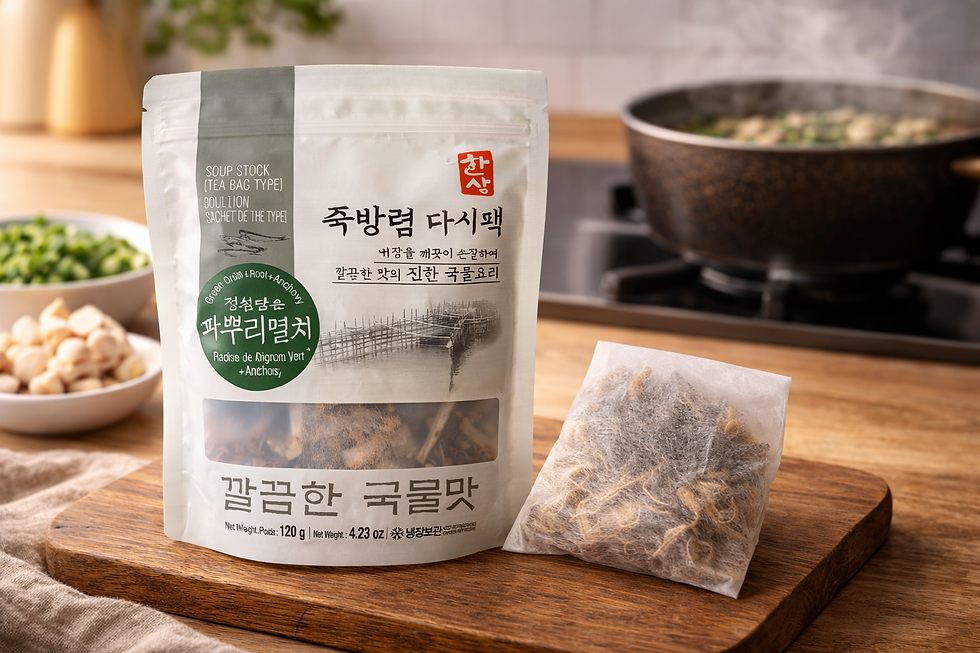
Stock bags are what to buy when you want the pot to smell like you tried
This is still the cleanest answer for most people.
Stock bags give you the feeling of real broth without the little chores that stop people from making broth in the first place. No fishing out loose bits. No straining. No pot full of spent anchovies and kelp. You drop a bag in water, simmer it, pull it out, and the broth tastes brewed instead of patched together.
That is exactly why products down below, make so much sense in a Korean pantry.
They do not all taste the same.
Hansang Radish & Anchovy Soup Stock (Tea Bag Type) is the one for cleaner everyday broth. It gives you a lighter, calmer base that works especially well when the rest of the soup is already doing enough. Think tofu soup, lighter guk, mandu soup, rice cake soup, or any pot where you want depth without a strong mushroom or allium shadow sitting over everything else.
Hansang Green Onion Root & Anchovy Soup Stock (Tea Bag Type) lands darker and a little more aromatic. The broth smells more cooked, more rooted, more like the kind of pot that has been moving toward dinner on purpose. This is the one that feels especially good when the weather is colder or when the soup wants a little more savory pull underneath it.
Hansang Shiitake & Anchovy Soup Stock (Tea Bag Type) has the fullest finish of the three. Not heavy, just rounder. The shiitake gives the broth a broader back end, which makes noodle soups, sundubu-style soups, and dumpling bowls feel more complete without needing much else.
That is why stock bags win so often. They do not just add taste. They change the shape of the liquid.


Powder is what saves the nights when dinner is already late
There is a specific moment when powder becomes the best tool in the kitchen.
It is the moment you already have water in the pot, ingredients on the counter, and about seven minutes left before you need the whole thing to become dinner.
That is where products like CJ Dasida Anchovy and Chung Jung One Instant Soup Stock (Beef Flavor) earn their place.
Powder does not behave like steeped stock. It moves faster than that. You stir it in and the broth tightens almost immediately. The smell lifts. The water stops feeling raw. Suddenly the soup has a center.
That is why powder is so useful, even if it is not the most romantic broth format in the world.
You do not use it because you are pretending you simmered stock all afternoon. You use it because sometimes the difference between a weak bowl and a satisfying one really is one spoonful.
CJ Dasida Anchovy is especially good when the pot wants Korean seafood-style backbone fast. It makes sense in quick noodle broth, dumpling soup, fish cake soup, lighter jjigae, and late-night pantry cooking when you still want the bowl to taste distinctly Korean.
Chung Jung One Instant Soup Stock (Beef Flavor) leans richer and warmer. It is useful when the soup wants a little more body from the start, or when the meal mood is less clean anchovy broth and more quick savory comfort.
Powder shines in the kinds of meals people actually make on tired nights. Egg drop soup. Mandu soup. Ramen that needs help. A quick pot of soup with scallions, tofu, and leftover vegetables. It is the fastest path from “almost soup” to “good enough to want again.”
👉 For a more practical look at beef flavor, anchovy flavor, ramen upgrades, soups, stews, and first-buy choices, use the Dashida guide before choosing a Korean soup stock powder.

Kelp is the quiet fix most people notice too late
Kelp does not usually make broth more dramatic.
It makes it more believable.
That is the difference.
That is why Wang Dried Kelp matters more than it first looks like it should.
Kelp is for the pots that already taste close. You seasoned them. You added aromatics. You are not missing flavor exactly. The broth just still feels a little narrow, a little flat in the middle, a little like all the ingredients are lined up instead of blended.
Kelp fixes that.
It is especially useful in lighter broths where every weakness shows. Tofu soup. zucchini soup. radish soup. noodle broth. A simple anchovy stock that still needs a little gravity. It also matters in soups where you do not want the broth to taste aggressive. Kelp adds depth without making the pot louder.
It is the pantry move that makes people sound like better cooks than they are.
Anchovy plus kelp is still the most Korean way to get there fast
There is a reason this combination keeps showing up.
It is not nostalgia. It is because it works.
Dried anchovies bring savory body. Kelp smooths the broth and gives it that quiet, slightly mineral, slightly sweet-underneath completeness that plain anchovies alone do not always reach. Together they make the kind of broth that supports a lot of Korean soup without getting in the way of it.
That is why Tong Tong Bay Dasi Anchovy (Family Design) paired with kelp is still one of the most useful things you can keep around if you want a more traditional Korean broth foundation.
👉 If dried anchovy bags all look the same on the shelf, this guide to Korean dried anchovies explains which ones belong in broth and which ones are better for banchan.
Good anchovy-kelp broth should not hit you as “fishy.” It should taste clear, savory, and ready. The kind of broth that makes tteokguk feel more proper, fish cake soup feel more alive, mandu soup feel less thrown together, and a lot of lighter jjigae taste less blunt.
It is not the absolute fastest route in this guide. But it is still one of the smartest.
And once you get used to it, it stops feeling like extra effort. It just starts feeling like the normal way to begin.
👉 For a Korean-focused take on dashi, kombu dashi, and instant dashi, read the dashi stock guide before choosing between stock bags, dried kelp, anchovy powder, and dried anchovies.
What to use when you need the answer fast
➡️ If your soup still tastes like hot water after you already seasoned it
Add powder if dinner is late.
Add kelp if the broth is close but still feels flat.
➡️ If you want a broth that tastes homemade without acting like a project
Use stock bags.
This is the format most likely to make you keep making soup instead of talking yourself out of it.
➡️ If you want the broth under tteokguk, mandu soup, or noodle soup to matter
Use anchovy plus kelp, or a good stock bag built around anchovy.
That is the point where the soup stops feeling like an assembly job and starts tasting like a real bowl.
👉 If the broth tastes good but still feels too light, these Korean soup add-ons can help turn the bowl into a fuller meal.
➡️ If you are the kind of cook who reaches for shortcuts and actually uses them
Keep powder and stock bags.
Powder saves you on rushed nights. Stock bags save you from settling for rushed flavor all the time.
👉 For a deeper look at anchovy stock, anchovy broth, dashima, kelp broth, and when to choose broth packets instead of loose ingredients, use the anchovy kelp stock guide.
The fastest path to better broth for most people
Most people do not need one perfect broth answer.
They need one answer for weeknights, one answer for emergencies, and one quiet upgrade they can lean on when the pot is missing something.
That means:
one stock-bag option
one powder option
one pack of kelp
That setup covers almost everything.
You can make a cleaner soup when you have a little time. You can rescue a tired weeknight bowl in seconds. You can make broth taste calmer and more finished without rebuilding the whole meal from scratch.
That is the real point of a Korean soup-base pantry. Not purity. Not technique theater. Just better broth more often.
➡️ If your broth still tastes flat after the stock base is handled, this guide to Korean fish sauce for beginners can help you understand when a small splash adds the missing savory layer.
👉 Browse our [Soup Bases, Seaweed & Kelp] for more options.
Final verdict
If you want one clean answer, start with stock bags.
They are the best first buy because they give you the most convincing broth with the least friction.
Keep powder too, because there will absolutely be nights when speed matters more than nuance.
And do not skip kelp. It is the quietest item in this whole category, but it is often the one that makes broth stop tasting flat and start tasting complete.
If you want the most traditional Korean broth path, anchovy plus kelp is still the one to learn. But if you just want soup to taste better this week, start with the bag.
Related posts to read next
FAQ
What is the easiest Korean soup base for beginners?
Stock bags are usually the easiest place to start because they make broth taste brewed and intentional without loose ingredients, straining, or much cleanup.
Is Korean soup stock powder worse than stock bags?
Not worse. Just different. Powder is faster and more direct. Stock bags usually taste calmer and more like an actual simmered broth.
What does kelp actually change in broth?
Kelp makes broth taste deeper, rounder, and more complete. It does not usually make the pot louder. It makes the broth feel more settled.
Do I need anchovies and kelp to make Korean soup properly?
You do not need them for every single soup, but anchovy plus kelp is still one of the most classic Korean broth foundations and worth learning if you want a stronger soup base.
When should I use stock bags instead of powder?
Use stock bags when you want broth to feel more homemade and you have enough time to let the bag simmer for a bit. Use powder when dinner needs to happen fast.
Which soups improve the most from a better broth base?
Tteokguk, mandu soup, fish cake soup, noodle soup, lighter guk, and a lot of everyday stews all get noticeably better once the broth underneath them has real backbone.
If I only want two broth shortcuts at home, which two should I keep?
For most people, one stock-bag option and one powder option make the smartest pair. That gives you both better flavor and rushed-night practicality.


Comments