
.png)
Daepae Samgyeopsal Guide: Thin-Sliced Korean Pork Belly for Fast BBQ Meals


Daepae samgyeopsal is thin-sliced Korean pork belly made for speed.
It gives you the samgyeopsal feeling without waiting for thick pork belly to slowly render and brown. The slices are thin, wide, and quick-cooking, so they hit a hot pan, curl at the edges, release fat fast, and turn into a wrap-ready Korean BBQ meal in minutes.
That is the main reason people choose daepae samgyeopsal over thicker pork belly. Thick samgyeopsal feels meatier and more restaurant-style. Thin sliced pork belly Korean BBQ feels faster, easier, and better for weeknight meals, rice bowls, lettuce wraps, and quick pan cooking.
For the full Korean BBQ table setup around meat, start with Korean BBQ at Home Starts Before the Meat: The Wraps, Sides, and Sauces Worth Buying First. This guide stays focused on daepae samgyeopsal, thin sliced Korean pork belly, fast cooking, sauces, wraps, rice, and when thin pork belly makes more sense than thick slices.
TL;DR
Daepae samgyeopsal is thin-sliced Korean pork belly, usually cooked quickly in a hot pan or on a grill.
It is faster than thick samgyeopsal and works especially well for weeknight Korean BBQ meals, rice bowls, lettuce wraps, and quick pork belly plates.
Thin pork belly cooks fast, crisps at the edges, and releases fat quickly, but it can overcook or turn greasy if the heat is wrong.
Choose daepae samgyeopsal when speed matters. Choose thick pork belly when you want a meatier, slower, more restaurant-style BBQ experience.
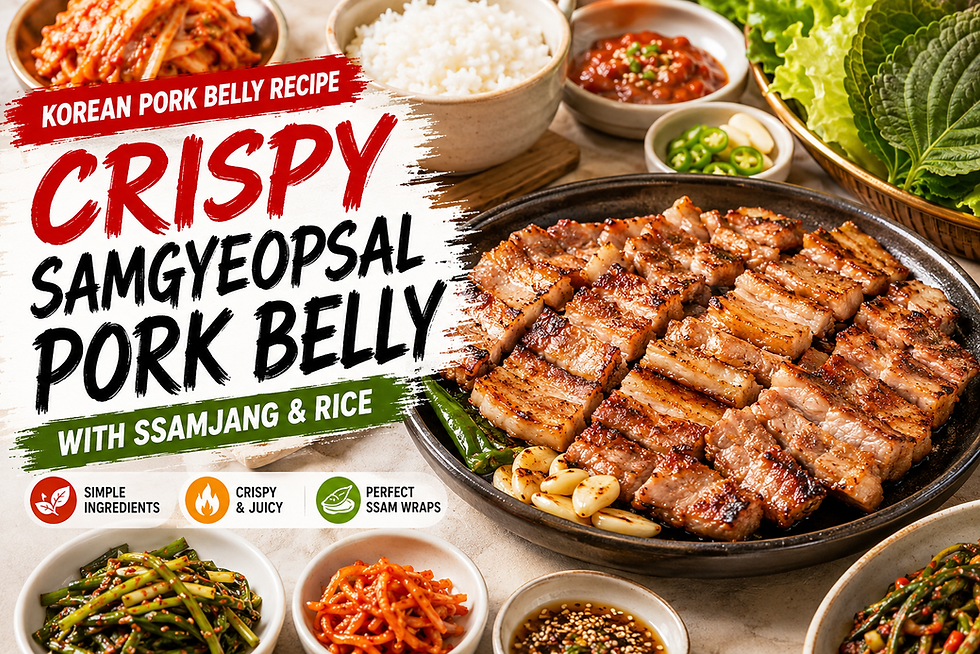
The best table setup is simple: lettuce or perilla leaves, ssamjang, sesame oil salt, rice, kimchi, garlic, green chili, and one or two banchan.
Daepae samgyeopsal also works well in easy meal uses like rice bowls, kimchi pork belly, quick stir-fry plates, ramen toppings, and lettuce wraps.
The main cooking rule is heat and spacing. Cook quickly in a single layer so the pork browns instead of steaming.
Quick Guide: When Should You Choose Daepae Samgyeopsal?
What you want | Choose daepae samgyeopsal? | Why |
Fast Korean BBQ at home | Yes | Thin slices cook in minutes |
Lettuce wraps with ssamjang | Yes | Easy to fold into wraps |
Rice bowls | Yes | Thin slices mix well with rice and kimchi |
Crispy pork edges | Yes | Edges brown quickly when cooked hot |
Thick, juicy pork belly bites | Not first choice | Thick samgyeopsal works better |
Restaurant-style grilling pace | Not first choice | Thin pork cooks too fast for slow table grilling |
Quick weeknight dinner | Yes | Best use case for thin sliced pork belly |
Big BBQ centerpiece meal | Maybe | Better as one of several meats, not always the main event |
Daepae samgyeopsal is the right choice when you want Korean pork belly fast. Thick samgyeopsal is the better choice when you want a slower, meatier BBQ meal.
What Is Daepae Samgyeopsal?
Daepae samgyeopsal is thinly sliced pork belly used for Korean BBQ-style meals.
The word daepae is often used for very thin slices, the kind that cook almost immediately on a hot surface. Instead of thick pork belly strips that need time to render, daepae slices are thin enough to curl, brown, and crisp quickly.

It is still samgyeopsal because the cut is pork belly. The difference is thickness and cooking style.
Regular samgyeopsal often feels like a grill-centered meal. Daepae samgyeopsal feels more like a fast Korean BBQ shortcut. It is easier to cook in a pan, easier to tuck into wraps, and easier to turn into a quick rice meal.
Daepae Samgyeopsal vs Thick Samgyeopsal
Both are Korean pork belly, but they do not eat the same way.
Thick samgyeopsal gives you a meatier bite. It takes longer to cook, but the reward is a juicy center, browned fat, and a more substantial BBQ feeling. It is better when you want the table to feel like a Korean BBQ restaurant.
Daepae samgyeopsal gives you speed and crispness. It cooks fast, takes sauce well, and fits easily into rice bowls or lettuce wraps. It is better when you want pork belly without managing thick pieces on the grill.

Use this split:
Choice | Best for |
Daepae samgyeopsal | Fast meals, rice bowls, quick wraps, crispy edges |
Thick samgyeopsal | Restaurant-style grilling, juicier bites, slower BBQ meals |
Daepae with rice | Weeknight dinner, lunch bowls, kimchi pork belly |
Thick pork belly with wraps | Classic BBQ table, ssamjang, perilla leaves, banchan |
If you are cooking after work, daepae is easier. If you are building a full weekend BBQ table, thick samgyeopsal may feel more satisfying.
Why Thin-Sliced Pork Belly Cooks Differently
Thin pork belly has less room for error.
That can be good. It means dinner happens fast. It also means the pork can go from crisp to overcooked quickly. Because each slice is thin, the fat renders almost immediately and the edges can brown before you have time to set the table.
This is why preparation matters. Have rice, wraps, sauce, kimchi, garlic, and sides ready before the pork hits the pan.

Good daepae samgyeopsal should have:
curled edges
light browning
rendered fat
tender thin layers
some crisp spots
no gray steamed surface
no soggy pile of pork
If the slices release a lot of liquid and look pale, the pan is probably crowded or not hot enough. If the slices turn hard and dry, the heat may be too high or the pork cooked too long.
How to Cook Daepae Samgyeopsal
1. Set the table first
Thin pork belly cooks fast, so do not start cooking before the sides are ready.

Put out lettuce or perilla leaves, ssamjang, sesame oil salt, rice, kimchi, sliced garlic, green chili, and banchan. Once the pork is cooked, you want to eat right away.
2. Heat the pan or grill
Use a hot pan, grill pan, cast iron pan, tabletop grill, or outdoor grill.

The surface should be hot enough that the pork sizzles immediately. If it does not sizzle, wait a little longer.
3. Cook in one layer
Lay the thin pork belly slices in a single layer.

Do not pile them up. If the slices overlap too much, they steam and turn gray instead of browning. Work in batches if needed.
4. Flip quickly
Daepae cooks fast. Once the edges curl and the first side has color, flip the slices.

You are not trying to slowly roast the pork. You are trying to render the fat, brown the edges, and keep the slices tender.
5. Move finished slices off the heat
Do not let thin slices sit on the hot pan too long after they are cooked.

Move them to a plate or a cooler part of the grill. Eat while hot, especially if you want the edges to stay crisp.
Best Sauces for Daepae Samgyeopsal
Daepae samgyeopsal works with the same sauces as regular samgyeopsal, but because the slices are thinner, you do not need much.
Ssamjang is the easiest sauce for wraps. It gives salty, savory, slightly spicy flavor and makes the bite feel complete.
Sesame oil salt is cleaner. It lets the pork stay the main flavor while adding toasted richness and salt.
Soy-vinegar dip can help when the pork feels too rich or when you want a sharper bite.
Use this sauce split:
Sauce | Best for |
Ssamjang | Lettuce wraps, rice-heavy bites, garlic, chili |
Sesame oil salt | Clean pork flavor, simple dipping, quick BBQ plates |
Soy-vinegar dip | Brightness, greasy bites, vegetables, mushrooms |
Gochujang-based sauce | Spicy rice bowls or bolder wraps |
For a deeper sauce guide, read Korean BBQ Dipping Sauce Guide: Ssamjang, Sesame Oil Salt, and Soy-Vinegar Dip.
Wraps, Rice, and Sides That Make It Work
Daepae samgyeopsal needs contrast because pork belly is still rich, even when sliced thin.
The basic table should have something fresh, something sharp, something salty, and something calm. Lettuce or perilla leaves give freshness. Kimchi or pickled sides give sharpness. Ssamjang gives salty-savoriness. Rice calms everything down.
Start with:
lettuce or perilla leaves
ssamjang
sesame oil salt
rice
kimchi
sliced garlic
green chili
cucumber sticks
one mild banchan
one pickled or sharp side
The table does not need to be huge. Daepae samgyeopsal is best when the setup feels fast and easy.
For more on why wraps and sauces matter before the meat, use the Korean BBQ at-home pillar linked above.
Best Ways to Eat Daepae Samgyeopsal
➡️ Classic lettuce wrap
Add one or two slices of pork to lettuce with rice, ssamjang, and garlic. This is the easiest samgyeopsal-style bite.
➡️ Perilla leaf wrap
Use perilla leaves when you want a stronger herbal flavor. The leaf cuts through the pork fat better than mild lettuce.
➡️ Rice bowl
Serve thin pork belly over rice with kimchi, cucumber, ssamjang, sesame oil, and a fried egg. This is one of the easiest Korean thin sliced pork belly recipes for a weeknight.
➡️ Kimchi pork belly plate
Cook kimchi near the pork after some fat has rendered. The kimchi softens, the pork tastes richer, and the whole plate works well with rice.
➡️ Ramen topping
Add cooked daepae slices on top of ramen when you want a richer noodle bowl. Keep the slices crisp and add them at the end.
➡️ Quick banchan-style plate
Serve pork belly with rice, kimchi, cucumber, roasted seaweed, and one dip. This is less BBQ-style and more fast meal-style.
Korean Thin Sliced Pork Belly Recipes That Make Sense
Daepae samgyeopsal is useful because it can move between BBQ and regular meals.
You can use it for:
lettuce wraps with ssamjang
pork belly rice bowls
kimchi pork belly stir-fry
pork belly and garlic plates
spicy pork belly with gochujang sauce
pork belly ramen topping
pork belly fried rice
pork belly with tofu and kimchi
The trick is not to treat every use like thick pork belly. Thin slices cook fast, so add them at the right time. For fried rice, cook them first, remove if needed, then add back. For ramen, cook separately and top at the end. For kimchi stir-fry, cook the pork first, then add kimchi so the pork does not boil in kimchi liquid.
When Daepae Is Better Than Thick Pork Belly
Daepae is better when time matters.
It is the better choice for weeknight Korean BBQ, one-pan meals, quick wraps, and rice bowls. It is easier to cook without a tabletop grill and easier to portion for one or two people.
Choose daepae when:
you want dinner fast
you are cooking in a pan
you want thin crispy edges
you want pork belly rice bowls
you want less knife work
you want easy wraps
you are cooking smaller portions
Choose thick pork belly when:
you want a slower BBQ meal
you want juicier pieces
you are cooking at the table
you want a more restaurant-style feel
you want to cut pieces after grilling
you want the meat to feel like the centerpiece
Neither is better at everything. They just fit different meals.
Common Mistakes
Crowding the pan is the biggest mistake. Thin pork belly releases fat fast, and if the slices overlap, they steam instead of brown.
Cooking on heat that is too low makes the pork greasy and pale.
Cooking too long makes the slices dry or hard.
Starting the pork before the sides are ready is another mistake. Daepae cooks so fast that the meat can cool before the table is set.
Using too much ssamjang can overpower the thin pork. Use a small amount.
Adding watery vegetables too early can make the pork boil instead of crisp. Cook the pork first, then add vegetables or kimchi if needed.
Treating daepae exactly like thick samgyeopsal can lead to overcooking. Thin slices need speed.
Simple First Daepae Samgyeopsal Table Setup
For a first meal, keep it easy.
Put this on the table:
hot daepae samgyeopsal
lettuce
perilla leaves if available
ssamjang
sesame oil salt
rice
kimchi
sliced garlic
cucumber sticks
green chili if you like heat
one banchan
This gives enough contrast without turning a fast meal into a complicated spread.
👉 Browse our [K-Food Guide] for more options.
Final Verdict
Daepae samgyeopsal is thin-sliced Korean pork belly for fast meals.
It is not trying to replace thick samgyeopsal in every situation. It is better when you want speed, crisp edges, easy wraps, rice bowls, and a pork belly meal that can happen in a regular pan on a weeknight.
Use thick pork belly when you want slow, juicy, restaurant-style BBQ. Use daepae samgyeopsal when you want the pork belly flavor with less waiting and less setup.
The best bite is simple: hot thin pork belly, lettuce or perilla, a little rice, ssamjang or sesame oil salt, and something sharp like kimchi or cucumber to make the next bite taste just as good.
Related Posts to Read Next
Korean BBQ at Home Starts Before the Meat: The Wraps, Sides, and Sauces Worth Buying First
Samgyeopsal Guide: Korean Pork Belly, Wraps, Sauces, and How People Eat It at Home
Korean Pork Belly Recipe: Crispy Samgyeopsal-Style Pork Belly With Ssamjang and Rice
Korean BBQ Meat Cuts Guide: Pork Belly, Short Ribs, Brisket, and What Each Cut Is For
Korean BBQ Dipping Sauce Guide: Ssamjang, Sesame Oil Salt, and Soy-Vinegar Dip
Doenjang vs Ssamjang: What's the Difference and Which One Should You Buy First?
Kimchi and Rice Guide: Why This Simple Korean Meal Works So Well
Pickled Radish, Garlic Leaves, and Sesame Leaves for Easy Meals
FAQ
What is daepae samgyeopsal?
Daepae samgyeopsal is thin-sliced Korean pork belly. It cooks much faster than thick samgyeopsal and is often used for quick BBQ-style meals, lettuce wraps, rice bowls, and pan-cooked pork belly plates.
Is daepae samgyeopsal the same as samgyeopsal?
It is a type of samgyeopsal because it is pork belly, but it is sliced thinner. Regular samgyeopsal often feels thicker and more grill-centered, while daepae samgyeopsal is faster and easier for weeknight meals.
How do you cook thin sliced pork belly Korean style?
Cook it quickly in a hot pan or on a grill in a single layer. Flip once the edges curl and brown, then serve with lettuce, ssamjang, sesame oil salt, rice, kimchi, garlic, and sides.
Is daepae samgyeopsal better than thick pork belly?
It depends on the meal. Daepae is better for speed, rice bowls, and quick wraps. Thick pork belly is better for slower Korean BBQ meals and meatier bites.
What sauce goes with daepae samgyeopsal?
Ssamjang is the easiest wrap sauce. Sesame oil with salt is best when you want a cleaner pork flavor. Soy-vinegar dip can help when you want brightness.
What can I make with Korean thin sliced pork belly?
You can make lettuce wraps, pork belly rice bowls, kimchi pork belly, ramen toppings, fried rice, spicy pork belly plates, or quick BBQ-style meals.
Why is my thin pork belly greasy?
The pan may not be hot enough, or the slices may be crowded. Thin pork belly should sizzle and brown quickly. If it steams, it can turn greasy and pale.
Do you marinate daepae samgyeopsal?
Usually, it does not need marinade for a samgyeopsal-style meal. Cook it plain and eat it with ssamjang, sesame oil salt, wraps, rice, kimchi, and garlic. You can season it separately for stir-fry-style recipes.


Comments