
.png)
Korean Pork Belly Recipe: Crispy Samgyeopsal-Style Pork Belly With Ssamjang and Rice

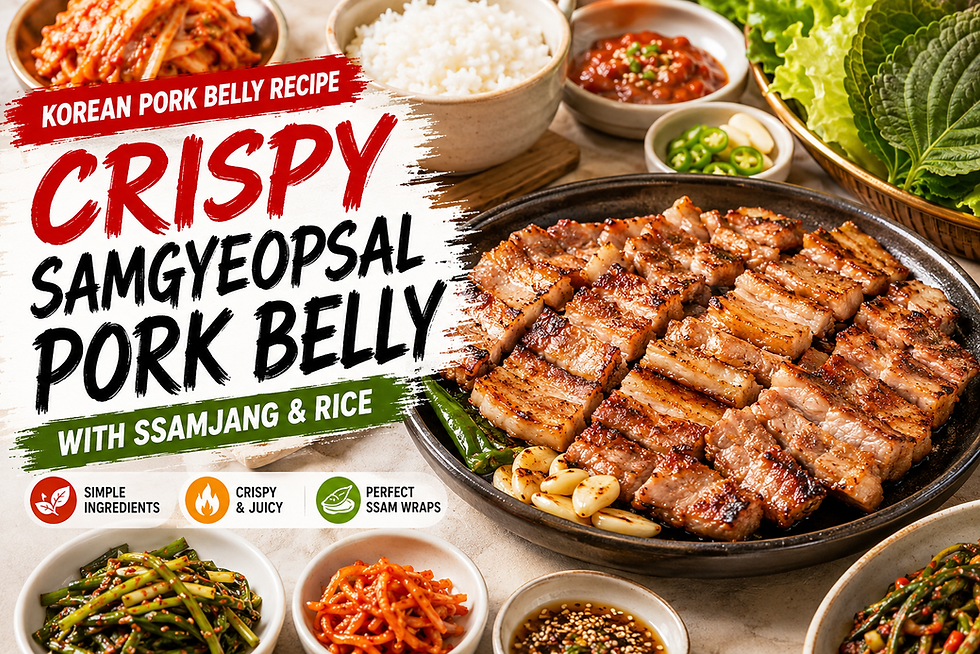
Korean pork belly does not need a complicated marinade to taste good.
For this kind of meal, the goal is crisp edges, rendered fat, hot rice, fresh wraps, ssamjang, garlic, kimchi, and a few sides that keep the pork from feeling too heavy. The pork stays simple because the table finishes the bite.
That is what makes this Korean pork belly recipe different from a saucy pork stir-fry or a slow braise. You are not trying to cover the pork with seasoning. You are trying to cook it well enough that every slice tastes rich, browned, and ready to wrap.
For the full table setup around Korean BBQ, start with Korean BBQ at Home Starts Before the Meat: The Wraps, Sides, and Sauces Worth Buying First. This recipe stays focused on Korean pork belly, crispy samgyeopsal-style cooking, ssamjang, rice, banchan, and how to make the meal work at home.
Recipe at a Glance
Detail | What to expect |
Main dish | Crispy Korean pork belly / samgyeopsal-style pork belly |
Best cut | Sliced pork belly |
Cooking method | Pan, grill pan, tabletop grill, cast iron, or outdoor grill |
Flavor style | Simple pork, crisp edges, dipping sauce, wraps, rice, kimchi |
Best sauce | Ssamjang or sesame oil salt |
Best sides | Rice, kimchi, lettuce, perilla leaves, garlic, green chili, banchan |
Texture goal | Rendered fat, browned edges, tender center |
Main warning | Do not crowd the pan or the pork will steam instead of crisp |
This is a cooking-method recipe more than a marinade recipe. The most important steps are heat, spacing, browning, and building a balanced bite at the table.
Ingredients
Main ingredients
Sliced pork belly
Salt, optional
Black pepper, optional
Lettuce or perilla leaves
Ssamjang
Sesame oil
Salt for sesame oil dipping sauce
Cooked white rice
Kimchi
Sliced garlic
Green chili, optional
Optional sides and add-ons
Cucumber sticks
Scallion salad
Bean sprout banchan
Spinach banchan
Pickled radish
Roasted seaweed
Grilled mushrooms
Grilled onion
Cooked kimchi
You do not need all of these. For a first Korean BBQ pork belly recipe, pork belly, rice, lettuce, ssamjang, kimchi, garlic, and sesame oil salt are enough.
Basic Ratio for 2 to 3 Servings
Use this as a starting point:
1 to 1 1/2 pounds sliced pork belly
1 head lettuce or a stack of perilla leaves
1 small bowl ssamjang
2 to 3 tablespoons sesame oil plus salt for dipping
2 to 3 bowls cooked white rice
1 to 2 cups kimchi
4 to 6 garlic cloves, sliced
1 or 2 green chilies, sliced, optional
1 or 2 simple banchan
If the pork belly is the only main dish, use more. If you are serving other meats, noodles, soup, or a larger banchan spread, use less.
What Kind of Pork Belly Works Best?
Sliced pork belly is the easiest choice.
Thin slices cook fast and crisp quickly, but they can dry out if you leave them on the heat too long. Thicker slices stay juicy and feel more like restaurant samgyeopsal, but they need more time and often need to be cut into bite-size pieces after cooking.
Use thinner pork belly when you want:
fast cooking
crisp edges
easy pan cooking
quick lettuce wraps
less knife work at the table
Use thicker pork belly when you want:
juicier pieces
stronger BBQ feeling
meatier bites
pieces you can cut after grilling
a more restaurant-style samgyeopsal texture
The best pork belly should have a balance of meat and fat. Too lean, and it can taste dry. Too fatty, and it can feel heavy unless you brown it well and serve enough kimchi, greens, and rice.
Should You Marinate Korean Pork Belly?
For this recipe, no.
Samgyeopsal-style Korean pork belly is usually cooked plain or lightly seasoned. The flavor comes from browning the pork, rendering the fat, and eating it with sauces and sides.
That is different from spicy pork bulgogi or soy-marinated pork. Those are good dishes, but they are not the same eating style.
Use this split:
Pork belly style | Best for |
Plain crispy pork belly | Ssam wraps, ssamjang, sesame oil salt, kimchi, rice |
Spicy marinated pork | Rice bowls, lettuce wraps, bolder gochujang flavor |
Soy-marinated pork | Sweet-savory grilled pork, rice-heavy meals |
Braised pork belly | Soft, saucy pork, longer cooking |
For this Korean bbq pork belly recipe, keep the pork simple and let the table do the seasoning.
Step-by-Step: How to Cook Korean Pork Belly
1. Prepare the table first
Pork belly tastes best hot, so get the sides ready before cooking.
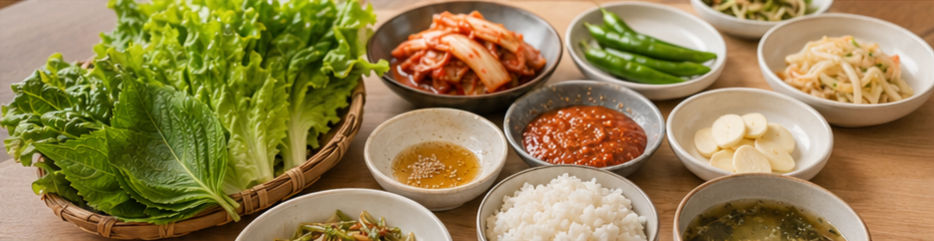
Wash and dry the lettuce or perilla leaves. Put ssamjang in a small bowl. Mix sesame oil with salt in another small dish. Set out rice, kimchi, sliced garlic, green chili, and any banchan.
If the table is not ready, the pork will cool while everyone looks for sauce.
2. Heat the pan or grill
Use a grill pan, cast iron pan, tabletop grill, outdoor grill, or sturdy nonstick pan.
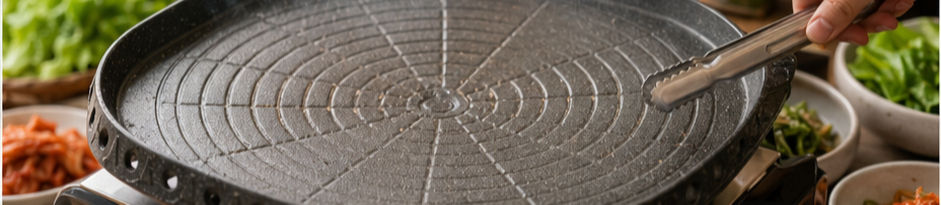
The surface should be hot enough to make the pork sizzle when it touches. If the heat is too low, the pork belly will leak fat slowly and feel greasy instead of crisp.
3. Lay the pork belly in one layer
Do not crowd the pan.
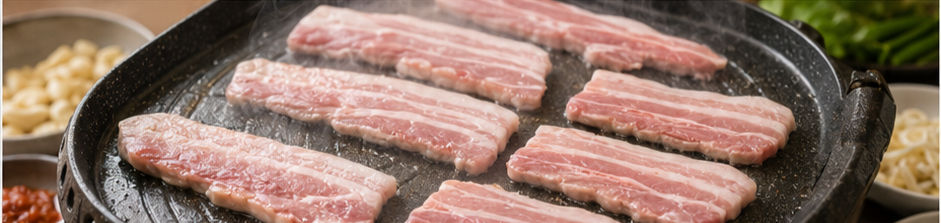
Give each slice enough room to brown. If the slices overlap, they steam. If they steam, the fat stays soft and the meat tastes heavy.
Cook in batches if needed. This is better than trying to cook everything at once.
4. Let the first side brown
Do not move the pork too much right away.
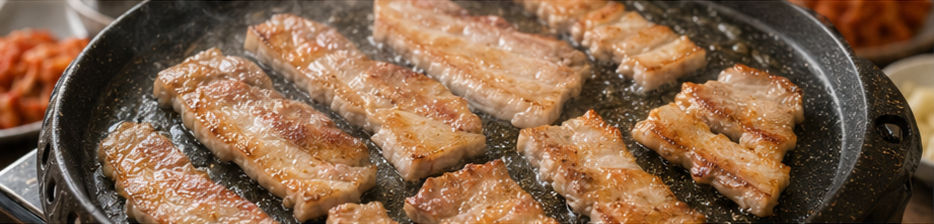
Let the first side brown and render. You should see the edges tightening and the fat turning glossy. Once the first side has color, flip the slices.
5. Flip and crisp the second side
Cook the second side until the pork is browned and the fat looks rendered.
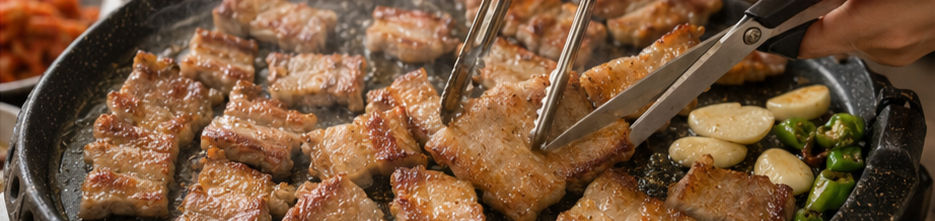
For thicker pieces, use tongs or kitchen scissors to cut them into bite-size pieces after both sides have browned. Then let the cut edges touch the pan for a little more crispness.
6. Move cooked pieces aside
If using a grill or large pan, move finished pieces to a cooler area so they stay warm without burning.
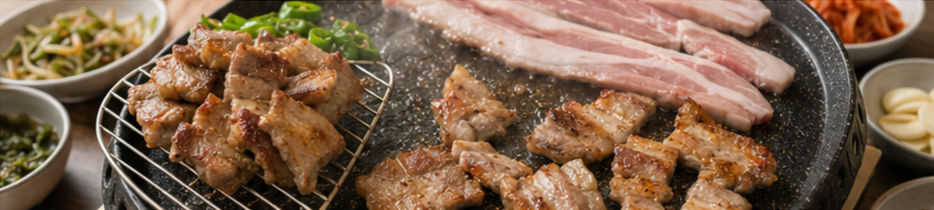
If cooking in batches, transfer finished pork to a plate and eat quickly. Pork belly is best when the edges are still hot and crisp.
7. Build wraps as you eat
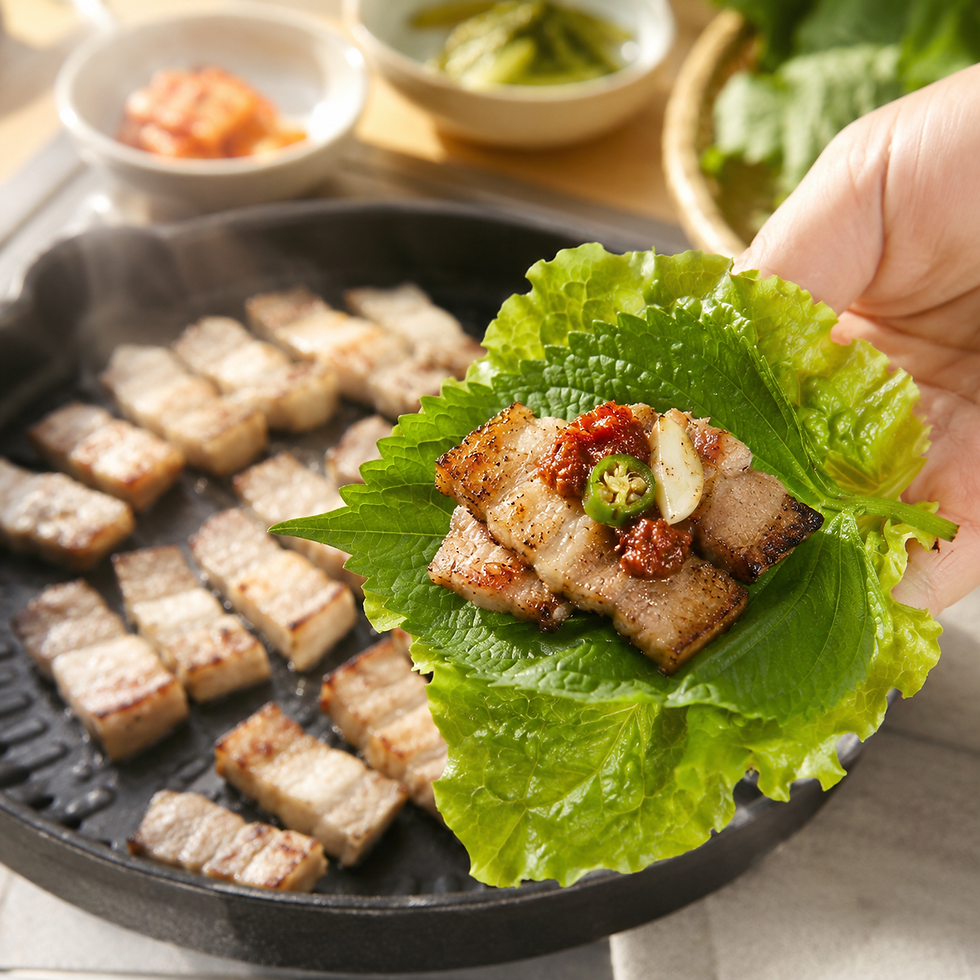
Place a piece of pork belly in lettuce or perilla leaf. Add a little rice, ssamjang, garlic, kimchi, or chili. Fold and eat in one bite if possible.
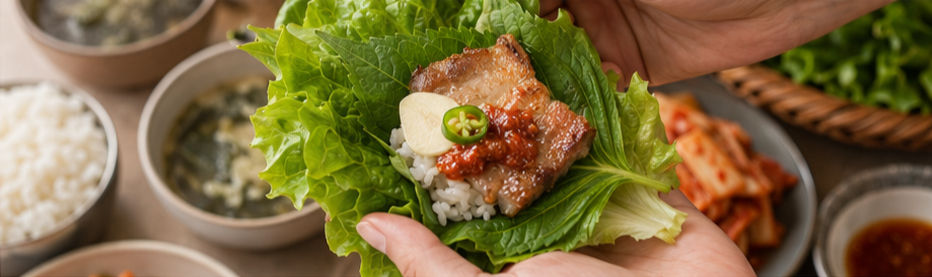
That is the point of the meal: crisp pork belly plus fresh wrap plus sauce plus rice plus something sharp.
Texture Cues: How Pork Belly Should Look
Good Korean pork belly should not look pale.
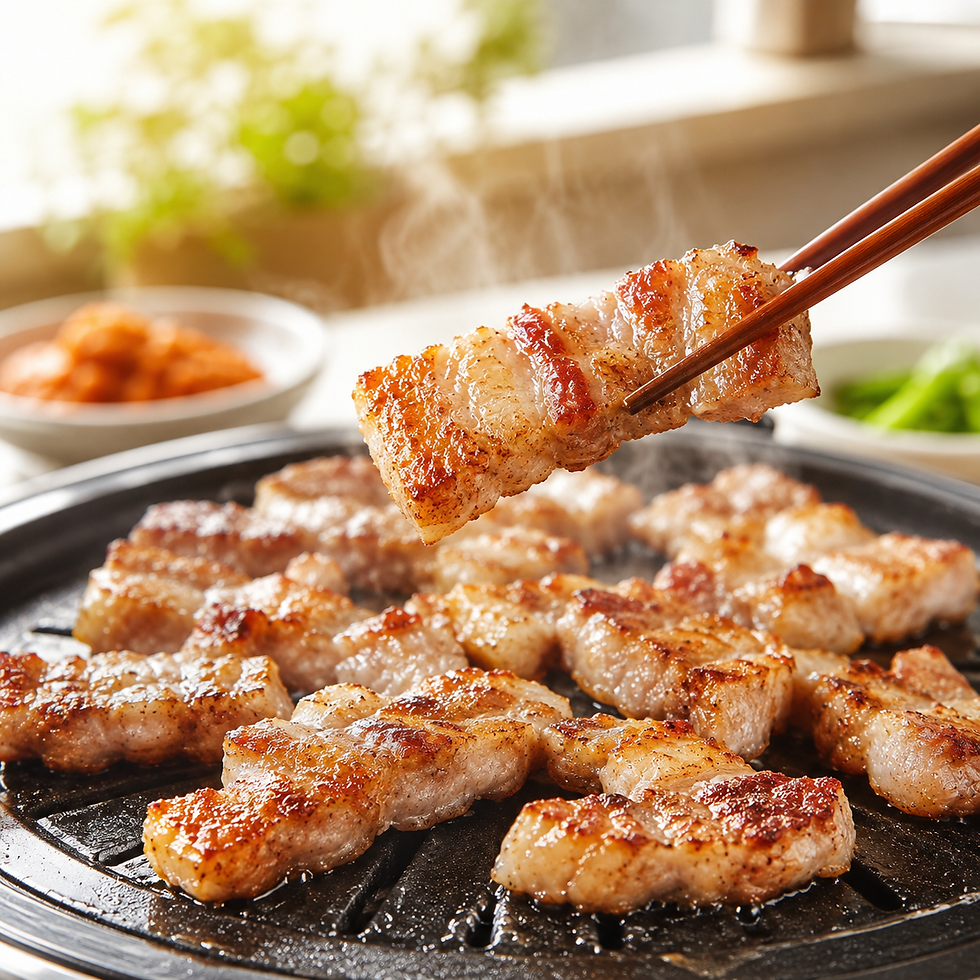
The edges should be browned. The fat should look rendered, not thick and raw. The meat should stay tender in the center. If the pork has a crisp edge and still feels juicy inside, you are in the right place.
Look for:
strong sizzle when the pork hits the pan
browned edges
glossy rendered fat
tender meat layers
no raw-looking white fat
no gray steamed surface
crisp spots where the pork touched the pan
If the pork tastes greasy, cook it a little longer and serve with sharper sides. If it tastes dry, the slices may be too thin or cooked too long after browning.
Ssamjang and Sesame Oil Salt
Ssamjang is the easiest sauce for Korean pork belly wraps.
It is thick, savory, salty, slightly sweet, and usually a little spicy. It sits inside lettuce wraps well and gives plain pork belly enough punch to taste complete with rice and garlic.
Sesame oil salt is the cleaner dipping sauce. Mix toasted sesame oil with salt and maybe a little black pepper. Dip the pork lightly before wrapping, or eat it directly with rice and kimchi.
Use ssamjang when you want:
bold wrap flavor
a thicker sauce
pork belly with lettuce and rice
a more classic Korean BBQ bite
Use sesame oil salt when you want:
clean pork flavor
toasted aroma
a lighter dip
a simple bite with less sauce
For a deeper sauce breakdown, read Korean BBQ Dipping Sauce Guide: Ssamjang, Sesame Oil Salt, and Soy-Vinegar Dip.
Rice, Kimchi, and Banchan
Rice is not just a side here.
A small spoon of rice inside a wrap softens the pork fat and the saltiness of ssamjang. It makes the bite feel rounded instead of intense. Short-grain white rice works especially well because it holds together and fits neatly inside a lettuce wrap.
Kimchi is just as important. Pork belly is rich, and kimchi brings acidity, chile heat, garlic, and crunch. Cold kimchi gives sharper contrast. Cooked kimchi tastes richer and softer, especially if you warm it near the pork fat.
Good banchan for Korean pork belly include:
napa kimchi
cucumber kimchi
pickled radish
bean sprouts
spinach
scallion salad
cucumber sticks
roasted seaweed
pickled garlic
For why rice and kimchi work so well together, read Kimchi and Rice Guide: Why This Simple Korean Meal Works So Well.
Lettuce Wraps vs Perilla Leaves
Lettuce is the easiest wrap.
It is crisp, mild, and beginner-friendly. It refreshes the bite without changing the flavor too much. Romaine, green leaf, red leaf, and butter lettuce can all work.
Perilla leaves are stronger. They taste herbal, fragrant, and a little sharp. They are especially good with pork belly because they can stand up to fat and ssamjang.
Use lettuce when you want:
mild freshness
crunch
easy wraps
a cleaner first bite
Use perilla leaves when you want:
stronger Korean flavor
herbal contrast
more aroma
a wrap that cuts pork fat better
The best setup has both, but lettuce alone is enough for a first samgyeopsal recipe at home.
How to Build the Best Pork Belly Wrap
The best wrap is balanced, not huge.
Start with one leaf. Add one piece of pork belly. Add a small spoon of rice. Add a little ssamjang or a pork slice dipped in sesame oil salt. Add garlic, kimchi, chili, or cucumber if you want contrast.
Try these combinations:
➡️ Classic ssamjang wrap
Lettuce, pork belly, rice, ssamjang, garlic.
➡️ Kimchi pork belly wrap
Lettuce, pork belly, rice, kimchi, sesame oil salt.
➡️ Perilla wrap
Perilla leaf, pork belly, rice, ssamjang, green chili.
➡️ Clean pork wrap
Lettuce, pork belly dipped in sesame oil salt, cucumber, rice.
➡️ Rich cooked kimchi wrap
Lettuce, pork belly, cooked kimchi, rice, a tiny amount of ssamjang.
Do not put everything in every wrap. Smaller bites taste cleaner.
Pan, Grill Pan, Tabletop Grill, or Outdoor Grill?
All of them can work.
A tabletop grill gives the closest Korean BBQ feeling because people can eat as the pork cooks. A grill pan gives good marks and helps fat drain slightly. Cast iron gives strong browning. A nonstick pan is easiest to clean but may not brown as aggressively. An outdoor grill gives smoke and space.
Use this split:
Cooking setup | Best for |
Tabletop grill | Korean BBQ table feeling |
Grill pan | Good browning and grill marks at home |
Cast iron pan | Strong crust and crisp edges |
Nonstick pan | Easy cleanup and beginner control |
Outdoor grill | Smoke, space, and bigger batches |
The rule is the same for all of them: do not crowd the surface, and let the pork brown before moving it too much.
Common Mistakes
Cooking over heat that is too low is the first mistake. Low heat makes pork belly render slowly without crisping, which can make it taste greasy.
Crowding the pan is another. Overlapping pork steams instead of browns.
Moving the slices too much prevents browning. Let one side cook before flipping.
Cutting thick pork too early can dry it out. Brown both sides first, then cut into pieces if needed.
Skipping rice makes the meal feel too fatty and salty.
Skipping kimchi or pickles removes the sharp contrast pork belly needs.
Using too much ssamjang can bury the pork. Start small.
Overstuffing wraps makes the bite messy and dull. One good bite is better than one giant bite.
Easy Variations
➡️ Garlic pork belly
Cook sliced garlic near the pork, or tuck raw garlic into wraps if you like a sharper bite.
➡️ Kimchi pork belly
Warm kimchi near the pork after some fat has rendered. Cooked kimchi becomes softer, richer, and more savory.
➡️ Spicy pork belly wraps
Add sliced green chili, gochugaru, or a little gochujang-based sauce to the wrap.
➡️ Rice bowl version
Skip the wraps and serve crisp pork belly over rice with kimchi, ssamjang, cucumber, and a fried egg.
➡️ Lettuce-heavy version
Use more lettuce, cucumber, perilla leaves, and pickled sides if you want the meal to feel lighter.
➡️ Banchan plate version
Serve pork belly with rice and several small sides instead of building wraps every time.
Leftovers and Reheating
Korean pork belly is best fresh, but leftovers can still work.
Reheat pieces in a pan over medium heat so the edges crisp again. Avoid microwaving too long because the fat can turn rubbery and the meat can taste heavier.
Leftover pork belly works well in:
rice bowls
kimchi fried rice
lettuce wraps
fried rice
ramen topping
bibimbap-style bowls
quick plates with kimchi and rice
If leftover pork tastes too rich, pair it with kimchi, pickled radish, cucumber, or a lighter salad.
What to Put on the Table First
For a first Korean pork belly recipe, keep the table simple.
Start with:
cooked pork belly
lettuce or perilla leaves
ssamjang
sesame oil salt
rice
kimchi
sliced garlic
green chili if you like heat
one fresh side
one mild banchan
That is enough. You can add more later, but the basic table already gives you the full samgyeopsal-style meal.
👉 Browse our [Korean sauces, marinades & paste category] for more options.
Final Verdict
This Korean pork belly recipe works because it keeps the pork simple and lets the table finish the flavor.
Cook sliced pork belly until the edges crisp and the fat renders. Serve it hot with rice, ssamjang, sesame oil salt, lettuce, kimchi, garlic, and banchan. Build small wraps with enough contrast to balance the richness.
The best Korean BBQ pork belly recipe is not about a complicated marinade. It is about heat, browning, and the right bite: crisp pork, fresh wrap, a little rice, a little sauce, and something sharp enough to make you want the next one.
Related Posts to Read Next
Korean BBQ at Home Starts Before the Meat: The Wraps, Sides, and Sauces Worth Buying First
Samgyeopsal Guide: Korean Pork Belly, Wraps, Sauces, and How People Eat It at Home
Korean BBQ Meat Cuts Guide: Pork Belly, Short Ribs, Brisket, and What Each Cut Is For
Korean BBQ Dipping Sauce Guide: Ssamjang, Sesame Oil Salt, and Soy-Vinegar Dip
Doenjang vs Ssamjang: What's the Difference and Which One Should You Buy First?
FAQ
What is Korean pork belly?
Korean pork belly is usually sliced pork belly cooked samgyeopsal-style, then eaten with lettuce or perilla wraps, ssamjang, sesame oil salt, rice, kimchi, garlic, and side dishes.
Is this the same as a samgyeopsal recipe?
Yes. This is a samgyeopsal-style Korean pork belly recipe focused on crisp edges, simple pork, sauces, rice, wraps, and banchan.
Do you marinate Korean pork belly?
For classic samgyeopsal-style pork belly, usually no. The pork is cooked plain or lightly seasoned, then eaten with sauces, wraps, rice, kimchi, and garlic.
How do you make Korean pork belly crispy?
Use a hot pan or grill, cook in one layer, do not move the slices too much at first, and let the fat render until the edges brown. Crowding the pan prevents crisping.
What sauce goes with Korean pork belly?
Ssamjang is the easiest sauce for lettuce wraps. Sesame oil with salt is best when you want a cleaner pork flavor.
What do you eat with Korean BBQ pork belly?
Eat it with rice, lettuce or perilla leaves, ssamjang, sesame oil salt, kimchi, garlic, green chili, pickled radish, and simple banchan.
Can I cook Korean pork belly without a grill?
Yes. A hot pan, cast iron pan, grill pan, nonstick pan, or tabletop grill can work. The key is heat, spacing, and browning.
What is the biggest mistake when cooking pork belly?
The biggest mistake is cooking it on heat that is too low or crowding the pan. Both make the pork steam and turn greasy instead of crisp.


Comments