
.png)
How to Use Perilla Oil in Korean Cooking: Best Dishes, Pairings, and Mistakes to Avoid

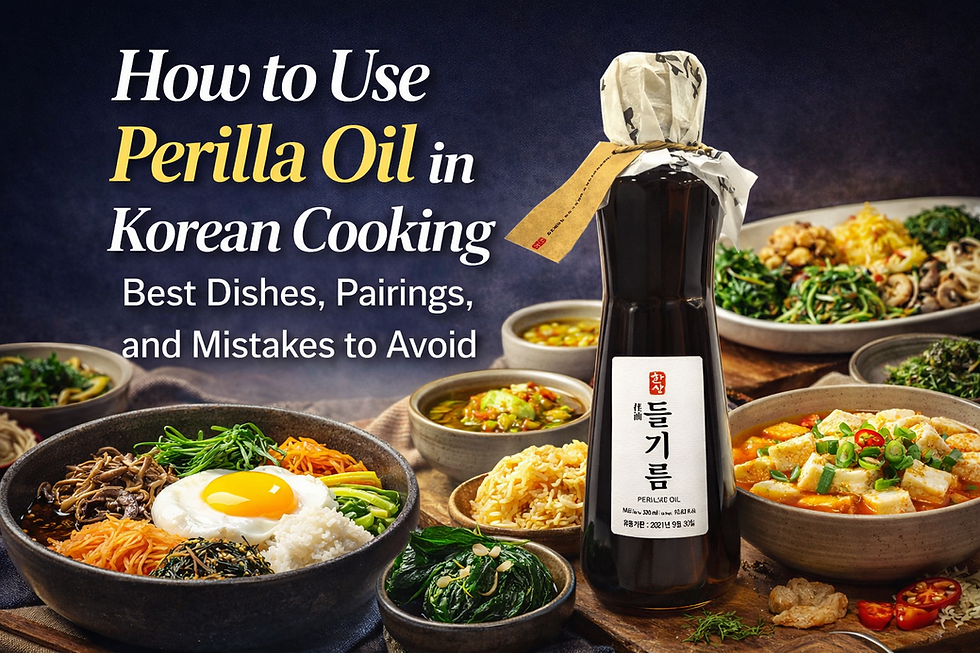
Perilla oil can make a dish taste more Korean with almost no effort.
Not because it is loud. Because it adds a deeper, earthier finish that changes simple food fast. A bowl of rice tastes fuller with it. Mushrooms feel rounder. Tofu stops tasting flat. Seasoned greens feel more complete. That is why people get attached to it once they start using it properly.
The important part is using it in the right kind of food.
Perilla oil is not the best match for every dish. It does its best work when the rest of the meal leaves room for it. If the food is already very sweet, very spicy, or heavily sauced, the oil can disappear. But in simpler Korean dishes, it can completely change the bowl.
TL;DR
Perilla oil works best in simple savory dishes where its flavor can actually show up.
The easiest places to use it are:
namul and vegetable side dishes
bibimbap and rice bowls
tofu dishes
mushrooms
spinach and other greens
fried eggs with rice
mild soups and stews
It pairs especially well with soy sauce, mushrooms, tofu, eggs, greens, seaweed, and warm rice.
The biggest mistakes are using too much, treating it like a neutral oil, or adding it to dishes that are already too loud.

What Perilla Oil Actually Tastes Like
Perilla oil is nutty, but it does not taste like sesame oil.
Sesame oil feels more toasted and familiar. Perilla oil feels deeper, earthier, and a little greener. It has a fuller finish, and that is why it works so well in foods that are mild or a little plain on their own. It does not need much help to stand out.
That is also why it is easy to overdo at first.
If you pour it the way you would pour a neutral oil, it can take over the dish. A little usually goes much further than people expect.
Best Dishes to Use It In
Namul
This is one of the easiest places to start.
Perilla oil feels very natural in seasoned vegetable side dishes because those dishes are simple enough for the oil to matter. It works especially well with fernbrake, mushrooms, spinach, zucchini, and leafy greens. Toss the vegetables while they are still a little warm and the flavor settles in better.
If you want to understand perilla oil quickly, namul is one of the best first uses.
Bibimbap and simple rice bowls
Perilla oil makes a rice bowl feel more finished almost immediately.
It works especially well when the bowl leans more vegetable-heavy, with mushrooms, greens, tofu, or egg. A small drizzle can pull the rice and toppings together and make the bowl feel warmer and more complete without adding another heavy sauce.
It is especially good when the bowl is calm enough to let the oil matter.
Tofu
Tofu and perilla oil make a lot of sense together.
Tofu is mild, soft, and very easy to build around, but it can also feel plain if nothing sharpens it up. Perilla oil gives tofu more depth without making it heavy. It works well with braised tofu, pan-seared tofu, chilled tofu, or even a very simple tofu-and-rice meal with soy sauce and scallions.
This is one of the easiest real home uses because tofu does not fight the oil at all.
Mushrooms
This is one of the strongest pairings.
Perilla oil and mushrooms already want the same thing. Both lean earthy and savory, so the flavor fits right away. A little perilla oil on sautéed mushrooms makes them feel deeper and rounder without needing much else.
If you want a very fast way to understand why people like this oil, mushrooms are a good place to start.
Spinach and other greens
Greens can taste flat very quickly if the seasoning is weak.
Perilla oil helps fix that. It gives spinach and other greens a little more body and makes soy sauce, garlic, and sesame-style seasoning feel more complete. It works especially well when the greens are still warm enough to absorb the flavor.
Fried eggs and warm rice
This is one of the most useful real-life uses.
A bowl of hot rice, a fried egg, and a little perilla oil already feels like a meal. The oil gives the egg more flavor and makes plain rice feel much less plain. You do not need much. Just enough to change the bowl.
This is a good everyday use because it takes almost no planning.
Mild soups and stews
Perilla oil is very good in brothy dishes when the broth is gentle enough to let it matter.
It works best in milder soups and stews, especially tofu-based, vegetable-forward, or light savory bowls. A small drizzle near the end can make the broth feel warmer and fuller. It is usually better added late than cooked hard from the beginning.

Best Pairings
Perilla oil is strongest with foods that are earthy, soft, or a little quiet on their own.
The best pairings are:
mushrooms
tofu
spinach and greens
warm rice
eggs
soy sauce
seaweed
mild broths
fernbrake
zucchini
simple vegetable side dishes
The pattern is easy to see. If the dish already leans savory, gentle, or ingredient-focused, perilla oil usually helps.
How to Use It at Home Without Overthinking It
The easiest way to use perilla oil is as a finishing flavor.
Drizzle a little over warm rice and egg. Add it to seasoned vegetables while they are still warm. Finish sautéed mushrooms with it. Add a little near the end of braised tofu. Use it in a mild soup right before serving.
That is a much better starting point than trying to use it as your main oil for everything.
Once you know what it tastes like in simple food, it becomes much easier to know where else it belongs.
👉 Browse our [Oil & Seasoning & Canned Food category] for more options.
Mistakes to Avoid
Using too much the first time
This is the easiest mistake to make.
Perilla oil has a stronger personality than neutral oil and a deeper finish than sesame oil. Too much can make the dish feel heavy or overly earthy. Start smaller than you think you need.
Treating it like a neutral cooking oil
Perilla oil is there for flavor.
If you use it the same way you use vegetable oil, you miss the whole point of it. It makes more sense as a finishing oil, a light sauté oil, or something added late for flavor.
Using it in dishes that are too loud
Perilla oil usually works best in calmer dishes.
If the food is very sweet, very spicy, or covered in strong sauce, the oil can disappear or feel misplaced. It has a better chance to shine in food that leaves room for nuance.
Cooking it too hard
Perilla oil can handle some cooking, but it is not the best choice for very high heat. If the heat gets too aggressive, the flavor can turn harsh. It usually tastes better when it stays in the background of the cooking process instead of taking the full force of the pan.

Final Verdict
Perilla oil works best when you give it a dish that lets it matter.
The easiest wins are namul, bibimbap, tofu, mushrooms, greens, fried eggs, warm rice, and mild soups or stews. It pairs best with ingredients that already lean earthy, savory, and simple. The main mistakes are using too much, hiding it under aggressive flavors, or expecting it to behave like a plain everyday oil.
The easiest way to think about it is this:
Perilla oil is not the oil you use because a dish needs oil.It is the oil you use because you want the dish to taste deeper, warmer, and more complete.
Related posts to read next
FAQ
Is perilla oil the same as sesame oil?
No. They are both nutty oils used in Korean cooking, but perilla oil usually tastes deeper, earthier, and a little greener than sesame oil.
What dishes is perilla oil best in?
It works especially well in namul, bibimbap, tofu dishes, mushrooms, greens, eggs, mild soups, and simple rice bowls.
Can I cook with perilla oil?
Yes, but it usually works better as a finishing oil or for lighter cooking than as a high-heat neutral oil.
What does perilla oil pair well with?
It pairs especially well with mushrooms, tofu, greens, eggs, rice, soy sauce, seaweed, and mild broths.
What is the biggest mistake people make with perilla oil?
Usually using too much or putting it into dishes where the flavor gets buried.
What is the easiest way to start using it?
Start with warm rice and egg, mushrooms, tofu, or seasoned greens. Those dishes make it very easy to understand what the oil is doing.


Comments