
.png)
Bibigo Dumplings Guide: Which Frozen Mandu Style Should You Try First?

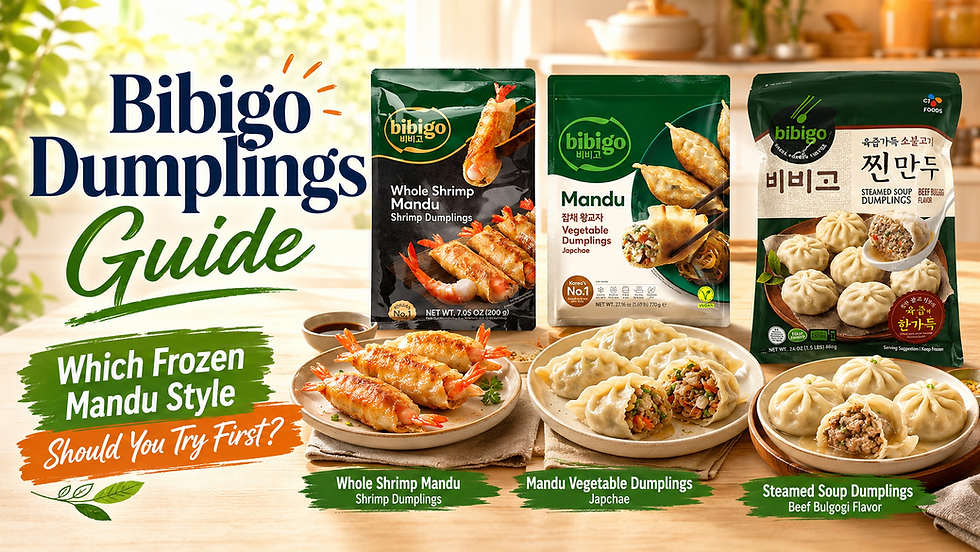
Bibigo dumplings look like an easy freezer decision until you realize the bags are solving different dinner problems.
One style is soft, sweet-savory, and built for low-effort comfort. Another wants a pan and a crisp bottom. Shrimp mandu sounds light, but it still needs gentle cooking or the wrapper can overpower the filling. Japchae dumplings can feel like a full meal when the glass noodles have enough room to show up.
That is the real decision with Bibigo mandu. You are not just choosing a flavor. You are choosing what role the dumplings need to play: quick meal, crispy plate, lighter appetizer, soup side, snack, or freezer backup for the night you do not want to think too hard.
Start with the style that matches how you actually eat dumplings.
TL;DR
Choose Bibigo dumplings by style first, then filling. Beef bulgogi is the easiest soft comfort pick. Japchae wang gyoza is the stronger crispy dinner pick. Whole shrimp mandu is better when you want something lighter, cleaner, and less heavy.
For most first-time buyers, the best Bibigo frozen dumplings are the ones that solve a real meal problem. Pick soft dumplings if you want speed and comfort. Pick larger gyoza if you want crisp edges and a dinner plate. Pick shrimp mandu if you want a cleaner side or appetizer.
The phrase Bibigo dumpling flavors can make the choice sound like a simple taste ranking, but texture and cooking method matter just as much. The best first bag is the one you will actually cook the right way.
How to Think About Bibigo Dumplings Before You Buy
Bibigo dumplings are easier to choose when you stop treating every bag like it should do the same job.
A steamed dumpling is supposed to feel soft and comforting. A large gyoza needs browning to show off the wrapper. A shrimp mandu should stay clean and juicy, not get buried under heavy sauce. Japchae filling needs enough bite space for the glass noodles to matter.
For a broader frozen-food starting point before narrowing in on dumplings, start with Best Korean Frozen Foods to Try First. This Bibigo dumplings guide is the closer look if you already know frozen mandu is the freezer lane you care about most.
The simplest first-buy question is this: do you want soft comfort, crisp dinner dumplings, or a lighter seafood bite? Once that is clear, the best Bibigo mandu style gets much easier to choose.
Best First Bibigo Dumplings for Most People: Beef Bulgogi
Beef bulgogi is the easiest Bibigo dumpling style to recommend first because it asks the least from you.
The flavor already makes sense: sweet-savory beef, soft wrapper, warm filling, no complicated sauce required. This is the style you reach for when dinner needs to feel handled without turning the kitchen into a project.
CJ Bibigo Steamed Beef Bulgogi Dumpling is the best first pick if you want a soft, quick meal dumpling rather than a crispy snack. The texture is supposed to be tender, so you are not chasing a perfect pan-fried bottom or worrying whether the wrapper browned evenly.
It works well with rice, kimchi, cucumber, pickled radish, or a simple soy-vinegar dip. It also makes sense when you are feeding someone who may not want a spicy kimchi dumpling, a more specific seafood filling, or anything that needs extra cooking attention.
Choose beef bulgogi first if you want the safest comfort pick. Skip it as your first bag if the whole reason you want frozen mandu is crisp texture.
Best Crispy Dinner Pick: Japchae Wang Gyoza
Japchae wang gyoza is the Bibigo style to choose when dumplings need to feel like the center of the meal.
The bigger size matters. Japchae filling needs space. If the dumpling is too small, the glass noodles can disappear behind wrapper and browned edges. In a larger gyoza, the noodles, vegetables, and seasoning have room to show up, so the bite feels more like japchae tucked into a dumpling instead of a vague sweet-savory filling.
CJ Bibigo Japchae Wang Gyoza is the better first buy if you want Bibigo frozen dumplings that can become dinner with very little help. Pan-fry them until the bottoms brown, add kimchi or a small salad, and the plate already feels more complete than a small appetizer-style dumpling would.
This is also the style to choose if you like crispy edges but still want the filling to matter. The wrapper gives you the pan-fried payoff. The japchae gives the dumpling a softer, slightly sweet, noodle-filled center.
For a direct japchae-dumpling comparison, read CJ Japchae Potstickers vs Bibigo Japchae Wang Gyoza: Which Frozen Japchae Dumpling Is More Worth Buying?. That article is useful if you are deciding between a larger dinner-style gyoza and smaller crispy potsticker bites.
Best Lighter Pick: Whole Shrimp Mandu
Shrimp mandu is the better Bibigo pick when you want dumplings that feel cleaner and less heavy.
The appeal is not big comfort in the same way beef bulgogi dumplings are. It is a lighter bite: seafood, vegetables, a cleaner filling, and a dumpling that works well when the sauce stays sharp instead of rich.
CJ Bibigo Whole Shrimp Mandu makes sense if you want a side dish, appetizer plate, ramen topper, or lighter dumpling snack. It is also a good first pick for someone who likes seafood but does not want the heavier feeling of pork or beef mandu.
Cook it gently. Shrimp mandu can lose its best texture if you push it too hard. Pan-frying works when you want crispness, steaming works when you want a softer bite, and air frying can work if you stop before the wrapper dries out.
Pair it with soy-vinegar, chili oil, scallion, or a lighter dipping sauce. Heavy creamy sauces usually make less sense because the shrimp flavor is the point.
How to Choose by Bibigo Dumpling Flavor
Bibigo dumpling flavors are easier to compare when you think about what the filling does to the meal.
Beef bulgogi is the comfort lane. It is sweet-savory, easy to like, and best when you want dumplings to feel warm and familiar. It is the safest Bibigo mandu style for beginners who want low effort and broad appeal.
Japchae is the texture lane. Glass noodles make the filling softer, chewier, and a little sweeter. It is especially good when the dumpling is large enough to let the japchae show up clearly.
Shrimp is the clean lane. It feels lighter, more delicate, and better with sharper sauces. It is less of a heavy dinner dumpling and more of a side, snack, or soup-friendly bite.
Not every possible Bibigo flavor needs to be your first bag. For a first buy, the better move is to choose the flavor family that matches your usual plate: sweet-savory comfort, noodle-filled crispness, or lighter seafood.
For a broader filling-by-filling breakdown beyond Bibigo, read How to Choose Korean Frozen Dumplings by Filling: Pork, Kimchi, Shrimp, Japchae, and More. This Bibigo guide keeps the decision brand-specific, but that filling guide helps if you are comparing Bibigo against other Korean frozen dumplings too.
How to Choose by Cooking Method
Cooking method changes the whole mood of Bibigo dumplings, so choose the method that matches the style.
Steam or microwave beef bulgogi dumplings when you want soft comfort fast. That style does not need crispy edges to make sense. It just needs to be hot, tender, and paired with something sharp like kimchi or pickled radish.
Pan-fry japchae wang gyoza when you want dinner texture. The browned bottom gives the large wrapper contrast, and the glass noodle filling tastes more satisfying when each bite has crispness outside and chew inside.
Cook shrimp mandu gently. Steam it when you want a clean bite, pan-fry it when you want light crispness, and air fry it only if you watch the wrapper closely. Shrimp fillings can go from clean to tired if you overcook them.
Use soup or ramen when you want dumplings as support instead of the main event. Shrimp mandu and softer dumplings can work well in broth, but crispy gyoza loses its main advantage once it sits in soup.
What to Eat With Bibigo Dumplings
Bibigo dumplings are better when the rest of the plate gives them contrast.
Beef bulgogi dumplings need something sharp or crunchy. Rice, kimchi, pickled radish, cucumber, or a simple soup all work because the dumplings are already soft and sweet-savory.
Japchae wang gyoza needs very little. A soy-vinegar dip, kimchi, salad, or steamed rice is enough. The dumplings are larger and more dinner-like, so too many sides can make the plate feel crowded.
Whole shrimp mandu should stay lighter. Scallion soy-vinegar, chili oil, cucumber, seaweed soup, or clean broth all make sense. Shrimp is easy to overpower, so let the filling stay visible.
For sauce ideas that make frozen mandu taste better without much work, read Korean Dumpling Sauce Guide: Soy-Vinegar, Spicy Dips, and What Makes Frozen Mandu Taste Better.
Which Bibigo Dumplings Should You Try First?
Choose beef bulgogi first if you want the safest comfort pick.
It is the best Bibigo dumpling style for soft texture, quick meals, and broad appeal. It is not the most dramatic choice, but it is the easiest one to imagine finishing and buying again.
Choose japchae wang gyoza first if you want crispy dumplings that can carry dinner. This is the better pick if you like pan-fried edges, larger bites, and fillings with real texture.
Choose whole shrimp mandu first if you want something lighter. It is better as a side, appetizer, soup add-in, or clean dumpling plate than as the heaviest dinner option.
The best first buy depends on what you want the dumplings to do. Soft meal? Beef bulgogi. Crispy dinner? Japchae wang gyoza. Lighter seafood bite? Whole shrimp mandu.
That is the easiest way to shop Bibigo dumplings without pretending every bag is supposed to solve the same craving.
Common Bibigo Dumpling Buying Mistakes
The first mistake is choosing only by flavor name. Flavor matters, but format matters too. A soft steamed dumpling and a large pan-fried gyoza do not eat the same way, even if both sound easy.
The second mistake is buying crispy dumplings when you really wanted a soft meal. If you do not want to pan-fry, do not start with a style that needs crisp texture to show its best side.
The third mistake is treating shrimp mandu like a heavy dinner dumpling. It can be part of dinner, but it shines more when the plate is lighter and the sauce is cleaner.
The last mistake is skipping sauce and sides. Frozen dumplings can taste flat if every bite is the same. Kimchi, pickled radish, cucumber, rice, soup, or a sharp soy-vinegar dip can make the bag feel much more worth keeping.
👉 Browse our [Instant & Quick Food category] for more options.
Final Buying Advice: The Best Bibigo Dumplings for Your First Bag
The best first Bibigo dumplings are the ones that match your real freezer habits.
Buy beef bulgogi if you want the easiest comfort meal. Buy japchae wang gyoza if you want a bigger, crispier dumpling that can carry dinner. Buy whole shrimp mandu if you want something lighter, cleaner, and easier to serve as a side or snack.
There is no single best Bibigo dumpling flavor for every shopper. There is only the bag that fits the way you actually eat: soft and fast, crispy and filling, or lighter and cleaner.
Start there and the freezer decision gets much easier.
Related Posts to Read Next
FAQ
What are the best Bibigo dumplings to try first?
The best Bibigo dumplings to try first depend on how you want to eat them. Choose beef bulgogi for soft comfort, japchae wang gyoza for a crispy dinner plate, and whole shrimp mandu for a lighter seafood bite.
Are Bibigo dumplings the same as Bibigo mandu?
Yes. Bibigo dumplings and Bibigo mandu usually refer to the same Korean-style frozen dumpling category. “Mandu” is the Korean word many shoppers use when talking about Korean dumplings.
Which Bibigo frozen dumplings are best for pan-frying?
Japchae wang gyoza is a strong pan-frying pick because the larger dumpling gives you crisp wrapper, browned edges, and enough filling to feel like dinner. Shrimp mandu can also pan-fry well if you do not overcook it.
Which Bibigo dumplings are easiest for a quick meal?
Steamed beef bulgogi dumplings are the easiest quick-meal style because they are soft, sweet-savory, and do not need crisp texture to taste satisfying. Add rice, kimchi, or soup and the meal feels handled.
What do Bibigo japchae dumplings taste like?
Bibigo japchae dumplings taste savory, slightly sweet, and noodle-filled, with chewy glass noodles giving the center more texture. They work best when the dumpling is large enough for the japchae filling to stand out.
Are Bibigo shrimp mandu good?
Bibigo shrimp mandu can be a good pick if you want a lighter dumpling with a cleaner seafood flavor. It is best with a sharp soy-vinegar dip, chili oil, or a simple broth that does not hide the shrimp.
What sauce goes best with Bibigo dumplings?
Soy-vinegar dipping sauce is the safest first choice. Add scallion, sesame oil, gochugaru, chili oil, or a little sugar depending on the filling and whether you want the sauce sharper, richer, or spicier.

Comments