
.png)
Gochujang Pork Belly Recipe: Sweet-Spicy Korean Pork Belly for Rice and Lettuce Wraps


Gochujang pork belly is for the nights when plain samgyeopsal sounds good, but you want the sauce to do more work.
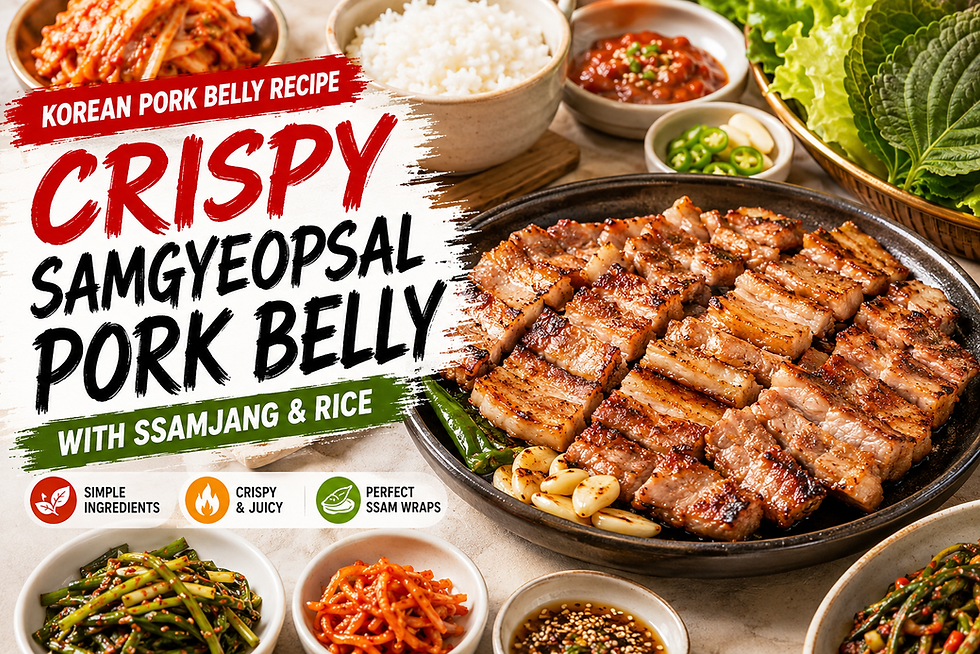
The pork belly still gives you richness, crisp edges, and that fatty Korean BBQ-style bite. The gochujang marinade adds heat, sweetness, garlic, soy sauce depth, and a sticky red glaze that belongs with rice, lettuce wraps, kimchi, and cold crunchy sides.
This is not the same thing as jeyuk bokkeum. Jeyuk bokkeum is a spicy stir-fried pork dish, usually cooked with onion and scallion until the sauce coats everything in the pan. This gochujang pork belly recipe stays focused on pork belly slices: marinate lightly, cook until browned, glaze without burning, then serve with rice or wraps.
For the bigger sauce picture, start with Best Korean Sauces for Rice Bowls, Noodles, and Dipping. This recipe stays focused on gochujang pork belly, Korean spicy pork belly, spicy pork belly marinade, rice bowls, lettuce wraps, kimchi pairings, and cooking cues.
Recipe at a Glance
Detail | What to expect |
Main dish | Sweet-spicy Korean pork belly |
Main sauce | Gochujang marinade and glaze |
Best cut | Sliced pork belly |
Best serving style | Rice bowls or lettuce wraps |
Flavor | Spicy, sweet, savory, garlicky, rich |
Texture goal | Browned pork belly with sticky sauce, not wet stir-fry pork |
Best sides | Rice, lettuce, perilla leaves, kimchi, cucumber, pickles, banchan |
Main warning | Gochujang and sugar can burn, so control the heat |
This serves about 2 to 3 people. Plan on about 10 minutes of prep, 15 to 30 minutes of marinating, and 8 to 12 minutes of cooking.
The goal is not to drown the pork belly. The goal is to coat it enough that each slice tastes sweet-spicy, glossy, and still like pork belly.

Ingredients
Main ingredients
Sliced pork belly
Gochujang
Soy sauce
Sesame oil
Garlic
Sugar, honey, or rice syrup
Mirin or water, optional
Black pepper
Scallions, optional
Sesame seeds, optional
For serving
Cooked white rice
Lettuce or perilla leaves
Kimchi
Cucumber sticks
Pickled radish or danmuji
Sliced garlic, optional
Green chili, optional
Simple banchan
You do not need a long ingredient list. Gochujang brings the spicy-sweet body. Soy sauce gives salt and depth. Sesame oil adds nuttiness. Garlic keeps the pork from tasting flat. Rice and wraps balance the richness.
Basic Ratio for 2 to 3 Servings
Use this as a starting point:
1 to 1 1/2 pounds sliced pork belly
2 tablespoons gochujang
1 tablespoon soy sauce
1 tablespoon sesame oil
1 tablespoon sugar, honey, or rice syrup
2 to 3 garlic cloves, minced
1 to 2 tablespoons mirin or water to loosen, optional
Black pepper to taste
Rice, lettuce, kimchi, and sides for serving
This ratio gives a balanced spicy pork belly marinade without turning the pork into a thick paste. If you want more heat, add more gochujang later. If you want a softer sauce, add a little more sweetener or water.
The Gochujang
Gochujang is the base of the flavor, so use it like a concentrated paste, not like a loose sauce.
CJ Gochujang Hot Pepper Paste is a good fit when you want a larger pantry tub for marinades, rice bowls, tteokbokki, stews, and sweet-spicy glazes like this one.
For pork belly, gochujang gives:
red color
chili heat
sweet-savory body
fermented depth
sauce cling
glaze potential
The important part is balance. Straight gochujang is thick and concentrated. It needs soy sauce, sesame oil, garlic, and a little sweetness or liquid so it coats pork belly without clumping or burning immediately.
The Sesame Oil
Sesame oil is not the main sauce, but it matters.
It rounds out the gochujang, adds toasted aroma, and makes the marinade taste more Korean instead of only spicy and sweet. Use enough to flavor the sauce, but not so much that the pork tastes oily before it even cooks.
Wang 100% Sesame Oil works well as a pantry sesame oil for marinades, dipping sauces, stir-fries, and finishing touches.
In this recipe, sesame oil should support the pork belly. The pork already has fat, so you only need a small amount for aroma.

Step-by-Step: How to Make Gochujang Pork Belly
1. Mix the marinade
In a bowl, mix gochujang, soy sauce, sesame oil, garlic, sweetener, black pepper, and a little mirin or water if needed.

The marinade should be thick but spreadable. It should coat a spoon, but it should not sit like dry paste. If it is too stiff, add a small splash of water or mirin.
2. Coat the pork belly lightly
Add the sliced pork belly and coat each piece.

Do not bury the pork in too much marinade. Pork belly is rich and fatty, so a moderate coating works better than a heavy sauce layer. Too much gochujang marinade can burn before the pork crisps.
3. Marinate briefly
Let the pork sit for 15 to 30 minutes if you have time.

This is enough for sliced pork belly because the pieces are thin and the marinade is strong. You do not need to marinate overnight. A long marinade can make the pork taste too salty or heavy.
4. Heat the pan
Use a grill pan, cast iron pan, nonstick pan, or outdoor grill.

Start with medium to medium-high heat. You need enough heat to brown the pork, but not so much that the gochujang and sugar scorch immediately.
5. Cook in one layer
Lay the pork belly slices in one layer.

Do not crowd the pan. If the pork overlaps too much, it steams and releases liquid instead of browning. Cook in batches if needed.
6. Brown the pork before adding extra sauce
Let the pork cook until the first side browns and the fat begins to render. Flip and cook the second side.

If there is extra marinade in the bowl, do not pour it all in at the beginning. Add a small amount near the end only if you want more glaze.
7. Glaze at the end
Once the pork is mostly cooked and browned, add a small spoon of extra marinade or a splash of water to loosen the pan sauce.

Toss briefly until the pork looks glossy. Stop before the sauce turns dark and bitter.
8. Serve right away
Serve with hot rice or lettuce wraps, plus kimchi, cucumber, pickles, or banchan.

Gochujang pork belly tastes best when the edges are hot and the sauce is glossy.
Texture Cues: What It Should Look Like
Good gochujang pork belly should look glossy, browned, and coated.
It should not look watery, pale, or buried in sauce. The pork belly should still have crisp edges or browned spots. The gochujang should cling to the surface, not sit as a raw red paste.
Look for:
browned pork edges
rendered fat
glossy red coating
sauce clinging to each slice
no watery sauce pool
no black bitter spots
no raw gochujang paste taste
If the pork looks wet, the pan may be crowded or too cool. If the sauce turns black fast, the heat is too high or the marinade layer is too thick.
Sauce Balance: Spicy, Sweet, Salty, Rich
A good spicy pork belly marinade needs balance.
Gochujang gives heat and body, but it can taste too thick or salty if used alone. Soy sauce adds savory depth but can make the pork too salty if you use too much. Sweetener helps browning and softens the chile heat. Sesame oil adds aroma. Garlic gives sharpness.
Use this balance guide:
Problem | Fix |
Too spicy | Add a little more sweetener or serve with rice and cucumber |
Too salty | Use less soy sauce next time or add more pork/rice |
Too thick | Add a splash of water or mirin |
Too sweet | Add a little soy sauce or more garlic |
Too flat | Add more garlic, scallion, or sesame oil |
Burns too fast | Use less marinade on the pork and glaze at the end |
The sauce should taste bold because pork belly and rice can handle it. But it should not taste like raw gochujang straight from the tub.
Rice Bowl Version
Gochujang pork belly is very good over rice because the sauce is strong.
Rice absorbs the sweet-spicy glaze and softens the pork belly richness. Add something fresh or sharp so the bowl does not feel too heavy.
A simple rice bowl can include:
hot white rice
gochujang pork belly
kimchi
cucumber
fried egg
scallions
sesame seeds
roasted seaweed
Do not over-sauce the rice before tasting. The pork belly already carries a lot of flavor. Start with the pork and let the glaze mix into the rice naturally.
Lettuce Wrap Version
For lettuce wraps, keep the pork belly pieces small enough to fold.
Use lettuce or perilla leaves, a little rice, one or two pieces of pork belly, cucumber, kimchi, or garlic. You usually do not need ssamjang because the gochujang pork belly is already seasoned.
Good wrap combinations:
➡️ Classic spicy pork belly wrap
Lettuce, rice, gochujang pork belly, cucumber.
➡️ Kimchi wrap
Lettuce, pork belly, rice, kimchi, sesame seeds.
➡️ Perilla wrap
Perilla leaf, pork belly, rice, cucumber, green chili.
➡️ Fresh cooling wrap
Lettuce, pork belly, rice, cucumber, pickled radish.
The best wrap should taste spicy, rich, fresh, and sharp in one bite.
How This Differs From Jeyuk Bokkeum
This matters because the ingredients can overlap.
Jeyuk bokkeum is usually a stir-fried spicy pork dish. It often includes thin pork, onion, scallion, and a gochujang or gochugaru-based sauce cooked together in the pan. The result is saucy, spicy, and rice-focused.
Gochujang pork belly is more pork-belly focused. The slices stay the main event. You are aiming for browned edges and sticky glaze, not a full onion-heavy stir-fry.
Use this split:
Dish | Main focus |
Gochujang pork belly | Pork belly slices, glossy glaze, rice or wraps |
Jeyuk bokkeum | Spicy stir-fried pork with onion, scallion, and sauce |
Plain samgyeopsal | Unmarinated pork belly with ssamjang and sesame oil salt |
Spicy pork belly rice bowl | Gochujang pork belly served over rice |
For a full stir-fry path, read Jeyuk Bokkeum (Korean Spicy Pork with Gochujang).
Common Mistakes
Using too much gochujang is the first mistake. More paste does not always mean better flavor. It can make the pork salty, thick, and easy to burn.
Cooking on heat that is too high can scorch the sugar and gochujang before the pork browns.
Cooking on heat that is too low makes the pork release fat and liquid without caramelizing.
Crowding the pan makes the pork steam instead of brown.
Pouring all the extra marinade into the pan too early can make the dish wet and pasty.
Marinating too long can make sliced pork belly taste too salty or heavy.
Skipping rice, lettuce, cucumber, kimchi, or pickles makes the meal feel too rich.
Treating this like jeyuk bokkeum can also change the dish. If you add too much onion, scallion, and sauce, it becomes more of a stir-fry than a pork belly glaze recipe.
Easy Variations
➡️ Extra spicy gochujang pork belly
Add gochugaru or sliced green chili to the marinade. Keep the gochujang amount controlled so the sauce does not turn too thick.
➡️ Honey gochujang pork belly
Use honey as the sweetener for a glossier, softer sweetness. Watch the heat because honey can burn.
➡️ Garlic-heavy pork belly
Add extra minced garlic if you want a sharper BBQ-style aroma. Cook carefully because garlic burns quickly.
➡️ Kimchi pork belly plate
Serve the pork with kimchi on the side, or warm kimchi briefly after the pork cooks. Do not cook the pork in too much kimchi liquid if you want crisp edges.
➡️ Gochujang pork belly lettuce wraps
Serve the pork with lettuce, rice, cucumber, kimchi, and pickled radish for a wrap-focused meal.
➡️ Rice bowl with egg
Serve pork belly over rice with a fried egg, scallions, sesame seeds, cucumber, and roasted seaweed.
Leftovers and Reheating
Gochujang pork belly is best fresh, but leftovers can work.
Reheat gently in a pan so the sauce loosens and the edges regain some texture. Add a tiny splash of water if the glaze is sticking too hard. Avoid microwaving too long because pork belly can turn rubbery and the sauce can taste heavier.
Leftovers work well in:
rice bowls
lettuce wraps
fried rice
ramen topping
kimchi rice plates
egg-topped bowls
quick lunch plates
If the leftovers taste too rich, add cucumber, kimchi, pickled radish, or a fresh salad.
What to Serve With Gochujang Pork Belly
Because the pork is rich and spicy, the sides should cool, cut, or calm.
Good pairings include:
white rice
lettuce
perilla leaves
kimchi
cucumber sticks
pickled radish
danmuji
bean sprouts
spinach banchan
roasted seaweed
fried egg
cold cabbage salad
You do not need every side. Rice, lettuce, cucumber, and kimchi are enough for a good first meal.
What You Need Before Cooking
Keep the setup simple: gochujang for the sweet-spicy base, soy sauce for depth, sesame oil for aroma, garlic for punch, and a little sweetener for glaze.
Rice should be ready before the pork finishes because the sauce is strong and the pork tastes best hot. For wraps, set out lettuce or perilla leaves, kimchi, cucumber, pickled radish, or another sharp side before cooking.
The only real buying priority is this: make sure you have gochujang, rice, and at least one fresh or sharp side. Everything else can be adjusted.
👉 Browse our [Korean Recipes] for more options.
Final Verdict
Gochujang pork belly is the right recipe when you want Korean spicy pork belly that still feels like pork belly.
Use gochujang for heat and body, soy sauce for depth, sesame oil for aroma, garlic for punch, and a little sweetness for glaze. Cook the pork in one layer, brown it first, then glaze near the end so the sauce clings without burning.
Serve it over rice when you want a bold bowl. Serve it in lettuce wraps when you want a samgyeopsal-style meal with more sauce. Add kimchi, cucumber, pickles, or banchan so the richness does not take over.
The best version is sweet-spicy, glossy, browned at the edges, and balanced by rice or fresh wraps.
Related Posts to Read Next
FAQ
What is gochujang pork belly?
Gochujang pork belly is sliced pork belly coated in a sweet-spicy Korean chili paste marinade, then cooked until browned and glossy. It is usually served with rice, lettuce wraps, kimchi, cucumber, or banchan.
Is gochujang pork belly the same as jeyuk bokkeum?
No. Jeyuk bokkeum is a spicy stir-fried pork dish often cooked with onion, scallion, and a saucy pan style. Gochujang pork belly focuses on pork belly slices, browned edges, and a sticky gochujang glaze for rice or wraps.
What is in spicy pork belly marinade?
A simple spicy pork belly marinade uses gochujang, soy sauce, sesame oil, garlic, sugar or honey, black pepper, and a little water or mirin if the sauce needs loosening.
How long should pork belly marinate in gochujang?
For sliced pork belly, 15 to 30 minutes is usually enough. The marinade is strong, and the slices are thin. Overnight marinating is usually not necessary.
How do you keep gochujang pork belly from burning?
Use moderate heat, cook the pork in one layer, do not add too much marinade at the beginning, and glaze near the end. Gochujang and sugar can burn if the pan is too hot.
What do you eat with Korean spicy pork belly?
Serve it with rice, lettuce or perilla leaves, kimchi, cucumber, pickled radish, fried egg, roasted seaweed, bean sprouts, spinach banchan, or cold cabbage salad.
Can I make gochujang pork belly less spicy?
Yes. Use less gochujang, add a little more sweetener or water, and serve with rice, cucumber, lettuce, or egg to soften the heat.
Is pork belly too fatty for this recipe?
Pork belly is fatty, but that is part of the dish. Cook it until the edges brown and the fat renders, then serve it with rice, kimchi, cucumber, or pickled sides to balance the richness.


Comments